In a previous post, (Daily life in the hamlets in times gone by, May 2023) I have quoted a passage from the memoir of George Barrs, the one time Curate of Rowley Regis , in which he writes with disdain, contempt even, of his Rowley parishioners. He was fairly scathing, too in some of his descriptions of them in the Burial Registers. It appears that this was a mutual dislike as there was at least one unsuccessful attempt to get rid of him by his own churchwardens in the early 1800s but this failed. More on that at a later date, perhaps.
But, as I have transcribed numerous Registers, Anglican and Non-conformist in the last few years I have noted that, as hand nail-making skills were overtaken by machinery, the ingenious people of the Black Country turned their dextrous hands to other occupations, in metal working especially but in other work, too. And industry continued to thrive in the area.
Even men who worked in physical trades such as quarrying and mining could still work in the nailshops at home. So when I see column after column in church or chapel registers which list occupations as ‘Labourer’ or – in the case of women – no recognition at all that they also worked at nailmaking or in other work, I always find myself wondering how accurate that generalisation was.
It is clear from some registers and from the sheer number of chapels that sprang up in local streets, (more than forty Primitive Methodist meetings in the Dudley area alone by 1840), that many people in the area around Rowley were not the godless alcohol ridden heathens that Barrs seemed to think but were actually independently minded men and women of character and determination who wanted to read the bible for themselves, pray in their own words and to worship in the way they chose in chapels which they had built. In addition to those forty PriitiveMethodist meetings, there were also Wesleyan Methodists, often worshipping in close proximity to the Primitive Methodists plus numerous Baptists and others such as a notable Society of Friends, otherwise known as Quakers. These people chose their own paths to spiritual fulfilment, many of them learning to read along the way.
Many of the chapels which were built were fine buildings which had to be funded locally, and they often involved heavy commitments in time and activities to run them and organise their activities. For at least in the Methodist churches worship was not confined to Sundays, nor to one service on Sundays, two or three was the norm and several services on week nights. Sunday Schools educated adults as well as children. And there were prayer meetings, men’s groups, women’s groups, choirs, bible study groups, too which met in the evenings during the week. Perhaps it was the wholehearted commitment of dissenters to their chapels that annoyed Anglican priests who saw themselves as leaders of their communities by right. The abuse heaped on dissenters in early days was very real and not always confined to words. There was little meeting of minds for many years afterwards.
There was nothing primitive about the organisations of these chapels, there were accounts, trusteeships, preaching rotas, training, printed lists, even before there were paid Ministers. And such Ministers as there were travelled many miles to preach in different places. There were women preachers, too, long before the Established Church ordained women.
Simple descriptions in official records of trades such as labourers or nail or chain makers must conceal the true nature of many of these people. Thinking about my own family, my uncle Bill Rose appears in official records, quite accurately, as a Gas Fitter. And so he was, all of his life. But that was only the day job, he was also for many years a very competent Secretary to our family Methodist church and for many many years, a Trustee of the Church, as was his father, my grandfather who was supposedly just a humble cobbler. And my uncle was also very active in the Worker’s Educational Association in the Birmingham area, promoting not only his own lifelong continuing education but that of others, enriching lives, expanding minds. He was an intelligent, cultured and modest man and highly respected in our chapel, though he never sought this and would have been unwilling to acknowledge it. And I am sure there were many many other such people in our community whose talents and abilities were put to good use but which have faded now from knowledge. Rowley has produced poets and composers as well as nails.
Thomas Gray’s Elegy Written in a Country Churchyard (my mother’s favourite poem) touches on this, the unrealised potential of humble folk.
Full many a gem of purest ray serene,
The dark unfathom’d caves of ocean bear:
Full many a flow’r is born to blush unseen,
And waste its sweetness on the desert air.
Far from the madding crowd’s ignoble strife,
Their sober wishes never learn’d to stray;
Along the cool sequester’d vale of life
They kept the noiseless tenor of their way.
Perhaps it was simply the independent non-conformist thinking of many ordinary local people that went down badly with the Reverend Barrs. I am convinced that there is a deep thread of non-conformism in my own personality, which surfaces from time to time even today and that this may well have been a defining characteristic of many Black Country people.
Increasingly, in the course of this study, I have had to revise my original view that not many people in Rowley would have stirred from their roots. Increasingly, I have found evidence that there were numerous people who did indeed travel and expand their trades, not only in this country but further afield, too. As regular readers will already know I discovered that one ancestor had married in London and I had wondered whether he was acting as a courier for the nail trade, possibly in connection with the Crowley family who had lived in Rowley before moving to Stourbridge and subsequently London in later generations.
This week I read an article about the Crowley family which mentioned that a book entitled Men of Iron – by M W Flinn, about the early iron industry with particular reference to the Crowley family, had been republished. It was first published in 1962 and Professor Flinn published other books on similar themes before and after this volume. This edition had become rare and expensive. But a copy was loaned by the Winlaton & District History Society to the Land of Oak & Iron Legacy Group and, with the enthusiastic consent of Professor Flinn’s family, the printed text was scanned, transcribed and reset to produce a new edition in 2019. It sounded an interesting book and, thinking that there might be some reference to Rowley Regis , I ordered myself a copy, an early self-Christmas present! It arrived this week and has much detail about the early iron industry and the families involved in it.
Copyright: Land of Oak & Iron 2019.
If you happened to be passing my house late on the evening it arrived, you may have heard a distinct ‘whoop!’ as I read the first few pages as my bedtime reading. This paragraph, on Page 8, is what gave rise to that whoop.
“Rowley Regis, in the heart of the Black Country, was a typical nail-making community. It was distinguishedin the seventeenth century not only for its concentration on nail-making, but for thenumber of families living there which produced the leaders of the iron industry in the next century. The Court Rolls of the Manor in the seventeenth century contain many references to the Wheeler, Parkes, Haden, Foley, Darby and Crowley families. Of the men married at Rowley in the years 1656-7, no fewer than forty were classed as nailers, the next largest occupational group being husbandsmen of whom there were four. Rowley Regis specialised at this period in the manufacture of rivets, hobnails and small nails.“
Copyright: From Men of Iron – by M W Flinn, published by Land of Oak & Iron 2019.
Whoop, whoop! So there it is, summed up. Not just ignorant unskilled labourers lived in Rowley, or at least not all! There were numerous families of industrious, innovative, inventive, clever, determined men who influenced the future of the iron industry and the whole of the surrounding area and further afield.
Flinn goes on to say a little more about Ambrose Crowley I who lived in the village, although his birthplace is not known. He had married Mary Grainger in the early years of the seventeenth century and settled in the village.
“Like his son and grandson, Ambrose I appeared to have had a numerous family, comprising at least five sons and four daughters. No records of his activities have been traced apart from the fact that he was a nailer. He was described as such in his Will which gives an interesting picture of a combination of light industry with an agricultural smallholding that must have been fairly common amongst the domestic workers in seventeenth-century industry. His property was valued at his death at £24.4s 8d and this included, besides his bellows, hammers and other implements valued at a mere £1.10s.0d, ‘muck in the yard, 3s 4d, cheese in the house £1.10s.0d, a cheese press and some old books; two cowes and one weanling calf, £4 10s 0d.’ Clearly his way of life was far from mean or uncultured, for his house contained six rooms in addition to the workshop and a barn. He died in September 1680 at Rowley Regis.”
Copyright: From Men of Iron – by M W Flinn, published by Land of Oak & Iron 2019.
The best £10 I have spent on a book in a long time! I have a lot more reading to do in this book and in “The Seventeenth Century Foleys: Iron, Wealth and Vision 1580-1716” which I bought at the Black Country Society Local History Conference in July but have only dipped into. Both books have information about the processes used in the iron industries and how these were refined and improved over time.
So our tiny village of Rowley Regis was not just a sleepy backwater in centuries gone by but home to some amazing people who influenced the whole of the Industrial Revolution. I am prouder than ever to call myself a Rowley girl.
Recently I came across an article in Ariss’s Birmingham Gazette dated 11 April 1825.
Coroner’s Inquest: Rowley Regis
A long examination took place on Saturday at Rowley Regis before Mr H Smith, Coroner, on the body of Jonathan Taylor, a pauper, upwards of 85 years of age. The deceased, who possessed excellent bodily health but whose mental faculties had for some time failed him, was an inmate of the poorhouse, and frequently became so unmanageable that he was obliged to be put under restraint. It was on an occasion of this kind that on Monday afternoon he was confined in a room called the dungeon where there was clean straw for him to lie on, and his victuals were regularly taken to him, and he made a hearty dinner on Tuesday with beef, bread and potatoes; but towards evening he stripped himself naked, and refused to eat his supper.
At five o’clock on Wednesday morning he was heard to cough, and about seven he was found dead, lying on his side with his shirt under his head. Several of the paupers deposed to the kind and humane treatment which the deceased had always received, in common with themselves, from the Governor and Governess of the Workhouse, and it appears that the dungeon was dry and wholesome and had a boarded floor. The Rev. George Barrs, Minister of the parish, stated that he had often made enquiries from the poor as to their treatment and they always expressed themselves perfectly satisfied with it. Mr Kenrick, the surgeon, who opened and examined the body of the deceased, said there were no marks of injury whatever upon it, and that he had never before seen so healthy a subject, considering his extreme age, and that he had no doubt he died a natural death. The jury therefore returned a verdict to that effect.
So what we would now recognise as dementia and mental health problems were a similar problem almost exactly two hundred years ago, and although treatment has mostly moved on a little, even now, in the 21st century, there are periodoc cases one hears of where the treatment of such people has not improved a great deal since then.
I cannot find a baptism locally for a Jonathan Taylor at any time around 1740 or any other record of him but he must have had some local connection to be in the Poorhouse.
The Poorhouse in Rowley was at the Springfield end of the village, just above Tippity Green and the Bull’s Head, on the same side of the road. It is apparently shown on this map which is a copy of the map drawn up in about 1800 in connection with the Enclosure process, above the Bull’s Head, with two buildings and marked ‘Poor’ and ’27’. but considerably before Brickhouse Green. The second building may have been a nailshop which Chitham says was used by the inmates to earn their keep.
Copyright Glenys Sykes.
Later there seems to have been some alms provision in Tippity Green itself.
Edward Chitham (in his 1972 book The Black Country) says “The Rowley Poorhouse was situated at Tipperty Green where nowadays the Christadelphian church stands. It was a stone building, limewashed white and contained separate accommodation for men and women. In addition to stone breaking both sexes worked in the adjoining nailshop, which was closed in 1829 to provide space for a small sickbay. In the sickbay the floor was to be laid with bricks and the window looking out on to the garden stopped up, being replaced by another looking onto what is now the Dudley Road. This was to be “above the height of persons” who might look in and see the paupers.”
Perhaps the provision of a sickbay in 1829 was as a result of the death of Jonathan Taylor in 1825.
How were Poorhouses run?
Under legislation arising from the Poor Relief Act of 1601, by the Parish, who appointed Overseers of the Poor (along with Churchwardens and other Parish Officers) from among their number. But those Overseers clearly delegated some of the practical work of running the Poorhouse.
On 3rd March 1818 this advertisement appeared in Ariss’s Birmingham Gazette:
Copyright: Glenys Sykes
Yes, it does say ‘the farming’ of the Poor, a curious term. So it appears that this work was let on an Annual Basis.
What life in the Poorhouse was really like
It is possible that life in the Rowley Poorhouse was not quite as rosy as the picture painted at the inquest above.
These are entries from the Parish Records at about that period:
Rowley Regis Poorhouse 3 January 1820
Resolved that Sarah Challenger be set to break stones at the Poor House under the inspection of J Evans and that she be kept to do that work every day and always do a reasonable quantity of it before every meal is given to her, and that the same course be taken with all other paupers who are capable of work, and that the stones to be broken by the women be first broken into pieces or brought to the place in pieces not exceeding ten or fifteen pounds and be broken by a hammer not exceeding two pounds into pieces not exceeding 3 or 4 ounces.
Rowley Regis Poorhouse 7 May 1820
Ordered that those of the Poor House that are capable of using a hammer with both hands be so put to work, and others with a hammer to be used with one hand only, and that they be not suffered to eat till the appointed quantity be broken by each of them, the stones to be broken down to the size of a hen’s egg.
Bearing in mind that the stone referred to was probably the local notoriously hard Rowley Rag, they certainly earned their keep. And all the local Guardians had supplies of ragstone delivered to their Work and Poorhouses and presumably received an income from the broken stone when it was sold on.
Poor House Rowley Regis 6 July 1821
John Haden was employed to maintain all paupers in the Poor House and he was paid the sum of two shillings and sixpence for each person each week.
One can see why entering the Poorhouse was very much something people dreaded and did their best to avoid. Even for those who needed financial support but could remain outside of the Poorhouse, the authorities would not give any financial assistance, for example, if the applicant owned a dog and they would require the dog to be destroyed before making any payments.
Government Enquiries
The Government was also taking an interest at this time in how these institutions were being managed. A Poor Rates Order was passed in the House of Commons on 20th June 1821,
“That the Churchwardens and Overseers of the Poor of every Parish, Township or other place, in England and Wales, do prepare an Account showing the total amount of the Money levied in the year ending on the 25th March 1821,upon such Parish, Township or other place, maintaining its own Poor; and also, the total amount of Money expended in that year; distinguishing in the said Account the amount of Money paid for any other purpose than the relief of the Poor; and that such Churchwardens and Overseers do, as soon as may be, transmit such Account to the Clerk of the House of Commons, stating, in addition thereto, the number of persons (if any) maintained in any Workhouse or other Poor-house, distinguishing in such Statement the number of children under 14years of age; and also stating whether any Select Vestry has been formed or an Assistant Overseer appointed by Virtue of the Act 59 Geo 3 C.12 and any other observations which may be thought necessary.”
The Report was to be brought back to the House of Commons in six months’ time. At this time, although the first national censuses had been held, the information from them was very limited and not detailed at all so probably this was the only way for the Government to gather this information.
Perhaps as a result of these researches, it appears that the Government was not satisfied that individual parishes were coping well or consistently with their responsibilities for the poor and the wealthier classes considered that they were paying for the poor to be idle. In 1834 ‘An Act for the Amendment and better Administration of the Laws relating to the Poor in England’, known widely as the New Poor Law was passed in Parliament which attempted to impose a system which would be the same all over the country.
Provision was made for Unions of parishes to be set up where several parishes would make provision jointly. Except in special circumstances, poor people could now only get help if they were prepared to leave their homes and go into a workhouse.
Conditions inside the workhouses were deliberately harsh, so that only those who desperately needed help would ask for it. Families were split up and housed in different parts of the workhouse. The poor were made to wear a uniform and the diet was monotonous. There were also strict rules and regulations to follow. Inmates, male and female, young and old were made to work hard, often doing unpleasant jobs such as making nails (although most Rowley folk would have been well used to this) or breaking stones. Children could also find themselves hired out to work in factories or mines.
The National Archives says that “Shortly after the new Poor Law was introduced, a number of scandals hit the headlines. The most famous was Andover Workhouse, where it was reported that half-starved inmates were found eating the rotting flesh from bones. In response to these scandals the government introduced stricter rules for those who ran the workhouses and they also set up a system of regular inspections. However, inmates were still at the mercy of unscrupulous masters and matrons who treated the poor with contempt and abused the rules.”
In 1836 the Parish of Rowley joined the Dudley Union of the Board of Guardians and later a new Workhouse was built at Sedgley where conditions were supposedly very much improved. From that point all of the residents of the Poorhouse in Rowley should have transferred there and certainly there were burials after that date of Rowley people who had died in the Sedgley Workhouse, as this is recorded in the Burials Register in some cases, although some were buried at Sedgley.
The New Workhouse for the Dudley Union
The provision of a new Workhouse for the Union had met with considerable opposition in Rowley, from those who were liable to pay the Poor Rate. In 1849 Mr F W G Barrs attended a meeting of the Guardians of the Dudley Union, (at which he was one of those who represented Rowley) and presented a Memorandum against the erection of a New Workhouse, which he said bore the signatures of ‘a great majority of the resident proprietors, rate-payers, and influential iron and coal masters’. According to the report in the Birmingham Gazette the presentation of this document “gave rise to some derisive observations from Mr Thomas Darby, one of the Rowley Guardians, and which drew from the Chairman the remark that a memorial of such a nature was deserving of the utmost attention and respect, instead of being met with a sneer and made a subject of ridicule.” After some discussions about the potential excessive cost of running a new Workhouse and evidence adduced by the Chairman who had consulted various ‘eminent medical men’ who had given it as their opinion that “in all the Kingdom cannot be found more healthy poor-houses than those now used in the Dudley Union” [which seems quite a remarkable claim] but he left it to the Guardians to act ‘according to the dictates of humanity and their own consciences’.
A proposal was made to the meeting to build a new Workhouse, an amendment was proposed by Mr Barrs “that under the existing depression of every kind of trade, and particularly of the iron trade which is the staple trade of the [Dudley] Union, it is the opinion of this meeting that this is not the time to impose any additional burthen on the already heavily burthened rate-payers.” Eventually, this proposed amendment was withdrawn and the proposal to build a new Workhouse was put to a simple vote. There were seven votes in favour and sixteen against.
This clearly did not put a stop to the proposal entirely as a new Workhouse was built in Sedgley in 1855-56.
The Rowley Poorhouse Building
There is some evidence, however, that the original Poorhouse building in Rowley was no longer in use before the new Workhouse was opened because in August 1849 there was an article in the Birmingham Gazette which related that:
‘At the weekly meeting of the Dudley Board of Guardians on Friday last, it was proposed, and, notwithstanding the strenuous remonstrances of Mr Barrs, one of the Rowley Guardians, ultimately resolved “that the Poorhouse at Rowley Regis be forthwith put in repair and used as a place for the reception of cholera patients for the whole of the Dudley Union.” This Union includes the densely populated parishes of Sedgley, Tipton, Dudley and Rowley.’
Mr Barrs was one of the sons of the late Rev. George Barrs and it seems that he may have inherited the combative style which had made his father so unpopular with his parishioners as the reports of his contributions to meetings of the Dudley Union Board seem to have him vigorously protesting against various proposals. It might be considered that it appears that in doing so he was usually representing the financial interests of rate payers and local businessmen, rather than the welfare of the poorer people who needed poor relief.
However, on this particular topic, one can imagine that the residents of the village around the former poorhouse would not have welcomed the use of the old buildings as a cholera hospital for the whole of this large area, especially as it was recognised to be so contagious so on this occasion Mr Barrs probably was speaking for most local residents. There was a cholera outbreak in the area in 1849 and there were 13 cases in the Rowley Parish, mostly in Old Hill in October and November. It is not known whether this plan was ever carried out or whether alternative arrangements were made. The former Poorhouse would not have appeared to have been very big so it is not clear how many people it would have accommodated nor who would have nursed the patients.
Up until this time, it appears that Overseers had been generally appointed from among local people and were probably not paid, it being perceived as a public service to the community. However, times were changing. By the middle of the 1800s the job of the Overseer or even the Assistants to the Overseer were not confined to the supervision of the Poorhouse or Workhouse itself, it seems. There was an advertisement in July 1849 for the neighbouring Union of Walsall for an Assistant Overseer which read:
Assistant Overseer wanted
The Guardians will, on the 10th August next, appoint some Person to perform the duties of ASSISTANT OVERSEER for the several Parishes in this Union.
Candidates, between the ages of 25 and 55 years, must be thoroughly competent to undertake settlement cases and parish appeals, and value all rateable property to the poor-rate. Salary £50 a year.
So the appointees would have had considerable administrative duties and would have required knowledge of the law to interpret whether people had a right of settlement and so were entitled to poor relief, a responsibility parishes were always keen to repudiate if that responsibility could be passed on to another parish where someone had lived or worked previously.
In the same paper an advertisement by the Parish of Birmingham was seeking to appoint ‘a properly qualified, active and experienced married couple to undertake the offices of Master and Matron of the Workhouse. Joint Salary £150 per annum with Board and Rations.’ They would be required to devote the whole of their time to the duties of their respective offices, and to enforce the observance of the Rules and Regulations of the Poor Law Board, and of the Board of Guardians, with the strictest care. The Master was required to be fully competent to keep the Books required under the Order of Accounts and to give a security of £200 for the faithful performance of his office. So this post did not appear to include the same responsibility for investigating rights of settlement as the Rowley job but it would have been a much larger operation. The report about Jonathan Taylor shows, though that in 1825 there were a Governor and Governess running the Poorhouse on a day to day basis.
The social care profession was slowly being made more professional, although compassion still did not appear to enter into the picture very much.
The Right of Settlement
Priot to the New Poor Law, the Right of Settlement meant that the place where you had this right had to assume responsibility for keeping you if you became poor or ill and unable to support yourself. My 4xg-grandfather Thomas Beet had been born in Nuneaton in 1764 and married there in 1802, having four sons of whom two survived, his wife dying in 1819. My fourth cousin Margaret who is also a descendant of Thomas kindly shared with me her discovery of a Removal Order in Nuneaton in 1820 relating to Thomas and his two sons who were deemed to have no Right of Settlement in Nuneaton and were removed to Rowley Regis. The reason for this is unclear but it is probable that in previous years he had worked in Rowley for some time, possibly for his cousin John Beet at Rowley Hall and this residence overtook his right to be maintained in Nuneaton.
Thomas appears in the 1841 Census in Tippity Green, along with two other elderly residents in the household of Elizabeth Thomson who is said to be of Independent Means. There is no mention of the Poorhouse. In the 1851 Census he was still in Tippity Green, aged 88 and Blind, as was Elizabeth Thompson, now shown as a Widow, and they are both described as Almspeople. So even several years after Rowley had joined the Dudley Union, there were still people described as Almspeople living in Tippity Green (and I have seen a suggestion that there was a Poorhouse in Tippity Green though I cannot find it on any map from the period. ) When Thomas Beet died in 1852 and was buried at St Giles, his abode was still given as The Poorhouse. Almshouses and Poorhouses are not the same thing but it is not clear who gave alms to support local people such as Thomas. I have not heard of any Almshouses as such in Rowley but I am aware that John Beet, the wealthy squire of Rowley Hall, had left the following legacy in his Will which was proved in 1844
“I give and bequeath unto the clergyman of Rowley Church and the occupier of Rowley Hall for the time being the sum of three hundred pounds. And it is my wish and I direct them to nominate and appoint under their hands in writing six proper persons to be trustees jointly with them for the purposes hereinafter mentioned, that is to say: Upon trust to invest the said sum of three hundred pounds upon freehold or governmental security and to crave the interest and proceeds thereof and give and divide the same unto and between such poor persons residing in the parish of Rowley as they or the major part of them shall consider fit and proper objects for relief, part in clothes and part in money.”
So the Vicar and the resident in Rowley Hall (at this time the widow of the late John Beet) appear to have had a sum of money for the assistance of the poor at their disposal and I wonder whether this was how Thomas came to be supported within the village, as an Almsperson. I will do some more research to see whether I can find out what happened to any such Trusts in later years. There is no apparent record of such a charity at the Charity Commission now but it is possible that it may have been consolidated in with other small charities at some point. A record may also have appeared on Charity Boards inside the church. If so, these may well have been destroyed in the church fire. If anyone has any information about this, I would be most interested to hear about it.
There is an interesting article on the workhouses.org website from the Dudley Guardian with a ‘pen and ink sketch’ which waxes lyrical about conditions in the new workhouse in 1866 which makes it sound almost like a delightful rest home. There is also a history and a plan of the new Workhouse on the website.
So this was the Poorhouse and Alms provision which served Rowley village and the Lost Hamlets two hundred or so years ago and illustrates how local people who could no longer support themselves were cared for. At least we know rom that inquest report that the Vicar took an interest in the Poorhouse and that, when someone – even someone who was 85 – died unexpectedly in the Poorhouse there was an inquest held locally and reported on and a real attempt was made to discover whether he had been ill-treated. It also gives us a glimpse of life as a pauper then, for our poor, old or infirm ancestors who could not be cared for by their families.
If we were able to travel back through time to a century or two ago in the Lost Hamlets and Rowley, would those of us with ancestors there be able to pick out members of our family? Or are our genes since then so genetically jumbled that we would not be able to do so?
Recently I went to fascinating talk by Dr Turi King who is the DNA specialist who appears on DNA Family Secrets on BBC1 and who is also the DNA expert at the University of Leicester who helped to exhume and subsequently identified the skeleton of Richard III through DNA. It was a most interesting talk and Dr King also has a website with some interesting videos on it (Link at the end of this article).
During the question and answer session afterwards, there was some discussion – and recognition – that physical appearances pass through DNA. And I put in my two penn’orth that I had observed that other physical characteristics such as gait and mannerisms also passed in that way. She looked rather surprised at this. I gave a couple of instances.
In the small town where I live now I once asked a locally born friend who a particular man coming towards us was, as I often saw him about the town but did not know his name. She thought for a moment and said that she wasn’t sure of his Christian name but he was definitely a P***tt as she could tell by his walk. She was so matter of fact about this that I was interested. Some months later I was standing outside the Co-op in the town and out of the corner of my eye I noticed this same friend approaching me – I knew it was her by her figure and especially because she also had quite a distinctive walk or gait. As she drew near I turned to say hello and found that I was looking at, not my friend, but her aunt – another distinctive family appearance and/or gait!
Dr King was quite interested to hear this though she commented that she had never heard of gait being passed like this – and then remembered that gait most definitely did pass in horses – she gave an instance of a particular breed of horses which had been imported to another country but the descendants of these horses could be identified as belonging to the imported horses by their particular gait. If it can be passed in horses, it seems to me, it can certainly be passed in humans.
At the end of the evening, as we all gathered our coats, a member of the audience came to find me and told me that I was right, gait did pass in families, her brother walked in exactly the same way as her grandmother had. It appears that sometimes genealogists recognise such traits before the science can prove it!
Recently I was discussing this with my cousin and she reminded me of something that happened when we were attending her daughter’s wedding. For various reasons, mostly distance and family commitments, although we had grown up as close friends and family, we had not seen much of each other for some years but my grown-up children and I travelled to Hertfordshire for this family occasion. It was interesting to see friends and family who we had not seen for some years and yes, likenesses were definitely clear – my cousin’s husband had turned into a replica of his father who I had known throughout my childhood. During the evening reception, my cousin and I stood chatting outside while various people were strolling around taking photographs of the grounds as the sun went down. Suddenly my cousin clutched my arm and pointed to someone – “Is that your R***?” she asked? “I thought it was Uncle John. He stands exactly like Uncle John.” It was my son. My father, his grandfather – her Uncle John – had been dead for many years before he was born and there were and are very few people now alive who knew him or would recognise such a thing as the way he stood.
But I already knew that my son had inherited a strong family likeness from the Hopkins side of my family. A newly acquired photograph of my great-uncle John Thomas Hopkins, killed unmarried and without issue, at Passchendaele in 1917 had shown that he and my son, his great-great-nephew, born seventy years after his death, could have been twins. Intriguingly, from the obituary with the photograph, it appeared that they also had various other traits in common, including artistic ability. Now, thanks to my cousin, I knew that my son had also inherited his gait or stance from that side of the family, too.
So it seems possible that, on our time trip to the Lost Hamlets in earlier times, we might have a clue as to which were our family members by recognising the way they walked or stood, as well as their looks.
Looking at a group photograph of ladies from the Birmingham Road Methodist church Women’s Own some years ago I pointed out one lady to my mother, saying “There is your cousin Edith.” who I knew well. “No, that’s not Edith,” said my mother “That’s her mother, my Aunt Blanche”. Likeness passed complete between mother and daughter!
Back in my little country town in Gloucestershire, where I have lived for forty years now, I once took a visitor from New Zealand into our primary school, at his request, as his ancestors had attended that school, and he gave a talk to the children about his life in New Zealand. As we waited to start, and the children were assembled in front of us, he commented to me how many familiar faces there were amongst the children. How could they be familiar to someone born and raised on the other side of the world? He knew the faces from old photographs of family and friends which his family in New Zealand had. I could not dismiss his observation.
And a few years ago, my husband and I travelled up to Ashcroft Nurseries, near Kingswinford (I collected Hellebores then and they are Hellebore specialists). Sitting in their café I looked around at the other customers and commented to my husband how many familiar faces there were. He was startled and looked round him. Who did I know? he asked, thinking I had spotted some old friends from my childhood. No-one, I didn’t actually know anyone individually, but I recognised the shapes of faces, the bone structures, the eyes, the hairlines – they were my tribe.
Whilst researching my family tree, I have often looked at old photographs of Rowley and Blackheath folk in books or online, particularly of groups taken in schools or chapels or sports teams, and have caught glimpses of faces which were familiar. Am I alone in this?
Photographs in some of Anthony Page’s books can also show up strong likenesses. Sometimes I can put a name to a face – Tromans or Baker, before even looking at the caption, from people I know.
From Anthony Page’s book Old Photographs of Rowley.
From Anthony Page’s book Old Photographs of Rowley.
These photographs are almost certainly of Rowley girls and women. In fact, because they appear to be dated ten or fifteen years apart, some of them may be the same children!
Copyright: Glenys Sykes
I posted this photograph of my class at Rowley Hall Primary School, taken in about 1961, on the Facebook group, some years ago. These were the faces around me in my childhood school years. Here are children named Harper, Spittle, Raybould, Whitehead, Sidaway, Ward, Franks,Whittall, Cole, Russell, Mullett, Tibbetts, Crump and many others if I could only remember them all more than 60 years later! I now know many of these are Rowley family names, although I hadn’t known that at the time.
And, looking at the old group photographs, I see the faces of their descendants, especially of the children in my class , appearing to me among the faces in the old photographs. It gives me a curious sense of belonging since many of my ancestors, too, have been in Rowley since parish records began and possibly since time immemorial.
Rowley quarrymen. Copyright unknown but will be gladly acknowledged if claimed. (If you can positively identify individuals in these photographs, please let me know. That information can then be added to the Lost Hamlets Study.)
Few poor people had cameras in those days and were certainly not of a class to have portraits painted so sometimes these more or less anonymous group photographs will be the only photographs which exist of our poorer ancestors. The men shown in photographs of groups of quarry workers, such as the one above, in all likelihood lived in and around the Lost Hamlets, some of them fathers and sons or brothers or cousins to each other – if we only knew their names. Do you look at them and see familiar faces? Is there a particular ‘walk’ or way of standing that you have noticed in your family?
So please tell me, Rowley and Blackheath people, do you know of family likenesses or family gaits or other characteristics which you have seen in your family? I would be interested to know.
We may never time travel but it is fun to consider what our ancestors looked like.
On the 19th August 1926, nearly 100 years ago, the Dudley Chronicle published an article which it entitled “Picturesque Portway – Interesting Facts about a Little Known Village”. I have not often seen Portway described as a village but no matter. And there seems to be some confusion in the mind of the writer as to where Portway village was, as the Portway Tavern is mentioned as being in the village. And cottages in Gadds Green are also mentioned in the article so Portway seems to be a very broad description covering several of the lost hamlets, rather than the area we know as Portway now. The writer clearly does not regard the area which I think of as the Lost Hamlets as part of Rowley village but rather as an insular self-contained community in itself. But there are indeed some interesting facts mentioned. And I am including it in the study of the Lost Hamlets because parts of the article refer to them.
Portway was introduced in the article as “a small ancient village on the slopes of the Rowley Hills, its associations stretching down into the very roots of our early history”.
The year this was written – 1926 – is significant because this was time of the General Strike, which lasted from 3rd to the 12th May. Much of the impetus for the strike related to the mining industry where the mines were in the ownership of private individuals and where working and safety conditions were poor and wages had been steadily reduced over a period of a seven year period was reduced from £6.00 to a miserly £3.90, an unsustainable figure contributing to severe poverty for a generation of workers and their families. When the mine owners announced their intentions in 1926 to reduce wages further and to increase working hours, they were met with fury by the Miners Federation. “Not a penny off the pay, not a minute on the day” was the response of the miners. Although the General Strike was only for a few days, the dispute between miners and mine owners lasted in some areas until November of that year.
Copyright: Anthony Page
One of the results of that, and not for the first time, was that people went out digging bits of coal from waste heaps around the mines, as shown on this photograph from Anthony Page’s first book on Blackheath, though he dated this photograph to 1912. But pits were already closing before that, according to Chitham, due to being worked out or because they were flooded, owing to the various owners being unable to agree on a comprehensive drainage scheme. During the 1926 General Strike, no coal was being produced which meant that the mine pumping engines had no coal and water rose in all the mines, sometimes to the top of the shafts. Coal picking on pit mounds became commonplace and Chitham says that miners assembled in hundreds to protest and support the pickers for the pit banks were also being explored by the mine owners, attempting to supply customers – removing waste coal, slack and other material was illegal for the public. But the damage was done to the mines, most of the pits never recovered.
So it was this background which led the article in the Dudley Chronicle to describe Portway as “a miniature Eldorado for coal-pickers since the commencement of the coal strike”. The result of the activities of the coal pickers was that “moss capped pit mounds, derelict these many years, to which Time has brought some appreciable improvement in aspect and old pathways, leading over sites of collieries long forgotten – few wanted to remember them – have been dug up and are now honeycombed with potholes and chasms.” There was a specific example mentioned of a well used path which led from Whiteheath Villa into Throne Road and which was said to be now full of holes, some five feet deep and several yards in circumference, which the writer feared might prove very dangerous on dark nights if they remained unfilled!
Although the writer did not claim that the area was all beautiful – “Portway’s greatest admirer would not call the village beautiful” – he considered that centuries before the area must have been “replete with aesthetic scenery” and must have commanded “one of the most charming panoramas in South Staffordshire”, which he considered had not been destroyed by industry. “There are many more natural altitudes in the county but none of the scenes visible from them is more beautiful today than that part of Worcestershire which, when visibility is good, can be seen from the apex of Portway’s heights, beyond the smoke and dust of the intermediate industrial parts”. A touch of the Hackney Marshes in that observation, methinks.
The situation, the writer continues, was different now in 1926. The many derelict pit mounds, of gigantic proportions, had been beginning to assume a vernal aspect and might have been, in a few years, as verdant as the Rowley Hills themselves, but were now as much of an eyesore as ever they were. “Just when people were beginning to comment upon the phenomenal aptitude of plants and herbage to grow and flourish on derelict land, the all life-giving powers of nature were frustrated by a few weeks of economic distress”. Perhaps not quite how the miners and their families would have seen it!
However, the article goes on to say that Portway would remain attractive because the fascination of the ‘obscure little village’ was attributable to “its old-world atmosphere, its divers associations with the past and old and interesting legends which had been handed down through the generations and will doubtless survive more incredulous generations than our own”.
Here are some of the things the writer found of interest in 1926.
The legend of the Finger i’ the hole cottage
This is a story much discussed on the Facebook page “I remember Blackheath and Rowley Regis” with several variations on a theme. So here is the story which was being told by local people in 1926.
“One of the strangest of the legends is that of the Scotsman, who, when collecting money from the cottages in Gadds Green, Portway, went to a cottage, put his finger in the hole provided to lift the latch, and had it chopped off by the occupant.
Our representative visited the now dilapidated cottage where the incident is reputed to have taken place. The cottage is the fourth of a row, and is known in the neighbourhood as “Finger ‘o the hole cottage. “
Copyright: Alan Godfrey Maps
Here is the 1902 OS map of Gadd’s Green and there are indeed four cottages in a row – could this be the location of the legendary Finger i’ the Hole Cottage?
The article continues “The front of the building was blown out one winter’s night many years ago when the occupant was a Mrs Cox, now of Gornal, and it has never since been repaired. The cottage is said to be over 300 years old and one family – that of Hill, members of which reside in an adjacent cottage – lived there for nearly 200 years. It is constructed of rough grey sandstone, and originally had two rooms, one up and one down. A stout roughly hewn oak beam, crossing the building from gable to gable, indicates where the first floor once rested, and shows that the height of the living room was under six feet. Occupying one-half of the building is a spacious old-fashioned fire-place, with a large open chimney and contiguous bake ovens. No fewer than ten men can comfortably stand in the aperture once occupied by the grate and its side seats.”
What a picture that paints! The Hill family were certainly in the area of the hamlets, two families of them in Gadd’s Green, then called Finger i’ the hole, in the 1841 Census and in later censuses also in Perry’s Lake.
A Royal Visit
“Another well known legend about the locality” the article goes on “is that concerning King John. It is said that in the early part of his reign the King visited the neighbourhood, and set up his throne in Throne Road. The site is supposedly marked by a group of four old cottages at the bottom of the road, and the story was once printed and sold by an enterprising grocer in the district. Verisimilitude is given to this otherwise almost incredible story by the fact that King John was greatly interested in Worcester, in the adjacent county (where he was buried) and was a frequent visitor to that place. He also frequently hunted in the forests of Kinver and Feckenham, which are not far distant from Portway.
The legend associated with Romsley in Halesowen, is that King John came onto Romsley Hill and, seeing the Premonstratensian monastery [presumably Halesowen Abbey] from that altitude, a circumstance he had wished to avert, walked away in disgust, also tends to give credibility to the Throne Road episode.”
What interests me about this account is that, although I had never heard about the Romsley story, my mother told me that she had been told as a child that Bell End was so called because King John had a Hunting Lodge there where a bell was rung to guide the hunters back after the chase. So that is another story which associates the Rowley area specifically with King John. I have also wondered how the area which always seemed to be known as ‘The Throne’, long before it became Throne Road, got such a name. So perhaps it just may be true. And I have not seen any convincing account of how the area came to be Rowley Regis, Rowley of the King. Maybe, maybe…
Roman Portway
The article also tells of possible associations of the area with the Romans. The name Portway itself is, the writer claims, indicative of a Roman Road over the heath, or perhaps the old line of British trackway. I have heard it suggested that it may have been one of the ‘white ways’, the roads along which salt was transported around the country. These roads often passed through places with the word white included in their name, presumably because the salt was white. And it may or may not be coincidence that our portway road passes through Whiteheath…
Another Roman connection mentioned in the article relates to the discovery in 1794, when some workmen were demolishing a wall in the locality and discovered an ancient pot or vase which contained a large number of Roman silver coins. The article states these two indications go “conclusively to show that Romans once occupied the neighbourhood, which was in those days of considerable strategical importance, owing to its altitude”.
I must admit, I am not quite as convinced as the writer obviously was but it would be nice to know where those Roman coins went to!
Portway Houses
A peculiar characteristic of a number of old cottages in Portway was noticeable, apparently, which was that one or perhaps more of the windows in each were bricked up, undoubtedly by former tenants (or landlords) to evade the window tax. As an alternative to paying tax, the article suggested that “our forebears could live solitary lives in darkened tenements”.
The window tax was in force from 1695 to 1851 and led to many windows or openings being closed up to avoid the tax. a tax of two shillings was set for all homes with up to ten windows, with four more shillings payable by those with up to twenty windows and a further four shillings on top of that by those with more than thirty. The tariffs were varied over time. In 1766 the primary threshold was adjusted to seven windows. Unsurprisingly, the number of homes with exactly seven windows swiftly plummeted by an estimated two thirds. This legislation apparently gave rise to the expression ‘daylight robbery’.
An article online suggests that “the health of the population was significantly affected by the inevitable tax planning manoeuvres of the day. Even by the mid 18th century the medical profession were clear that living without adequate light and ventilation was causing increased typhus, smallpox and cholera and this is borne out by the Public Health Reports I wrote about recently. The tax, and property owners’ attempts to avoid it, had become a primary cause of death for many of the country’s poor”.
One can, of course, still sometimes see houses where windows have been bricked up for this purpose but generally only in fairly substantial houses though this may only be because the poorer dwellings have long since fallen down or been demolished.
Also on local houses, the writer observed that there were a large number of houses in Throne Road which were of some antiquity.
Old Portway Farm, 1960s. Copyright unknown but will be gladly acknowledged on receipt of information.
Several apparently had doors “on the outside of which was quaint partially corroded iron decorative work, the stout weather-beaten panels being held together by wooden pegs. Some of the cottages are partially erected of unpolished grey sandstone; some half- timbered, quaint and diminutive; a few large and of comparatively good architecture, whilst one – Portway Hall, in Throne Road, has a conspicuously fine frontage and is of imposing structure. The date of its erection, according to a plate over the large hall door, is 1672. On the plate is the head of a judge, which suggests that the building might have been the residence of a county judge, sheriff or magistrate.”
Portway Hall. Copyright unknown.
“The writer was permitted to look over the interior of the Portway Hall. The furniture is of considerable antiquity, some being of the seventeenth century. In the dining room, one is first impressed by a massive brightly polished chandelier; next by innumerable old vases decorated with quaint figure work in divers hues, and finally the eye is attracted by large dark oak chairs, which are carved, like the ancient miserere seats in our ancient cathedrals. Halfway up the large wide staircase leading to the first floor, one meets two cavities in the wall, each side a high stained glass window which are now occupied by vases but which were unquestionably made to hold statuettes. The ceilings of most of the rooms are richly scalloped in fine art and in the hall door, the stained glass, which is of another century, is very picturesque.”
Many current members of the Facebook page can remember visiting Portway Hall in the latter part of the 20th century, it is interesting to read an account written in the early 1900s. What a pity that this hall did not survive.
The Portway Tavern
The Portway Tavern is described as “the rendezvous of generations of quarrymen”, referring to recent renovations which had done much to modernise the exterior but it was noted that “the interior is pervaded with an old-world atmosphere. On a rack in the smoke room are twenty-two churchwarden pipes, numbered and tobacco stained, the blackest belonging to the oldest and most regular attendant at the pipe club which meets in the tavern on winter evenings.”
Churchwarden pipes. Copyright Pipes Magazine.
The people of the area
The writer concludes that Portway is secluded and peaceful, its people on the whole an insular contented lot whose families have lived in the same cottages or the same street and worked at the same occupation for generations. He describes how, a stranger, stopping to ask a question, in a moment, is surrounded by a crowd of well-meaning inquisitive folk each contributing to the reply. Once the bona fides of the visitor is established, which he says is not easily wrought, he will be taken into their cottages and treated as one of themselves.
“There is a strangeness of spirit, so different from the traditional English. The men folk work on their doorsteps in the quarry and although they chose to remain secluded, their contribution to the world’s market – the famous Rowley Rag – has brought the urban district fame.
At the conclusion of this fascinating article the writer notes that many people – even in Rowley District would never have seen a quarry from which the Rag is produced. He describes a typical quarry, now derelict, standing near the apex of Portway (in which, remember, he includes Gadds Green and Perry’s Lake). He writes:
“It is a gigantic cavity, half a mile in circumference and of tremendous depth. The steep moss carpeted escarpments, the massive grey and brown sandstone and rock cliffs constitute a very impressive picture. Poised on the very precipice of the quarry is a small ivy clad house, which looks down on the Worcestershire, Warwickshire and Herefordshire Counties. The Malvern, Clent and Warley heights are clearly visible and stretched out, as on an opened Survey Map, are Smethwick, Oldbury, Langley, Frankley and their contiguous townships and villages.”
The Blue Rock Quarry, Copyright Jim Rippin.
“Only with a view such as obtains from this altitude can one realise the multiplicity of two counties industries; the diversity of landscape; the strange mixture of the urban and the rural in Worcestershire; the ugliness of the squat, smoking workers’ cottages in the close proximity, and the extent to which man has despoiled the natural face of the Black Country.”
There is no by-line on this article, we cannot know whose thoughts and observations we are sharing a century later when that landscape has again changed beyond recognition. But it offers, I think, a fascinating glimpse of our hamlets and life in them a century ago. He was not completely correct about insularity, we now know, we have learned about the Rowley men who went off to work in other areas. But I think he may have captured something of the atmosphere of these small communities and the people who lived in them for centuries.
I have been continuing this week to dip into the very detailed and wideranging reports by the Health Inspector to the Rowley Regis Borough Council. This piece does not relate solely to the area of the Lost Hamlets but this campaign would certainly have included them so I have included it in my blog out of general interest.
Recycling seems to be thought of these days as a fairly modern phenomenon but this extract from the RRUDC Health Inspector’s Report in 1941 shows that it has happened before!
The Ministry of Supply started the “National Salvage Scheme” in December 1939 to save paper, rags, rope and string, household bones, rubber, food waste and all kinds of metal. The Women’s Voluntary Service helped run the campaign to encourage householders to salvage as much material as possible. The point in time of this report was almost halfway through the Second World War and shows how the authorities engaged with the community in promoting recycling for the War Effort.
Copyright unknown.
This report is taken from the online report verbatim.
“1941 Report of Health Inspector to Rowley Regis Urban District Council.
WASTE RECOVERY.
This work has expanded during the year according to the demand of National needs.
The premises at Powke Lane have been fully made use of and the ample space and cover provided has been invaluable. An Electric Baling Press for tins, and a larger one for paper (both purchased the previous year) were installed and are rendering excellent service.
In August a County Salvage Drive was inaugurated in which Rowley Regis as a Borough took part, and a two-ton Bedford lorry was obtained and fitted with high sides and painted with suitable advertising matter. The slogan adopted, “ SALVAGE OR SINK,” has caught on very well.
A loud speaker and gramophone were fitted to this vehicle, and after the official send-off by the Mayor and Mayoress, the Chairman of the Health Committee, the Organiser of the W.V.S., and the Leader of the Girl Guides, a tour of the streets and a canvas of every house in the district was made within the allotted fortnight. Excellent results were obtained in material, but financially we were no better off owing to heavy expenses incurred to make the effort a success.
Apart from this, however, the imagination of the Public was stirred and it did help to keep the householders more salvageminded with the resultant continuous even output.
My opinion is that whilst County Drives have played a useful part in educating the people in this war effort, National Appeals result in a far heavier response by those firms who have had the capacity to contribute the weightier ledgers and redundant material which is asked for.
The Women’s Voluntary Service has rendered excellent service and on two occasions every house in the Borough has been canvassed, and handbills delivered. In addition to this, large bills with a gummed front surface have been distributed and stuck inside the windows of the houses. The W.V.S. has been most successful in this form of advertisement as at least one house in every 20 throughout the whole Borough exhibited at least one bill in the house or shop window.
The bills or posters were in large red block type letters with the words “ PLEASE KEEP your Salvage out of the Dustbin,” and “ Put your Scraps in Pig Food Bins and maintain your Eggs and Bacon.” The results were well worth the effort.
In addition to the above, on two separate occasions, every dustbin lid in the Borough had glued on to it a circular paper disc 6 inches in diameter with red letters with the following words “For Ashes Only. Keep your Salvage out,” and “Salvage in the Dustbin is an offence against the War Effort. Are you Guilty? ”
Needless to say, the results were remarkable.
Further to all this, an alternative weekly collection of Refuse and Salvage was inaugurated during the early months and continued throughout the year.
This system of salvage collection is far in advance of the hanging of bags in the street for householders to put the paper in once per week, a method as unsightly as it is disagreeable. A weekly collection from shops, offices and stores is also maintained.
Splendid results have also been obtained from Schools. The method is for children to collect paper and metal and take it to school. It is weighed daily and each child credited with the amount collected. Prizes to the children of each school have been awarded monthly in the form of Saving Stamps, and these have been presented by the Mayoress together with the Chief Sanitary Inspector. The Mayoress (Mrs. Card) has done wonderful work in this connection as up to 10 schools have been visited in one day every month awarding the prizes and instructing the children on salvage procedure.
Much praise is also due to the teachers, most of whom have given every possible help throughout the whole period.
Pen friends have also been made with our local school children in towns in the Yorkshire area.
Prizes of Saving Stamps have been awarded to the children totalling £22 8s. 6d.
Fortnightly visits to the tip and Salvage Disposal Depot have been arranged by the W.V.S. for groups of children from the various schools, and this has formed an interesting feature of our advertising campaign.
The estimated value of Salvage sales are as follows:—[ For those who are not familiar, these sums are shown in pounds, shillings and pence!]
January £51 15 10
February £490 16 1
March £202 1 1
April £217 15 11
May £318 7 6
June £325 0 7
July £251 10 6
August £407 5 3
September £240 0 2
October £305 18 9
November £278 16 11
December £278 19 1
Estimated total sales … £3,368 7 8
The following are the amounts of waste material recovered and returned to industry:—
Tons Cwts Qrs Lbs.
Waste Paper 387 0 2 7
Pig Food 320 6 0 0
Ferrous Metals 202 2 2 18
Non-Ferrous Metals 1 7 0 14
Baled Tins 70 5 0 0
Bones 7 8 3 4
Rags 8 3 2 0
Broken Glass 29 14 3 0
Bottles, Jars, etc. 494 gross, 3 dozen.
Deputations from other Authorities have visited the District and have copied some of our methods.
The number of Communal Pig Food Bins in the district is 825, and these are collected three times per week. The Refuse and Salvage vehicles also collect household scraps from the houses on the weekly visits.”
Copyright details unknown.
We may think we are doing something new but in reality, recycling and re-using materials used to be essential and a way of life to a far greater extent than it is now. It is our modern society which has forgotten about ‘rag and bone men’ who came round the streets with their horse and cart and we have become used to single use plastics and throwaway appliances.
Perhaps we might still have some lessons to learn!
Anyone who has researched their ancestors back much beyond 1900 knows that general health, life expectancy and particularly child mortality were very much worse than they were later. As Chitham notes in his History of Rowley Regis, cholera epidemics in 1832 and 1849 had made it clear that small parishes had problems coping with such outbreaks and health issues generally. As a result Local Boards of Health were set up and Rowley Regis had one of these, later succeeded by the Rowley Regis Urban District Council in 1871.
The cholera epidemic did not leave Rowley village untouched. Between 16th July and 8th October 1832 there were 71 burials at St Giles with cholera given as the cause of death. Of those 11 were from Rowley Village including 5 members of the Westwood family, 1 from Portway, 1 from Tippity Green, 5 from Bourne Brook and 21 from Windmill End, which was below Rowley, between Springfield and Netherton. Bourn Brook was also in that area. There were also several from Primrose Hill, again very close to Windmill End so the cholera really was rife in that area, though it appears to have been largely avoided by the folk in the hamlets living higher up the hill. The age range of those affected was from 6 months to 78 years, with many adults in middle life, leaving their families without a mother or a father.
In 1849 the published transcribed burial registers stop at the end of 1849 and between 10 Oct 1849 and the end of December that year there were 12 burials of cholera victims but there may be more after that. All of these came from the Old Hill area.
This week online I have found the Annual Report of the Medical Officer of Health to the Rowley Regis Urban District Council , many ofwhich have been digitised with the assistance of the Wellcome Foundation, very possibly from the Foundation Library and which can be read and downloaded free from the Internet Archive. And they make fascinating reading, giving an official view of many aspects of life in the Rowley Regis area. The earliest report I have been able to find so far is dated March 1894 and the last in 1965 when the Council was abolished.
All photographs here my copyright.
The Medical Officer of Health in 1895 was J G Beasley. The members of the Rowley Local Board were listed in a newspaper report in the County Express on 24 December 1887 so fairly close in date to the first report I can find and they were all local names – Mr W Bassano presided, other members present were Mess’rs Lowe, Priest, Plant, Wood, Robertson and Whitehouse. The Board apparently met monthly. Dr Beasley had clearly been in post for several years by the time of the report I found for 1895 and he knew his area well.
The report is extremely detailed and thorough, much of the information broken down into the Electoral Wards in Rowley Regis, which were Tividale, Rowley Regis, Blackheath, Old Hill and Cradley Heath so it is possible to look at much of the information just for Rowley Regis. Much of what follows, however, relates to the wider area of Rowley, rather than just the hamlets. Nevertheless I hope that you will find it of interest as undoubtedly the issues covered in the report relate to the residents of the Lost Hamlets to some extent. The photograph below shows the list of streets in the Rowley Ward in 1891. The population of the ward then was 5,005, it comprised 1347 acres, had 920 inhabited houses and 29 void houses.
The report also notes the number of births – 1252 in the District in 1895, there were also 622 deaths in all.
The page also shows the numbers of sicknesses of particular types – Smallpox, Scarlet Fever, Diptheria, Croup, Erysipelas, Enteric Fever, Puerperal Fever and Cholera, whether they related to people under or over five years of age, and the number of deaths resulting, all divided into quarters of the year. Fortunately in this year, there were no cases of small pox, diphtheria, enteric fever or Cholera.
There are mortality returns – 622 deaths in the year1895, 326 males and 296 female, giving a death rate of 18.7 per 1000 inhabitants. In 1894, the report says, there were 510, and the death rate then was 15.6 per 1000. The report then breaks these down by age – 243 deaths of infants under the age of one year, a rate of 7.3 per 1000 inhabitants, more than twice the rate of any other age group – 103 between one and five years, 22 between five and fifteen years, 19 between fifteen and twenty-five years, 115 between twenty-five and sixty five years and 120 aged over sixty five. None of these latter were more than 3.6 per 1000.
The infant mortality rates were a subject of much concern amongst both Council Health officers and members. The report goes on:
“Infant mortality again forces itself very prominently on our notice. Three hundred and forty six deaths under five years of age out of a total of six hundred and twenty two which had been registered. This is a very serious condition of affairs and the solution to the problem of how this waste of infant life is to be prevented does not appear to me to be forthcoming in the near future. In addition to the old conditions mentioned in my previous reports, all of which conditions still exist, a severe epidemic of Scarlet Fever has been prevalent in the District for the last eight months concurrent with which has been an epidemic of Whooping Cough and, during the last quarter and epidemic of measles. “
Smallpox
The report also notes that in the year there were three cases of smallpox, all in the Halesowen Road. In these cases, all the patients had been vaccinated against smallpox and had mild attacks from which they recovered. It is clear from the report that the medical officers made vigorous attempts to trace the origin of the infection and although all three cases were in the same street, he had been unable to find any connection between them. In the report for the previous year, I noted that there had been fourteen cases of smallpox, all treated in isolation at the Tividale Isolation Hospital.
It was noted that several were connected and from the same area of High Street and Hackett Street, Blackheath. The report notes
“All these people, in my opinion, had the disease conveyed to them by our Sub-Inspector who is brother-in-law to the first case admitted this year. I had foreseen the danger for some time and had attempted to minimise it by instructing him not to handle the patients or otherwise unnecessarily expose himself to infection, also to disinfect his own clothing at frequent intervals. This risk will always be attendant on those engaged in disinfecting clothing and infected houses.”
Poor sub-inspector. Fortunately all the patients were well vaccinated, had the disease in a very mild form and made good recoveries. Another cluster of cases in Tividale were thought to have originated with a policeman who regularly patrolled past the isolation hospital where smallpox patients were nursed.
The report noted that the Medical Officer considered that they had been very fortunate in confining the disease to the houses in which it had appeared and he attributed this success in a great measure to the prompt removal of the patients to the hospital and the thorough process of disinfection to which they subjected the houses and their contents.
There had also been one case of suspected cholera in July 1894 in Tividale and again swift and thorough measures were taken. The Medical officer says in a letter sent the same day to the Local Government Board that
“I have ordered the closets at his residence and at the works to be emptied tonight, the contents to be buried after being freely treated with carbolic powder, and the midden holes also to be freely dressed with the same powder. I have supplied disinfectants (sanitas oil emulsion) for all soiled linen to be soaked in and the first thing in the morning, shall have all soiled articles disinfected by our steam disinfector. I have removed all the occupants of the house (including two lodgers) and have left him in the care of his wife and mother.”
How thorough is that? Fortunately the man survived and recovered and laboratory tests on samples subsequently showed that the infection was not cholera. But it might have been…
Scarlet Fever – unknown for my childhood and since until quite recently – 541 cases of this had occurred in 1895, amongst 352 families with 24 deaths resulting. This was 353 more than the previous year. Fortunately most of these had been of a very mild type, hence the ‘small proportion’ of deaths. By the middle of August 1895 the outbreak had become so severe that Dr Beasley had to report it to the Local Government Board. The letter is shown in full in the report. He details his efforts to stop the spread of the disease,
“taking all the means at my disposal’ including confining patients to their homes ‘until desquamation has been completed’ (the peeling of scales of skin due to the disease), preventing children from infected houses attending any school or public assembly, disinfecting by stean disinfector all clothes, bedding etc and disinfecting all infected houses as early as possible after the convalescence or death of the patient. A free distribution of disinfectants and a strict surveillance over all notified cases.”
He also noted that one person Mary Jane Dunn – had been convicted of exposing a child in public whilst suffering from Scarlet Fever, for which they had been fined twenty shillings and costs. They were certainly very proactive in trying to combat this disease. He notes that almost all the cases were confined to Old Hill and Cradley Heath at the time (August) though it later appeared in Blackheath and Rowley Regis and was also in neighbouring areas and indeed the whole country.
Seven cases of Diptheria had also occurred among five families with one death. Again, unheard of in our modern lives, thanks to vaccinations. The Medical Officer attributed most of these cases to drainage problems and offensive drains.
Six cases of membranous croup had occurred, all isolated cases spread around the district and five of them in under fives, four deaths resulting from these.
There had been twenty one cases of Enteric (Typhoid) Fever, among seventeen families again scattered around the District though usually attributed to impure drinking water or ‘effluvia’from a night soil tip or pigstys, or contaminated wells or water supplies. He notes that the water supply to these houses had received ‘careful attention’ and other sanitary defects had been rectified.
Measles, although not a notifiable disease,had also proved a considerable problem. Eight deaths had been registered from this cause. There had been a few cases in Old Hill and Cradley Heath in the first quarter and then none until November and December when it became so prevalent that the Endowed School at Reddal Hill and the Infant Department at the Old Hill Board School had been advised by him to close a week prior to the Christmas holidays to try to slow the spread of the disease by person to person infection. A full report had been submitted to the Local Government Board again, once more included in the report, and it was stated that at Reddal Hill School, 120 children out of 610 pupils and at the Old Hill Board School, 200 out of 417 children were absent on account of some members of the various families being attacked with either measles or scarlet fever. The schools had closed immediately and would not re-open until 6th January.
This photograph shows the Preventive Measures adopted to try to contain the spread of infectious diseases.
As part of this report there is also an ‘Epitome of Sanitary Work for the Past Year’ in the report. Work was being done to provide ‘deep drainage’ throughout the District but this could not be turned into the pipes until the whole work was completed, understandably!
To improve surface drainage extra men were still employed in attending to the open ditches and water courses in the parish and 5,507 yards of ditches had been cleared out during the year. It has to be said that although parts of Oakham were included in the list of areas where ditches had been cleared out, there is no mention of any of the lost hamlets – perhaps there weren’t any ditches on the quarry side of the hill. Also 1,335 yards of kerbing and channelling had been laid on local roads in the area. It is difficult to imagine so much work being done in such a small area in one year these days.
Night soil removal was done under contract which was said to be ‘far from satisfactory’ – complaints were made of the nuisance arising from some of the tips and of the night soil being tipped in unauthorised places – the more things change the more they stay the same! Early fly tipping, obviously… In the previous April an extra assistant inspector had been appointed to look after the privies and closets in the Upper Division – which would include Rowley – and since then, complaints of delay in having them emptied has been less frequent.
There had been continuing efforts to improve the safety of water supply in the District – 261 houses had been connected to the South Staffordshire Water Company supply and two wells had been closed in 1895 and the water from fifteen tested and fourteen of those had been condemned as unfit for use. But finally a reference to Turners Hill –
Reference to the water supply to Turners Hill appears in both the 1894 and 1895 Reports.
In 1894:
“The water supply of Turners Hill and District still remains unchanged, although further very special efforts have been made to procure a proper supply from the SSWWCo for this area. It is a matter of deep regret to the Board and to myself that these efforts have been unsuccessful, notwithstanding the engagement by the Board of an eminent Water Engineer, with the hope of effecting the required supply. The Water Works Company have considered several schemes suggested by the said engineer but have not accepted any of them, nor does it seem possible to get the company to lay on their water without the payment of a very considerable sum of money, which it is feared could not be met by a rate on the locality. This particular area is rural in character but is nevertheless within that covered by the Company’s Act of Parliament. It is a great pity that the service reservoir for the parish of Rowley Regis was not constructed on this highest point of the parish so that all parts could have been supplied from it.”
And the 1895 Report has:
“In spite of all efforts on the part of the Council the water supply of Turners Hill district remains unchanged. An effort has been made to get the mains extended either from Perrys lake or Whiteheath to the lower part of Portway and Throne but without success and this part of the parish is practically without any reliable water. Two springs and a number of surface wells are the only sources from which water can be obtained.”
Inspections
In addition to all these other responsibilities Inspections had also been carried out under the Factory and Workshop Act. And 22 dairies and Milkshops had been inspected with 18 formal notices issued and 17 nuisances abated as a result. 219 Cowsheds and 131 slaughter houses, 92 canal boats and 67 pigsties had been inspected. Dwellings, houses and schools had been the subject of 281 inspections for ‘foul conditions’, resulting in 133 notices and 130 improvements, 31 buildings had been found to have structural defects , 14 to be overcrowded and 17 unfit for habitation. Of these latter notices had been issued in 15 cases and the nuisances abated. There had also been 1098 lots of infected bedding stoved or destroyed, 458 houses disinfected and 1 school and 330 houses had been limewashed. The Department had purchased a ‘Disinfector’ apparatus which was judged to be a great requisition and was performing its work ‘in a most satisfactory manner’, and public prejudice against it was said to be gradually wearing away.
Conclusions
I was struck by the diligent efforts shown in this report to prevent disease and to identify the origins, the work to improve housing, sanitation, drains etc, to make life better for local people. Taxes, it has been said, are paid with resignation, rates are paid in anger and it is certainly true that, in my experience as a local government officer, many people find it hard to identify the services which their rates pay for. But I don’t think that this can have been said then. There appears to have been quite a small team making a very strong effort to improve people’s lives and to assist those afflicted by infectious diseases and to remove the causes where these could be traced back to environmental issues.
I am also sure that it is not insignificant that the people sitting on this board were local people, they lived here, they worked or had their businesses here, they met the local inhabitants at their churches and chapels, in the shops, as their neighbours – they knew them. These were not ‘jobsworths’ doing this for the sake of looking good, of being a committee member, this committee also had a vigorous committed professional staff who, frankly, appear to have been working their socks off to improve the living conditions of local people, and many of them appear to have stayed in their posts for many years. So they knew their area intimately. I have the impression that they achieved an enormous amount given the limitations of scientific knowledge then.
I wonder, has local government been greatly improved by combining authorities into bigger and bigger councils so that your representatives will certainly not have the local knowledge and commitment that these people did?
These reports show a very detailed picture of the public health concerns of local councils at this time and by looking at later reports it is possible to see great changes and to appreciate why some courses of action were taken in slum clearance and demolishing houses in later years. I will look at a couple of later reports in a later post, some of the changes are very striking.
To read some of the reports for yourself, go to the Internet Archive at archive.org and search for “Rowley Regis” and specify ‘texts’. You can also limit it by dates so I searched from 1850 – 1970, lots of interesting results and many of these reports.
There was no shortage of places for folk to have a drink in days gone by, in Rowley and around. Hitchmough’s work on Black Country pubs is an amazing and most interesting read, packed with information and stories. (Hitchmough’s Guide to Black Country pubs – an invaluable source for local historians is at longpull.co.uk ) He lists 29 pubs in and around Rowley, 7 with a Whiteheath address in addition to the ones in the Lost Hamlets. Not all of them will have been operating at the same time and most of them have long since disappeared but in their time, there were a lot of them!
For the purposes of this study, I shall look at the main pubs in the Lost Hamlets in separate posts, as there is too much information for each of them to fit them into one piece
I am starting with the BULLS HEAD which was at 1, Dudley Road, Springfield, (Tippity Green), Rowley Regis. This is the view that most people now would recognise, from Anthony Page’s Second book of Rowley Regis images.
Copyright Anthony Page.
According to Hitchmough, who is the fount of all knowledge on such issues, the owners of the Bull’s Head were Ferdinando Dudley Lea-Smith, Thomas Benjamin Williams and Lizzie Bate of Rowley Regis, Ansells Ltd. (acquired in 1946) and later Sue Whittall and Mark Franks [1997].
It is entirely probable that there was a public house or hostelry of some sort on the site before formal licensing was introduced but the LICENSEES were as follows:
Joseph Bowater [1834] – [1854]
Mrs. Eliza Bowater [1860]
Elizabeth Bowater [1861] – [1865]
William Henry Hingley [1868] – [1870]
William James Hingley [1867] – [1874]
William Williams [1875]
Thomas Benjamin Williams [1875] – [1891]
Thomas William Williams [1892] – [1900]
Howard Woodhouse [ ] – 1909);
Simeon Dunn (1909 – [1912]
Thomas Benjamin Williams [1911]
Gertrude Fletcher (1913 – [ ]
John Hughes [1916] – 1932
Hitchmough has later licensees listed but I have stopped at about 1920 as my study is really looking at this earlier period.
This map is dated about 1803, copyright Bob Adams. It shows a substantial building on the site of the Bull’s Head which was probably a hostelry even then. There is not much other development, the buildings above it are marked Poor and are presumably the Poorhouse which fits with later census routes. The windmill is just visible in the middle at the bottom, the tiny building with sails, in the ownership of J Alsop, according to this map. There is no development to the North side of Tippety Green but the building opposite the Bull’s Head may be the Mill Farm. I suspect that the tiny square there is the Tippity Green Toll House but that is just a guess! Perrys Lake is already quite a substantial area with several buildings shown.
This hand-drawn map looks to date to about the same period and was shown on Facebook by Roger Slater. It too shows the same buildings but possibly also shows the ‘green’ area. Presumably the bar shown across the road to Perry’s Lake is the Toll Gate.
Joseph Bowater, the first licensee listed by Hitchmough, was also a butcher and it was quite common in those days for licensees to have other full time occupations in addition to the pub, including butchers, farmers and boilermakers in this area. In the 1841 Census, Joseph Bowater was listed as living in Tippity Green and his occupation was shown as a butcher. His age was shown as 50 and with him was Elizabeth Bowater, also 50 with no occupation shown, and also William Cooper, a Male Servant, aged 20, and Catherine Hargrove a female servant aged 25. The two men were both born in Staffordshire, the two women were not.
Also living there were three other men, all labourers. Since Joseph had already been the licensee for several years, it appears that he was combining his butchery business with the pub which was probably why the pub was called the Bull’s Head. (In similar vein, the Levett family apparently sold or let land near their butchery business in Birmingham Road, Blackheath for the erection of a pub (first licenced in 1857) and specified that the pub should be called the Shoulder of Mutton which is, as far as I know, still there and still a pub.)
So it appears that as early as 1841 Joseph Bowater was operating also as a lodging house keeper at the pub. A Joseph Johnson Bowater was baptised at St Giles on 13 Jul 1788, the illegitimate son of Ann Bowater, one wonders, as ever whether his middle name is a clue to his father’s identity. And I was very interested to note from the parish register that sixteen years later in 1804, a child Elenor was baptised, the ‘base-born’ daughter of Daniel Johnson and Elizabeth Bowater , unusual in this register for the father of an illegitimate child to be named – perhaps the Bowaters and the Johnsons were near neighbours!
There were other Bowater families in the area at the time, the first Bowater mentioned in the Parish Registers of St Giles is in 1740.
In 1851 the census gives clearer picture – Joseph Bowater, 64 still showing as living in the first entry in Tippity Green, is a Vittler (a corruption of Victualler – someone who supplies Victuals – food and drink) and Butcher who was born in Rowley and his wife Elizabeth, 66 who was born in Birmingham. Joseph is also employing a butcher Luke Lashford aged 21 who was also born in Birmingham (also referred to in my post about the Redfern family), two female general servants, born in Halesowen and Tipton respectively , a fourteen year old lad from Dudley described as an Inn Servant and a visitor William Bowater 40, born in Rowley.
Whereas Tippity Green came in time to be used as the name of the street running from Dudley Road to Perrys Lake, it seems that at this time the names of various small hamlets referred to a group of dwellings and small businesses grouped together, often round an open space or Green rather than a linear row of houses, as shown on the early maps above, hence Tippity Green, Cock Green, Brickhouse Green although quite where one stopped and the next started is not so easy to work out. One thing I have learned is not to get too hung up on precise addresses at this time.
Bowater was clearly keeping the Bulls Head Inn , licensed premises even though the Census does not mention it by name and this is borne out by that little word in the description of one of his employees – Inn servant! And when I looked at the Enumerator’s Route which Ancestry provides at the beginning of each census piece, the enumerator actually mentions the Bulls Head Inn although he doesn’t identify it on the Census sheet itself, how contrary and unhelpful for us later local historians centuries later!
Incidentally, the next entry in the census is for two people described as Almspeople so that gives us a clue that the almshouse was somewhere very close to the Bulls Head. One of those was Thomas Beet, my 4xg-grandfather, then aged 88 and blind.
There is remarkably little information about Joseph Bowater that I can find. There is one baptism in St Giles in 1829 for James, son of Joseph and Mary Bowater of Cock Green, a labourer which is roughly in the same area as the Bull but there were a lot of Bowaters around and there is no real evidence that this is the same Joseph. By 1841 our Joseph was married to an Elizabeth but no children of that marriage are listed anywhere that I can find. Joseph appears to have died in 1857 and was buried on 23 Jan 1857 at St Giles, aged 70, his abode given as Tippity Green and his cause of death shown in the Burial Register as old age.
Elizabeth or Eliza Bowater then appears to have taken over the licence as she is shown by Hitchmough as the licensee until at least 1865. In the 1861 Census, she is still in Tippity Green, aged 71 and a publican, living with one Elizabeth Bowater, 71, publican and one house servant and one boarder, a stone dresser so the butchery business appears to have ceased or at least not to have a butcher there. There was a grocery shop listed next door in that census, occupied by Benjamin Rock so perhaps he was using part of the premises which had previously been used by the butcher.
Inquests were often held in local pubs and the Bull’s Head was no exception. A report in the Stourbridge Observer on January 1 1865 told of
“An adjourned inquest was held at the BULLS HEAD, Perry’s Lake, on Wednesday last, before E. Hooper, Esq, Coroner, touching the death of Henry Parkes, a collier, 44 years of age, who met with his death through falling down a coal pit on the 21st ultimo. On that day, the deceased and several others who all worked for Mr. Mills of Gornal went to the office to receive their wages. Deceased left the office first, and walked towards the pit to pay his club money. One of the men heard a sound, and immediately missing deceased, some tackle was procured, and a miner named Edwards and another man descended and brought deceased from the bottom of the shaft. He was quite dead. The pit according to witness’s statement, was fenced all round, and was not at work. A man and a boy have both lost their lives previously, by falling down the same pit. After the first inquest, the Coroner and Jury went to view the pit.
At the adjourned inquest, on Wednesday, Mr. Baker, Government Inspector of Mines, was present, and also Mr. Homfray, solicitor, with Mr. Mills, on behalf of the proprietors of the colliery.
Some further evidence was taken of the state of the fencing round the pit, and William Morgan, the banksman of the pit, was called by Mr. Homfray. He stated that the pit was in the same state when the Jury saw it as at the time of the accident.
Mr. Mills was also sworn, and deposed to the same circumstances, and promised that new iron railing should be placed round it.
The Coroner summed up, impressing upon the Jury the fact that there was no evidence as to how the deceased got into the pit. If they were of opinion that the pit was properly fenced of course, would be accidental; but if they thought that the pit was not properly fenced, they would leave the matter in the hands of the Government Inspector.
The Jury retired for ten minutes, and then returned a verdict of Accidental Death, accompanied with the opinion that the pit was not properly fenced at the time.”
Poor Henry Parkes and his family and just before Christmas, too. After publishing this piece I was contacted via Facebook by Luke Adams who was able to give me more information. His wife was related to the Mr Mills referred to above and Luke thinks that the reporter misheard the name of the place, which he gave as Gornal but which Luke thinks was probably Gawne Hill which was the site of a mine and very close to the Bull’s Head. This makes a lot of sense to me, as I had found the Gornal reference odd. Thanks, Luke!
The Bull’s Head also acted as a community venue and several meetings of striking miners and pottery workers were held there at various times, as reported in the local press.
William Hingley took over the licence from at least 1868 so I looked for a death or burial for Elizabeth Bowater at or around that date. But there was no such burial at St Giles anywhere near that date. However, there was a death registered in the Dudley Registration District in the September qtr of 1866 for an Elizabeth Bywater of about the right age. And FreeREG shows that an Elizabeth Bywater was buried in Upper Gornal on August 1866, aged 70 which is exactly the right age for Elizabeth Bowater. Upper Gornal? The abode recorded in the Burial Register is the clue here, she had been in the Union Workhouse there, just along the road from Upper Gornal and if, as I surmise, she had had no children to look to her welfare, this might well be where she ended up if she became infirm.
I had noticed when looking at the Bowaters in censuses that they rarely employed anyone from the village, always from the surrounding area, perhaps they did not endear themselves to local people.
There is an article on the workhouses.org.uk site from the Dudley Guardian here on the Dudley Workhouse, including an article dated April 1866 so particularly timely for this Elizabeth which gives a ‘pen and ink sketch’ of the new workhouse, well worth reading and fairly positive, considering the general reputation of workhouses at that time.
The Licence for the Bull’s Head was now taken over by William Henry Hingley [1868] – [1870] and then William James Hingley [1867] – [1874]. I do wonder whether these two were actually the same man. Certainly a newspaper report in the Stourbridge Observer on 28 September 1867 has William James.
In the 1871 Census William J Hingley is recorded as being 32 and a licensed victualler, born Rowley Regis. He had married Ann Maria Barnsley in 1862 at Netherton and children Caroline M, born 1864, William H, born 1867 and Mary born 1869 were listed in the census, all born in Rowley Regis. His father Titus Hingley was also a publican, running the Heath Tavern in Cradley Heath – the licensed trade is another that often ran in families.
Did he keep a good house? I suspect it depended who you asked…
A report in the Stourbridge Observer on 28 September 1867 says:
“At the Petty Sessions, on Wednesday last, before H. G. Firmstone, E. Moore, and F. W. G. Barrs, Esqrs, William James Hingley, landlord of the BULLS HEAD, Tippitty Green, was charged by Superintendent Mills with unlawfully and knowingly permitting drunkenness in his house on the 9th instant.
Police-sergeant Powner said that he visited the defendant’s house after eleven o’clock. He found about forty men in the house, several of whom were quite drunk. Two of the men were playing at dominoes, and four others at cards. About one o’clock in the morning he heard great screaming at the defendant’s house, and some person shouting ‘Murder’. He visited the house again just before two o’clock, and there was fighting going on, the defendant taking no notice.
Defendant admitted that there were a number of persons ‘fresh’, but he did what he could to get them out. Fined 5s and costs.”
So it sounds as though he was popular with some people!
The Police were obviously keeping an eye on the Bull’s Head. A report in the Stourbridge Observer on 21 February 1874 relates:
“William James Hingley, landlord of the BULLS HEAD INN, Rowley, was charged with a similar offence [being open during prohibited hours] on the 8th inst.
Police-constable Cooper said he visited defendant’s house on the above date at 5.40pm and found a man and a woman there. The landlady was warming some ale. The man gave the name of Joseph Whitehouse of Dudley. Defendant’s wife said the two people said they were travellers, and she was getting them something to eat and drink, when the officer came in. Joseph Whitehouse also gave evidence. The case was dismissed.”
So he was let off here. Certainly convictions on licensing matters for a licensee were not a trivial matter. At the Annual Licensing Meeting of the Rowley Regis Petty Sessional division, held at Cooksey’s Hotel, Old Hill on 27 August 1870, the County Express reported that the landlord of the Boat Inn, Tividale who had two convictions recorded in the previous year, had his licence taken away altogether, two more had their licenses suspended, and five landlords, including William’s father Tobias in Cradley Heath were ‘cautioned in reference to the future conduct of their houses’. Numerous beer house keepers around the area applied for wine and spirit licences which were all refused except one. Nine men applied for a licence to keep a beerhouse and all but one of these were refused, too. So frequent offences might well lead directly to a loss of livelihood.
But an advertisement in the Dudley Herald on the 7 March 1874 seems to show the whole brewing apparatus being sold off.
“Unreserved sale ….. at the BULLS HEAD, Tippetty Green near Rowley Regis ….. the whole of the
excellent brewing plant, well seasoned hogshead and half hogshead ale casks, 350 gallon store cask,
2 and a half pockets fine Farnham and Worcester hops, malt, whiskey, stock of old and fresh ale,
crossleg and oblong tables, rail back benches and forms, quantity of chairs, 4-pull beer machine, tap
tables, malt crusher, iron boilers, vats, coolers, fowls, stock of hay etc. together with the neat and
clean household furniture…..”
Whether this sale went ahead we do not know because certainly William James Hingley was still landlord of the Bull’s Head in June of that year when the following report appeared in the Stourbridge Observer
“William James Hingley, landlord of the BULLS HEAD, Tippetty Green, Rowley, was charged by Police-sergeant Walters with selling ale during prohibited hours on the night of the 13th inst, to wit, at 20 minutes to twelve.
Defendant’s wife pleaded not guilty.
Police-constable Jackson said that he visited the defendant’s house at twenty minutes to twelve o’clock. When he heard some persons laughing and talking. Witness pushed the door, but it was fastened. He got over the wall and found several men sitting in the bar, and some women. Cole had a glass of liquors, as also had a man named Joseph Baker. A woman named Priest had a stone bottle full of ale. He went to the front door, and met the woman coming out. Witness told Mrs. Hingley of it. She said the ale was filled before eleven o’clock. Witness saw the bottle filled.
Defendant said it was club night, and there was a dispute over a bondsman, and could not help it.
Sergeant Mills said defendant had been previously convicted; although it had been some time since.
The Bench considered it a bad case, and fined defendant 20s and costs.”
Whether or not these issues led to the Hingleys giving up is not known but Thomas Benjamin Williams took over the licence at latest in 1875 which is very close to that date and the sale.
Thomas Benjamin Williams was born on 6th August 1844, at Glasbury on Wye, Radnorshire. He married Alice Susannah Darby on 8th September 1874 at Rowley Church. He died in 1908.
The Baptisms Register at St. Giles’, Rowley records the baptism on 15th August 1875 of Ella Mary, daughter of Thomas Benjamin, publican of Tippetty (sic) Green and Alice Susannah Williams,
(Thirty-five years later on 29th July 1911 Thomas Raymond (b. 9/7/1911), son of Thomas Benjamin and Jessie Williams, brewer, The Croft, Rowley Regis was also recorded, the next generation!)
So the 1881 Census for the Bull’s Head has Thomas Benjamin Williams (36), licenced victualler, born Glasbury; Alice S. Williams (39), wife, their children Ella M. Williams (5), Florence Williams (2), daughter and Lizzie Williams (7 months), daughter, all born in Rowley Regis plus Louisa Plant (14) and Hannah Horton (14), both general servants and born Rowley Regis. The Williams family employed people from the village in contrast with the Bowaters.
Sadly Florence died in December 1883 and was buried at St Giles on 10 December, aged 5 and Ella Mary Williams died in December 1888, aged 13 and was buried at St Giles on the 20th December. So in the 1891 Census there were Thomas Williams (46), licensed victualler, born Glasbury, Radnorshire, Alice S. Williams (39), wife, Lizzie Williams (10), daughter, scholar, Thomas B. Williams (8), son, scholar, all born Rowley Regis and Ellen Hill (22), a general servant, born Rowley Regis.
Anthony Page had this photograph in his Second Book of Rowley Regis photographs and he dated this to the late 19th Century. The buildings to the right of the house are the brewery. Perhaps the people standing outside are the Williams family.
An article in the Black Country Bugle in January 2003 had the following tale to tell:
‘Tippetty Green – The Tromans Family – And The Rowley Quarries’ by Peter Goddard
“The BULLS HEAD was a little more upmarket thanks largely to the efforts of Thomas Benjamin Williams and his wife ….. Thomas had left the quarries to take the tenancy of the BULLS HEAD and it was here that their children were born – Lizzie and Thomas Benjamin Jnr. The pub prospered much to the reported displeasure of the Levett family who were running the PORTWAY TAVERN …… One night the windows of the BULLS HEAD were mysteriously smashed. The following night, Thomas, always called Master by his wife, was seen leaving his pub with a poker up his sleeve, and setting out over Allsops Hill. The following day it was reported that the windows of the PORTWAY TAVERN had been broken during the hours of darkness! The BULLS HEAD suffered no further damage.
Having worked in the quarries Thomas knew the hardships the local families suffered and during very severe periods he would send a cart to Old Hill Bakery for a load of bread which he distributed free of charge to his customers.
…..The pub continued to improve its trade and Thomas eventually purchased the freehold and began to brew his own beer. The business made rapid progress and Thomas purchased other pubs in the area, including the WHEATSHEAF at Turners Hill and the GRANGE in Rowley Village. They had 14 pubs in all and to meet the demand they built a bigger brewery on land to the rear of “The Turnpike” immediately opposite the BULLS HEAD. Williams’ [This is a useful clue to the whereabouts of the Turnlike!] Fine Rowley Ales continued at the Rowley Brewery until 1st November 1927 when they began to purchase beers from the Holt Brewery of Birmingham. Thomas (Jnr) had taken over the business when his father died in 1908. Ansells Brewery bought out the Holt Brewery and being keen to expand further, made a bid for young Thomas’ business. After protracted negotiations an ‘attractive’ offer was finally made and accepted and the enterprising business of T. W. Williams and their Fine Rowley Ales finally came to an end…..”
This map, the OS 25” to the mile, was surveyed in 1881 and revised in 1914 and it shows the site of the brewery in Tippity Green. It ceased brewing on 1st November 1927.
So although the list of licensees shows other people at different periods between 1900 and 1911, the pub was still in the ownership of the Williams family.
So in the 1901 Census, Thomas and Alice Williams were still at The Bulls Head, Thomas now listed as a brewer rather than just a publican with their children Lizzie, now 20 and Thomas Junior, 18 and one general domestic servant Maria Parsons, aged 19. Next door on Dudley Road was still a grocer’s shop where Hannah Povey (or possibly Dovey) was noted as the shopkeeper. Living with her and her husband Charles Povey (or Dovey), who was a self-employed haulier, were her daughter Isabella, Isabella’s husband Simeon Dunn who was also listed as a brewer and their five children. Simeon Dunn was listed as the licensee from 1909, the year after Thomas Williams’s death, until 1912 when the licence went back to Thomas Junior for a couple of years. So these were obviously closely connected with the family and reinforces my feeling that the grocery shop was part of or intrinsically connected with the Bull’s Head.
The Parish Register notes on 15th September 1909 the baptism of Wilfred, son of Simeon and Isabella Dunn, brewer, of 1, Dudley Road, the usual address of the Bull’s Head and the 1911 Census has Simeon Dunn (45), brewer, Isabella Dunn (43), wife, married 23 years, James Dunn (22), son, coal haulier, (perhaps with his grandfather/step-grandfather Charles Povey/Dovey?), William Dunn (19), son, a bricklayer’s apprentice, Amy Dunn (18), daughter, Arthur Dunn (15), son, blacksmith’s striker, Lily Dunn (12), daughter, Florence Dunn (9), daughter, Hilda Dunn (6), daughter, Wilfred Dunn (1), son, all born Rowley Regis. Simeon and Isabella’s descendents are still very much around today.
Norma Postin also confirmed in a comment on this piece about the descendents of Simeon and Isabella Dunn – “I am one of them as they were my gt grandparents . My grandfather was James Dunn. Isabella was the daughter of Hannah and her first husband Samuel Wittall. Isabella later married Charles Dovey. Simeon and Isabella’s daughter Florence married John Noott in 1927 , and lived at Rowley Hall .” Thanks, Norma, the web of connections around the Hamlets is always interesting!
Luke Adams also added some more information on Facebook about Gertrude Fletcher, the landlady in 1913 and who was Luke’s wife’s great-grandmother. She was apparently pretty formidable and well known as the sole proprietor of a series of pubs and cider houses such as The Plough in Halesowen, which was quite unusual for a woman in that time. Coincidentally, she was also the granddaughter of Mr Mills, mentioned in connection with the death of Henry Parkes. And he even supplied a picture of her!
Gertrude Fletcher, Copyright Luke Adams.
The invaluable ‘I remember Blackheath and Rowley Regis’ Facebook page and community can add some interest to the picture, too. In 2021 Simon Hancox showed a picture of a Williams Fine Rowley Ales blue and white Pint tot, owned by his mother and which was thought to come from the Bull’s Head. Simon’s mother lived at Rowley Hall which he says was owned by the William’s family so their property holdings in Rowley were obviously substantial. A rare and possibly now unique piece of Rowley history, I show it here, if Simon has any objection to this, I will of course remove it.
Copyright Simon Hancox.
As I said in the original piece, I had no doubt that there are many local residents who have memories of this pub, so much a part of the lcoal community over such a long period which has been confirmed on the Facebook page ‘I remember Blackheath and Rowley Regis! Many people had lived there or had friends who lived there or had held family celebrations of various sorts there, many happy memories.
I had asked whether the pub is still open or whether it has suffered the fate of so many pubs now and had closed down. Immediately this piece was published, several people reported on the Facebook page that the Bull’s Head is currently closed and looking sad and run down, there seem to be various rumours about potential future uses though no mention of it reopening as a pub to the regret of many people. Another community asset lost and the long usage of the site as a pub apparently at an end. Many thanks to everyone who added information and answered my question.
Following on from my last piece about the older children of this couple, this piece looks at the children born after the 1941 Census.
By 1851, the family was still on Turner’s Hill, Joseph still a labourer but now with his age given as 48 and his place of birth as Rowley Regis as were the whole family. Maria was now 50, Eliza 20, Joseph 18, William 16 both boys working as labourers; Ann at 13 was still a scholar. In the interim between the censuses, Solomon, aged 9, John aged 7 and Samuel aged 5 had all been born. All were described as scholars.
Incidentally, when I looked at later Censuses, I noticed that Joseph’s widow Maria, later described herself as the widow of a Highways Labourer and in 1871, he described himself as a Furnace Labourer, although he and Maria had a boarder who was a Highways Labourer so perhaps he moved from one job to the other. Certainly other Redferns were Furnace Labourers, gruelling hot work for much of the year, I suspect. Their family has grown in ten years.
In 1851 Eliza is still living at home, now aged 20, Joseph aged 18, William, aged 16 and Ann, aged 13, the two boys were working as labourers and Ann and the younger children were Scholars. But Elizabeth, like her mother, had no occupation shown. Also Solomon, aged 9, John, aged 7 and Samuel aged 5 had come along. The household is almost next to Turner’s Hill Farm so they were pretty high up on the hill.
Henry Redfern
I also noted that there was another Redfern in the later censuses, living with Joseph and Ann Maria and later with his own wife and family. This was Henry Redfern who was born in 1854, the illegitimate son of Eliza Redfern. Henry was baptised at St Giles on 22 Mar 1854 as the son of Eliza Redfern of Turners Hill with no father named and appears to have been raised by his Redfern grandparents as he was with them in the 1861 and 1871 censuses, and after his mother had married Daniel Hughes in 1859 and moved to Dudley.
Family trees on Ancestry state that on his marriage certificate in 1875 (when Henry married his cousin Elizabeth Redfern), his father’s name was given as Luke Lashford. I can find only one reference to this name in the locality and this was in 1851 when a Luke Lashford, born in Birmingham, was living and working as a butcher for Joseph Bowater at the Bulls Head in Tippity Green – the dates fit, so presumably this is Henry’s father. After this census Luke Lashford disappears without trace. I cannot find a death for him, nor any other record of him later, it does look as though he may have ‘done a runner’! Fortunately, the Redferns were obviously a very supportive family for Eliza.
Henry worked for most of his life in the stone quarries and he and Elizabeth lived on Turners Hill all their lives, it appears from censuses, and had nine children. Their children were Mary A (1874), Henry (1875), Eliza (1878-1878), Joseph (1879), Martha (1882), Louisa (1885), Walter (1889), Sarah Jane (1891) and Ernest (1895) – another nine great-grandchildren for Joseph and Ann Maria.
It seems likely to me that, since Henry worked in the quarry for at least forty years, he may appear on some of the numerous photographs of quarry workers which are in various books and online. Alas, I have no way of identifying him if so but perhaps some members of the Redfern family might recognise a family likeness. Do tell if you can!
Younger children of Joseph and Ann Maria Redfern
Solomon Redfern 1841-1928
Solomon stayed in the hamlets all of his life, working in the quarry. He married Mary Ann Mole of the Club Buildings, Hawes Lane, on 8 Feb 1863 at St Giles when he was 21 and she was 22. They initially lived in Hawes Lane, possibly at the Club Buildings but by 1881 they were back in Perrys Lake where they stayed for the rest of their lives. In the 1901 Census, the address is given as Hailstone Quarry, following on from Perrys Lake in the list so perhaps they were further up the hill, actually within the quarry. Family members may be able to tell me this.
Solomon’s children:
Solomon and Mary Ann had six children that I know of. These were William (1863-1863), Ann (1864-1948), Alfred (1866-1940), Edward (1868-1871), William (1872-1956) and Samuel (1876-?).
Of those children, the first William died aged 15 weeks, sadly not unusual in those days.
Ann (1864-1948) married Eli Eades at Reddal Hill church on 19 Dec 1891. They had three children, Annie in 1893, William G in 1895 and Jesse in 1901. Eli Eades was a draper and died in 1023. William appears to have followed him into this trade and they may have had a shop in Long Lane, somewhere in the area of Shell Corner. Ann lived on until 1948.
Alfred (1886-1940) stayed in Perrys Lake in Rowley, marrying Kate or Catherine Whithall, also of Perrys Lake on 25 Dec 1887 at St Lukes, Cradley Heath. He appears to have worked at the quarry for his whole life and they lived at 12 Perrys Lake but had no children. He died in 1940 and Catherine died in 1954.
Edward (1868-1871) had died at the age of three and was buried on 12 Nov 1871 at St Giles, Rowley Regis.
William moved to Threlkeld in Cumberland to work in the quarry there, at some point between 1891 when the census shows that he was still in Perry’s Lake and 1900 when he married Sarah Ann Airey in Threlkeld. They had five children – Ernest in 1901, Edith in 1902, Alfred in 1903, Mildred in 1907 and Annie in 1909. By 1939, William and Sarah had moved to Langcliffe, Craven where William still gave his occupation as a Limestone quarryman. Their son Alfred lived next door but one with his family, he was also a quarryman. William died in 1956 and Sarah in 1957, they are buried together in Langcliffe, Craven District, North Yorkshire, England.
I could at first find no trace of Solomon’s youngest child Samuel after 1901 when he was still living at home. None of the online family trees had any further information on him either. He did not appear to have died between 1901 and 1939 in the UK, he did not die in the First World War, I could not find him in the 1911 or 1921 Censuses . Did he start using another name? Did he emigrate?
But I think I have now found him. The 1939 Register, (which was not a census but a listing of the whole population taken by the Government just before the Second World War and which was to be the basis of rationing and later used by the NHS, ) is a useful source as it shows dates of birth, addresses, implied family groups, occupations but not places of birth. Many newer entries are redacted, blacked out for 100 years from their date of birth because those people are or are assumed to be still alive, although people who have died can be opened up. But I could search the Register for the whole country for a Samuel Redfern born in 1876. There were six Samuel Redferns in the whole of England and Wales in 1939 who had been born between 1875 and 1877. Of these most were in Derbyshire or Cumberland. But one was in the Cockermouth area, where, as I showed in a previous post, quite a number of Rowley quarry workers had settled, recruited by the quarries there for their sett making skills. Those had included William Redfern, Samuel’s brother who had settled in the Threlkeld area.
It appears that Samuel had followed his older brother up to Cumberland, he had married in the Cockermouth area in 1908 to Mary Elizabeth Charters and they had two children William Lawrence in 1909 and Mary Frances in 1911. In 1939 Samuel was living in Rakefoot, Embleton, Northumbria with his wife and daughter, his occupation was given as a Roadstone Quarry Worker – the granite connection again! Using this information I was then able to find the family in the 1911 Census in Wythop Mill Nr Cockermouth and in Tile Kiln Cottage, Arlecdon, Cumberland in the 1921 Census, Samuel always working in quarries.
John Redfern 1844-1929
John was living at 26 Rowley Village in 1911, with his two daughters Ann Maria 1871- and Phoebe 1880. He had married Leah Tromans on 24 December 1865 at Dudley St Thomas and states in the 1911 Census that they had had 8 children of whom only four were still alive in 1911. I can only find the birth registrations for six children between their marriage in 1865 and 1890, the last child I can find was John, born in 1883. The first two children Martha (1866-1866) and Sarah Ann (1868-1868) had both died in their first months and were buried in St Giles. It is possible that there were another two stillbirths which would not be registered but which would still be counted by the family as their children.
Some of the trees on Ancestry have a photograph of a farm called Upper House Farm, Wolferlow in Herefordshire, attached to the information about this John, stating that John farmed there with his son John before returning to Ockbrook, Derby and Stanley, Derbyshire where the family had originated from, a Moravian settlement , where John’s grandfather German Redfern had lived.
This may be possible and may come from family information, since the trees are those of Redferns. However, this may not have been over a prolonged time period as both John and his son John are in the Rowley and Blackheath area for all of the censuses that I have been able to find and all of their children were born in the area. John the older died in Rowley Regis in 1948. Neither of them appears to have any farming experience from their listed occupations which does not necessarily preclude a period of farming, family members may be able to explain how this came about. There were certainly Redferns farming in Wimborne, Dorset but I have not looked at the Derby Redferns in any detail. His father was given as John Redfern, a labourer and hers as Joseph Stokes, deceased, also a labourer. The witnesses were Joseph Stokes and Jane Hadley.
Leah Redfern died in 1905 and was buried on 17 Aug 1905 at St Giles, aged 58. John Redfern , of 26 Rowley Village, where he had lived with his family for many years, died in 1929, aged 85 and was buried at St Giles on 4 Mar 1929.
John’s children
John and Leah’s known surviving children were Ann Maria born 1871, Joseph born 1875, Phoebe born 1880 and John born 1882.
Ann Maria 1871-1955, Phoebe 1880-1955
Neither Ann Maria or Phoebe married and they lived in Rowley Village with their father until his death in 1929, after which they appear to have continued to live together in the same house. Online family trees record that Phoebe died on 9 February 1955 aged 75 and Ann Maria died only a few days later on the 17th, aged 84. Whereas Ann Maria seems to have taken care of domestic life for the family, Phoebe worked, in 1901 as a Nail Bag Maker, in 1911 as a ‘counter of nuts and bolts’ in Rowley, in 1921 as a ‘weigher of nuts and bolts’ at T W Lenches in Ross, and in 1939 as a ‘checker of nuts and bolts’ so it appears likely that she worked at Lenches all her life.
Joseph Redfern 1875-1943
Joseph married Eliza Stokes at St Paul’s Church, Blackheath on 22 Apr 1895. He was 21, a labourer and gave his abode as 74 Halesowen Street while Eliza was also 21 and gave hers as 97 Halesowen Street. They had at least seven children and in 1911 were living at 91 Rowley Village. He was then working as a Brick Kiln Labourer. Their children were Joseph (1896), Ethel (1899), Doris (1902), May (1905), Leonard (1908) and Lily (1910) and Annie (1912). In 1901, the family were living in Rowley Village and Joseph was working as a labourer at the Cement Works; in 1911 they were at 91 Rowley Village, and Joseph was working as a Brick Kiln Burner; in 1921, still living at 91, Rowley Village, Joseph was working as a Yard Labourer at T W Lenches. The 1939 Register shows Joseph living at 6 Limes Avenue, Blackheath and working as a Works Watchman. With him is his daughter Ethel with her husband Thomas Astley, and Joseph’s youngest daughter Annie.
Although Joseph is noted as a Widower in the 1939 Register, Eliza appears still to be alive and she is listed in the 1939 Register in the Staffordshire Mental Hospital near Stafford, she lived until 1957 by which time she was back in Rowley Regis. There may have been an assumption that Joseph was a widower on the part of the person completing the 1939 Register as Joseph was living alone in Limes Avenue. Joseph died in December 1943 and was buried on 18 Dec 1943 at St Giles, Eliza in 1957.
John Redfern 1882-1948
John married Annie Crumpton in about 1906, in the Stourbridge Registration District. They went on to have at least nine children – Leah – 1906-1906, Percy in 1907, Lily in 1910, Phoebe in 1913, John in 1915, Arthur James in 1919, Harry in 1922, Hilda in 1924 and Stanley in 1928. The family lived in various roads in Blackheath and John was at times a labourer but in 1921, a storekeeper at British Thompson Houston. In 1939, the family were living in Grange Road and John was listed as a general labourer and also as an Air Raid Warden. Annie died in 1947 and John died in 1948.
So all of John and Annie’s children stayed in the Rowley and Blackheath area for the rest of their lives.
Samuel Redfern
Samuel Redfern 1845-1911
Samuel was the youngest child of Joseph and Ann Maria and by 1861, at 15 years of age he was already a labourer, still living at home with his parents on Turners Hill. In 1871 he was again still living at home and both Samuel and his father were described as Furnace Labourers. In 1891, Samuel appears to have been a patient in the North Lonsdale Hospital, Barrow in Furness where he was described as a ‘Stoker at the Steelworks’. Yet another instance of Rowley men moving up to the North for work, in this case in the steel industry, rather than quarries. But he did, after all, come from a family where many of the men were furnace workers.
After that, records become sparse for Samuel. In 1901 he is still in Barrow in Furness living with his wife Sarah, formerly Hartley and a son named in the census as Henry H Redfern, Samuel’s occupation given as a Steelworks labourer. Samuel and Sarah had been married in Barrow in Furness in 1896. But there is no birth registration for a Henry Redfern in this area in 1882, I suspect that Henry was actually, as so often in those days, put down as Redfern because that was the name of the head of the household and he was actually Henry Hartley, that Sarah was a widow at the time of her marriage to Samuel and Henry was one of three sons of that previous marriage. And there is a Birth Registration for a Henry Hartley in Barrow in Furness in 1882 and a Henry Hartley appears in the 1911 Census in Barrow in Furness, too. So I do not think Henry was Samuel’s son.
Samuel appears to have died in Barrow in Furness in the early months of 1911. His widow Sarah remarried in 1912.
Redfern Overview
Any errors in this research are all my own, corrections welcome. I have looked at Redfern Trees online and sometimes used those to guide me to additional information (I have said so where I have done this) but generally I have only included information where I can confirm information and sources.
So although I have not gone any further back from Joseph and Ann Maria in that first 1841 census, in two generations they had between them 11 children and at least 54 grandchildren in the Rowley area or within a few miles, shown on this screenshot here (of the Redfern part of my own family tree – Joseph is the paternal grandfather of the husband of my 1st cousin 3x removed, so not exactly closely related!).
Copyright: Glenys Sykes, all rights reserved.
The screenshot is, I’m afraid, much too small for you to read the details but Joseph and Ann maria are at the top just under those little green symbols. And I couldn’t even get all of the grandchildren on the screen, too many of them, the tree is too wide but it gives an idea of how big their family was! And the majority of them stayed in the Rowley and Blackheath area, although a few went North, no wonder there are still many Redferns in the area today.
There are several Redfern family trees on Ancestry and the Redfern Family website https://redfernsworldwide.com/ and One Name Study which I mentioned in my last article so plenty of opportunities for co-operative researching!
More family studies from the Lost Hamlets coming in due course!
The 1841 Census for the Lost Hamlets has one family of Redferns – Joseph Redfern was living on Turners Hill, a labourer, with his age given as 35. His wife Maria (sometimes Ann Maria), nee Priest, has her age as 40. Joseph and Maria appear to have been married at Tipton on 16 Jul 1827. Maria sometimes used Ann Maria and sometimes Maria, in records throughout her life. Their children Sarah aged 12, Eliza aged 10, Joseph aged 8, William, aged 6 and Ann, aged 4 completed the family, all of the children were born in Rowley Regis.
In later censuses, Joseph gave his age as 48 in 1851, giving a birth year of about 1803. I can find no baptism for a Joseph Redfern in the area in that year, so it is possible that he was born elsewhere, though he consistently says in censuses that he was born in Rowley Regis. Another possibility is that he was baptised in a non-conformist chapel. Certainly, the Priest family into which he married had very strong connections with the Presbyterian Chapel in Cradley Heath which was also in the parish of Rowley Regis.
Maria or Ann Maria gives her age in 1851 as 50 which gives her birth year of 1801. The only baptism I can find for this period of a likely Ann Maria is Maria, the daughter of Cornelius and Mary Priest of Bournbrook , Cradley Heath who was baptised at St Giles, Rowley Regis on 4 Oct 1801. But this is by no means certain, there may be another baptism somewhere that I have simply not been able to find.
The fact that Joseph and Maria were married in Tipton perhaps argues that she was not connected to the Cradley Heath Priests but I cannot find another Maria or Ann Maria baptised in the Tipton area either. And since Maria had had a baby out of wedlock, it seems possible that her family sent her to stay with relatives in Rowley to hide the shame for the family (possibly their view, not mine!). And it seems that David Priest , living with his family in Gadds Green in 1841 was born in Cradley Heath and directly related to the Priest families there so they would have been known to each other and were probably related.
At various points Joseph gives his occupation as a labourer or a furnace man or a furnace labourer. This seems to have been a common occupation for the Redferns as at least two of his sons were also furnace labourers. In 1856, at his son Joseph’s marriage his occupation was given as a Blast Furnace man. One census entry notes that he is a furnace labourer in a coal mine (fires were kept burning at the bottom of shafts to pull air through the mines and reduce the build-up of explosive gases) but others were noted as Blast Furnace labourers, a very different job. I am unsure where the nearest blast furnaces were to Turner’s Hill, possibly at Tividale/Tipton where there were extensive iron works and at least three furnaces shown on the 1st Edition OS Map though there were almost certainly others in the area including Brades where a furnace is also shown. If Joseph was working at the iron works in the Tividale/Tipton area, this may account for the marriage at Tipton church.
Ist Edition OS Map, copyright David & Charles, surveyed about 1830. Several furnaces and iron works are shown on this map including ones at Tipton and Dudley Port, also at Brades.
Ann Maria
The name Ann Maria is used frequently in the family from this point on, often, it appears, with the name Maria being used day to day. Almost all Joseph and Ann Maria’s children and many of their grandchildren named one of their daughters Ann Maria so they are liberally scattered around the family tree!
Are they on my family tree?
Yet again, having thought when I started this study that I had no connections with the Redferns, I now find that I have two, so far, as Cornelius Priest was already in my family tree! I suspect that the more I look in detail at the families in the Lost Hamlets, the more I shall find that my lines are married into them at some point, sometimes several points, perhaps a natural result of them living in such small communities with limited contact with other communities. So yes, they are on my tree!
Who was Thomas Priest?
Thomas Priest, aged 15 was also living with the Redfern family on Turners Hill. The 1841 Census does not show relationships within households. Thomas was baptised at Dudley St Thomas on 26 Mar 1826, the son of Ann Maria Priest and there is no name shown in the Register for the father so he was probably illegitimate. Joseph and Ann Maria were married in July 1827, fifteen months later so this was certainly not a hasty marriage shortly before or after Thomas’s birth. There are several family trees on Ancestry which suggest that this Thomas was the illegitimate son of Ann Maria and Joseph, born before they were married.
My expert consultant on such issues agreed with me however that, at this time, when parents of an illegitimate child subsequently married, that child usually then became known by the father’s name and is shown in sequence in censuses as the oldest child whereas step children tend to be listed after full children. Since Thomas is shown at the end of the household in 1841, and with the name Priest, not Redfern, and after Joseph and Ann Maria’s other younger children, I suspect that he was not Joseph Redfern’s child but a stepson. It was very common at that time for stepchildren to use their stepfather’s surname or to swap between the two names so the later use of the Redfern name is not conclusive. The only document I can find which lists Thomas as Priest is the 1861 Census when Thomas was living in between his stepfather and stepbrother. I suspect that the enumerator knew that Thomas had grown up in the Redfern household and perhaps thought of him as a Redfern so that the use here is an enumerator error. Certainly all of Thomas’s children were registered as Priest, not Redfern.
At his own marriage to Emma Moreton in 1850, at Dudley St Thomas, Thomas gave the name of his father as Joseph Priest, a Furnaceman, not Joseph Redfern – although he was also a Furnaceman!
There was at least one Joseph Priest in the area who is of about the right age and could have been this man but although there was one family of Priests at Finger i’ the hole in 1841 there is no Joseph listed there and other Priest families appeared to have been in Blackheath and especially in Cradley Heath (which is also where I theorise that Maria’s family were living). It is also possible that the priest asked ‘What is your father’s name and Thomas replied ‘Joseph’ and this was attached to Thomas’s surname of Priest so that gave Joseph Priest. Or Thomas may simply have invented a father’s name, rather than have that space empty, thus showing that he was illegitimate, something that genealogists find is not uncommon with illegitimate children.
A DNA test might prove the final answer to this, perhaps the current members of the Redfern family have done this and established the answer to their satisfaction!
Certainly in later years, Thomas remained in the hamlets, at one stage he and his family were living next door to other members of the Redfern family for several decades.
I shall do a separate post about the Priest family.
Where had the Redferns come from?
One of the crests associated with the Redfern family, courtesy of Andrew Redfern.
Wikipedia suggests that Redfern is an English surname of French Norman origin. It originally appeared as De Redeven.
The first Redfern mentioned in the St Giles’s Parish Registers is the baptism of Ann, the daughter of William and Sarah Redfern on 9th December 1792, followed by John, their son on 20 May 1798. This John must have died, (although I cannot find a burial for him), as another John was baptised to William and Sarah on 11 Jul 1802.
In 1813,Elizabeth, daughter of William (a farmer) and Sarah Redfern of Piddocks Green, Rowley Regis was baptised on 5th August, in June 1815 Edward, son of William and Sarah of Plants Green, farmer, was baptised . Plants Green was certainly in the Old Hill/Cradley Heath area but I do not know where Piddocks Green was, it may well have been the same place, place names were sometimes quite flexible.
On 19th January 1817Henry Smith Redfern, base born son of Mary Redfern of Turner’s Hill was baptised (there may just be a clue as to the identity of his father there, although I haven’t looked any further into that!).
On 15th July 1821, William, son of John and Mary Redfern of Turners Hill, a nailer, was baptised, followed by sister Rebekah on 7 September 1823. On 25 September 1825Joseph, son of John and Mary, now described as a labourer and of Lye Cross was baptised. On 9 Mar 1828Mary Ann Redfern of Lye Cross, died, aged 28 of Fever.
On 4 December 1832Esther Redfern of Mincing Lane, aged 30, died of diabetes.
On 7 Jul 1833Elizabeth Redfern of Dudley Wood was buried, aged 27, having died of decline.
On 16 Oct 1839, John Redfern of Turners Hill, aged 9 months died of measles.
On 13 February 1848, Harriet, daughter of William (a miner) and Ann Redfern of Portway was baptised.
On 2 December 1849, William Redfern of Turners Hill was buried, aged 81, the cause of death being given as Old age.
So clearly there were Redferns in the area, including Turner’s Hill and Lye Cross as early as 1821.
Both Joseph and Ann Redfern give their place of birth consistently in all censuses as Rowley Regis. And yet, I cannot find baptism for a Joseph Redfern in Rowley or in the surrounding area.
At least some of Joseph and Ann Maria’s children were baptised at Dudley St Thomas, Joseph and Eliza both on 12 Aug 1832, with Joseph’s occupation given as a Furnaceman and their abode as Rowley Regis. William was baptised there on 2 Jul 1837 and Ann Maria was baptised the same day.
Also at St Thomas, John, son of John (another Furnaceman) and Mary Redfern of Portway, was baptised there on 18 Oct 1835.
So it appears that these Redferns moved between St Thomas at Dudley and St Giles at Rowley, which seems to be quite common for families living in this area. And there were Redferns scattered around both Rowley and the wider neighbourhood after about 1790.
To muddy the waters, Solomon (one of Joseph and Ann Maria’s later children, to be covered in a later post) appears to be a Redfern family name. There are Solomon Redferns in Stockport in Cheshire in 1866 and in Meltham near Huddersfield in 1852, though that name is spelled Redfearn. And in Denton, Lancashire in 1866. Although all of these Solomons were married to a Mary so it is possible that they are all the same person, moving around!
Online trees trace Joseph’s birth to Stanley in Derbyshire, but I have not investigated this possibility any further, since Joseph himself believed that he had been born in Rowley Regis and there were certainly Redferns in the area at that time.
So this is the Redferns in the Lost Hamlets in the 1841 Census. Since this is such a short piece, I will add some details about:
Joseph and Maria’s older children (those listed in the 1841 Census)
Sarah Redfern 1829-1885
The oldest daughter Sarah, who was aged 12 in 1841 was no longer in the household by 1851. In fact she was living at 84 Snow Hill, Birmingham where she was a servant in the household of Josiah Blackwell, who was a grocer. She was described as a House Servant but there were also three other Assistant Grocers living in so there would have been plenty to keep her busy. Snow Hill Station was, of course, the Birmingham Station familiar to those of us who used the train into Birmingham, that trains from Rowley and Blackheath later ran in to on the Great Western line but the station was not built until 1852 so it was not open when Sarah was working there. But a long row of shops remained long afterwards, running down the hill. Rowley Regis and Blackheath Station did not open until 1867! But even without the busy station that Snow Hill became later, there must have been quite a contrast between the rural outlook of Turners Hill and the increasingly busy city of Birmingham.
On 25 Dec 1854Sarah Redfern was to marry William Damby or Danby, a miner, at Dudley St. Thomas.
Her father Joseph’s occupation then was given as a Furnace labourer and a Joseph Redfern was one of the witnesses, possibly her brother Joseph who would have been 21 by this time but more likely to have been her father. Sarah and William had ten children, born in Cradley Heath and then The Knowle before William died at The Knowle in January 1873, aged only 41. He was buried in St Giles. By 1881 Sarah had moved to Dudley with the younger four of her children. Among the children of the couple were several with the recurring Redfern names, including Ann Maria (known as Maria) and a Solomon. Sarah died in December 1885, aged 58 and was buried on 20 Dec 1885 at St Giles, with her abode shown as 26 Cinder Bank, Netherton.
So Sarah does not appear in the hamlets after the 1841 Census, although at one later stage she was living at The Knowle, just around the corner from Lost hamlets.
Eliza Redfern – 1831-1909
The next daughter was Eliza, born in about 1831/2, and baptised on 12 August 1831 at Dudley St Thomas was still at home in 1851. On 15 Jun 1859 Eliza married Daniel Hughes at St. James Church Parish, Dudley, and the couple made their home in Dudley, where they had 5 children. Eliza died in September 1909. So Eliza only appears in the hamlets in one more Census, the 1851, before moving to Dudley.
Joseph Redfern 1833-1912
Joseph stayed firmly on Turners Hill, all his life, and married Ann Maria Taylor in 1856, another Ann Maria! Was she related? There were certainly Taylors living on Turners Hill so I shall check this out. Emma Redfern was born in the June qtr of 1854, but Joseph and Ann Maria did not marry until June 1856 so it is not known whether or not Emma was Joseph’s child. However, she was always described as his daughter on census returns and used the name Redfern until her marriage so she may have been. Joseph and Ann Maria went on to have Thomas in 1856, William in 1858, Sarah in 1860, AnnMaria in 1864, Samuel in 1866, Joseph in 1869, John in 1870 and James in 1873.
In 1861 there were three Redfern families living in a row on Turners Hill, this Joseph, his brother (or half-brother) Thomas Priest/Redfern and his father. By 1871, Joseph was working as a labourer in a ‘potyard’, presumably Doulton’s factory. In his census entry in 1901, Joseph was, at 69, still working as a labourer in the stone quarry. In 1911, still at Turners Hill, he was noted as a pottery labourer but also Old Age Pensioner, a whole lifetime of hard physical labouring of one sort or another.
He states in 1911 that his marriage had resulted in 9 children of whom only four were still alive. Ann Maria died in 1903, buried on 14 Jul 1903 and Joseph died in 1912. He was buried on 07 May 1912 at St Giles, his abode given as 3, Turners Hill.
William Redfern 1835-1917
William also stayed in the hamlets, living on Turners Hill until his marriage to Elizabeth While in Halesowen in 1871, when he moved to 6 Perry’s Lake where he stayed until his death in January 1917. William and Elizabeth had no children. William was a general labourer all his life, sometimes working at the pottery and his last census entry in 1911 he stated that he was an “Old Age Pensioner, Retired Labourer Moving Pipes”. William was buried at St Giles on 17 Feb 1917. Elizabeth died in 1926 and the entry in the Burial Register at St Giles says that she was ‘late of Perrys Lake’.
Ann Redfern 1838-1919
Ann Maria married Frederick Hadley in the Dudley Registration District in the last quarter of 1857, (although I only know this from GRO Index and have not yet found the marriage). They lived in Lye Cross for a while before moving to Turners Hill and they had at least eight children: Joseph in 1859, William in 1861, Mary in 1863, Ann Maria in 1865, Thomas in 1868, Sarah in 1871, Eliza in 1877 and Ellen in 1881. They stayed living on Turners Hill, next door to Ann’s older brother Joseph until their last census entry in 1901. Frederick died in 1909 and was buried at St Giles on 31 Jul 1909. Ann died in 1919 and was buried at St Giles on 13 Mar 1919.
Thomas Priest or Redfern 1823-
Thomas was the illegitimate son of Ann Maria or Maria Priest, probably not the son of Joseph Redfern. He married Emma Morton on 10June 1850 at Dudley St Thomas. Emma had two children before this marriage, John in 1847 and Sarah in the March quarter of 1850. It is not clear whether these were Thomas’s children although they both subsequently used the Priest surname. Thomas and Emma had at least a further eight children: Joseph in 1854, Thomas in 1857, Ann Maria in 1858 (who died the same year), Ann Maria and Elizabeth (twins) in 1859, Mary in 1862, Eliza in 1865 and Emma in 1867. Emma, wife of Thomas died in 1895 and was buried on 04 Aug 1895 at St Giles.
Thomas Priest died in January 1905 and was buried on 19 Jan 1905 at St Giles, with his abode still given as 2 Turners Hill so he had lived there for nearly 50 years.
So this is all relating to the Redfern family as they were shown in the 1841 Census. There were more children born to Joseph and Ann Maria later but I will cover them in another post.
The Redfern Family One Name Study
There is a website about the Redfern family which is linked to a Redfern One Name Study and this may be of interest and allow Redfern family members to join forces to compare their information. Andrew Redfern who runs the website and study would welcome contacts with members of the Redfern family wherever they are. Here is the link:
In the course of researching my post on the Hailstone in April, I came across and mentioned this quote:-
Stone Pillar Worship (Vol. vii., p. 383.) [Date not known but certainly prior to 1879 and probably much earlier.]
“—The Rowley Hills-near Dudley, twelve in number, and each bearing a distinctive name”
This quote has kept coming back to me since writing the post and I wondered whether it was possible still to name the twelve hills today.
Ist Edition OS Map, surveyed between 1814 and 1827. Copywright David & Charles. The hatching of the area of the hills may be a useful clue!
Some are easy. Turners Hill, Darbys Hill, Hailstone Hill and Hyams or Highams Hill spring immediately to mind and are clearly marked on OS and earlier maps.
Was The Knowle one of the hills? The original spelling seems to have been The Knoll which is another term for a Hill so perhaps this was one of the old names.
There was a Rock Hill quarry marked on the 1902 OS Map, near to Darbys Hill, along with Rough Hill shown on the map above Springfield. Hawes Hill, also on the OS maps, lay just below the village.
Surely the hill on which the main street of the village was built, on which the church stands to this day, was Rowley Hill? When I walked to school in Hawes Lane, I certainly knew I was walking up Rowley Hill and if a stranger asked where Rowley church was, you would say that it was at the top of Rowley Hill but that name doesnot appear on any maps. And what happened to Dobbs Bank, shown on the First Edition OS Map? Is a Bank a Hill?
The OS map also shows a Bare Hill Farm, near Oakham and Bare Hill is shown on a map of 1820. The names Rough Hill, Bare Hill and Rock Hill quarry do tell us something of what the terrain looked like.
Was there a Portway Hill – it is still referred to as such today but the road was always just called Portway, rather than Portway Hill and the OS Map labels the hill there Turners Hill, rather than Portway Hill.
Allsop’s Hill is mentioned in documents occasionally but that may have been a later name associated with the owner of the quarry.
Are Haden Hill and Old Hill just too far away? Is Gorsty Hill counted as part of the range of hills? Moving over the county boundary, are Kates Hill or Cawney Hill part of the range, too or Tansley Hill which is just below Oakham and appears to be part of the same range of hills? I did not know that there was a Warrens Hill until I looked at this map. (I wonder whether there were rabbits there?)
Does Bury Hill fall within the group? Was Waterfall Lane ever known by name as a hill? There is plenty to consider.
Goodness, the whole area is hilly!
On a recent trip back to the area, I was struck by how hilly the whole area is, every road seemed to go up or down hills, right over to Merry Hill and Brierley Hill and to Furnace Hill in Halesowen.
So this is my list of the possible candidates. The first twelve appear on OS maps and I personally would regard as part of the range of Rowley Hills. The others are listed in my order of probability and proximity.
Turners Hill
Darby’s Hill
Hailstone Hill
Highams Hill
Hawes Hill
Rough Hill
Bare Hill
Rock Hill
The Knowle/Knoll
Timmins Hill
Warrens Hill
Dobbs Bank
Rowley Hill
Portway Hill
Allsop’s Hill
Tansley Hill
Cawney Hill
Kates Hill
Gorsty Hill
Haden Hill
Old Hill
Bury Hill
So I would be very interested to know what others think, and would welcome some group participation! Especially, I would welcome thoughts from local people who may know of names I have not found on maps. Answers on a postcard please or better still, please comment if you have views on which were the twelve hills of Rowley or if you know of more possibilities, either here on the blog or on the ‘I remember Blackheath and Rowley Regis’ Facebook page where I will put a link to this article.
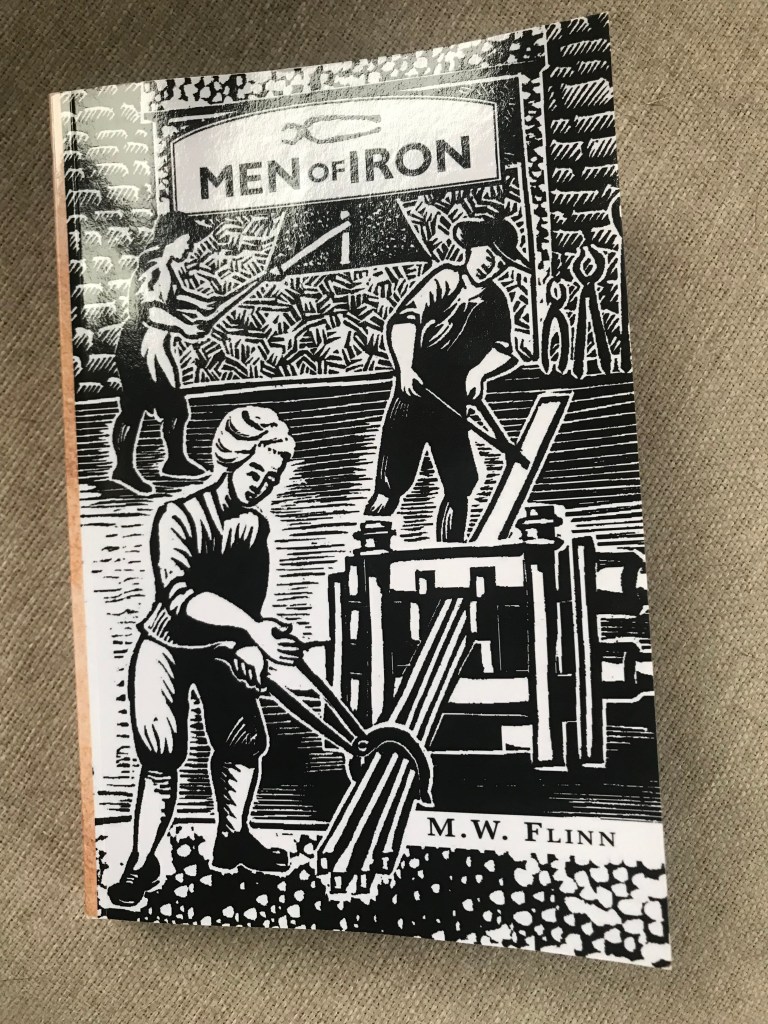
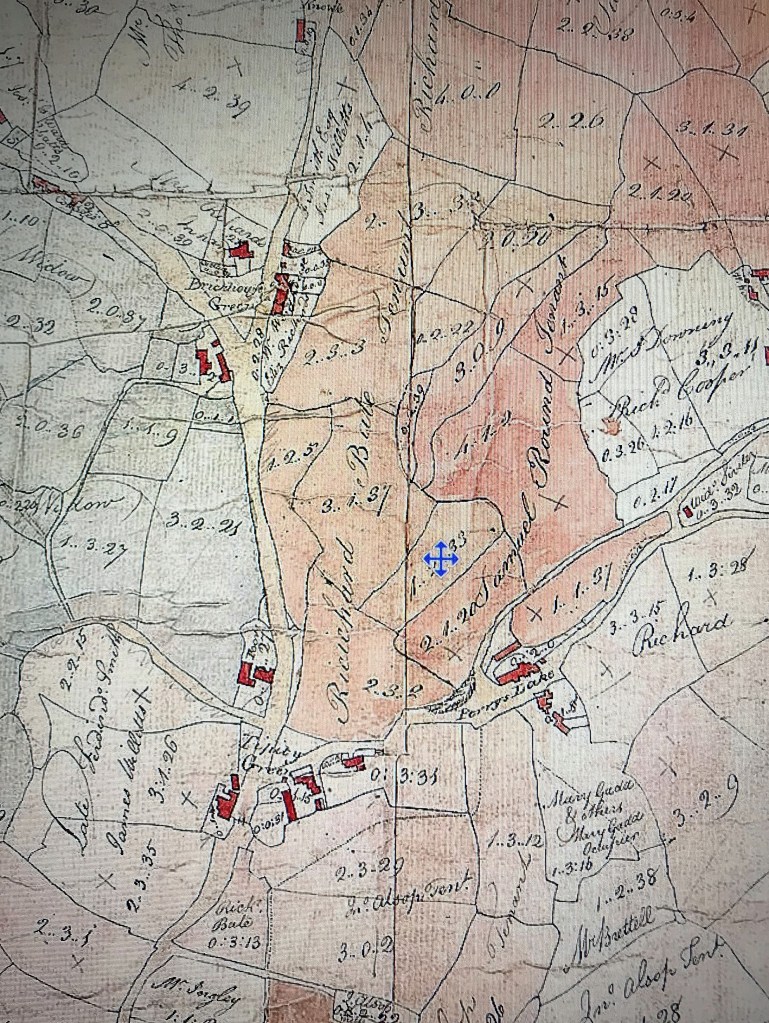
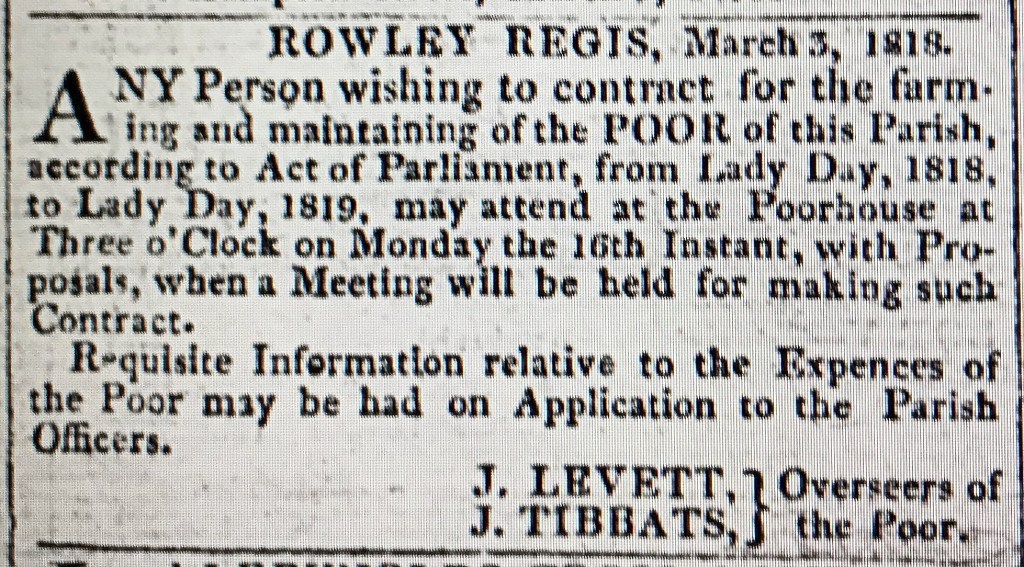

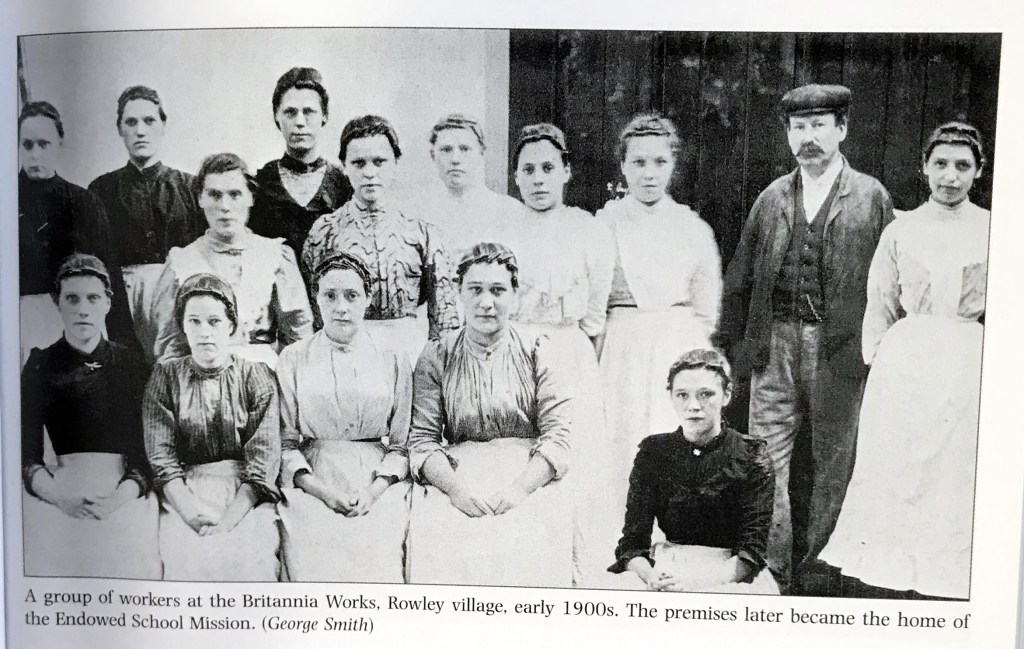
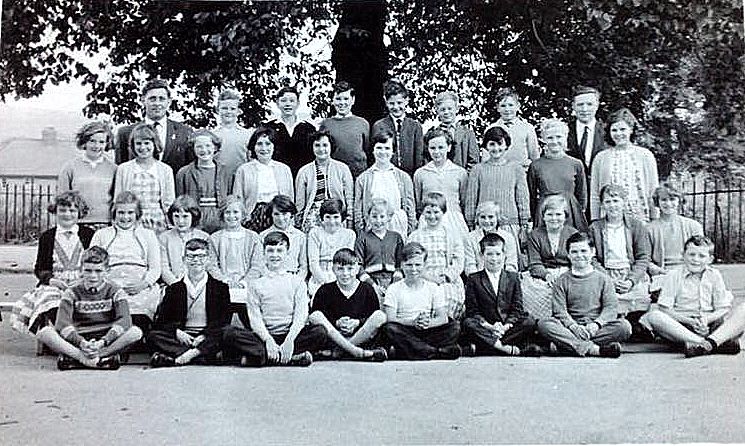


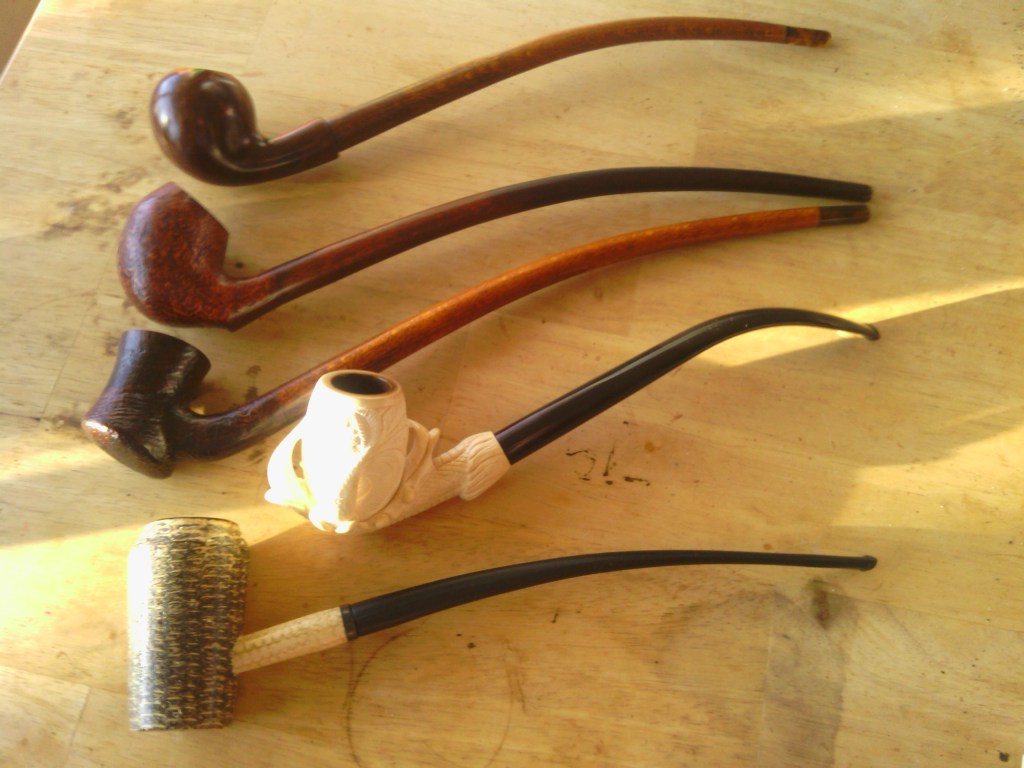
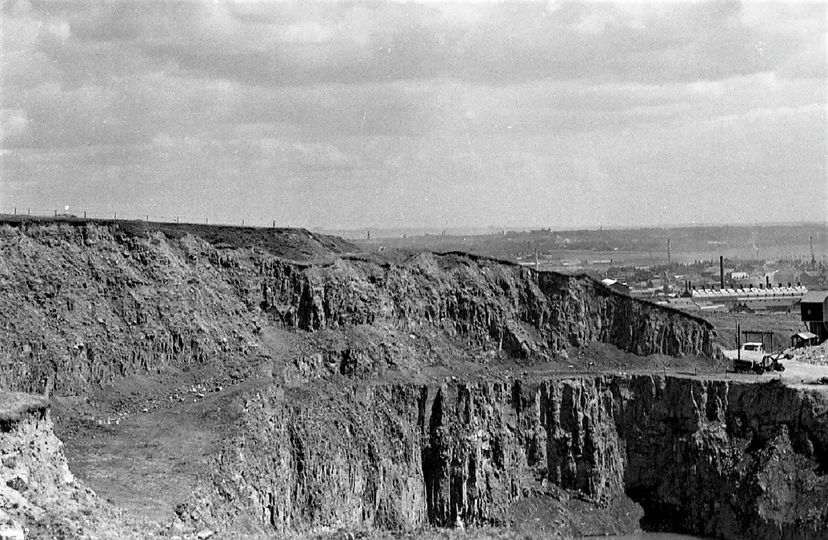
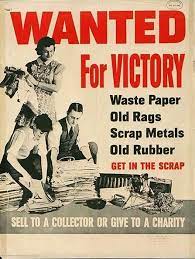

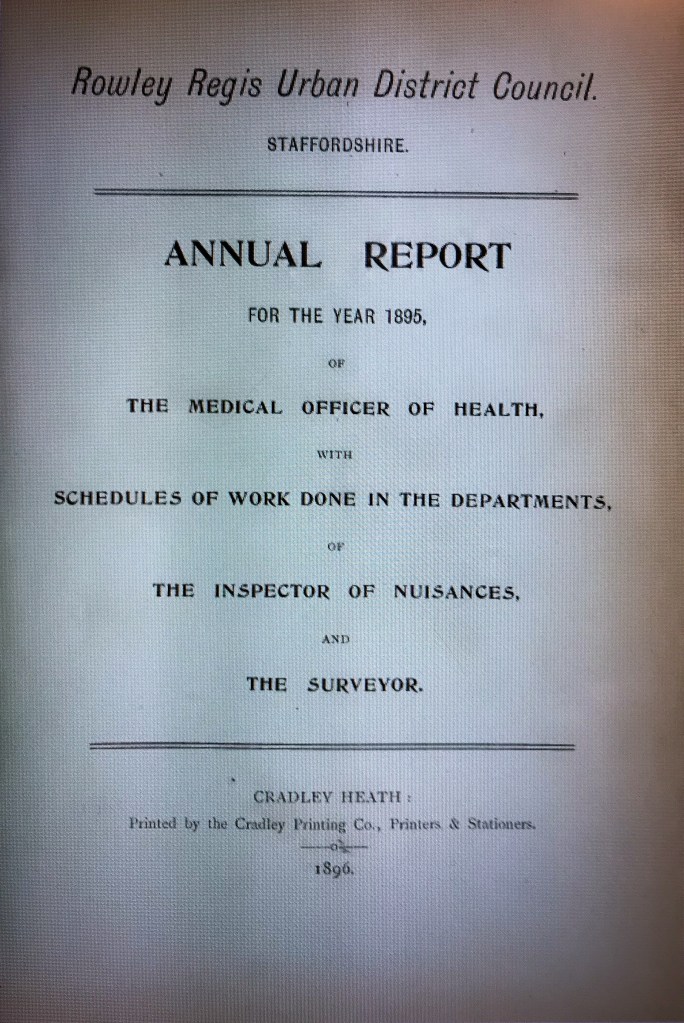
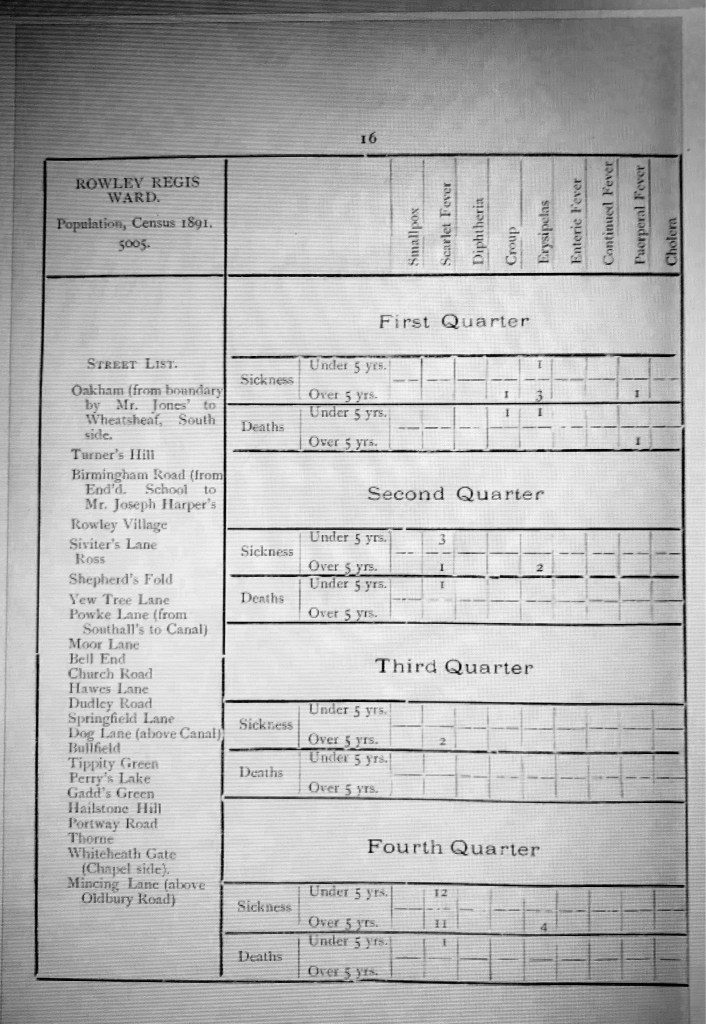


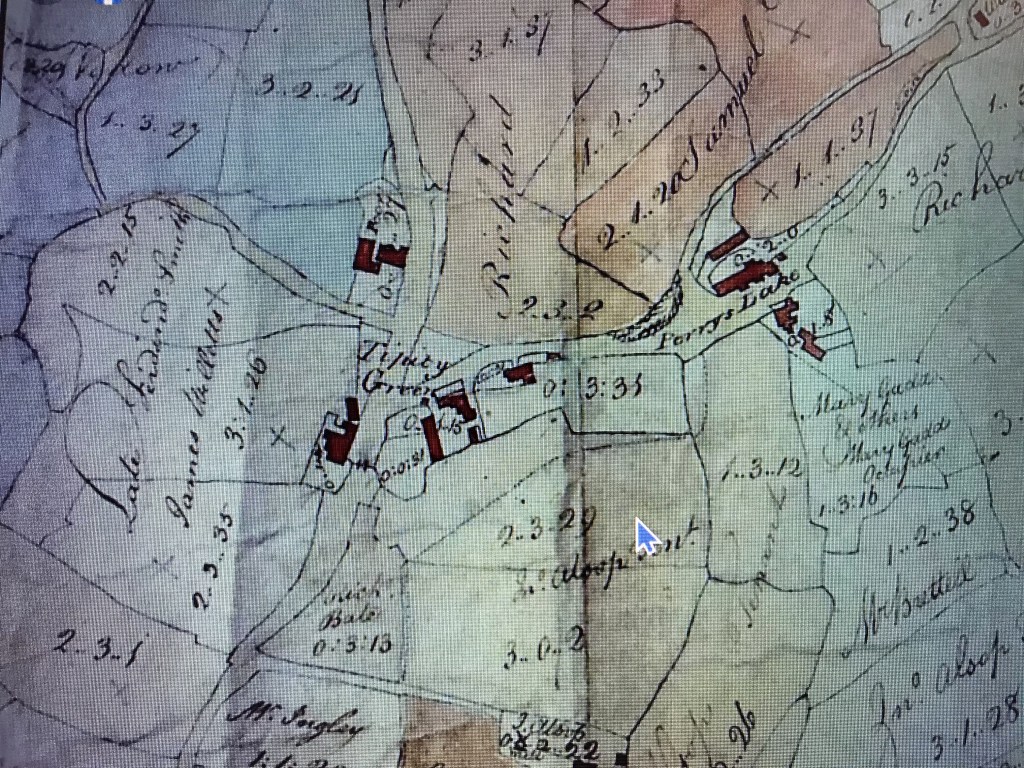
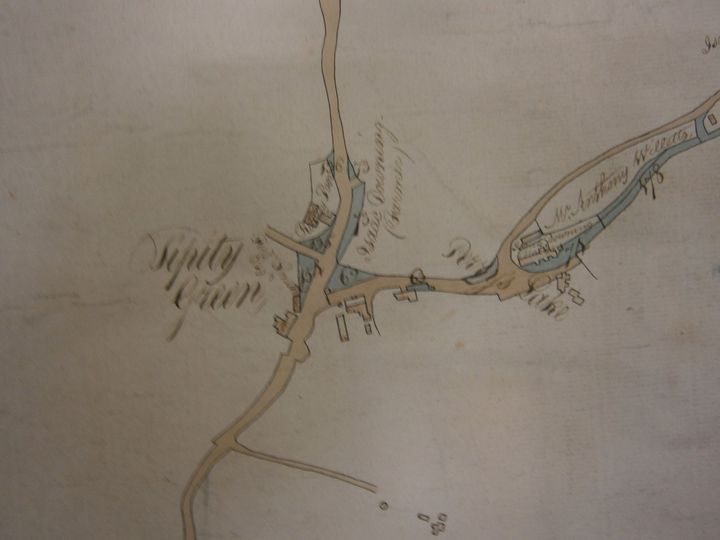


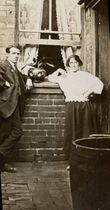
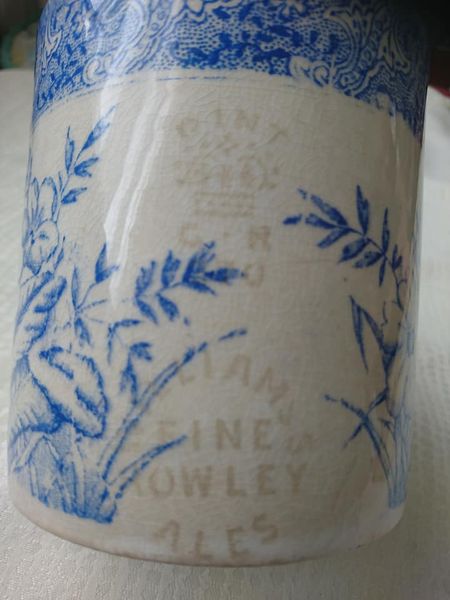


 rowleyregislosthamlets.co.uk