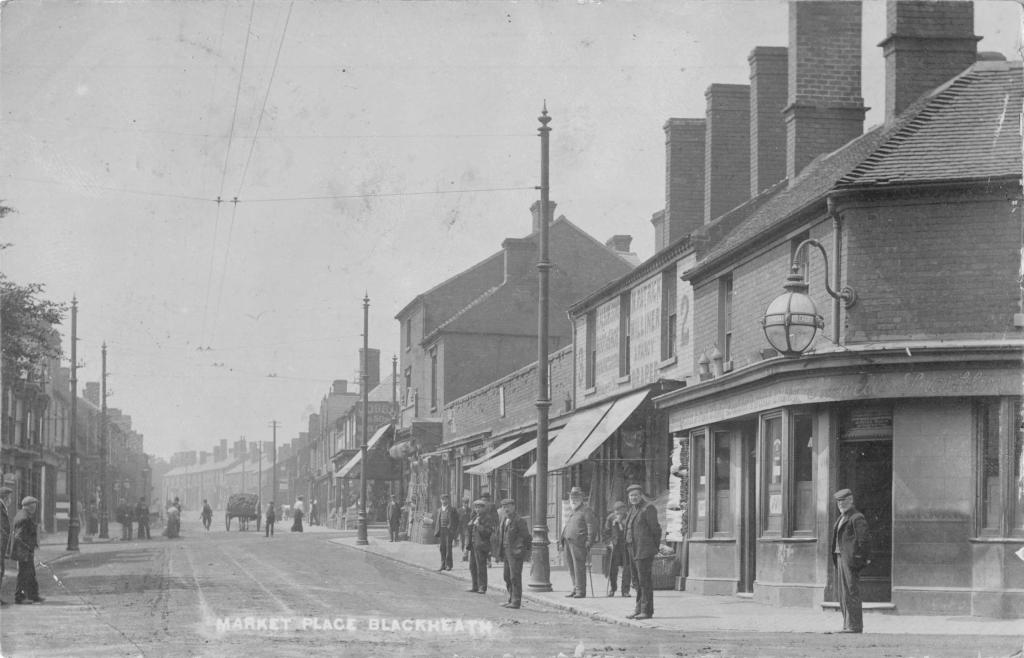
Are you sitting comfortably? Then I’ll begin… here is today’s story (with links, of course, to the Lost Hamlets and the Downing and Whitehouse families!)
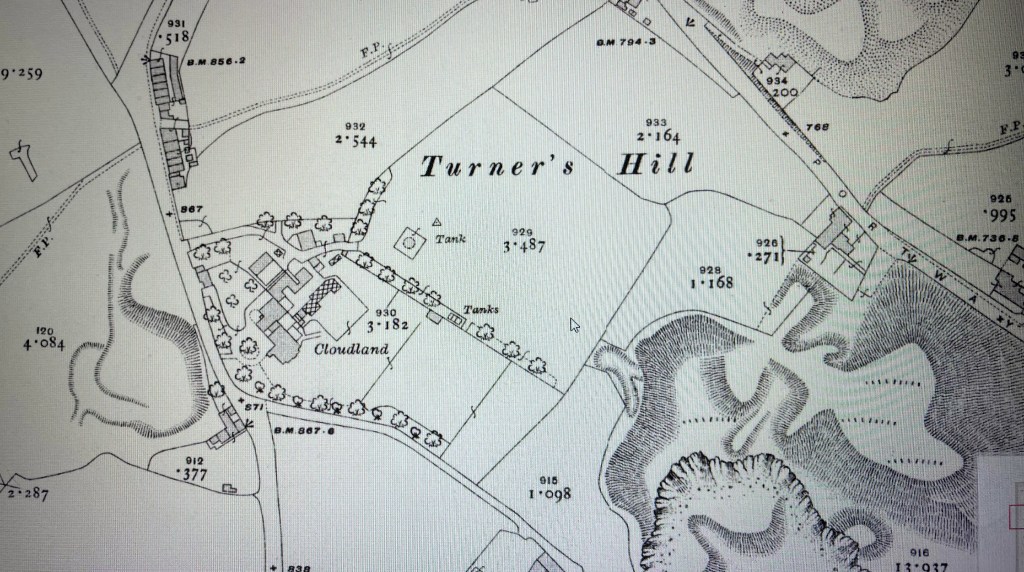
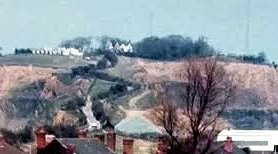
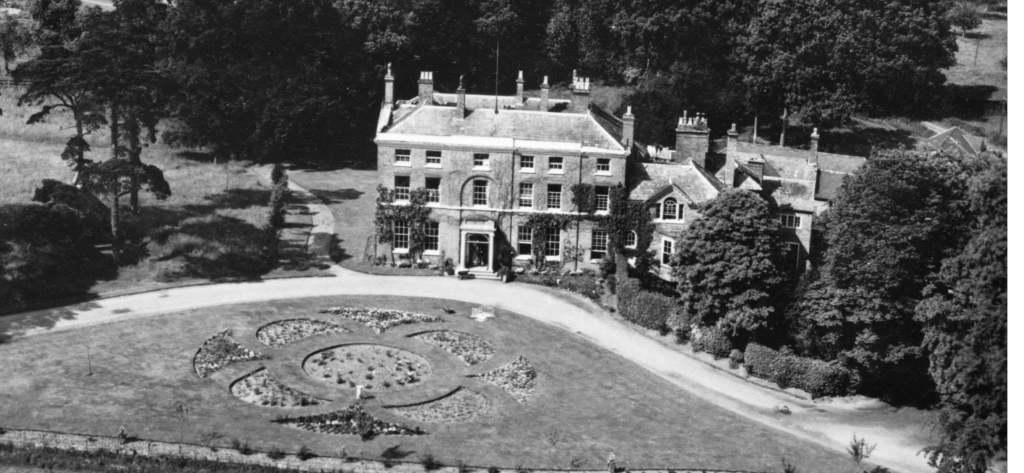
To begin at the beginning… it is spring of 1822. It has been a mild spring and the weather is good for hunting. You, Joseph Downing, are a wealthy and respected young man of 38, with a profession as a beast leech and a practice which you took over several years ago from your late uncle Isaac who was an eccentric old gentleman, from whom you inherited both money and several properties. You are married with one son and three daughters and, after your uncle’s death, you moved from Portway to Turner’s Hill.
Yours is a close-knit little circle. Your father Paul Downing also lives on Turner’s Hill, although his house there was the site of some disturbance last year when four local Rowley men broke in and stole various items and last September, at Stafford Assizes they were all sentenced to death for this, although the sentences were commuted and the four were all transported to Australia instead.
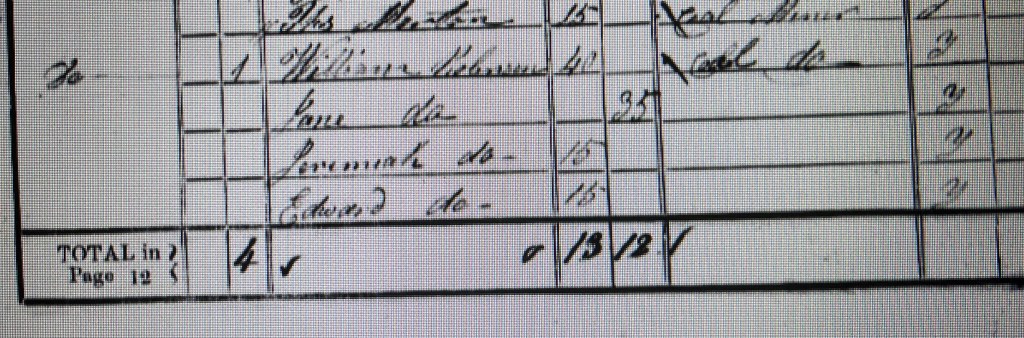
Your wife Nancy, who you married in 1810, has her parents and three older brothers living nearby. One of those brothers, Samuel married your sister and only sibling Mary in 1813 so you four are double in-laws. Mary and Samuel live in West Bromwich but sadly have no children of their own so they have adopted your eldest daughter Emma and have paid for your children Matilda and Isaac to go to school.
You and Samuel are good friends and share a love of shooting so you often go shooting together in the Lightwoods area of Quinton, riding from your respective homes and meeting at the house of Thomas Fox, a blacksmith, in Beech Lane, on the turnpike road from Birmingham to Hales Owen. You bring your own victuals but buy in beer in generous quantities from the local pubs, which the three of you consume after your shooting. Life, it seems, is very good.
So, how does it happen that in September of that same year, you, Joseph Downing, find yourself on trial at Shrewsbury Assizes, in peril of your life – accused of the murder of your own brother-in-law Samuel Whitehouse in the woods on your way home after such a day out? Read on to find out!
The trial account
Summer Assizes – Shrewsbury, Saturday August 3 1822, Criminal Court (Halesowen was in Salop or Shropshire at this time so the case went to the Shrewsbury Assizes, not Stafford.)
As can be imagined, this case excited much interest and the newspapers of the time carried extensive reports, much of which I am showing verbatim:
“The trial of Joseph Downing for the murder of his brother-in-law came on at seven this morning, long before which hour every seat in the court was occupied. A large proportion of the audience were ladies. Mess’rs Puller, Campbell and Male appeared for the prosecution and Mess’rs Jervis, Pearson and Russell for the defence.
The indictment charged the prisoner with having, on the 3rd April last, given Samuel Whitehouse a mortal blow on the back part of the head with a gun barrel, of which he languished till the 5th April, when he died.
The prisoner, in a firm tone, pleaded – Not Guilty.”
This is the evidence which was put before the Court:
On the 3rd October Joseph Downing and his brother-in-law Samuel Whitehouse had met by arrangement at Tom Fox’s house and forge. Both came on horseback from their homes, about four miles apart, Samuel riding a mare which he had not had very long but which was described as ‘skittish’ and, while they were waiting for Joseph to arrive, he told Tom Fox that the mare had already thrown Samuel on a previous visit to Fox, having run against and broken down a stile for which he had had to compensate the farmer and of which he had said “what a mercy it was she had not killed him”. He said he would get rid of her, for she was so shy; he was afraid she would kill him some time or other. The same mare had also subsequently thrown and kicked one of his grooms. Samuel also brought his spaniel, a gun dog bred to find, flush and retrieve game from undergrowth and water.
Joseph had not two but three purposes with his visit. He came to shoot and socialise but also brought a colt to be shod at the forge and a new gun barrel which he wanted Fox to bore out and widen in his forge. Downing’s mare and colt were left in Fox’s warehouse for the day, Whitehouse’s mare tied up at Fox’s ‘hovel’, as Fox described it himself during his evidence. Then he loaned Joseph a gun and the three men went out shooting. Fox also testified that “During the whole time, there were no words of anger between them; they were very friendly; I never saw them better friends in my life.”
Fox told the court that he had known Joseph and Samuel very well for several years. They were great friends and had been for years. They were in the habit of coming frequently to his house for the purpose of going shooting together, putting up their horses, and sending for beer to the public houses. They usually brought their own victuals with them. On that day, they went out shooting together, and he accompanied them. They all returned about three in the afternoon, after being out between four and five hours.
This is Fox’s description of the rest of the evening:
“On our return we all took some refreshment. I then tried to widen the breech of the gun-barrel and we walked out to look at Whitehouse’s farm. We returned about six. We then took more refreshment, both food and drink. The ale came from the “Dog” public house, and was paid for by both. Altogether we had 12 quarts of ale. [A quart, a quarter of a gallon, is two pints, so the total here is twenty four pints of beer]. We three, a man of mine, my son and wife, partook of it; but they had not more than two quarts (four pints) of the whole. I, Whitehouse and Downing drank equal quantities [which would have been twenty pints, nearly seven pints each for the three men]. We continued drinking until nearly nine o’clock [so these quantities of ale were drunk over three hours]. In this time, Downing and I laid a wager on the age of Downing’s colt of £1. Each of us produced £1, and gave the money to Whitehouse to hold, who put it into one of his pockets, I did not see which.
I looked at the clock just before Downing and Whitehouse went away, which was on the stroke of nine. It was moonlight, clear but cloudy at times. It was rather calmish. Whitehouse went first. I fetched his horse from my hovel, where it had been put up, and I helped him on. At that time we were all fresh [drunk!]; but the deceased could sit his horse, as well I saw. I held his horse, and gave him the gun. It was then in the state which it had been the whole day. The lock was then entire, and the spring in its place. Downing followed, and mounted his horse, which had been kept in our warehouse. He was in the same [drunken] state in which we were.
They crossed the turnpike road to go through the wood. There is a narrow path through the wood which joins the road near the gravel pit. Across this path there are two gates, one next the road, and another 35 yards further on. I opened the first gate for them; Whitehouse passed through first and Downing followed. I went to the second gate. Here Downing said he had forgotten his gun barrel, and asked Whitehouse to stop or he would lose his road, as he had done the time before. I went back for the gun barrel, walked at a moderate pace, and on my return found Downing waiting for me at the gate. Whitehouse had gone on. The trees shade the road, so that more than 100 yards cannot be seen; but he was out of sight. I delivered the gun barrel to Downing, who rode on at a foot’s pace, leading the colt in his right hand. The colt was about 2 years old. The path is what is called ‘a little trig road’.
I returned and went to bed.”
So, this evidence shows, the two men had, after a night of hard drinking, left Fox’s house to make their way home cross country, all three men, apparently, considerably the worse for drink!
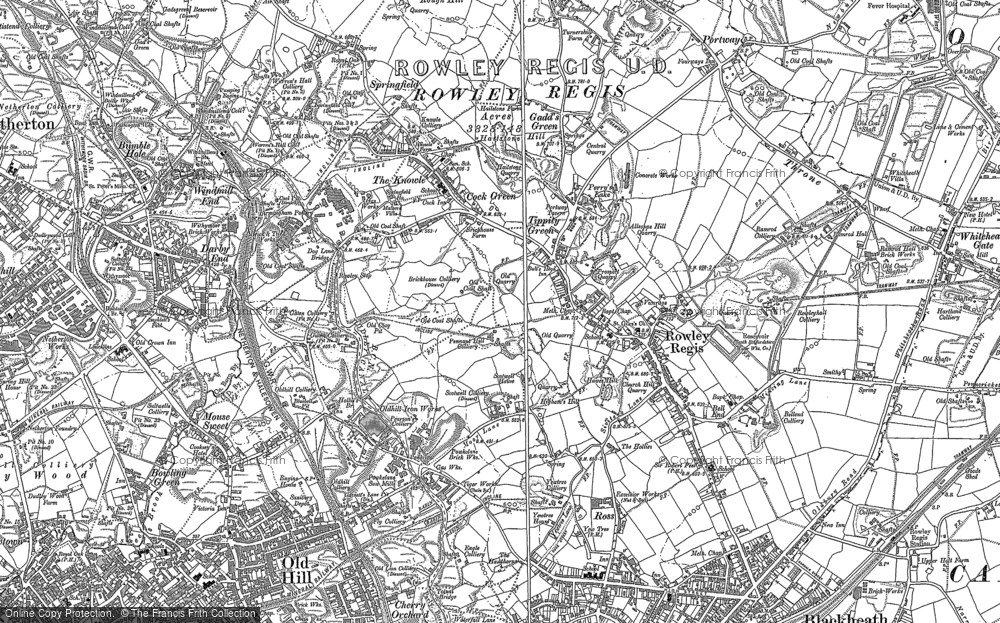
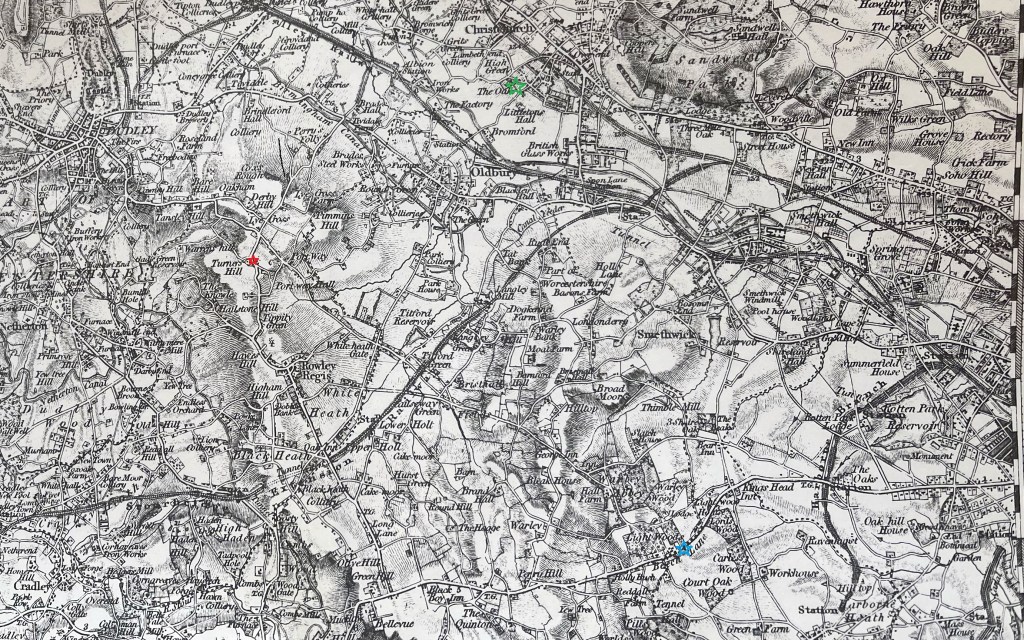
Perhaps, by this time, you feel a map would be useful? When I first read the trial reports and tried to place the events in my mind, I certainly did. So here is an extract from the OS One-Inch map from 1872, somewhat later but I have put stars at Turner’s Hill, The Oaks at West Bromwich (which was possibly where Samuel lived and this site was certainly associated with the Whitehouse family a few years later) and also at the probable site of Tom Fox’s forge, opposite the Light Woods.
Copyright: David and Charles, Newton Abbot, Devon.
And Joseph and Samuel had become separated in the wood. Presumably at some point their routes would have diverged anyway as one was going to Rowley, probably – looking at the map via Whiteheath Gate, and the other to West Bromwich, perhaps via Oldbury.
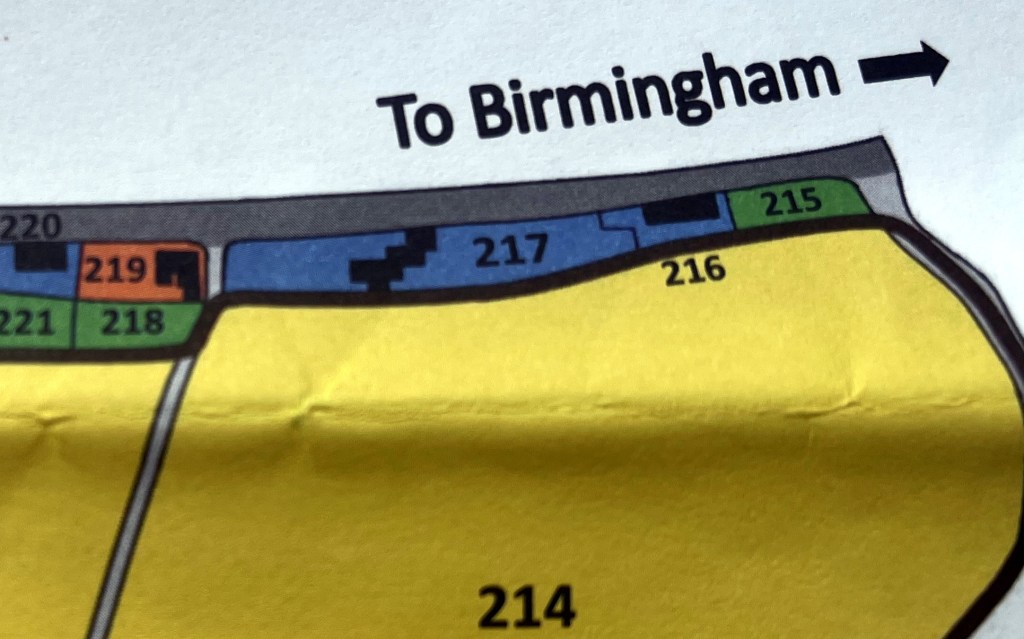
This extract from the Tithe Map for the area shows Plot Number 217, described in the apportionments as ‘house, blacksmith’s shop and garden, Plot 217, the property of Lord Lyttelton, at the Turnpike road’s (now Hagley Road West) eastern extremity in the township measured 2 roods, 1 pole.’ And the Fox family were associated with this site for most of the 19th century.
Copyright: Michael Hall
So this was right at the edge of the parish, on the toll-road, very near to the Beech Tree Inn, probably about where the road from Harborne comes up to meet the Hagley Road West and where eventually the Wolverhampton New Road began when it was built much later. This was also near Warley Woods and the Bear Wood, so there would have been some promising areas for shooting.
What happened next?
Now we hear the evidence of Richard Aston, an apprentice shoemaker:
“I am apprentice to John Bridge of the Beech Tree, who is a shoemaker. On the 3rd April I set out for Oldbury about seven o’clock. On my return I took the road from West Bromwich. I passed Parker’s house about 20 minutes after nine. I heard a horse galloping; I stopped it; the bridle had been in our shop for mending, and I noticed the broadness of the reins. I took the horse to Ezekiel Dearns, and inquired who had passed that way. In consequence of what I there heard, I pursued the road towards Fox’s.
In my way, near Wood’s Gate I found a body. I saw a hat lying about two yards from the body, nearer to me. The body lay across the road. A gun was lying about two yards from the body, near to the hat. I dismounted and found it was Mr Whitehouse. He was leaning on his right side, his face towards Fox’s, and he lay in the road. He was not then sensible.
I led the horse to our house. I afterwards went to Mrs Fox’s and she and a man named Henley returned with me. As I was going back to the body, I heard a man halloo, as if he was making an alarm. I thought it might be Mr Whitehouse got up, hallooed “Mr Whitehouse,” and heard a horse gallop from the place where he lay. He was then lying on his back, the flap of his smallclothes unbuttoned and his waistcoat stripped under his arm; and his pockets, to the best of my recollection, unbuttoned. In the left-hand breeches pocket we found nothing; in the right-hand pocket two £1 notes; his watch was gone.
We took him to the Beech Tree public house. It was three quarters of an hour from the time I first saw him, till I saw him again. I took the gun the first time, and left it at Mr Bridge’s shop. The next morning I found that the spring was off and shot in it but no wadding.
About five in that morning, I saw Downing, and again between twelve and one. The second time he brought me the spring of the gun; there was a little dirt in the middle of it. He said a good many had been looking for it, but no-one could find it but he. I had told Hanley that the spring was missing. I went with the prisoner to the place where he found the spring which was a few yards from the spot where the deceased was found. The place was soft and dirty; there was dirt in the muzzle of the gun, so that it appeared to have fallen on the muzzle. Afterwards I saw Mr Granger riding a mare which I believe to be that which I caught.”
Cross-examined by Mr Pearson:
“The gun was in a ditch, where the gravel was sufficiently hard to throw it on one side. I caught the mare at a gate. She seemed alarmed but I did not see her tremble. The gate was little more than half a mile from the place where I found the deceased. When I reached the deceased, the mare started. A spaniel was lying by the body and he went with me. Whitehouse breathed hard, like a man who was intoxicated. I lifted him up, under the arms; and did not, the first time, perceive the waistcoat tucked up. The person of the deceased must have been removed between the first and second time I saw him. When I went to Fox’s, Mrs Fox called twice to waken her husband; I heard someone answer whom I thought was Mr Fox, as if drunk or asleep. The gun was placed in the shop, where many might have seen it.”
Poor Samuel Whitehouse! Knocked senseless and then robbed, it seemed.
Mrs Fox had gone back to alert her husband to what had happened. He said:
“I was awakened by my wife who told me that Whitehouse lay hurt at the Beech Tree. I went to the Beech tree public house and found him there wounded. I mounted Whitehouses’s mare and rode to Downings to inform him what had happened. It was nearly two in the morning before I reached Downings, in consequence of the badness of the road. I went by the same trig road. I called Downing, who came down, and I informed him of the state of his brother-in-law. I said he was very badly hurt, and had lost his money. Downing said “he was very sorry it had happened and could not think which way he went that he had missed of him. Then we made ready to come to the Beech Tree. It was nearly four before we started, because the mare had not been fed, and it was necessary to feed her. Downing mounted his horse. In returning to the Beech Tree we came through that wood. Before that time I had been told by my wife in what place Whitehouse had been found. When we reached it, we stopped and looked about to see it we could find anything. It was then day-break. He dismounted and looked about. He said he thought there was some blood but it was not light enough to see. I looked and thought it was blood, but it was scarcely light enough to see.
We then went on to the Beech Tree and arrived nearly at five. Downing went into the room where Whitehouse was. I followed him; he was then so sensible as to know me. Downing went to the bedside and asked him if he was sick. I think he said “Yes” but I did not hear him. He shook hands with me very much. About an hour afterwards, Downing made him some tea, fed him with a teaspoon, took his hand, and felt his pulse, which he said beat regularly. I did not see Whitehouse take Downing’s hand. He knew me, I am sure.
We remained at the Beech Tree for nearly three hours. The Doctor and Downing consulted that Mr Baddeley, of Dudley, another Doctor, should be called in, and Downing went [to Dudley] for him. Between 10 and 11, Downing returned to the Beech tree.
Before Mr Baddeley came, Downing and I went together to the trig road. We searched all about the place where Whitehouse had lain. We found horses in the road before we came to the spot, on that side of the gate where he was found. We then went to the place and Downing found the spring of Whitehouse’s gun in the rut which might be three or four inches deep, and had no water. We found nothing else. We then went back to the Beech Tree. I might be 3 yards from Downing when he found it. He said “Here is his gun-spring,” before he took it up.”
The gun barrel taken away by Downing was produced, and identified by the witness. The spring of the gun was also produced and sworn to be that found, and the gun of Whitehouse was identified in the same manner.
All of this evidence was presented for the prosecution, so they clearly felt it was sufficient to charge Joseph Downing. Downing’s barrister Mr Jervis cross-examined Tom Fox. More facts (and opinions) emerged:
Tom Fox: “I do not remember any attempt of my wife to wake me because I was in liquor. The mare had been ridden to Hales Owen, about three miles, to fetch a doctor, after being caught a mile from my house. I was present while the surgeon searched the head. Whitehouse appeared to know me, as he shook hands with me very much by the right hand. Directions to fetch Downing were given in the presence of Whitehouse. Before this the doctor had said that he was in danger but might recover.
When I reached Downing’s, he appeared to have been in bed; he dressed and came to me. I told him “Whitehouse was badly hurt, and had lost his money.” He went and gave the mare a feed of hay; she had been 11 or 12 miles, besides having stood all day.
When we reached the Beech Tree, Downing went up first and I followed him. He went to the bedside and spoke to Whitehouse. He administers to cattle, and is somewhat acquainted with medicine. Whitehouse looked at him, and seemed to know him. When he shook hands with me, I was nearer to his hand than Downing. When Downing felt his pulse, he seemed sensible and showed no aversion. There was a twitching of his limbs on the right side which made it difficult to keep the clothes on him. He took the tea from the prisoner’s hand. Mr Bloxam being gone, Downing desired that the doctor might be fetched, and both the Mess’rs Bloxam came. He remained until their arrival, and desired them to do the best they could for him. They examined and dressed the wound again in his presence, and he looked at it. The two brothers of the deceased came after the dressing. Downing then desired that Baddeley, his own surgeon might be fetched and Downing and Thomas Whitehouse went for him. Downing returned first.
Then we went to the spot and he plucked out the spring of the gun with a stick. He attended the coroner’s inquest at every sitting, and also attended the funeral.”
Then some evidence was called from local people about various movements:
Ezekiel Dearn examined by Mr Campbell:
“I am a nailer by business, living by the side of the road. In the morning of the 3rd April I saw the prisoner and deceased separately pass my house. About nine in the evening, as near as I could guess, I saw Downing return at a gentle trot leading a colt, at a rate of 4 or 5 miles an hour. A few minutes later, two strangers passed on foot in the same direction. They were walking at a common pace. About four or five minutes after, Mr Whitehouse’s mare came up loose at a gallop, and she passed on. Near four minutes after Aston brought the mare to my door.
Cross examined by Mr Russell: The mare continued to gallop as long as I saw her: 10 or 12 minutes elapsed after Downing passed before the mare came by. Afterwards I continued working at my nail shop about an hour, by the road side; but I saw no other man or horse pass. Downing could not have gone back without my seeing him.”
Thomas Wakeman, examined by Mr Puller:
“On the 3rd April I went to Oldbury, and returned by the Rowley Road. I set out to come home 20 minutes before nine. It is about two miles and a half from the place whence I set off to Parker’s. I came gently, walking all the way. About forty yards before I got to Parker’s, I met a man leading a horse which seemed a young one. I wished him “good night”. He was going at a good fair walk. At that time I did not know him. He did not appear to take any notice of me. He was like the prisoner at the bar. Before I met him, I heard a halloo which seemed to come from before me. Afterwards, not more than seven yards behind, I met another man going about the same pace. I was then about three quarters of a mile from the spot where Mr Whitehouse was found.
Cross examined by Mr Jervis: There are other roads by which the persons might have reached the place than that through the wood.
Ann Fox, the wife of Fox the publican was called and brought into the witness box; but being in ill-health, she immediately fainted away, and was not again called, it being understood on both sides that her testimony would not be material.
Thomas Taylor, examined by Mr Male.
“My father lives about 100 yards from Fox’s house; I live with him. I went out about a quarter after nine on the evening of the 3rd April to procure some mud for the oven. I heard a voice in the wood call “Fox! Fox!” not very loud, and then a noise as of something falling. It did not appear as if it were a heavy fall. I was about 300 or 400 yards from the place where Whitehouse was found. My father was not so near the spot as I, but he might have heard the fall. It certainly was not 10 o’clock. The road is hard where Whitehouse was found. I heard no footing of horses.”
John Taylor, the father of the last witness, stated that he heard the cry of “Fox” three times at half past 9 by his clock but heard no footing of horses.
Then there was the medical evidence given by the two Doctors Bloxham, of Halesowen.
Mr Stephen West Bloxham examined by Mr Hale:
“I am a surgeon in partnership with my father at Hales Owen. On the 4th April I was called to attend Mr Whitehouse, the deceased. I found him totally insensible and speechless. The left side was quite paralysed, and the right in constant action and convulsion. I found a wound a little above the projection at the back oof the head. It was about two inches in length and half an inch wide. On examining the wound with my finger, I found the scalp separated for two inches upward in that part which is naturally separated in infancy.
I will not swear that it might not be caused by a fall from a horse; but I think, from examination of the head after death, such consequences could not have been produced. I think a fall from a horse could not have occasioned so extensive an injury. The blow must have inclined upwards, because the scalp below was perfect and that above severed. I cannot swear that a kick from a horse would not have produced a wound and effects such as I described but I am not inclined to think it was done by a horse from other appearances of the head. There were two wounds full of dirt on the left temple which induced me to suppose that this temple came into contact with the ground. There was no dirt in the wound at the back of the head. Had the deceased fallen with his hat on, the consequences could not have been so extensive.
My opinion is that the wound and fractures in the skull were produced by a violent blow at the back of the head; I think from a flat instrument. Any of the square sides of a gun barrel would be likely to produce the wound. I have no doubt that the blow behind was the cause of Mr Whitehouse’s death. I think he could know no one, and must have been incapable of shaking hands with any one from the time of the accident. I saw the prisoner about seven on the following morning in the presence of the deceased. I communicated to the prisoner, and so did my father, the dangerous state of Whitehouse. My father, in my hearing, expressed to the prisoner a wish to consult the family surgeon, and was informed by him that Mr Baddeley was the family surgeon. I do not recollect that he said anything further.”
Cross examined by Mr Pearson:
“I believe Mr Baddeley to be a very scientific man.
The two wounds on the temple might have been produced by a fall from the horse, and the back wound by a kick from the horse, without any other blow. The hat must have come off at the time when the chief blow was given. The back wound had bled some quantity, but I think not so much as to carry off the dirt. The edge of the horse-shoe might be free from dirt by constant friction. I should think the whole of the horse-shoe would not be received into the wound, but it would have admitted the edge of a horse-shoe. A kick from a horse would not be more violent than a blow from a man inflicted by a heavy instrument. A horse’s kick at the striking distance might produce the appearances at the back of the head; at least I will not swear it would not.
If the deceased answered a question as to his illness, I should think him sensible. If he grasped the hand of another in gratitude for fetching his friend and brother-in-law, this would be a proof he was sensible. I do not think it possible he could have moved from one side of the bed to the other, nor from a road into a ditch at six feet distance. Had a man given him the blow on the back of the head as he was riding, he must have fallen forwards, in which case his head would be towards the place to which he was proceeding.”
On re-examination, the witness said that if the horse had by a jerk turned round, the man might fall in a contrary direction. The wound appeared to be made with an instrument rather than a horse’s foot, because it was straight, not circular. It might possibly be given between the collar and the hat if the hat was on. The fracture was four or five inches towards the front of the head; which might have been produced by the weight and violence of the blow. Any square iron bar might have produced such a wound.
Mr C W Bloxam examined by Mr Puller:
“I am father of the last witness, and have been a surgeon 40 years. I saw the deceased the morning a after the violence but did not examine the wound itself until the morning after. I have heard the account given by my son, and as far as relates to the extent of the wounds, and the fracture of the skull, I entirely agree with him. After the death, I opened the wound and found it in the state which he has described. The impression on my mind at the time was, that it was inflicted by some heavy metallic substance, from the sharpness of the blow given. Such a derangement of the skull could not have been produced without a very wide instrument if of wood. The gun-barrel is certainly capable of producing the wound; I found part of the scalp which was mashed nearly to correspond with one of the squares of the barrel, but I cannot take it on myself to say that the wound actually was produced by it.
Cross-examined by Mr Russell:
“I could form very little judgment from the comparison with the scalp in the state it then was. Mr Baddeley did not attend when I made the examination, which was before the Coroner. It was possible the wound might have been given by great force. No injury was done to the hat.”
So the two doctors differed from Mr Fox as to whether Samuel Whitehouse was conscious at the Beech Tree Inn but seemed convinced that a blow from some metallic implement had caused the wound.
Then there was the evidence of Benjamin Granger, the person prosecuting this case:
Benjamin Granger, the prosecutor, constable of the parish of Halesowen, was examined by Mr Puller:
On the 13th of April, I went to examine the state of the wood. There are various little tracks which are very narrow; but one is waggon way, which is wider than the right path.
On the 20th I rode Mr Whitehouse’s mare, and she carried me safe. When I passed the second gate, I dropped the reins to see where she would take me, and she went straight up the right track. I ordered Fox to go through the same ceremony which he did in fetching the gun-barrel and returning and it took a minute. It is 576 yards from the second gate to the place where Mr Whitehouse was found. There is a bank at the place, on which a person standing might have struck Mr Whitehouse as he rode along. I was present before the coroner when Mr Downing was there. I heard his examination taken; he was told it was his option whether he would say anything. I heard it read to him, and saw him sign it.
As it appeared that the prisoner had been sworn at the start of the inquisition, Mr Justice Bayley thought the subsequent examination not admissible in evidence against him. His Counsel, however, waived the objection and it was read. It gave a narrative of the proceedings of the day, and stated that he never saw Whitehouse in the road, though expecting every moment to overtake him. The only part which could be supposed to assist the prosecutor’s case was, that in which he said he did not remember meeting with anyone; whereas Wakeman said that he met a man who he believed to be the prisoner.
This was the case for the prosecution.
The prisoner, being asked if he would say any thing for himself, replied “Nothing, my Lord, except that I am not guilty.”
Various witnesses were then called for the defence:
Samuel Hodgets: “I live with my father, near the wood. I remember, a month before Mr Whitehouse’s death, his coming late at night to my father’s house, saying that he had been thrown from his mare and lost her. We went to look for her, and found that she had broken into one of the fields. He paid for the damage done to the stile she had injured, and rode her home.”
Thomas Binks: “I was servant to Mr Whitehouse, and live with his widow. About a month ago I was sent out on the mare; she plunged and threw me. I have attended the mare in the stable; she is kicking and vicious.”
Mr Thomas Winter, the surgeon who attended the last witness after his accident, stated that he was brought to his house stunned and with a cut on the ear. As the wound had no dirt in it, he thought it might probably be occasioned by a kick from the mare.
Joseph Cox, who lives in the road to the prisoner’s house from the place where the body was found, saw him pass at a quarter or twenty minutes before ten, at a slow pace, leading the colt with his right hand.
Mary Binks, the servant to theprisoner, remembered his arriving at home on the evening of the 3rd of April. He took the colt to the field, put up his horse, came in and shortly after went to bed.
Mr Baddeley, a surgeon in extensive practice at Dudley, was fetched by a brother of the deceased.He examined the wound. The whole injury seemed caused by one blow, which could not have been given without injuring the hat, if on. The effects might undoubtedly have been produced by the kick of a horse, and much more probably than by an instrument.
Mr Winter was called again, and said that having attended to the evidence, he had no doubt the wound might have been given by a kick of a horse. A horse’s foot would have given a more severe blow than a man could strike with a colt in his hand.
Mr Evans, surgeon at Shrewsbury, thought it much more probable that such an injury was caused by a kick from a horse than by human force.
Mr Thomas Whitehouse, a brother of the deceased, stated that he had often seen the deceased and the prisoner together, and always in apparent friendship.
What did the Judge say?
Mr Justice Bayley addressed the jury:
He had not stopped the case because when life was lost it was right that all the circumstances should be investigated with the greatest care. But now, if they thought every probability was in favour of the prisoner’s innocence – that the deceased might have been delayed on the road by taking the wrong path – that the position of the body at first, its subsequent removal after Downing had passed on, the direction in which the horse was found, and the whole demeanour of the prisoner, left them without doubt, it would be unnecessary for him to read over the evidence.
The Jury immediately said that they were satisfied and found a verdict of Not Guilty.
Mr Justice Bailey then said “I think it right, in the presence of the prisoner and of all who have heard the trial, to express my opinion that, if the unfortunate deceased did come to his death by human hands, which is by no means clear, it appears from all the evidence that it was from other hands than those of the prisoner.”
Downing, who during the trial had preserved an entire composure, burst into tears on hearing this address, and said with great emotion “Thank you greatly, my Lord; thank you, Gentlemen of the Jury.” He was immediately discharged.”
So this was the account taken from newspapers at the time.
I hope my readers will forgive this very long account, but there are so many relevant details in the evidence that it seemed simplest to repeat the reports here.
So Joseph Downing was freed, without a stain on his character but that did not, apparently satisfy everyone. It appears that his family, at the time of the burial on 10th April, a week after the incident, were unsure what had happened and there is a note on the burial entry in the Register “Murdered or found in a dying state being thrown from his horse and kicked.”
The case rumbled on. A Reward of £100, for the apprehension and conviction of the person or persons who robbed and murdered Samuel, was offered in a newspaper advertisement in Aris’s Birmingham Gazette on 15th April 1822. This report noted that he had been robbed of several bank notes, his watch, chain and seals and a leather shot pouch. A Coroner’s Inquest had been started and statements taken from Mr Downing and the Foxes, father and son and at that point the elder Fox had been detained in custody on suspicion of being implicated in the act. But it seems that nothing more came of that and attention then shifted to Joseph Downing.
Two years later
I found another article about a trial at Shewsbury Assizes in September 1824, two years later when a John Felton was charged, on the oath of the widow Mary Whitehouse with stealing Samuel Whitehouse’s silver watch, bank notes and other items. This was how the report began:
“ This case excited a very considerable interest, and the court was unusually crowded. To explain the circumstances of this transaction, it will be necessary to state the following facts:-
In the 3rd April 1822 Mr Samuel Whitehouse, a respectable farmer, residing at West Bromwich, went to visit a Mr Joseph Downing, an opulent farmer, residing in the Parish of Rowley, near the Beech Lanes, on the road to Halesowen, who was his brother-in-law” …… etc, etc.
And then came the heavy hint that perhaps Mr Downing was not so innocent at all… an acquittal and the words of the Judge on that occasion did not prevent these innuendos, it seems.
“Mr Downing was apprehended on the charge of having murdered Mr Whitehouse and was fully committed for that crime and was tried at the Summer Assizes at Shrewsbury 1822 but was acquitted. It was sworn on that occasion, by a surgeon, that a blow had been inflicted with the barrel of a gun (and it was proved that Downing carried a gun when he left Fox’s house), which would have produced such an injury as that which occasioned the deceased’s death.
The prisoner Felton as also, at the time of the Coroner’s Inquest, in custody on suspicion of being concerned in the murder, and also a young man named Fox, the son of the man at whose house the deceased and Mr Joseph Downing were drinking on the night of the murder. They, however, were finally discharged.”
No mention, either of the opinion of another surgeon at the earlier trial that the injury was more likely to have been inflicted by a kick from a horse!
But back to the report on Felton’s trial:
“Mr Maule, for the prosecution, stated the case to the Jury. He said that the prisoner, at the time of the murder and robbery of Mr Whitehouse, kept the Pheasant public house, within half a mile of the spot where the deed was perpetrated. It could be proved that on the night in question, the prisoner [Felton] was seen on horseback, going in the direction where the body was found, and must have passed the place. It was not alleged that the prisoner inflicted the wounds that caused the death of the deceased, but that he passed by when the deceased lay insensible on the ground and rifled his person of his watch and ten £1 notes. The deceased, when first discovered, was lying on his face with his head towards a ditch, but in a quarter of an hour afterwards, when assistance was procured, on proceeding to the spot, he was found in a different position, and the pockets rifled of the watch and notes.
The deceased’s watch was found in the prisoner’s possession in June last, and in such a condition that no doubt could be entertained of its having been buried for a considerable period in the earth, as it was covered with soil and tarnished. On the prisoner being taken into custody, he told two different stories about his obtaining possession of the watch.
The Jury would seriously consider the facts he should prove, and if they were convinced of the prisoner’s guilt, they would discharge their duty by convicting him.”
Then entered a new character – Samuel Whitehouse’s widow.
Mrs Mary Whitehouse, the sister of Mr Joseph Downing, a good-looking woman, attired in deep mourning, was called. She was exceedingly agitated and could not speak for some time. She, being partially recovered, stated that, on the 3rd April, her husband went out shooting, and took with him the watch now produced.
Thomas Fox, the Landlord of the Pheasant public house, recollected the deceased, Paul Whitehouse and Joseph Downing coming to his house; the deceased had bank notes in his pocket and a silver watch. [Two errors here – it was Samuel, not Paul Whitehouse who died. At the time of the original incident, Thomas Fox was not the landlord of the Pheasant, the accused John Felton was!]
Richard Aston, whose detailed evidence in Downing’s trial we saw earlier in this script, found the deceased in the road insensible, and went to the Beech tree public-house for assistance; on returning to the deceased, he said “I heard a halloo, and then a second halloo; and I made a hallooing in answer, and directly after I heard a horse gallop off in a direction towards the Pheasant public house, which is about half a mile from where the deceased lay. When I arrived where the deceased was lying, I found he had been removed into the ditch; his waistcoat was raised up; the waistband of his breeches was unbuttoned, and one of the pockets was unbuttoned. I did not see that he had a watch when I first saw him. He had no watch when I saw him again. I assisted in removing him to the Beech Tree, where he lived two days in a state of insensibility.”
John Downing – [yes, almost certainly distantly related to the Rowley Downings!]: “I live at Harborne; on the night of the 3rd April 1822 about twenty minutes past nine, I saw the prisoner at the bar pass my house on horseback, which is situate about half a mile from where Mr Whitehouse was found, and in the direct road to the Pheasant public –house. The prisoner’s father lived at Harborne; I particularly noticed the prisoner by his beating his horse over the shoulders to make him go faster. It was a moon-light night; I am sure it was the prisoner.”
Cross-examined by Mr Maule:
“I saw the prisoner on other days in April frequently; he visited his father, and my house is on the road, between the residence of father and son; the prisoner might have gone up a turnpike road after he passed my house and not have passed through the wood.”
Questioned by the Judge:
“I was 20 yards off the prisoner when he passed me; it is not uncommon for a man to beat a horse on the shoulder; I did not speak to the prisoner, though he was a neighbour; his horse was darkish; I have known the prisoner since he was a child.”
Moses Hyam identified the watch left in Mrs Tonk’s possession to be the same he sold to Whitehouse.
Edmund Darby, a constable, apprehended the prisoner at Birmingham, when he gave different accounts how he obtained it.
The prisoner declined saying anything in his defence, and called several witnesses, who gave him a good character.
Mr Justice Park considered that the circumstances were very slight against the prisoner.
The Jury returned a verdict of Not Guilty.
More details about the strange circumstances surrounding the watch emerged in a report in the Shrewsbury Chronicle dated 20 August 1824:
John Felton, charged with stealing a silver watch, value £3, from Samuel Whitehouse.
Elizabeth Tonks, took the Pheasant Inn off the prisoner’s hands in June 1822. In October last, he brought a dirty and tarnished silver watch to her house; he asked if a man had been there to enquire for him, and on being answered in the negative, he told Mrs Tonks that he had advanced 11/- (eleven shillings) on the watch to a strange man who was to have met him there to redeem it; he then asked Mrs Tonks to let him have 11/- on it, but enjoined her to let no one know of the transaction, and particularly not her servant girl, who had lived with him also at the Pheasant, when he kept it; witness accordingly took the watch in pledge, cleaned it in the best way she could, and used it; and that afterwards, when the matter became public, she gave it up to Darby, the constable.
Darby stated that he apprehended the prisoner at Bromsgrove Fair, where he had horses to sell, and telling him he was come to apprehend him, he said “Are you, by God! About that damned watch; I do not care about it; I had it of a man whom I did not know.”
A great number of respectable persons who had known the prisoner from 4 to 26 years, gave him a most excellent character.
The names of certain people seem to recur in these trials and it is likely that the local authorities were under some pressure to solve this mystery, and numerous people seem to have come under suspicion.
Summary
Was Joseph involved in attacking his brother-in-law? He certainly had nothing to gain financially – Joseph was a very wealthy man, as was Mary Downing, Samuel’s wife and both Joseph and Mary had received substantial bequests from their uncle Isaac Downing in 1814. And there is no evidence that the men were on bad terms, quite the contrary. So what motive could he have had? It’s difficult to think what motive Tom Fox would have had either, although he too clearly came under suspicion.
My own view is that it seems perfectly possible to me that, with Samuel riding in the dark in a very drunken state, his unreliable horse could have thrown him as he rode through the wood and then kicked him in the head and the horse was certainly running wild at that time. It appears that the Judge at the trial also had great doubt about whether Samuel had died as a result of a human attack.
The route taken by the two men – both of whom were the worse for alcohol – would have diverged anyway at some point cross country and it was clear that there were various tracks and pathways through the Lightwoods and that Joseph Downing had got lost there before. And could he really have attacked his brother-in-law so viciously while he was himself on a horse and leading a colt with his right hand? It seems unlikely.
That Samuel was subsequently robbed definitely happened, perhaps by one or more passing men who took advantage of his unconscious state and may not even have realised that he was so badly injured, (it seems the wound was on the back of his head and not immediately obvious in the dark of the woods). And he probably smelled of drink, too so the thief may just have thought he had fallen down drunk.
But what a fascinating glimpse of the life these men led and how the movements of people along the road were noted by the local residents!
I wonder whether Joseph was able to resume anything like his normal life after that. Was there always a whisper of doubt about his innocence? Did his wife Nancy suspect that he might have killed her brother? Did his sister Mary think that he had struck down her husband? Did all five of his daughters choose to live with their Aunt Mary, Samuel’s widow, in West Bromwich because of family issues or did they just prefer to live in a town? Who knows? They all returned to Turner’s Hill, to live with their mother and brother Isaac after their father’s death. I am currently trying to track down Joseph’s Will and also his son Isaac’s Will which may give some clues. Did all of those daughters and Isaac remain unmarried because of the family disgrace? We shall never know.
Would there have been much sympathy in Rowley in 1822 for Joseph? Remember that only the year before, four Rowley men had been sentenced to death for a minor robbery at the home of Joseph’s father, although those sentences were commuted to transportation, so local support might have been thin on the ground.
So, there it is – a real life murder mystery, unsolved, it seems, to this day. Or was it a terrible mishap, involving a man worse for drink, a bad tempered horse and an opportunistic thief?
What do you think?