When, back in February 2023, I posted for the first time on the ‘I Remember Blackheath & Rowley Regis’ Facebook page about my then new One Place Study about the Lost Hamlets, I had some very encouraging responses, one of which was from Ronald Terence Woodhouse who told me that his family had been the original licensees of the Wheatsheaf and that his grandmother had lived in the first cottage going up Turner’s Hill, so right in the centre of the study area. And ever since, I have been meaning to do a piece on the Wheatsheaf. So here it is, at last.

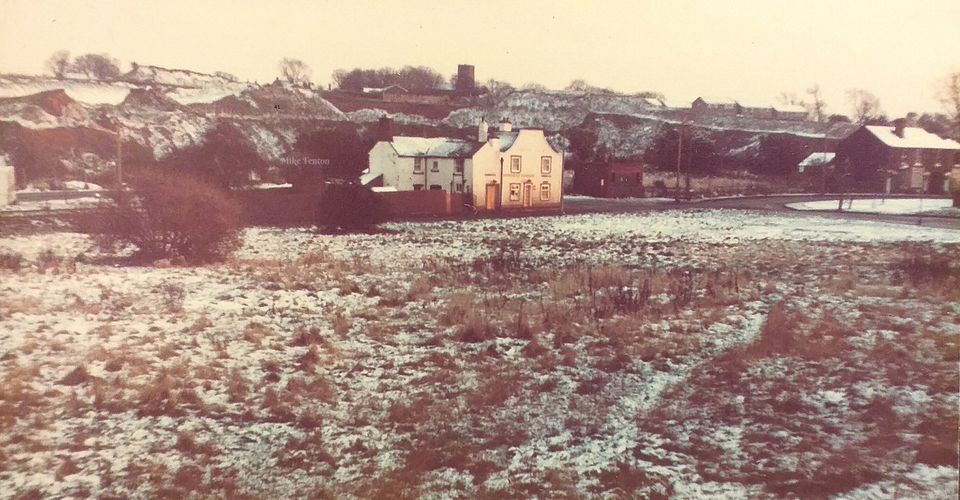
Copyright: Mike Fenton. This shows the pub in about 1928 and the Water Tower on Turners Hill can be seen in the distance. This building was demolished soon after this and a replacement built.
The address shown in Hitchmough’s Guide [i] for the Wheatsheaf is 1, Turner’s Hill, or Darby’s Hill, Lye Cross, Four Lane’s End, Oakham, Rowley Regis. So quite which if those it is, I would not know. Probably all at one time or another. Perhaps part of the reason for this varying address is that these are all descriptions given in the different censuses, Lye Cross from 1841-1861, when the pub was managed by Benjamin Woodhouse from about 1834-1861, then by Joseph Cox from 1861-1892. Joseph Parkes was the Licensee from 1996-1904, Walter Woodall from 1911-1912, then it was managed by Howard Woodhouse in 1916 and then Thomas Woodhouse in 1919-1920. It is quite possible that the other licensees were related to the Woodhouses and Hitchmough does not have a complete list in terms of dates, but I have not looked at those families in detail at this stage.
In the 1871 Census, the pub’s address is shown as Turner’s Hill and in 1881 it is 35 Oakham, in 1901 it was 1, Turner’s Hill – Tavern – as in 1901. So this area seems to have been called various things. As late as 2022 the site was still described as 1 Turners Hill. But certainly there was a pub or tavern there at a very early date which continued until quite recently, only the Bull outlasting it.
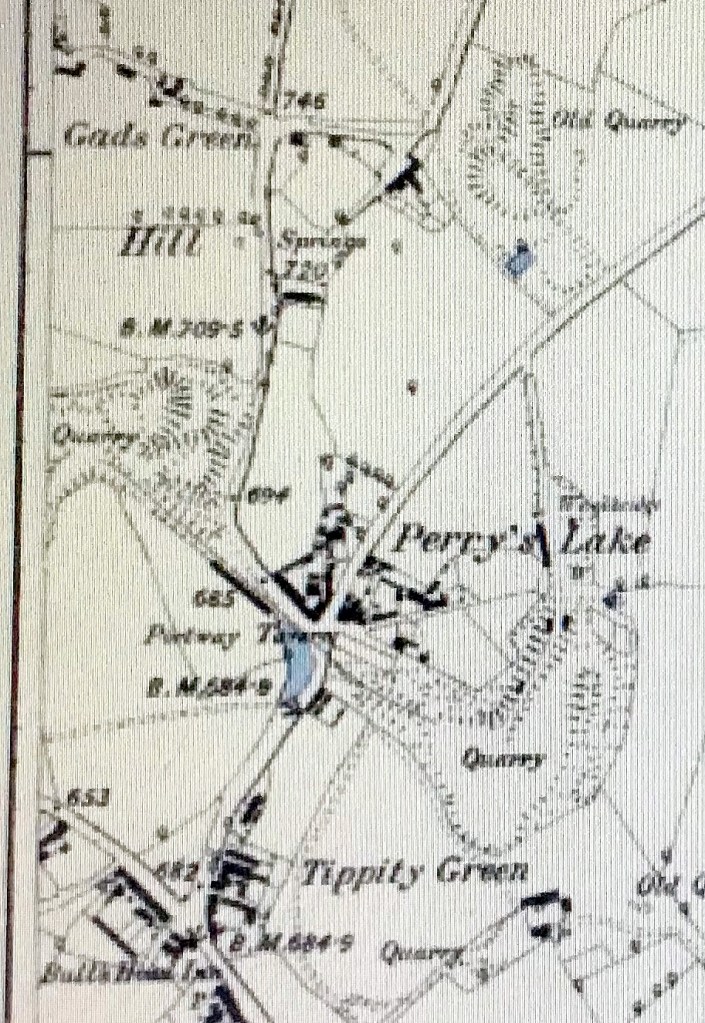
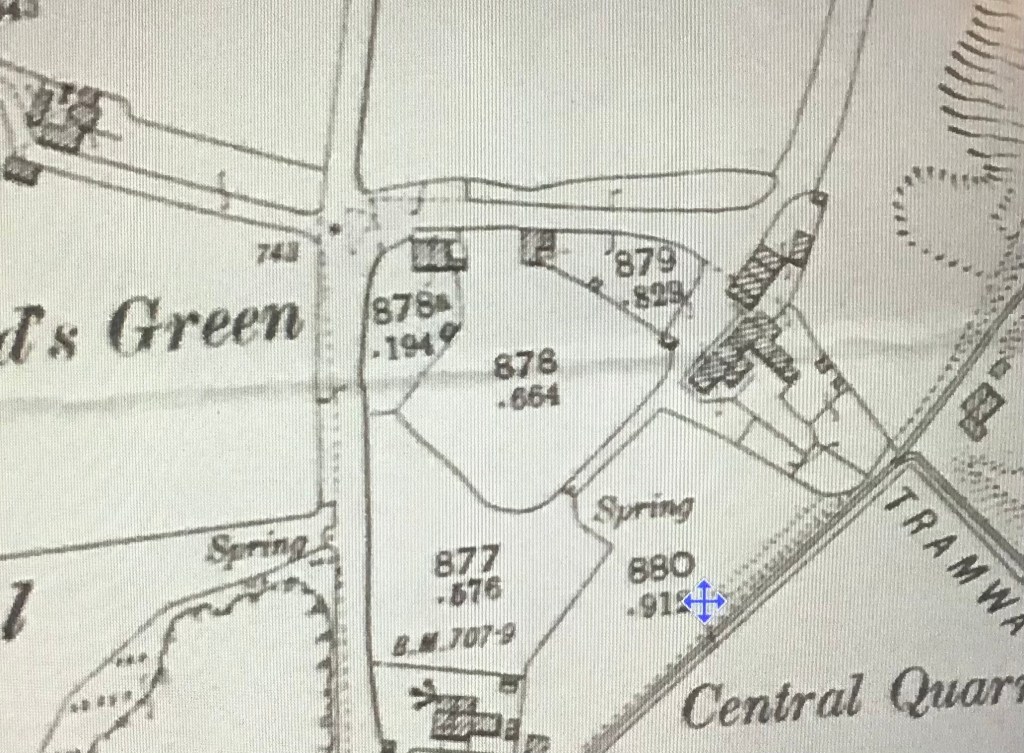
The Wheatsheaf was situated at the junction of Portway Hill and the road which ran from Perry’s Lake up over Turner’s Hill. This area is not strictly part of the Lost Hamlets since it is not physically lost as the other hamlets have been, the area is still there although the pub has now closed. But there was a strong family spread across this area and the Turner’s Hill/Gadd’s Green/Perry’s Lake area with a lot of connections. Families from this area also often used the Dudley churches, rather than Rowley.
Benjamin Woodhouse Licensee 1834-1855)
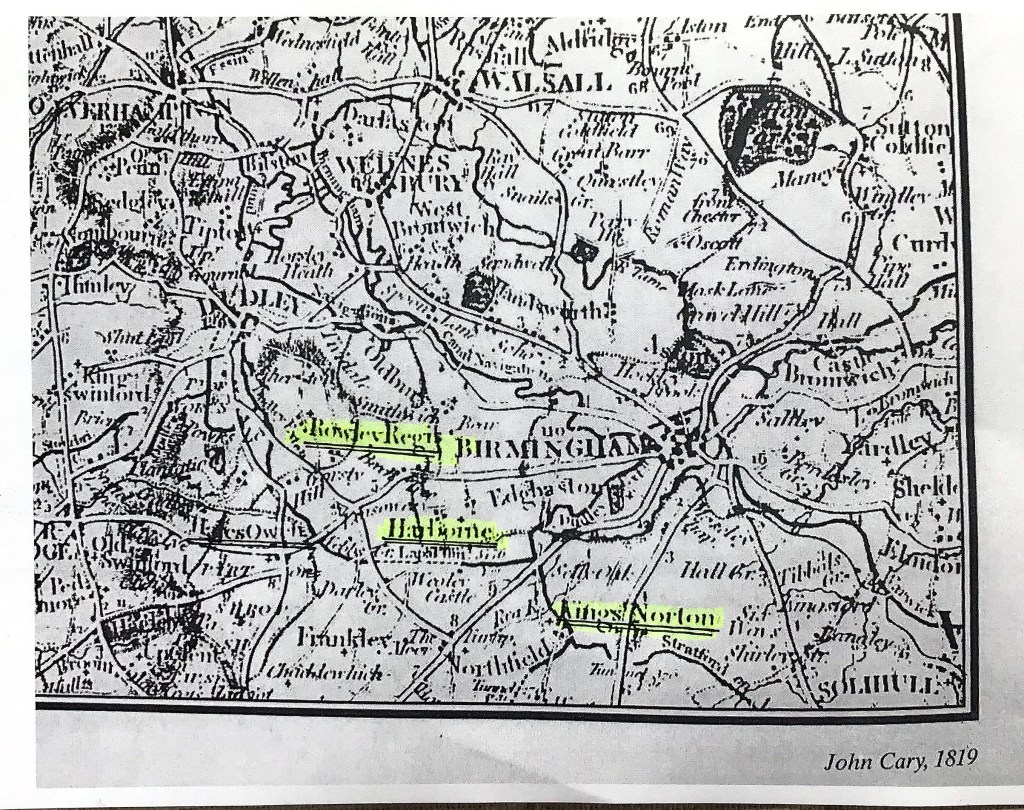
In August 1826 and 27, August 1829 and again in August 1830 notices appeared in Aris’s Birmingham Gazette warning ‘Gentlemen’ against ‘sporting or trespassing’ on the land of various owners or they would be deemed ‘wilful trespassers. Signatories to this Notice included Benjamin and later Thomas Woodhouse, Benjamin Hadley and Thomas Smart, all names associated with Benjamin. There were similar notices relating to several other places, including Sedgley, Kings Norton and Sutton Coldfield although I do not know what gave rise to these nor whether they had any effect on the hunting /poaching and shooting parties. There was no police force as such in those days and people had to protect their land as best they could,in this instance by working together. However, it does show that at least Joseph Woodhouse was a well established landowner in this area by 1929 and the house may well have been operating as a beerhouse or pub by then but this is uncertain.
In November 1839, an auction was held at ‘the house of Benjamin Woodhouse at the Wheatsheaf’of a small freehold estate which was situated ‘at Portway’ within two miles of Dudley, by the side of the road leading to Oldbury, Titford and Birmingham, consisting of a Farm House, Barn, Cow-house, small tenement, and four closes of rich Pasture Land, containing about eight acres, ‘in the occupation of Thomas Woodhouse’. The notice emphasised that the property was in the immediate vicinity of numerous collieries and iron works, rendering it a ‘most desirable investment’. This may have been Portway Farm or another farm on that road.
Hitchmough lists the first licensee as Benjamin Woodhouse – from 1834-1861. In the 1841 Census Benjamin was there with his wife Sarah Woodhouse (nee Smart) and an Ann Woodhouse, aged 20, all born in Staffordshire. Benjamin and Sarah appear to have been married at Handsworth in 1812.
The 1841 Census does not give relationships but from what I have been able to research, it does not appear that Ann is the daughter of Benjamin and Sarah, I have only been able to discover one child born to them, Sarah Jane who was baptised at St Giles in 1832, when they had been married for twenty years and Sarah was forty four.
Sarah Woodhouse died in March 1854, aged 66 and Benjamin in early 1855, aged 69, both buried at St Giles. So clearly he cannot have been the licensee until 1861, as Hitchmough suggests. Perhaps the dates of 1861-1892 which Hitchmough suggests for the next licensee reflect the next licence record or possibly census that Hitchmough was able to find, there is sometimes a delay in finding records of licences changing hands.
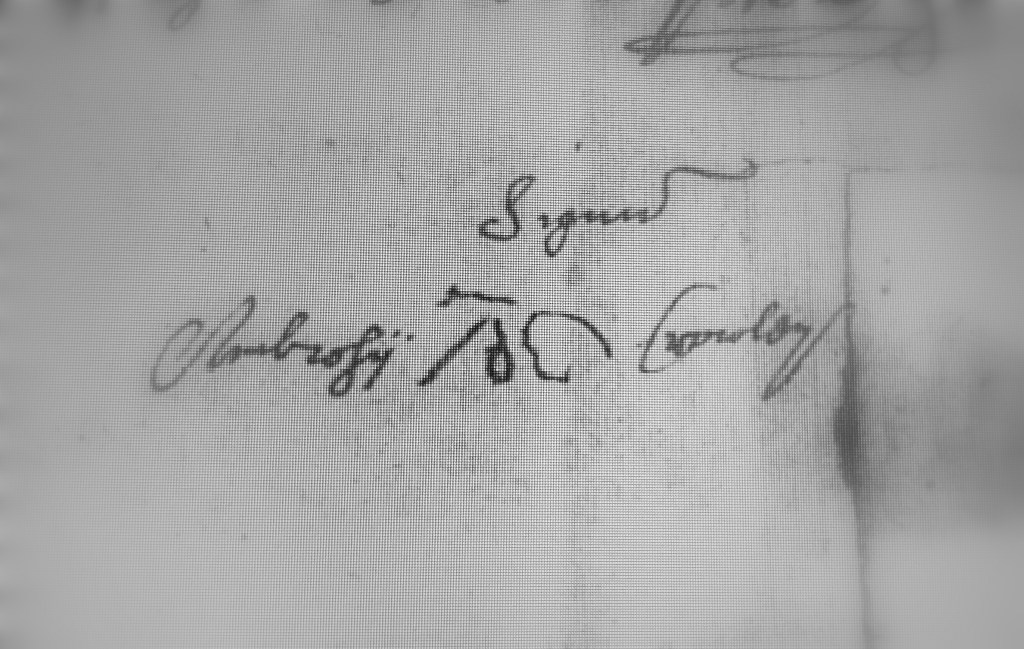
Benjamin’s Will was made in October 1854, proved in May 1855 in which he describes himself as a publican of Lye Cross, so it seems that this was definitely the right Benjamin Woodhouse. In his Will, Benjamin leaves houses to the two sons of his niece Ann (so perhaps that was who was staying with him in 1841?) but most of his assets were left in a complex Trust for the benefit of his daughter Sarah Jane. The Trustees were his niece’s husband Enoch Hadley and Charles Cox of Oakham, both described as cattle dealers. Benjamin appears to have been quite well to do, leaving various properties and his Will leaves, amongst other things, his brewing equipment so, like many Victuallers at that time, he obviously made his own beer. But he also listed “furniture, brewing vessels, plate, linen, china, glass, books, prints, wines, liquors, consumable stores, and other household effects” amongst his possessions. Certainly it sounds like a well furnished and decorated house, I have not seen ‘prints’ listed in any other local Wills.
I began this piece fairly sure that I was not related to this family – there was not a Woodhouse to be found on my family tree with 7000 people on it. But then I found that Benjamin’s daughter Sarah Jane Woodhouse married a Major Rose – my mother’s maiden name was Rose. That started little bells ringing in my head as I have lots of Roses from Rowley on my tree. But Major Rose was from Halesowen, so not likely to be connected. It took me about ten minutes to find his father Aaron Rose, also living in Halesowen and a Gun Barrel Manufacturer – still no connection, no gun barrel makers amongst my lot. Then, in the 1851 census I saw that Aaron Rose was born in Rowley. Ah! And his parents were Moses Rose and Mary Stephenton, who were my 5xg-grandparents… okay, I am related, very distantly. Major Rose was my 1st cousin 5xremoved. I am beginning to wonder whether I am actually related to everyone living in the Lost Hamlets then…
Sarah Jane and Major had been married on 15 February 1854 at St Martins in Birmingham, where Sarah Jane was described as ‘of this parish’. This was only a few weeks before her mother died and I am slightly surprised that she was not married in Rowley. And her father’s Will went to great lengths to try to prevent her husband from benefitting from his estate, leaving most of his assets in Trust for Sarah’s benefit. Perhaps they did not approve of the marriage. Major’s family were involved in gun making and Benjamin Woodhouse would probably have been aware that Aaron Rose, Major’s father had been declared bankrupt in 1852. None the less, Sarah’s was a long and fruitful marriage, she and Major Rose had at least six children together, rejoicing in the names of Benjamin Woodhouse Rose (1855), Major General Rose, (1859), Sydney Herbert Rose (1861, Baron Rose (1864), Captain Rose (1866) and Sarah Jane Rose. The first two children were born in Rowley Regis (probably at the Wheatsheaf) but the later children were born in Halesowen where the family both farmed in the Frankley/Illey area and Major and his brothers continued to be much involved with gun barrel making.
On 18 April 1855, there is a notice in the Worcestershire Chronicle, stating that the transfer of the Licence for the Wheatsheaf had been sanctioned from Enoch Hadley (who was Executor for the estate of Benjamin Woodhouse) to Major Rose, Benjamin’s son-in-law.
Interestingly Hitchmough has a note that Hoof marks were reported on the roof of the Wheatsheaf in 1855!
And Major and Sarah Jane’s elder two children were born in Rowley in 1855 and 1859 so they may have stayed at the Wheatsheaf until then. In 1857 and 1858 Major Rose also took out Game Licences in Rowley Regis. But by the 1861 Census , Major and Sarah were back in Halesowen, he describing himself as an ‘ironmaster’ and certainly he remained involved with the family gun making business for many years to come. Also living with them in 1861, apparently as a servant, was Mary Smart, born Rowley Regis, aged 28. As Sarah’s mother was a Smart, I wonder whether she was actually related to Sarah.
The Woodhouses were numerous in Oakham and Lye Cross. There were three Woodhouse families on one page in the 1841 Census. I will do more work for a Woodhouse Family Study when time permits.
The other thing which is becoming clear from my research is that families who kept pubs tended to intermarry – their children were accustomed to the life, knew how things worked, and presumably met the children of other licensees socially. Looking at the marriages of the children of Thomas several of them and their children married into families – the Bate family, the Levett family, the Roses, the Woodhouses who were farmers , maltsters or farmers and especially publicans. Even when men marrying into the family were in other occupations, such as Joseph Cox who was a farmer, and Major Rose who was a gun barrel maker (although his father had been both a maltster and a licensee earlier in his life), these men turned their hands to becoming licensees when people were required to run the family pub. Keeping the businesses in the family!
Joseph Cox (licensee 1861-1892)
Ah, I thought – a completely different name, nothing to do with the Woodhouses then. It did take me half an hour of checking to discover that Joseph’s wife Sophia was a Woodhouse, the niece of the original Benjamin. So the Woodhouse family were still in control of the Wheatsheaf! I should not be surprised by now at how closely inter-related all the families in this area were.
In the Worcestershire Chronicle on 18th January 1860 there is a notice that a licence transfer had been permitted for the Barley Mow at Rowley from Joseph Cox to William Griffiths, presumably prior to Joseph taking over the Wheatsheaf. Hitchmough lists Joseph Cox as the licensee at the Barley Mow at Tividale from about 1855-1860, his time at the Barley Mow may have been sufficient to give him some experience in the licensed trade before taking over the Wheatsheaf.
In the 1861 Census, Joseph and Sophia were living at the Wheatsheaf with their children John, aged 6, Sarah Jane, aged 3 and Annie E aged 1, plus a house servant Sarah Rupp, aged 17 who was from Dudley.
In the 1871 Census, Joseph and Sophia were living at the Wheatsheaf with their children Eliza Ann, aged 18, John, aged 16 – a solicitor’s Clerk, Sarah Jane, aged 13, Ann Elizabeth aged 11, plus Mary Sophia, aged 9. (I don’t know where the eldest child Eliza Ann, then 8, was in the 1861 Census, as she is not listed with the rest of the family at the Wheatsheaf and I can’t immediately find her with other relatives in the area.)
There was an inquest held at the Wheatsheaf in October 1878 and details of this appeared in the Birmingham Daily Post on the 18th October:
Birmingham Daily Post 18/10/1878
“Yesterday afternoon Mr. Edwin Hooper, coroner, held an inquest at the WHEAT SHEAF INN, Turners Hill, on the body of Joseph Woodhouse (53), a milkseller, who died under circumstances already reported.
Mrs. Woodhouse said she had been delivering milk with her husband on Monday night, and when in Gipsy Lane, on the road home, she heard a great shouting, and saw a trap loaded with men behind them. Her husband pulled more on one side, but as he did so the horse became frightened, and bolted with them. She lost consciousness, and when she recovered her husband was lying by the road side insensible. She had fallen on her shoulder, and her collar bone was broken. At the time she recovered the men in the trap were driving off faster than ever. A young man helped witness home, and brought her husband. The men were to blame for shouting so loudly and frightening the pony.
Joseph Harvey, of Tividale, said he heard five or six men in a trap driving at full speed, and shouting to Woodhouse as though they wished him to get out of the way. When the pony bolted both were thrown out, and the trap fell over. He called to the men, but they would not stop.
Police-constable Gevin said he had made full enquiries as to the men in the trap, but had not learned who they were. He received no information of the man’s death until late on Tuesday evening.
The Coroner summed up, and asked the jury if they would have an adjournment to give the police more time. There seemed no doubt but that the men would say if brought before the jury that they were simply shouting for the old man to get out of the way. The wife evidently did not seem to think much of the blame to be attached to the men, for she made no complaint, and did not inform the police of the death of her husband for a long time.
The jury then returned a verdict of Accidental Death.”
So this, although not directly related to the Wheatsheaf, was related to the Woodhouse family, one time and perhaps continuing owners of the Wheatsheaf who continued to farm throughout this period in the immediate area of Oakham/Lye Cross.
In the 1881 Census, Joseph and Sophia are still at the Wheatsheaf with son John, now a Clerk at the Colliery, rather than a Solicitor’s Clerk, and daughters Annie and Mary.
In 1891, listed as 1 Turner’s Hill, Joseph is still listed as a licensed victualler and Sophia, Annie and Mary are still living at home and unmarried.
Sophia Cox died in 1894 and Joseph Cox re-married and retired to Smethwick with his new wife where he died in 1903.
Joseph Parkes (licensee 1896-1907)
In 1901, The Licensee is Joseph Parkes, aged 60 and his wife Sarah Jane Parkes.
So far was I know, there is no connection between this couple and the earlier licensees. Parkes is such a common local name that I have not been able to narrow down any more information. So it may be that this was the point at which the family sold the pub to Thomas Williams of the Rowley Brewery. Or it may be, of course, that Joseph Parkes or his wife may have been related to the Woodhouse/Smart/Cox families and I have simply not yet found the link! As Sarah Jane is a name much used by the Woodhouse and Cox families, it was tempting to consider whether Joseph had married into those families but it appears more likely that he was the Joseph Parkes who married Sarah Jane Adams in 1862 in Quinton.
During Joseph’s tenure as licensee, Hitchmough reports an amazing procession, starting at the Wheatsheaf in 1898.
“County Advertiser 24/9/1898
“On Sunday afternoon the annual friendly societies’ Sunday service, on behalf of the hospitals, was held in a field at the back of Mountford House, Siviters Lane, Rowley, kindly lent for the occasion by Dr. J. G. Beasley. The members of various societies met at their headquarters, and were formed into a procession as below. The Blackheath Village Band started from the WHEAT SHEAF INN, Turners Hill at one o’clock, with the Church of England Friendly Society, and proceeded through Portway and Perrys Lake, calling at the BULLS HEAD INN for the Sick Club, at the WARD ARMS INN for Court Foresters’ Pride, at the KINGS ARMS INN for Lodge Working Man’s Friend. It then proceeded by way of Ross, Holly Road, Tump Road, and John Street, to the GEORGE AND DRAGON Ground. The Woodgate Brass Band had in the meantime covered its route from the OLD BUSH INN, Powke Lane, with Court Little Band of Hope, calling at the MALT SHOVEL INN for Lodge Lily of the Valley, the VINE INN for Court Mistletoe Bough, proceeding along Station Road to the RAILWAY INN for Court Britannia’s Pride, thence through Halesowen Street, Tump Road, and Hackett Street, meeting the other Courts at the GEORGE AND DRAGON Ground. A united procession was then formed, and marched to Siviters Lane, reaching the ground at three o’clock. The proceedings opened with the hymn ‘All people that on earth do dwell,’ after which the Chairman (Mr. E. Pewtress, CC) delivered a short address.
The Rev. C. W. Barnard, MA, Rector of Kings Norton, then addressed the meeting, after which the hymn ‘Lead, kindly light,’ was sung. Addresses were also delivered by the Revs. W. Hall and N. Haigh, of Blackheath.
At the close a collection was taken on behalf of the Dudley Dispensary and Birmingham Eye Hospital. It amounted to £11 9s 5d.”
What an amazing event that must have been to see, I can imagine the local children dancing happily alongside the procession. It is clear from this that many of the local pubs, including the Wheatsheaf, ran friendly societies to assist people with illness and medical expenses, in those days when there was no health service, no national insurance and when fees had to be paid for a doctor to visit.
Walter Woodall 1907-1912
In 1911 Walter Woodall (35) was listed as ‘brewer [beer], licensed victualler’ and both he and his wife Elizabeth were born in Wednesbury and, again, there is no obvious connection to the previous owners. The elder two of their children Florence (11) and Walter (5) had been born in Tipton but the youngest Harold (1) was born in Rowley.
Walter Woodall appears only to have been there for five years and the only mention of him in the Press is for the transfer of the licence for the Wheatsheaf from him to Thomas Henry Holland in 1912. Which is rather odd because the same report also notes the transfer of the licence of the Barley Mow in City Road, Oakham to the same Thomas Henry Holland! And Hitchmough does list Holland as the licensee at the Barley Mow from 1911 -1916 but does not mention Holland in relation to the Wheatsheaf. Perhaps a reporter error, as Hitchmough lists the new licensee for the Wheatsheaf in 1912 as Howard Woodhouse, succeeded in 1919-1920 by Thomas Woodhouse. Yes, the Woodhouses, after a gap of more than 50 years (or perhaps 20 if you take into account the Cox family who were also close Woodhouse connections).
Purchase of the Wheatsheaf by Thomas Williams of the Rowley Brewery
Despite all my efforts to associate later licensees with the Woodhouse family, it may well be that in fact the pub was sold in 1896 when the Cox family retired and it is simply coincidence that Woodhouses were back in 1916. Hitchmough notes that the owner of the Wheatsheaf was T B Williams (who had taken over the Bull in about 1875 and who died in 1908) and the Rowley Brewery, followed by Thomas W Williams and Lizzie Bate, before being sold to Ansells in 1946 and subsequently Admiral Taverns. I had noted in my piece on the Bull [ii] that T Williams, the owner there had expanded his brewing and pub-keeping activities from when he took over as licensee of the Bull and had bought both the Wheatsheaf at Turners Hill and the Grange in Rowley Village. So it appears that although the Woodhouses were licensees in 1916, they no longer owned the pub.
Thereafter, Hitchmough listed thesucceeding licensees as :
Howard Woodhouse 1916
Thomas Woodhouse1919-1920
Edward Harrison (1920-1929)
Frank Green (1929)
Frank Jinks (1929-1957)
Walter Raymond Harris (1957 – 1960);
Frederick William Hughes (1960 – [1965]
Frederick Brown (1968 – [ ]
C Swarbrick (1970 – [ ]
Arthur Isherwood (1981 – [ ]
Glenn Whitehouse [1988]
Sara Harvey (2015 – [ ]
Twentieth century genealogical records are much sparser than earlier ones and I have no further information about these licensees although many Rowley people will have memories of more recent ones, as customers at the pub! The licensees in 1988, Mr & Mrs Whitehouse, complained that when the road over from Perry’s Lake over Turners Hill was closed, they lost a substantial amount of trade from Rowley Regis.
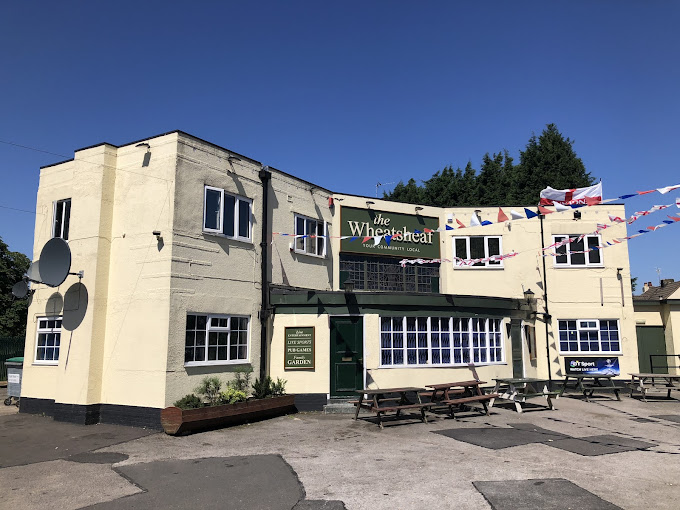
Copyright unknown. Taken in 2018, this shows the replacement pub, looking prosperous and well maintained.
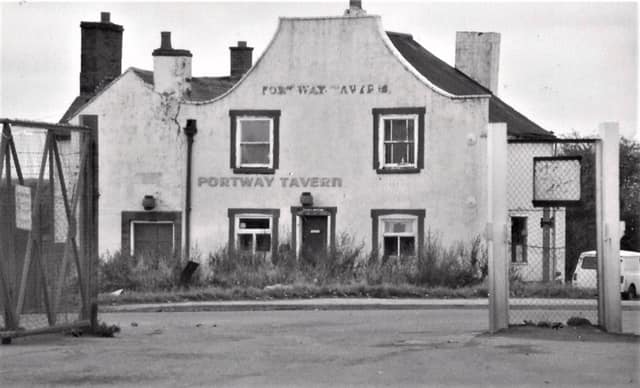
The original pub was demolished in about 1930 and a replacement built behind it. This closed permanently in 2019, like so many pubs, still described as 1 Turner’s Hill and planning permission was sought in 2022 to redevelop the site with a very modern block of flats. However I note, from the Sandwell Planning website, that the Council Officers considered that this site was an adopted open space within the Strategic Open Space & a Wildlife corridor, no decision notice or withdrawal of the application is listed and there appears to be no further progress on this application since then.
So far as I am aware, the pub building remains boarded up on site at present, another previously well used pub which has now gone.
[1] https://longpull.co.uk/index.html [1]
[2] https://rowleyregislosthamlets.uk/2023/09/19/pubs-in-the-lost-hamlets-1-the-bulls-head/










 rowleyregislosthamlets.co.uk
