John Levett b.1847 Rowley Regis
Over the last few weeks, I have done quite a lot of work on the Levett family in Rowley Regis. After the terrible year for that family of 1902 I suspected that most of the remaining Levetts had moved away from the village. Having a quick look at the 1911 Census for Rowley to confirm my theory, I was surprised to see a John Levett aged 67 living in Springfield because he did not appear to be part of the other Levett family in any of the earlier work I had done. On searching further, I found him in Rowley and Blackheath right back to 1871, originally working as a butcher and later at the quarry. I knew that there were later generations of Levetts who were butchers in Rowley and Blackheath who did not appear to come from the branch of the family which I had been working on – was this where they came from?
This John Levett appears in his first census under this name in Rowley in 1871 and he was consistent in records thereafter over a 50 year period about his age and place of birth which showed that he was born in Rowley Regis in 1847. So who were his parents? Where was he in 1851 and 1861? He did not appear under this name in the censuses for those years.
I looked in various records for a birth or baptism of a John Levett in Rowley Regis in 1847, + or -1 year. No birth registration or baptism. Odd. Checked surrounding parishes – still no John Levett. Odder. After mulling this over for a while, it occurred to me that perhaps his birth and baptism had not appeared because he was illegitimate and his birth might have been registered in his mother’s name?
The illegitimate Johns baptised in Rowley Regis in 1847
So I checked the Baptismal Register for St Giles for 1847, looking for a child named John, illegitimate, and baptised in that year. There were only two.
John Hobbiss
One was born to Rosannah Hobbiss at Slack Hillock on 28th February 1847 and was baptised at St Giles on 9 May 1847, according to his Birth Certificate. Although the mother’s name is given in the Baptismal Register as Louisa, I cannot find any trace of a Louisa Hobbis before or after this date and I suspect that either this is a clerical error or she lied about her name! But a John Hobbis of the right age appears in the 1851 and the 1861 Censuses, apparently the son of Rosannah Smitten, nee Hobbis, in both censuses living in Old Hill. But after that John Hobbiss is nowhere to be found. Rosannah Hobbis married Thomas Smitten at Dudley St Edmund on 25 Oct 1847 and in 1851, when they were living in Old Hill, John is described as Rosannah’s son so it appears that he was not Thomas’s as their other child Emily is specifically noted as his child. Rosannah was born in Bromsgrove so was not a Rowley or Old Hill girl. In 1861, the family were living in Cherry Orchard, Old Hill and John is again shown under the name of John Hobis, by then 14 and a coal miner. In 1871 Rosannah, by now widowed, was living in Elbow Street, Old Hill with her children by Thomas Smitten but John is no longer living with her. I have not been able to find any trace of him under that name after that date.
So this boy had associations with Slack Hillock and Halesowen Street, where the mystery John Levett was later living in 1871 and where his bride Ellen Smith lived, was only a few hundred yards away. However it is more difficult to see whether John Levett of Rowley, the farmer, had any direct connections with this area that would bring him into contact with Rosannah Hobbiss but that cannot be ruled out either.
John Moreton
The second illegitimate John was born to Emma Moreton, (who just happens to be my 2xgreat-aunt) on 16th March 1847 at Finger-i-the-Hole and was baptised at St Giles a few weeks later on 13th June 1847. Emma, who grew up in Perry’s Lake, married Thomas Priest (or Redfern) a couple of years later in 1850 and they had ten children together. But in the 1851 Census her four year old son John is living with them in Gadds Green under the name Priest and also in 1861, by then aged 14 and listed by the name Redfern – but that was because his stepfather Thomas Priest also used both names in different censuses, either that or it was an enumerator error, as the family was living literally between two households of Redferns – see my article on the Redferns for more on that! At that time John was a furnace labourer, a common occupation for the Redfern men. But after that John Moreton – or Priest or Redfern – depending on which name he was using at the time – is nowhere to be found on the area.
So both of these illegitimate Johns seem to disappear after the 1861 Census when they would have been 14 and going out to work – no help there, then!
However, a John Moreton, aged 22, was married at St Giles on 21 Aug 1870 to Eliza Caddick. He gave his abode as Turner’s Hill, (where the Priests/Redferns lived), and did not enter any name for his father. And the witnesses to this marriage were Solomon and Mary Ann Redfern, Solomon was only a few years older than John and was a half-brother to Thomas Priest or Redfern. He actually lived for some years next door to John so would certainly have been known to and associated with this John.
Had this John reverted to his original name for his marriage? I think he had.
John and his wife were living in Church Row, Rowley in 1871 with their 10 month old son Samuel and this John gives his place of birth as Rowley Regis. There was only one John Moreton born in Rowley in that period, so it seems likely that this is the same John Moreton who was baptised in 1847. By 1881 the family had moved to Barrow-in-Furness in Lancashire and John was working in the iron works there. Again, this fits with his previous occupation as a furnace labourer when he was in Rowley.
Barrow-in-Furness Migration from Rowley
Incidentally, on this page of twenty six people in Parker Street, Barrow-in-Furness, there are no less than twenty two people who give their place of birth in the Black Country – Rowley Regis, Cradley, Brierley Hill, Tipton – on this page and those around it there are Mortons, Whitehouses, Gaunts, Willetts,Siveters, Priests, Ingrams, Westwoods, Billinghams, and Taylors, all familiar local Rowley names. It looks as though there was a considerable migration amongst the iron workers from the Black Country iron works to the Barrow area.
This Moreton/Morton family (The spelling changes at this time) remained there afterwards and it appears that John Moreton died there some time between the 1901 and 1911 censuses when Eliza Morton is shown as a widow in the latter. If this is the John Moreton who was baptised in 1847, he is not our man.
Back to the mystery man – John Levett the Butcher
At this new John Levett’s marriage in St Giles in 1867, aged 21 and a butcher, of Blackheath, he gave his father’s name as John Levett, farmer. The information given in such records is only as accurate as the priest or Clerk is told so the use of this name is not necessarily true. But his use thereafter of the Levett surname does seem to indicate that he believed that he was a Levett. Perhaps he knew who his father was and decided to name his father and use his surname when he got married and thereafter.
As to the identity of this John’s father, there is only one John Levett in Rowley Regis in the 1841 and 1851 Censuses, and that was John Levett of Brickhouse Farm, father of James Adshead Levett. Did the recently widowed John Levett find solace with a local girl in 1846? Perhaps he did. Was he the father of this John Levett? He would have been nearly seventy by 1847 so not impossible but perhaps unusual.
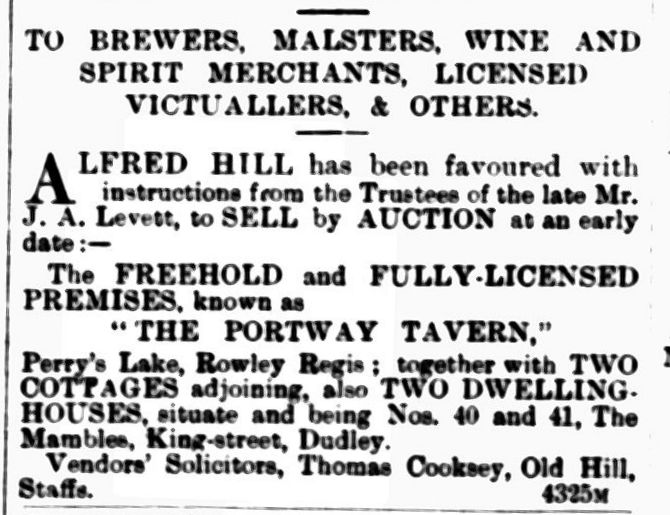
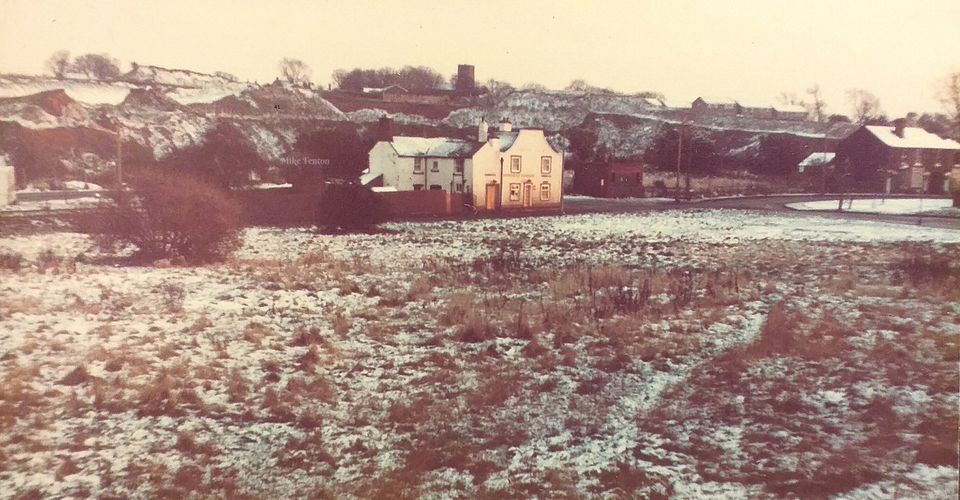
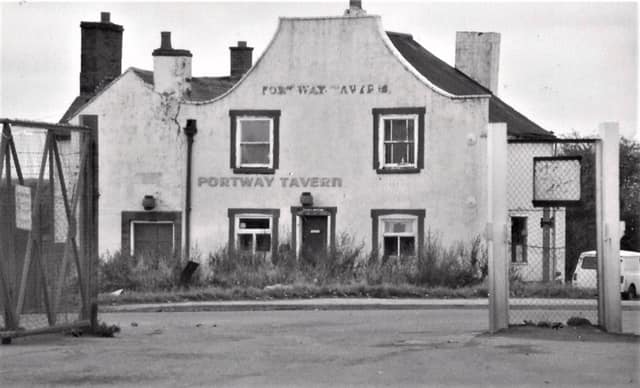
Or might James Adshead Levett, living in Perry’s Lake, and aged 42, and previously described in records as a farmer, be responsible? It appears from the variations in the descriptions of James’s occupations that the pub-keeping was only one of various occupations and as late as 1851 he was described as a colliery clerk. It may well have been that he also assisted his father with running the Brickhouse Farm.
Of the two possible illegitimate Johns baptised in Rowley, I tend towards thinking that the John Levett in Rowley is more likely to be the son of Rosannah Hobbiss. He was later living in Halesowen Street, Blackheath at the time of his marriage, just up the hill from Slack Hillock and it does seem likely that the other John reverted to his original name of Moreton and moved away from the area.
I can find no Bastardy Orders to help. Perhaps a DNA test would throw up some links or perhaps descendants of this couple actually know the story but otherwise this has to remain pure speculation.
John and Ellen Levett
This John Levett married Ellen Smith on 14 Oct 1868 at St Giles, Rowley Regis. He was 21 and a butcher of Blackheath. She was 19 and also of Blackheath, so presumably her father had given his consent to the marriage. The groom gave his father’s name and occupation as John Levett, farmer. Her father was Sydney Smith, a Manufacturer. The witnesses were Job and Sarah Siviter but these people were the Grave Digger and Church Cleaner for St Giles so this may have been the only connection, they may have acted as witnesses on a regular basis.
John was marrying into a respectable family, perhaps he felt under pressure to be able to name his father in the marriage record. Later in life their sons and daughters went into service with wealthy families and ran businesses so they must all have been presentable and capable.
Ellen Smith was the eldest daughter of Sydney Smith of Halesowen Street , Blackheath who was a Rivet Manufacturer, employing five men in 1871. From the description in the census then it appears that they were living towards the Gorsty Hill end of Halesowen Street, perhaps somewhere near the junction with New John Street.
After their marriage, the couple were living in Halesowen Street in 1871, in Garratts Lane, Old Hill in 1881 and by 1891 had moved to 2 Dudley Road, Springfield where he was described as a Labourer, (also in 1901 when he and his two remaining sons at home were stone breakers) whereas previously he had always been shown as a butcher. 2 Dudley Road was next to the Bull Inn and there is some evidence that this had been a shop, possibly a butcher’s shop previously. By this time John and Ellen Levett had had five sons and three daughters. They remained in Springfield until their deaths, both attaining grand old ages for that period. John Levett died in 1926 aged 81 and Ellen in 1929 aged 80, both are buried in St Giles Churchyard.
Their children were:
Harry (1870-1886), who died aged 15 and was buried at St Giles on 9 May 1886, his address was shown in the Burial Register as Tippity Green so their Dudley Road home appears to have been very close to the Bull Inn.
Their eldest daughter Alice (1872-1915) had in 1891 been living in as a servant in the household of Mr T Danks, Boiler manufacturer, at 77 Dudley Road, along with her sister Amy. In 1895 Alice married Samuel Dowell at Reddal Hill and they moved to St Johns-in-the-Vale, in Cumbria, where they were living in 1901, where Samuel was working in the stone quarry. (Regular readers may remember that many Rowley sett workers moved to St John’s-in-the-Vale in this period, this has been referred to in other pieces on this blog.) Alice’s brother Frank was also living with them, also working at the quarry. However, their stay in Cumbria does not appear to have lasted long as both of Alice and Samuel’s children were born in Rowley, Winifred in 1903 and Donald in 1907. In 1911 they were living in New Buildings, Tippity Green. Alice died in 1915, aged 42 and was buried at St Giles.
Frederick (1873-1932) This little Levett stayed at home! Frederick became a butcher, in 1901 and 1911 he was listed as a butcher in Rowley Village. In 1894 Fred, then a quarryman, married Elizabeth Payne at Holy Trinity, Old Hill, and they had six children, two daughters and four sons, one of the latter died in infancy. By 1921 Fred had a butcher’s shop at 35 Penncricket Lane and his son Harry (by then 24) had his own butcher’s shop at 48 Birmingham Road, Blackheath. It was this shop that I remember although by then it must have been run by Fred’s grandson or great-grandson.
Frederick and Elizabeth had four sons and two daughters, Harry (1896-1958),John (1899), Ellen (1902), George Frederick (1903-04), Alfred(1908) and Amy (1909). Harry continued to run the butcher’s shop in Birmingham Road and it was still run by Levetts up to the 1960s.
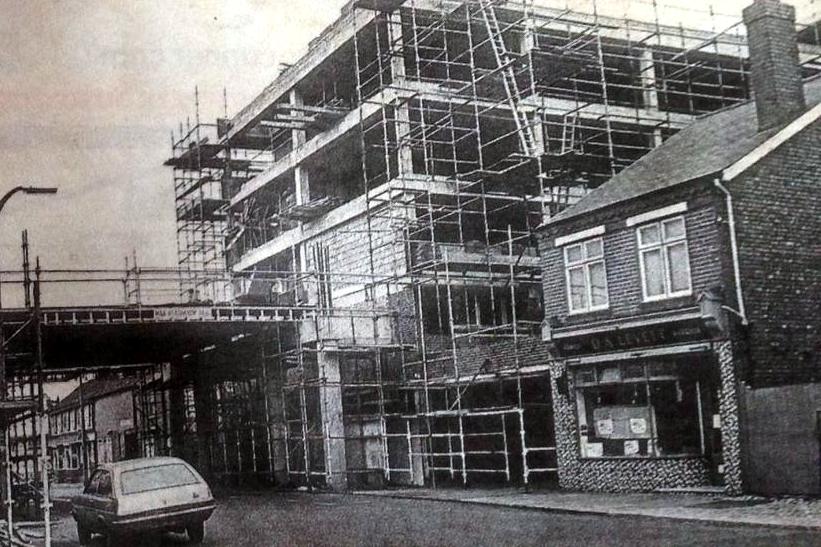
Copyright – Steve Pearce
This photograph, posted on Facebook by Steve Pearce in 2014, shows Levett’s butcher’s shop in Birmingham Road, alongside the never to be completed car park construction. The abattoir was originally behind the shop, I understand and the family sold the land on which the Shoulder of Mutton was built, the name of the pub specified as a nod to the butchery business! There are many comments on Facebook from people who remember David Levett and his son still running the business and how well respected, obliging and friendly they were, as I remember myself.
Amy (1875-1952) also went into service and after leaving Mr Dank’s household, she moved to Stoke Prior where in the 1901 Census she was a nurse to the children of Mr Victor Drury, a boot manufacturer. Her sister Lizzy was Cook in the same household. However, soon after the Census Amy married William Henry Edwards (a Rowley boy) on 27 Jun 1901. And they married in St Johns-in-the-Vale, in Cumbria (popping up again!). This family stayed in Cumbria, however, their children Frederick and Ellen were born there and they later moved to Cockermouth where they died, William in 1940 and Amy in 1952.
Frank, (1877-1938) who had been living with his sister Alice in the 1901 Census, also stayed in Cumbria. On 8 Apr 1901 he married Annie Adelaide Hindmoor Benbow at St Johns-in-the-Vale, Cumbria and they had three sons Sydney (1903), James (1904) and John (1908) He and his family moved to the USA in 1913, probably to join Annie’s brother James Benbow, and Frank is still listed as a sett cutter at this time. However, Annie died in Massachusetts in 1917 and Frank returned to Cumbria with his two younger sons James (1904) and John (1908) (their eldest son Sydney (1902) staying in the USA for the remainder of his life) in 1919. They were living with his sister Amy and brother-in-law William Edwards in Threlkeld in the 1921 Census. Frank died in 1938, his death registered in the Carlisle area so it is possible that he continued to live in Threlkeld or perhaps died in the Infirmary in Carlisle which is the main hospital for the area.
Lizzie (1880-1956) or Lizzy (the spelling varies throughout her life!) also remained in Springfield, Rowley for many years, listed as late as 1940 in trade directories as a shop keeper at 7, Dudley Road, where she lived with her parents until their deaths. Whether she kept the shop open is unknown but she died at 7 Dudley Road in 1956, the last of her generation, and it appears likely that she is the Elizabeth Levett who was buried at St Giles then. She had been Lizzie all her life and her birth was registered as Lizzie but formality overtook her at the end! Records show that Probate was issued to her nephews Harry and John Levett, both butchers!
Peter (1883-1944)
Peter’s is a sad story. He was unmarried and shown as a stone quarry worker in 1911, living in Dudley Road with his parents. He served in WW1 with the Worcestershire Regiment but was discharged ‘insane’ in 1919 and in the 1921 Census was shown as a patient at Barnsley Hall Mental Hospital. He was still there in the 1939 Register, shown as an ex- soldier, which probably implies that he had been there ever since. He died at Barnsley Hall in 1944.
Ernest Levett (1877-1919)
Ernest, the youngest of the children of John and Ellen Levett, was born in 1877. In 1911 he was working as a labourer at the stone quarry. He married Beatrice Taylor at St Giles on 25 Oct 1908 and they had five daughters and one son, including twin daughters Nellie and Amy born on 28 Oct 1919. He died and was buried at St Giles on 6 Dec 1919, when they were barely a month old. No mention is made of his cause of death and he may have died of Spanish flu which killed many people then. Beatrice, at the age of only 26,was left with six children aged twelve down to a few weeks old. Ernest having returned from the war, unlike many men, this must have seemed very hard to Beatrice. In the 1921 Census, Beatrice was still at 2 Tippity Green, the address given on Ernest’s enlistment papers but by 1939 she had moved with all her children except Elsie to Queens Drive, Whiteheath. It appears that Elsie died in 1927, aged 11. The other children – Lizzie (1909), Herbert (1911), Annie (1913), Elsie (1916), Nellie and Amy (twins – 1919) mostly appear to have married fairly locally, although this is entering the period when tracking people becomes more difficult because of data protection.
Summary – the other Levett family!
This John Levett was not mentioned in any of the Levett Wills I have looked at and it is not known whether the other branch of Levetts in Rowley acknowledged them. The names John and his wife used for their children are not the same names, generally, that recur frequently in the other Levett family, although the names from the Smith family, Ellen’s family – Sydney, do recur. Like the other Levetts, however, this John Levett was a hard working man, first as a butcher and later in the quarry. He left eight children and at least twenty grandchildren. No doubt there are many more descendants in later generations. Two of his sons and one of his daughters followed him into business, running shops in Springfield and the village and later in Blackheath so perhaps he had inherited at least the Levett capacity for business.
And although the family moved around the area in later years, John and Ellen and their daughter Lizzie Levett, with their shop and home lived at 7 Dudley Road right up to Lizzie’s death in 1956.

Copyright: Mike Fenton
This photograph, courtesy of Mike Fenton, shows Dudley Road in 1969, only a few years after Lizzie died and there are two shops on the left. Comments on this picture on Facebook say that the first of these was a butcher’s shop, and the second was known as Mary’s shop. I suspect that this shop was Lizzie’s shop before Mary!
The end of this part of the story of their lives has Lizzie ending up living for decades within yards of, if not actually on the site of Brickhouse Farm where the original John Levett, very possibly her grandfather or great grandfather, had lived when he moved to Rowley one hundred and fifty years earlier.
As I have commented before in this study, Rowley family roots go deep but it seems they also go in circles!









 rowleyregislosthamlets.co.uk