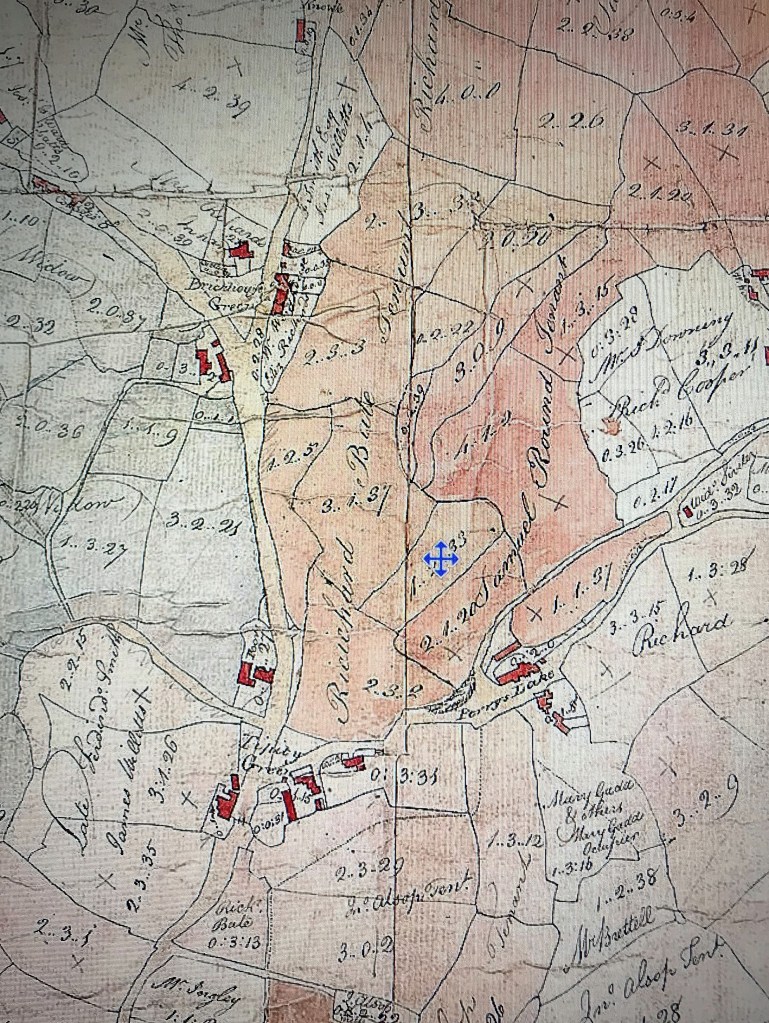
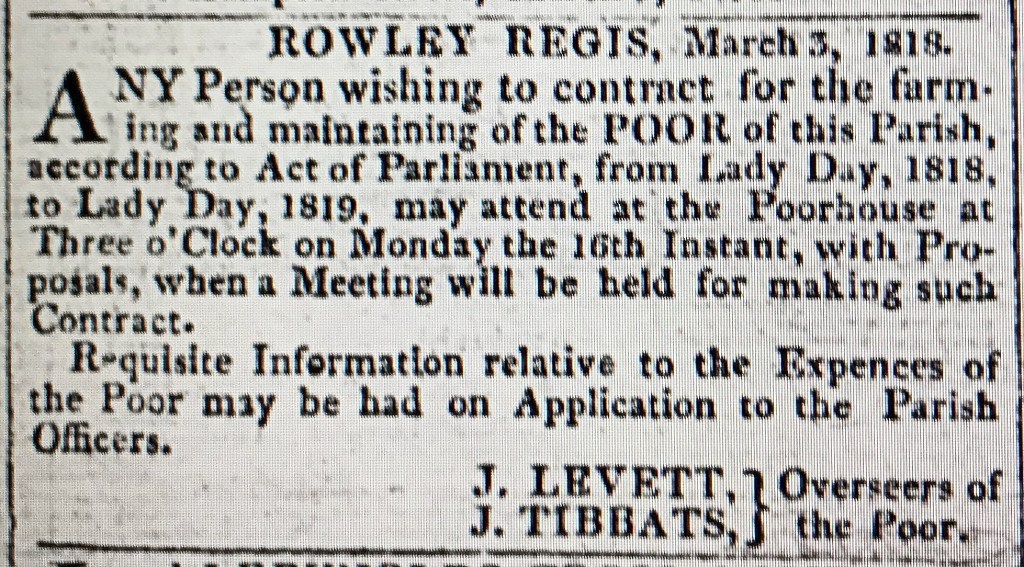
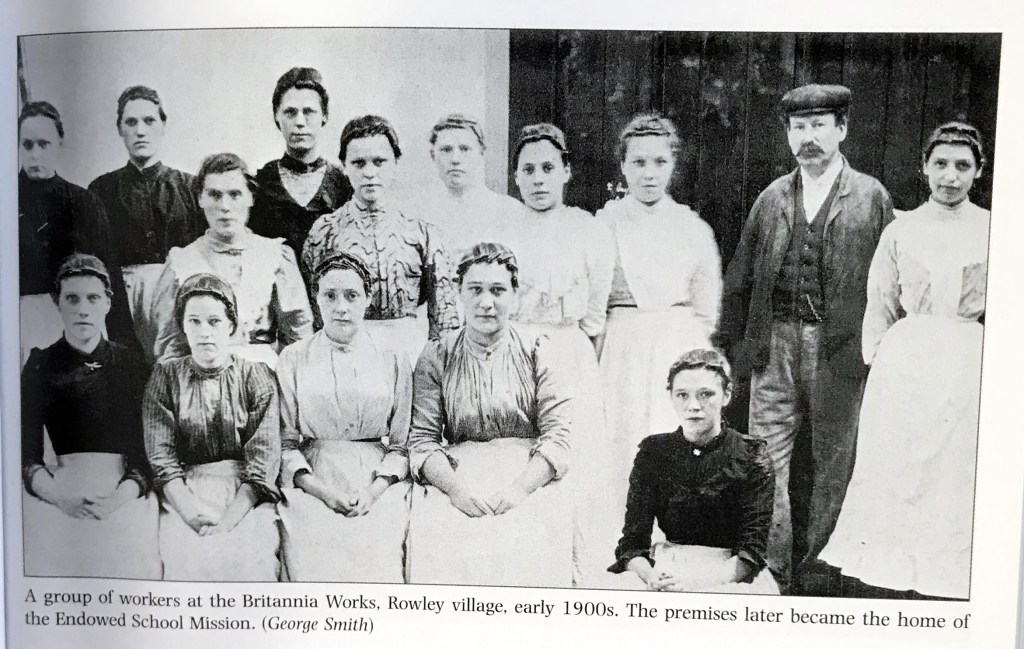
The family of Joseph and Ann Maria Redfern, Part 2

Later Redferns after 1851

Following on from my last piece about the older children of this couple, this piece looks at the children born after the 1941 Census.

By 1851, the family was still on Turner’s Hill, Joseph still a labourer but now with his age given as 48 and his place of birth as Rowley Regis as were the whole family. Maria was now 50, Eliza 20, Joseph 18, William 16 both boys working as labourers; Ann at 13 was still a scholar. In the interim between the censuses, Solomon, aged 9, John aged 7 and Samuel aged 5 had all been born. All were described as scholars.

Incidentally, when I looked at later Censuses, I noticed that Joseph’s widow Maria, later described herself as the widow of a Highways Labourer and in 1871, he described himself as a Furnace Labourer, although he and Maria had a boarder who was a Highways Labourer so perhaps he moved from one job to the other. Certainly other Redferns were Furnace Labourers, gruelling hot work for much of the year, I suspect. Their family has grown in ten years.  

In 1851 Eliza is still living at home, now aged 20, Joseph aged 18, William, aged 16 and Ann, aged 13, the two boys were working as labourers and Ann and the younger children were Scholars. But Elizabeth, like her mother, had no occupation shown. Also Solomon, aged 9, John, aged 7 and Samuel aged 5 had come along. The household is almost next to Turner’s Hill Farm so they were pretty high up on the hill.

Henry Redfern

I also noted that there was another Redfern in the later censuses, living with Joseph and Ann Maria and later with his own wife and family. This was Henry Redfern who was born in 1854, the illegitimate son of Eliza Redfern. Henry was baptised at St Giles on 22 Mar 1854 as the son of Eliza Redfern of Turners Hill with no father named and appears to have been raised by his Redfern grandparents as he was with them in the 1861 and 1871 censuses, and after his mother had married Daniel Hughes in 1859 and moved to Dudley.

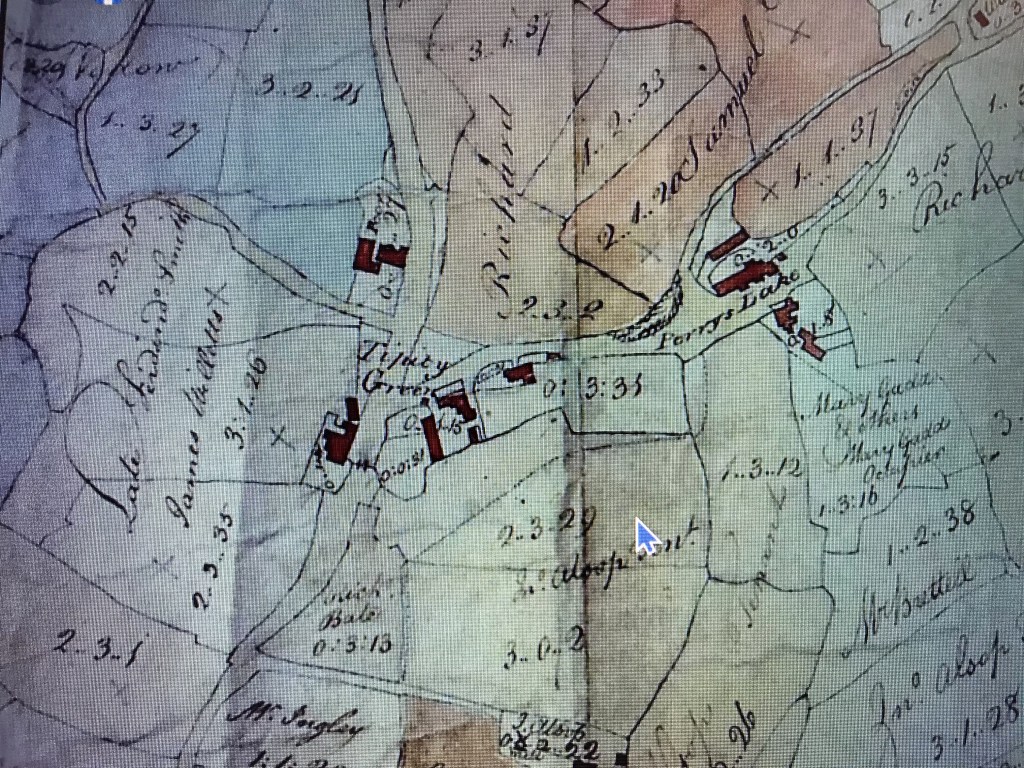
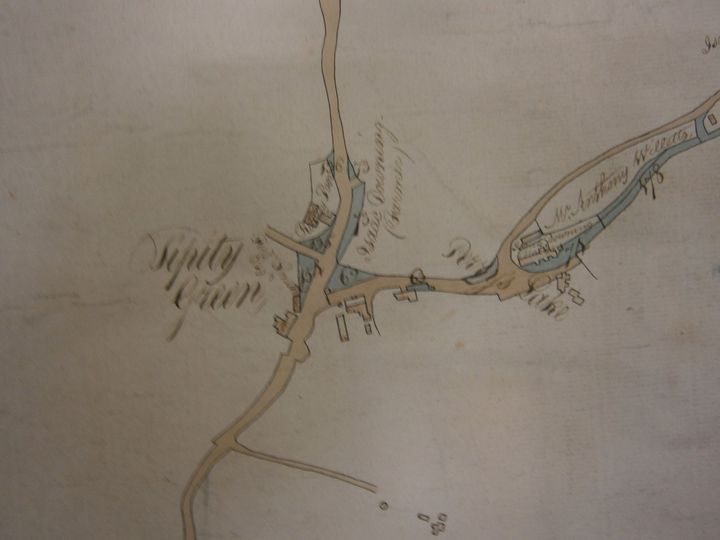
Family trees on Ancestry state that on his marriage certificate in 1875 (when Henry married his cousin Elizabeth Redfern), his father’s name was given as Luke Lashford. I can find only one reference to this name in the locality and this was in 1851 when a Luke Lashford, born in Birmingham, was living and working as a butcher for Joseph Bowater at the Bulls Head in Tippity Green – the dates fit, so presumably this is Henry’s father.  After this census Luke Lashford disappears without trace. I cannot find a death for him, nor any other record of him later, it does look as though he may have ‘done a runner’! Fortunately, the Redferns were obviously a very supportive family for Eliza.

Henry worked for most of his life in the stone quarries and he and Elizabeth lived on Turners Hill all their lives, it appears from censuses, and had nine children. Their children were Mary A (1874), Henry (1875), Eliza (1878-1878), Joseph (1879), Martha (1882), Louisa (1885), Walter (1889), Sarah Jane (1891) and Ernest (1895) – another nine great-grandchildren for Joseph and Ann Maria.

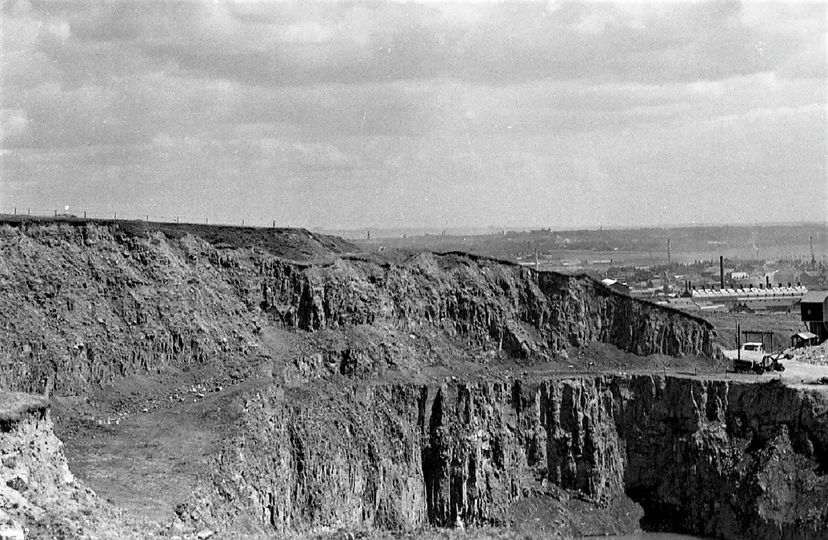
It seems likely to me that, since Henry worked in the quarry for at least forty years, he may appear on some of the numerous photographs of quarry workers which are in various books and online. Alas, I have no way of identifying him if so but perhaps some members of the Redfern family might recognise a family likeness. Do tell if you can!

Younger children of Joseph and Ann Maria Redfern

Solomon Redfern 1841-1928

Solomon stayed in the hamlets all of his life, working in the quarry. He married Mary Ann Mole of the Club Buildings, Hawes Lane, on 8 Feb 1863 at St Giles when he was 21 and she was 22. They initially lived in Hawes Lane, possibly at the Club Buildings but by 1881 they were back in Perrys Lake where they stayed for the rest of their lives. In the 1901 Census, the address is given as Hailstone Quarry, following on from Perrys Lake in the list so perhaps they were further up the hill, actually within the quarry. Family members may be able to tell me this.

Solomon’s children:

Solomon and Mary Ann had six children that I know of.  These were William (1863-1863), Ann (1864-1948), Alfred (1866-1940), Edward (1868-1871), William (1872-1956) and Samuel (1876-?).

Of those children, the first William died aged 15 weeks, sadly not unusual in those days.

Ann (1864-1948) married Eli Eades at Reddal Hill church on 19 Dec 1891. They had three children, Annie in 1893, William G in 1895 and Jesse in 1901. Eli Eades was a draper and died in 1023. William appears to have followed him into this trade and they may have had a shop in Long Lane, somewhere in the area of Shell Corner. Ann lived on until 1948.

Alfred (1886-1940) stayed in Perrys Lake in Rowley, marrying Kate or Catherine Whithall, also of Perrys Lake on 25 Dec 1887 at St Lukes, Cradley Heath.  He appears to have worked at the quarry for his whole life and they lived at 12 Perrys Lake but had no children. He died in 1940 and Catherine died in 1954.

Edward (1868-1871) had died at the age of three and was buried on 12 Nov 1871 at St Giles, Rowley Regis.

William moved to Threlkeld in Cumberland to work in the quarry there, at some point between 1891 when the census shows that he was still in Perry’s Lake and 1900 when he married Sarah Ann Airey in Threlkeld. They had five children – Ernest in 1901, Edith in 1902, Alfred in 1903, Mildred in 1907 and Annie in 1909. By 1939, William and Sarah had moved to Langcliffe, Craven where William still gave his occupation as a Limestone quarryman. Their son Alfred lived next door but one with his family, he was also a quarryman.  William died in 1956 and Sarah in 1957, they are buried together in Langcliffe, Craven District, North Yorkshire, England.

I could at first find no trace of Solomon’s youngest child Samuel after 1901 when he was still living at home. None of the online family trees had any further information on him either. He did not appear to have died between 1901 and 1939 in the UK, he did not die in the First World War, I could not find him in the 1911 or 1921 Censuses . Did he start using another name? Did he emigrate?

But I think I have now found him. The 1939 Register, (which was not a census but a listing of the whole population taken by the Government just before the Second World War and which was to be the basis of rationing and later used by the NHS, ) is a useful source as it shows dates of birth, addresses, implied family groups, occupations but not places of birth. Many newer entries are redacted, blacked out for 100 years from their date of birth because those people are or are assumed to be still alive, although people who have died can be opened up. But I could search the Register for the whole country for a Samuel Redfern born in 1876. There were six Samuel Redferns in the whole of England and Wales in 1939 who had been born between 1875 and 1877. Of these most were in Derbyshire or Cumberland. But one was in the Cockermouth area, where, as I showed in a previous post, quite a number of Rowley quarry workers had settled, recruited by the quarries there for their sett making skills. Those had included William Redfern, Samuel’s brother who had settled in the Threlkeld area.  

It appears that Samuel had followed his older brother up to Cumberland, he had married in the Cockermouth area in 1908 to Mary Elizabeth Charters and they had two children William Lawrence in 1909 and Mary Frances in 1911. In 1939 Samuel was living in Rakefoot, Embleton, Northumbria with his wife and daughter, his occupation was given as a Roadstone Quarry Worker – the granite connection again! Using this information I was then able to find the family in the 1911 Census in Wythop Mill Nr Cockermouth and in Tile Kiln Cottage, Arlecdon, Cumberland in the 1921 Census, Samuel always working in quarries.

John Redfern 1844-1929

John was living at 26 Rowley Village in 1911, with his two daughters Ann Maria 1871- and Phoebe 1880.  He had married Leah Tromans on 24 December 1865 at Dudley St Thomas and states in the 1911 Census that they had had 8 children of whom only four were still alive in 1911. I can only find the birth registrations for six children between their marriage in 1865 and 1890, the last child I can find was John, born in 1883. The first two children Martha (1866-1866) and Sarah Ann (1868-1868) had both died in their first months and were buried in St Giles. It is possible that there were another two stillbirths which would not be registered but which would still be counted by the family as their children.

Some of the trees on Ancestry have a photograph of a farm called Upper House Farm, Wolferlow in Herefordshire, attached to the information about this John, stating that John farmed there with his son John before returning to Ockbrook, Derby and Stanley, Derbyshire where the family had originated from, a Moravian settlement , where John’s grandfather German Redfern had lived.

This may be possible and may come from family information, since the trees are those of Redferns. However, this may not have been over a prolonged time period as both John and his son John are in the Rowley and Blackheath area for all of the censuses that I have been able to find and all of their children were born in the area.  John the older died in Rowley Regis in 1948. Neither of them appears to have any farming experience from their listed occupations which does not necessarily preclude a period of farming, family members may be able to explain how this came about. There were certainly Redferns farming in Wimborne, Dorset but I have not looked at the Derby Redferns in any detail. His father was given as John Redfern, a labourer and hers as Joseph Stokes, deceased, also a labourer. The witnesses were Joseph Stokes and Jane Hadley.

Leah Redfern died in 1905 and was buried on 17 Aug 1905 at St Giles, aged 58. John Redfern , of 26 Rowley Village, where he had lived with his family for many years, died in 1929, aged 85 and was buried at St Giles on 4 Mar 1929.

John’s children

John and Leah’s known surviving  children were Ann Maria born 1871, Joseph born 1875, Phoebe born 1880 and John born 1882.

Ann Maria 1871-1955, Phoebe 1880-1955

Neither Ann Maria or  Phoebe married and they lived in Rowley Village with their father until his death in 1929, after which they appear to have continued to live together in the same house. Online family trees record that Phoebe died on 9 February 1955 aged 75 and Ann Maria died only a few days later on the 17th, aged 84. Whereas Ann Maria seems to have taken care of domestic life for the family, Phoebe worked, in 1901 as a Nail Bag Maker, in 1911 as a ‘counter of nuts and bolts’ in Rowley, in 1921 as a ‘weigher of nuts and bolts’ at T W Lenches in Ross, and in 1939 as a ‘checker of nuts and bolts’ so it appears likely that she worked at Lenches all her life.

Joseph Redfern 1875-1943

Joseph married Eliza Stokes at St Paul’s Church, Blackheath on 22 Apr 1895. He was 21, a labourer and gave his abode as 74 Halesowen Street while Eliza was also 21 and gave hers as 97 Halesowen Street.  They had at least seven children and in 1911 were living at 91 Rowley Village. He was then working as a Brick Kiln Labourer. Their children were Joseph (1896), Ethel (1899), Doris (1902), May (1905), Leonard (1908) and Lily (1910) and Annie (1912). In 1901, the family were living in Rowley Village and Joseph was working as a labourer at the Cement Works; in 1911 they were at 91 Rowley Village, and Joseph was working as a Brick Kiln Burner; in 1921, still living at 91, Rowley Village, Joseph was working as a Yard Labourer at T W Lenches. The 1939 Register shows Joseph living at 6 Limes Avenue, Blackheath and working as a Works Watchman. With him is his daughter Ethel with her husband Thomas Astley, and Joseph’s youngest daughter Annie.

Although Joseph is noted as a Widower in the 1939 Register, Eliza appears still to be alive and she is listed in the 1939 Register in the Staffordshire Mental Hospital near Stafford, she lived until 1957 by which time she was back in Rowley Regis. There may have been an assumption that Joseph was a widower on the part of the person completing the 1939 Register as Joseph was living alone in Limes Avenue. Joseph died in December 1943 and was buried on 18 Dec 1943 at St Giles, Eliza in 1957.

John Redfern 1882-1948

John married Annie Crumpton in about 1906, in the Stourbridge Registration District. They went on to have at least nine children – Leah – 1906-1906, Percy in 1907, Lily in 1910, Phoebe in 1913, John in 1915, Arthur James in 1919, Harry in 1922, Hilda in 1924 and Stanley in 1928. The family lived in various roads in Blackheath and John was at times a labourer but in 1921, a storekeeper at British Thompson Houston. In 1939, the family were living in Grange Road and John was listed as a general labourer and also as an Air Raid Warden. Annie died in 1947 and John died in 1948.

So all of John and Annie’s  children stayed in the Rowley and Blackheath area for the rest of their lives.

Samuel Redfern

Samuel Redfern 1845-1911

Samuel was the youngest child of Joseph and Ann Maria and by 1861, at 15 years of age he was already a labourer, still living at home with his parents on Turners Hill. In 1871 he was again still living at home and both Samuel and his father were described as Furnace Labourers. In 1891, Samuel appears to have been a patient in the North Lonsdale Hospital, Barrow in Furness where he was described as a ‘Stoker at the Steelworks’. Yet another instance of Rowley men moving up to the North for work, in this case in the steel industry, rather than quarries. But he did, after all, come from a family where many of the men were furnace workers.

After that, records become sparse for Samuel. In 1901 he is still in Barrow in Furness living with his wife Sarah, formerly Hartley and a son named in the census as Henry H Redfern, Samuel’s occupation given as a Steelworks labourer. Samuel and Sarah had been married in Barrow in Furness in 1896. But there is no birth registration for a Henry Redfern in this area in 1882, I suspect that Henry was actually, as so often in those days, put down as Redfern because that was the name of the head of the household and he was actually Henry Hartley, that Sarah was a widow at the time of her marriage to Samuel and Henry was one of three sons of that previous marriage. And there is a Birth Registration for a Henry Hartley in Barrow in Furness in 1882 and a Henry Hartley appears in the 1911 Census in Barrow in Furness, too. So I do not think Henry was Samuel’s son.  

Samuel appears to have died in Barrow in Furness in the early months of 1911. His widow Sarah remarried in 1912.

Redfern Overview

Any errors in this research are all my own, corrections welcome. I have looked at Redfern Trees online and sometimes used those to guide me to additional information (I have said so where I have done this) but generally I have only included information where I can confirm information and sources.

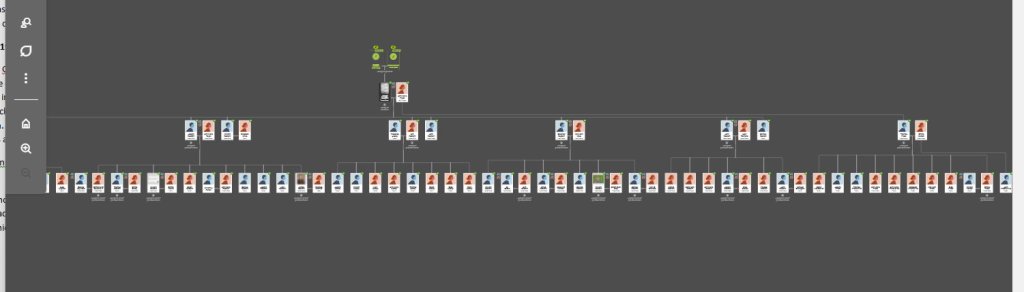
So although I have not gone any further back from Joseph and Ann Maria in that first 1841 census, in two generations they had between them 11 children and at least 54 grandchildren in the Rowley area or within a few miles, shown on this screenshot here (of the Redfern part of my own family tree – Joseph is the paternal grandfather of the husband of my 1st cousin 3x removed, so not exactly closely related!). 

Copyright: Glenys Sykes, all rights reserved.

The screenshot is, I’m afraid, much too small for you to read the details but Joseph and Ann maria are at the top just under those little green symbols. And I couldn’t even get all of the grandchildren on the screen, too many of them, the tree is too wide but it gives an idea of how big their family was! And the majority of them stayed in the Rowley and Blackheath area, although a few went North, no wonder there are still many Redferns in the area today.

There are several Redfern family trees on Ancestry and the Redfern Family website https://redfernsworldwide.com/   and One Name Study which I mentioned in my last article so plenty of opportunities for co-operative researching!

More family studies from the Lost Hamlets coming in due course!

The Redfern Family in the Lost Hamlets 1

The 1841 Census for the Lost Hamlets has one family of RedfernsJoseph Redfern was living on Turners Hill, a labourer, with his age given as 35. His wife Maria (sometimes Ann Maria), nee Priest, has her age as 40. Joseph and Maria appear to have been married at Tipton on 16 Jul 1827. Maria sometimes used Ann Maria and sometimes Maria, in records throughout her life. Their children Sarah aged 12, Eliza aged 10, Joseph aged 8, William, aged 6 and Ann, aged 4 completed the family, all of the children were born in Rowley Regis.

In later censuses, Joseph gave his age as 48 in 1851, giving a birth year of about 1803. I can find no baptism for a Joseph Redfern in the area in that year, so it is possible that he was born elsewhere, though he consistently says in censuses that he was born in Rowley Regis. Another possibility is that he was baptised in a non-conformist chapel. Certainly, the Priest family into which he married had very strong connections with the Presbyterian Chapel in Cradley Heath which was also in the parish of Rowley Regis.

Maria or Ann Maria gives her age in 1851 as 50 which gives her birth year of 1801. The only baptism I can find for this period of a likely Ann Maria is Maria, the daughter of Cornelius and Mary Priest of Bournbrook , Cradley Heath who was baptised at St Giles, Rowley Regis on 4 Oct 1801. But this is by no means certain, there may be another baptism somewhere that I have simply not been able to find.

The fact that Joseph and Maria were married in Tipton perhaps argues that she was not connected to the Cradley Heath Priests but I cannot find another Maria or Ann Maria baptised in the Tipton area either. And since Maria had had a baby out of wedlock, it seems possible that her family sent her to stay with relatives in Rowley to hide the shame for the family (possibly their view, not mine!). And it seems that David Priest , living with his family in Gadds Green in 1841 was born in Cradley Heath and directly related to the Priest families there so they would have been known to each other and were probably related.

At various points Joseph gives his occupation as a labourer or a furnace man or a furnace labourer. This seems to have been a common occupation for the Redferns as at least two of his sons were also furnace labourers. In 1856, at his son Joseph’s marriage his occupation was given as a Blast Furnace man. One census entry notes that he is a furnace labourer in a coal mine (fires were kept burning at the bottom of shafts to pull air through the mines and reduce the build-up of explosive gases) but others were noted as Blast Furnace labourers, a very different job. I am unsure where the nearest blast furnaces were to Turner’s Hill, possibly at Tividale/Tipton where there were extensive iron works and at least three furnaces shown on the 1st Edition OS Map though there were almost certainly others in the area including Brades where a furnace is also shown. If Joseph was working at the iron works in the Tividale/Tipton area, this may account for the marriage at Tipton church.

Ist Edition OS Map, copyright David & Charles, surveyed about 1830. Several furnaces and iron works are shown on this map including ones at Tipton and Dudley Port, also at Brades.

Ann Maria

The name Ann Maria is used frequently in the family from this point on, often, it appears, with the name Maria being used day to day. Almost all Joseph and Ann Maria’s children and many of their grandchildren named one of their daughters Ann Maria so they are liberally scattered around the family tree!

Are they on my family tree?

Yet again, having thought when I started this study that I had no connections with the Redferns, I now find that I have two, so far, as Cornelius Priest was already in my family tree!  I suspect that the more I look in detail at the families in the Lost Hamlets, the more I shall find that my lines are married into them at some point, sometimes several points, perhaps a natural result of them living in such small communities with limited contact with other communities.  So yes, they are on my tree!

Who was Thomas Priest?

Thomas Priest, aged 15 was also living with the Redfern family on Turners Hill. The 1841 Census does not show relationships within households. Thomas was baptised at Dudley St Thomas on 26 Mar 1826, the son of Ann Maria Priest and there is no name shown in the Register for the father so he was probably illegitimate. Joseph and Ann Maria were married in July 1827, fifteen months later so this was certainly not a hasty marriage shortly before or after Thomas’s birth. There are several family trees on Ancestry which suggest that this Thomas was the illegitimate son of Ann Maria and Joseph, born before they were married.

My expert consultant on such issues agreed with me however that, at this time, when parents of an illegitimate child subsequently married, that child usually then became known by the father’s name and is shown in sequence in censuses as the oldest child whereas step children tend to be listed after full children. Since Thomas is shown at the end of the household in 1841, and with the name Priest, not Redfern, and after Joseph and Ann Maria’s other younger children, I suspect that he was not Joseph Redfern’s child but a stepson. It was very common at that time for stepchildren to use their stepfather’s surname or to swap between the two names so the later use of the Redfern name is not conclusive. The only document I can find which lists Thomas as Priest is the 1861 Census when Thomas was living in between his stepfather and stepbrother. I suspect that the enumerator knew that Thomas had grown up in the Redfern household and perhaps thought of him as a Redfern so that the use here is an enumerator error. Certainly all of Thomas’s children were registered as Priest, not Redfern.

At his own marriage to Emma Moreton in 1850, at Dudley St Thomas, Thomas gave the name of his father as Joseph Priest, a Furnaceman, not Joseph Redfern – although he was also a Furnaceman!

There was at least one Joseph Priest in the area who is of about the right age and could have been this man but although there was one family of Priests at Finger i’ the hole in 1841 there is no Joseph listed there and other Priest families appeared to have been in Blackheath and especially in Cradley Heath (which is also where I theorise that Maria’s family were living). It is also possible that the priest asked ‘What is your father’s name and Thomas replied ‘Joseph’ and this was attached to Thomas’s surname of Priest so that gave Joseph Priest. Or Thomas may simply have invented a father’s name, rather than have that space empty, thus showing that he was illegitimate, something that genealogists find is not uncommon with illegitimate children.

A DNA test might prove the final answer to this, perhaps the current members of the Redfern family have done this and established the answer to their satisfaction!

Certainly in later years, Thomas remained in the hamlets, at one stage he and his family were living next door to other members of the Redfern family for several decades.

I shall do a separate post about the Priest family.

Where had the Redferns come from?

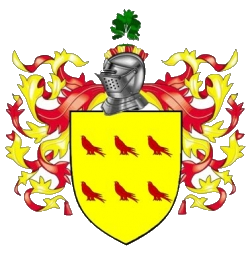
One of the crests associated with the Redfern family, courtesy of Andrew Redfern.

Wikipedia suggests that Redfern is an English surname of French Norman origin. It originally appeared as De Redeven.

The first Redfern mentioned in the St Giles’s Parish Registers is the baptism of Ann, the daughter of William and Sarah Redfern on 9th December 1792, followed by John, their son on 20 May 1798. This John must have died, (although I cannot find a burial for him), as another John was baptised to William and Sarah on 11 Jul 1802.

In 1813,Elizabeth, daughter of William (a farmer) and Sarah Redfern of Piddocks Green, Rowley Regis was baptised on 5th August, in June 1815 Edward, son of William and Sarah of Plants Green, farmer,  was baptised . Plants Green was certainly in the Old Hill/Cradley Heath area but I do not know where Piddocks Green was, it may well have been the same place, place names were sometimes quite flexible.

On 19th January 1817 Henry Smith Redfern, base born son of Mary Redfern of Turner’s Hill was baptised (there may just be a clue as to the identity of his father there, although I haven’t looked any further into that!).

On 15th July 1821, William, son of John and Mary Redfern of Turners Hill, a nailer, was baptised, followed by sister Rebekah on 7 September 1823. On 25 September 1825 Joseph, son of John and Mary, now described as a labourer and of Lye Cross was baptised. On 9 Mar 1828 Mary Ann Redfern of Lye Cross, died, aged 28 of Fever.

On 4 December 1832 Esther Redfern of Mincing Lane, aged 30, died of diabetes.

On 7 Jul 1833 Elizabeth Redfern of Dudley Wood was buried, aged 27, having died of decline.

On 16 Oct 1839, John Redfern of Turners Hill, aged 9 months died of measles.

On 13 February 1848, Harriet, daughter of William (a miner) and Ann Redfern of Portway was baptised.

On 2 December 1849, William Redfern of Turners Hill was buried, aged 81, the cause of death being given as Old age.

So clearly there were Redferns in the area, including Turner’s Hill and Lye Cross as early as 1821.

Both Joseph and Ann Redfern give their place of birth consistently in all censuses as Rowley Regis. And yet, I cannot find baptism for a Joseph Redfern in Rowley or in the surrounding area.

At least some of Joseph and Ann Maria’s children were baptised at Dudley St Thomas, Joseph and Eliza both on 12 Aug 1832, with Joseph’s occupation given as a Furnaceman and their abode as Rowley Regis. William was baptised there on 2 Jul 1837 and Ann Maria was baptised the same day.

Also at St Thomas, John, son of John (another Furnaceman) and Mary Redfern of Portway, was baptised there on 18 Oct 1835.

So it appears that these Redferns moved between St Thomas at Dudley and St Giles at Rowley, which seems to be quite common for families living in this area. And there were Redferns scattered around both Rowley and the wider neighbourhood after about 1790.

To muddy the waters, Solomon (one of Joseph and Ann Maria’s later children, to be covered in a later post) appears to be a Redfern family name. There are Solomon Redferns in Stockport in Cheshire in 1866 and in Meltham near Huddersfield in 1852, though that name is spelled Redfearn.  And in Denton, Lancashire in 1866. Although all of these Solomons were married to a Mary so it is possible that they are all the same person, moving around!

Online trees trace Joseph’s birth to Stanley in Derbyshire, but I have not investigated this possibility any further, since Joseph himself believed that he had been born in Rowley Regis and there were certainly Redferns in the area at that time.

So this is the Redferns in the Lost Hamlets in the 1841 Census. Since this is such a short piece, I will add some details about:

Joseph and Maria’s older children (those listed in the 1841 Census)

Sarah Redfern 1829-1885

The oldest daughter Sarah, who was aged 12 in 1841 was no longer in the household by 1851. In fact she was living at 84 Snow Hill, Birmingham where she was a servant in the household of Josiah Blackwell, who was a grocer. She was described as a House Servant but there were also three other Assistant Grocers living in so there would have been plenty to keep her busy. Snow Hill Station was, of course, the Birmingham Station familiar to those of us who used the train into Birmingham, that trains from Rowley and Blackheath later ran in to on the Great Western line but the station was not built until 1852 so it was not open when Sarah was working there. But a long row of shops remained long afterwards, running down the hill. Rowley Regis and Blackheath Station did not open until 1867! But even without the busy station that Snow Hill became later, there must have been quite a contrast between the rural outlook of Turners Hill and the increasingly busy city of Birmingham.

On 25 Dec 1854 Sarah Redfern was to marry William Damby or Danby, a miner, at Dudley St. Thomas.

Her father Joseph’s occupation then was given as a Furnace labourer and a Joseph Redfern was one of the  witnesses, possibly her brother Joseph who would have been 21 by this time but more likely to have been her father. Sarah and William had ten children, born in Cradley Heath and then The Knowle before William died at The Knowle in January 1873, aged only 41. He was buried in St Giles. By 1881 Sarah had moved to Dudley with the younger four of her children. Among the children of the couple were several with the recurring Redfern names, including Ann Maria (known as Maria) and a Solomon. Sarah died in December 1885, aged 58 and was buried on 20 Dec 1885 at St Giles, with her abode shown as 26 Cinder Bank, Netherton.

So Sarah does not appear in the hamlets after the 1841 Census, although at one later stage she was living at The Knowle, just around the corner from Lost hamlets.

Eliza Redfern – 1831-1909

The next daughter was Eliza, born in about 1831/2, and baptised on 12 August 1831 at Dudley St Thomas was still at home in 1851. On 15 Jun 1859 Eliza married Daniel Hughes at St. James Church Parish, Dudley, and the couple made their home in Dudley, where they had 5 children. Eliza died in September 1909. So Eliza only appears in the hamlets in one more Census, the 1851, before moving to Dudley.

Joseph Redfern 1833-1912

Joseph stayed firmly on Turners Hill, all his life, and married Ann Maria Taylor in 1856, another Ann Maria! Was she related? There were certainly Taylors living on Turners Hill so I shall check this out. Emma Redfern was born in the June qtr of 1854, but Joseph and Ann Maria did not marry until June 1856 so it is not known whether or not Emma was Joseph’s child. However, she was always described as his daughter on census returns and used the name Redfern until her marriage so she may have been. Joseph and Ann Maria went on to have Thomas in 1856, William in 1858, Sarah in 1860, Ann Maria in 1864, Samuel in 1866, Joseph in 1869, John in 1870 and James in 1873.

In 1861 there were three Redfern families living in a row on  Turners Hill, this Joseph, his brother (or half-brother) Thomas Priest/Redfern and his father. By 1871, Joseph was working as a labourer in a ‘potyard’, presumably Doulton’s factory. In his census entry in 1901, Joseph was, at 69, still working as a labourer in the stone quarry. In 1911, still at Turners Hill, he was noted as a pottery labourer but also Old Age Pensioner, a whole lifetime of hard physical labouring of one sort or another.  

He states in 1911 that his marriage had resulted in 9 children of whom only four were still alive. Ann Maria died in 1903, buried on 14 Jul 1903 and Joseph died in 1912. He was buried on 07 May 1912 at St Giles, his abode given as 3, Turners Hill.

William Redfern 1835-1917

William also stayed in the hamlets, living on Turners Hill until his marriage to Elizabeth While in Halesowen in 1871, when he moved to 6 Perry’s Lake where he stayed until his death in January 1917. William and Elizabeth had no children. William was a general labourer all his life, sometimes working at the pottery and his last census entry in 1911 he stated that he was an “Old Age Pensioner, Retired Labourer Moving Pipes”. William was buried at St Giles on 17 Feb 1917. Elizabeth died in 1926 and the entry in the Burial Register at St Giles says that she was ‘late of Perrys Lake’.

Ann Redfern 1838-1919

Ann Maria married Frederick Hadley in the Dudley Registration District in the last quarter of 1857, (although I only know this from GRO Index and have not yet found the marriage).  They lived in Lye Cross for a while before moving to Turners Hill and they had at least eight children: Joseph in 1859, William in 1861, Mary in 1863, Ann Maria in 1865, Thomas in 1868, Sarah in 1871, Eliza in 1877 and Ellen in 1881. They stayed living on Turners Hill, next door to Ann’s older brother Joseph until their last census entry in 1901. Frederick died in 1909 and was buried at St Giles on 31 Jul 1909. Ann died in 1919 and was buried at St Giles on 13 Mar 1919.

Thomas Priest or Redfern 1823-

Thomas was the illegitimate son of Ann Maria or Maria Priest, probably not the son of Joseph Redfern. He married Emma Morton on 10 June 1850 at Dudley St  Thomas. Emma had two children before this marriage, John in 1847 and Sarah in the March quarter of 1850. It is not clear whether these were Thomas’s children although they both subsequently used the Priest surname. Thomas and Emma had at least a further eight children: Joseph in 1854, Thomas in 1857, Ann Maria in 1858 (who died the same year), Ann Maria and Elizabeth (twins) in 1859, Mary in 1862, Eliza in 1865 and Emma in 1867. Emma, wife of Thomas died in 1895 and was buried on 04 Aug 1895 at St Giles.

Thomas Priest died in January 1905 and was buried on 19 Jan 1905 at St Giles, with his abode still given as 2 Turners Hill so he had lived there for nearly 50 years.  

So this is all relating to the Redfern family as they were shown in the 1841 Census. There were more children born to Joseph and Ann Maria later but I will cover them in another post.

The Redfern Family One Name Study

There is a website about the Redfern family which is linked to a Redfern One Name Study and this may be of interest and allow Redfern family members to join forces to compare their information. Andrew Redfern who runs the website and study would welcome contacts with members of the Redfern family wherever they are. Here is the link:

https://redfernsworldwide.com/

The Twelve Hills of Rowley

A little fun puzzle for my readers today.

In the course of researching my post on the Hailstone in April, I came across and mentioned this quote:-

Stone Pillar Worship (Vol. vii., p. 383.) [Date not known but certainly prior to 1879 and probably much earlier.]

“—The Rowley Hills-near Dudley, twelve in number, and each bearing a distinctive name”

This quote has kept coming back to me since writing the post and I wondered whether it was possible still to name the twelve hills today.

Ist Edition OS Map, surveyed between 1814 and 1827. Copywright David & Charles. The hatching of the area of the hills may be a useful clue!

Some are easy. Turners Hill, Darbys Hill, Hailstone Hill and Hyams or Highams Hill spring immediately to mind and are clearly marked on OS and earlier maps.

Was The Knowle one of the hills? The original spelling seems to have been The Knoll which is another term for a Hill so perhaps this was one of the old names.

There was a Rock Hill quarry marked on the 1902 OS Map, near to Darbys Hill, along with Rough Hill shown on the map above Springfield. Hawes Hill, also on the OS maps, lay just below the village.

Surely the hill on which the main street of the village was built, on which the church stands to this day, was Rowley Hill? When I walked to school in Hawes Lane, I certainly knew I was walking up Rowley Hill and if a stranger asked where Rowley church was, you would say that it was at the top of Rowley Hill but that name doesnot appear on any maps. And what happened to Dobbs Bank, shown on the First Edition OS Map? Is a Bank a Hill?

The OS map also shows a Bare Hill Farm, near Oakham and Bare Hill is shown on a map of 1820. The names Rough Hill, Bare Hill and Rock Hill quarry do tell us something of what the terrain looked like.

Was there a Portway Hill – it is still referred to as such today but the road was always just called Portway, rather than Portway Hill and the OS Map labels the hill there Turners Hill, rather than Portway Hill.

Allsop’s Hill is mentioned in documents occasionally but that may have been a later name associated with the owner of the quarry.

Are Haden Hill and Old Hill just too far away? Is Gorsty Hill counted as part of the range of hills? Moving over the county boundary, are Kates Hill or Cawney Hill part of the range, too or Tansley Hill which is just below Oakham and appears to be part of the same range of hills? I did not know that there was a Warrens Hill until I looked at this map. (I wonder whether there were rabbits there?)

Does Bury Hill fall within the group? Was Waterfall Lane ever known by name as a hill? There is plenty to consider.

Goodness, the whole area is hilly!

On a recent trip back to the area, I was struck by how hilly the whole area is, every road seemed to go up or down hills, right over to Merry Hill and Brierley Hill and to Furnace Hill in Halesowen.

So this is my list of the possible candidates. The first twelve appear on OS maps and I personally would regard as part of the range of Rowley Hills. The others are listed in my order of probability and proximity.

  1. Turners Hill
  2. Darby’s Hill
  3. Hailstone Hill
  4. Highams Hill
  5. Hawes Hill
  6. Rough Hill
  7. Bare Hill
  8. Rock Hill
  9. The Knowle/Knoll
  10. Timmins Hill
  11. Warrens Hill
  12. Dobbs Bank
  13. Rowley Hill
  14. Portway Hill
  15. Allsop’s Hill
  16. Tansley Hill
  17. Cawney Hill
  18. Kates Hill
  19. Gorsty Hill
  20. Haden Hill
  21. Old Hill
  22. Bury Hill

So I would be very interested to know what others think, and would welcome some group participation! Especially, I would welcome thoughts from local people who may know of names I have not found on maps. Answers on a postcard please or better still, please comment if you have views on which were the twelve hills of Rowley or if you know of more possibilities, either here on the blog or on the ‘I remember Blackheath and Rowley Regis’ Facebook page where I will put a link to this article.

The Farms in the Lost Hamlets

As I have mentioned before, although the landscape around Rowley became industrialised and scarred by mining, clay extraction and quarrying, much of Turners Hill remained open countryside and in use for farming, supplying the local population with milk and eggs until well into the 20th century and much of the area on the hill is now being returned to a green condition as quarries are filled in.

There were several farms on the Rowley side of Turners Hill itself, and this post is principally about Freebodies Farm, Hailstone Farm and Turners Hill Farm with a mention of Lamb Farm, nearer to Portway Hall. To local people these farms were often known by the names of the farmers living there at the time but on maps their traditional name are usually shown.  Of the local farms, there were apparently at least four dairy farms in the area in the 1920s and 30s, run by the Monk, Richards, Merris and Skidmore families.
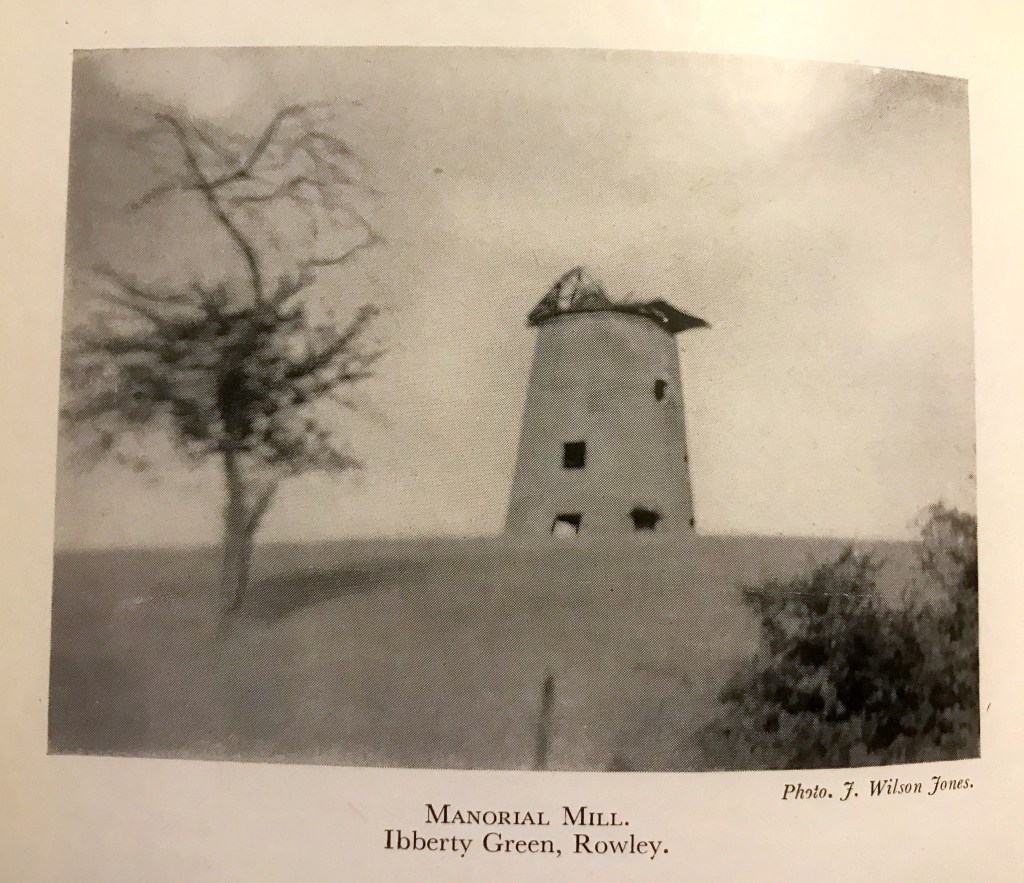
At an early stage there was a Mill or Windmill Farm at Tippity Green although this was not identified in the later censuses, it appears to have been on the site of the former parish windmill and this area was subsequently quarried away.

This photograph of the Ibberty (later Tippity) Manorial Mill appears in J Wilson Jone’s book, The History of the Black Country which was published in about 1950 although the date of the photograph is not known.

In 1841 Edward Alsop aged 60 was listed as a farmer at the Wind Mill Farm in Tippity Green, with his presumed wife and four children, plus a male servant. Next listed on the Census was Elizabeth Lewis, aged 40, an ironmonger, with her family and then Joseph Bowater who was a butcher and subsequent licensee of the Bulls Head so that is the correct area in Tippity Green. Neither the Alsop nor Lewis families are listed in the area by the time of the next census.

There was also a Knowle Farm but this is not quite within the area of the Lost Hamlets and I have not indexed the Census for this area.  

Also, the late Anthony Page has a picture in his first book on Rowley of Warren’s Hall Farm which was over the top of the hill on the Oakham Road, a large white house. It later also had riding stables and later still became a residential Nursing Home before being demolished and replaced by housing. Again, it is not quite within my study area and I have not indexed the census for this area.

Portway Farm, also slightly outside my study area, still exists though no longer in farming use, perhaps the only one of all these farms to have survived as a building to the present day.

The Censuses

The Censuses are not consistent about how the farms were recorded. Sometimes they were not listed by name. Where I have been able to identify the farms I have shown the results under details about each farm. To date I have only transcribed censuses for the Study area up to 1881. Later ones will follow in due course and I hope to upload the transcripts to a website for the Study at some point. 

Not all the censuses include the acreage farmed by each farm but where they do, they vary considerably from one census to the next which does not help with the identification process.

Where on Turners Hill were the farms?

I was very unclear until recently exactly where each of these farms was although I think I have them identified now. No doubt someone will help me out if I have this wrong!

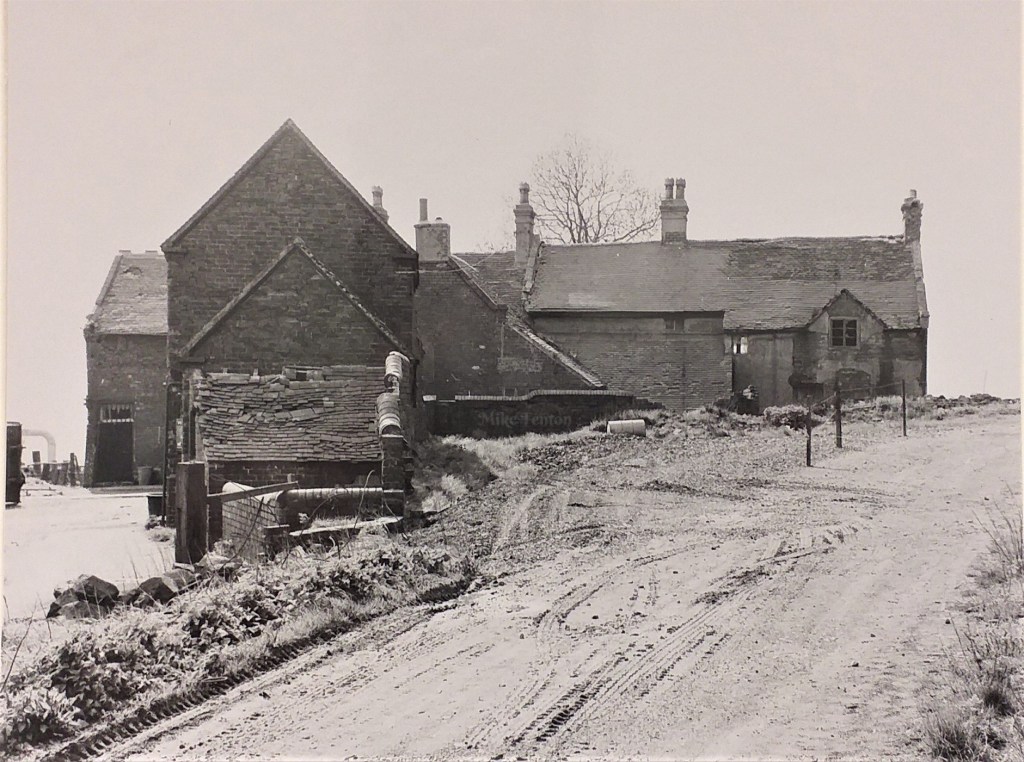
Freebodies Farm and Hailstone Farm were next to each other down a lane on the left off the Turners Hill Road, above the Hailstone quarry with the Hailstone Farmyard being at the end of the track in the area shown on OS maps as Gadds Green. Hailstone Farm occupied the two buildings shown on the left on this photograph and Freebodies the three buildings on the right.

The date of this photograph is not known (copyright also unknown but will be gladly acknowledged if informed) but the two farms are very much on the brink of the quarries so probably 1960s.

Turners Hill Farm was further up the hill, on the right.

Turners Hill Farm, 1969. Copyright: Mike Fenton

Many of the fields were divided not by hedges but by stone walls which is a very common practice in areas where there is a ready supply of stone for use, as in the Cotswolds and in the Yorkshire Dales. There were some hedges, though, because Reg Parsons who grew up at 2 Turners Hill in the late 1930s told me that his mother loved the wild sweet peas which grew in the hedges near there. He remembered Vera Cartwright with the milk cart which delivered daily to Blackheath, Whiteheath, Langley and Rowley Regis, seven days a week. Before the advent of milk bottles, milk in most parts of the country was taken round in churns and cans and the cans were taken into the customer’s house to be dispensed into their own jugs. This was not just in Rowley, my husband can remember, as a boy, helping his uncle with his milk round in Gloucester where the same system was used. He also said that the horse or pony would know the route and stopping places where they would wait patiently for the milk to be dispensed before moving on to the next stop.

Reg Parsons also remembered that there was a field below his home on Turners Hill which was used as an fuel dump in the Second World War, he remembers piles of Jerry Cans on concrete bases and also an anti-aircraft gun (known apparently as Big Bertha) near the Wheatsheaf pub. My mother used to be on fire watch sometimes during the war, with the St John’s Ambulance brigade and  she also remembered the gun there. Sarah notes that one of her grandfather’s fields was requisitioned by the army so this would have been for the fuel storage that Reg remembers and she also tells of family memories that during the war a German bomb landed on one of the fields killing a cow. And during air raids, the ponies pulling the milk carts had to be unharnessed in case they bolted, with all the potential loss of milk and vehicles. Later, in the 1950s, six caravans were put on the site which were lived in by local people.

Many people have mentioned their memories of the Cartwright family who farmed at Hailstone Farm on Turner’s Hill for many decades and who had a riding school, as well as the milk round. Sarah Thomas has written a fascinating book called Hailstone Farm about life on the farms there which she has published privately and, having come across my study online, she has very kindly sent me a copy but with the stipulation that she does not wish to have any of the contents to be put on social media. However, she tells me that she has deposited copies of the book in national and local archives so it would be well worth enquiring, if you are visiting local archives or perhaps Blackheath library, whether they hold a copy. Certainly Dudley Archives lists a copy and Sandwell Archives appear to but do not specify where it is held and it is not reservable through the library system. The book is full of photographs and pictures of documents and family memories and history. I will not be reproducing anything from it but it will inform me about the farms and where they were so that this study has a more accurate record of the farms and their ownership over recent years.

Freebodies Farm, Turner’s Hill

There has been, if not specifically a farm, then an area known as Freebodies on Turners Hill for centuries.

A Survey of English Place Names refers to it as an ‘early-attested site in the Parish of Dudley , a name of the manorial type, deriving from the family of Frebodi  found in Dudley in 1275 and 1327’. Bear in mind that for centuries the main route from Rowley to Dudley ran over Turners Hill so directly through the site where Freebodies Farm later was.  There was, may still be, an area of Dudley called Freebodies in the Kates Hill area of Dudley and the Freebodies Tavern was there until very recently.

The Morgan website has a large amount of well documented and referenced information on local families and the area and notes that a document in the Dudley Archives shows that there was a Deed Poll in about 1550 by a William Chambers Alias Ireland assigning ancient ecclesiastical land of the Priory of St John’s at Halesowen. A number of his descendants for the next 150 years appear in the local records of Rowley Regis and Dudley, using the names ‘Chambers alias Ireland’  These include intermarriages with the Darby family. The name Ireland is sometimes spelled ‘Ierland’ or ‘Yearland’. The same document demonstrates that they owned ex-monastic lands at Rowley called Freebodies, and this reference recurs in a number of later Darby wills. If you have Chambers/Irelands/Darbys or Cartwrights on your family tree it is well worth looking at this site https://www.morganfourman.com/  Sadly I have none of these names in my tree!

A survey by Lord Dudley’s Stewards in 1556 produced a rent roll in which William Ireland’s Freebodys, later called Freebury Farm is recorded, suggesting that it was established before the neighbouring Hailstone Farm.

A Will of John Chambers in 1870, implies that the farm on Turners Hill was originally part of the Freebodies estate. Certainly, John Chamber’s brother William was an executor of his will and was described as a farmer of Rowley Regis.

At other times it was known as Freebury Farm. Spelling was very variable in those days!

Censuses for Freebodies: At Freebodies Farm in 1841 were Josiah Parkes and his family (including Sophia Cole who was mentioned in my earlier article about the Cole families around Turners Hill, and one male and one female servant.

However, there is no mention of Freebodies in the 1861 Census nor any farmer listed in Gadds Green.  However, listed as Farmhouse, Turners Hill and as a farmer of 30 acres is William Smith, aged 54 with his wife Sarah and his Levett granddaughter, plus two servants. Was this Freebodies?

In 1871 there is no mention of Freebodies Farm but two households are listed as ‘adjoining Hailstone Farm’ – John Bradshaw, an agricultural labourer aged 26 with his wife and his 11 month old son plus his brother aged 21 and also an ag lab. The brothers had both been born in Haselor, Warwickshire and his wife in Solihull. Also described as living ‘adjoining Hailstone Farm’ was a blacksmith Henry Russell aged 33 with his wife and daughter. So both of these households were from outside the area. It is possible that the land of the two farms was being worked together and the farmhouse used to house either farm workers or tenants.

The next building listed is Brickhouse Farm which was some distance away in Cock Green on the Dudley Road and which was being farmed by the Levett family with one ag lab and one female servant. There is sometimes no accounting for the routes taken by census enumerators!

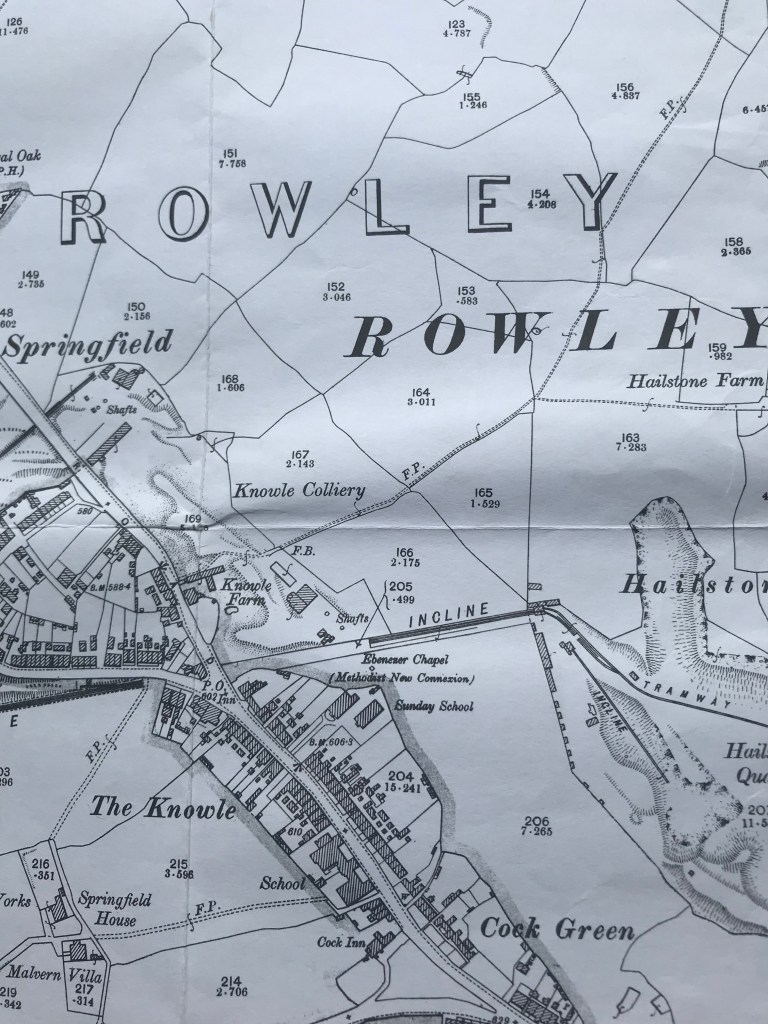
Or was there a well established path across the fields between Hailstone and the Dudley Road at Springfield which everyone used? This seems likely as Reg Parsons mentioned to me that his father, on his way home from work, would sometimes get off the bus at Springfield to buy something from the shop there and would then cut up over the  fields to home. This does seem more practical than the residents up on the hill always having to walk down to Perrys Lake, along Tippetty Green and to the Knowle that way. There is certainly a Footpath marked on the 1904 OS Map, here, running from Knowle Farm to Hailstone Farm and also further on up Turners Hill. .

Copyright: Alan Godfrey Maps

Hailstone Farm

A lease in Dudley Archives dated 1796 is for a lease of 21 years to Samuel Round, farmer, of  Hailstone Farm (a messuage called Freeberrys alias Fingerhold – that Finger ‘I the Hole popping up again!) so it seems likely that the farm was established by the late 1700s.

Sarah’s Cartwright grandfather had been born on Hailstone Farm but the family then moved elsewhere, again this makes me think of the information on the Morganfourman site that the Cartwrights were closely linked to this area as far back as the 1500s. He took over first Lamb Farm in 1912 and then Hailstone Farm in 1924 and ran their businesses from there, including the riding school established by Sarah’s mother and the milk round (which had originally been started in the early 1900s when the family were living at Lamb Farm), later taking on the tenancy of Freebodies in addition in 1932, subletting the house to tenants. In addition to the Riding School, there were some Gymkhanas there – much more detail about this and photographs in this article in the Black Country Bugle in 2019. https://www.pressreader.com/uk/black-country-bugle/20191106/281505048027440

Later part of the family moved to another farm at Bewdley and Sarah’s mother and father continued to live at Hailstone until the 1960s when the lease was terminated and the land taken back for quarrying.

There is much more detail in the book about the farms, their construction, plans, photographs, invoices etc from the business in the book, a real very personal record of a Rowley Farm in the 20th century.

Censuses for Hailstone Farm

In 1841, the farmer at Hailstone Farm was Samuel Round who was sixty, with three servants, possibly the Samuel Round mentioned above who was granted a lease in 1796 or possibly his son . I can find no trace of Hailstone Farm or the Round family in 1851.

In 1861, Keturah Round, a married lady of 54 was at Hailstone Farm with several children though no spouse and she is described as the Head of the household though not a widow. She had married Edwin Round in Dudley in the Sep qtr if 1854 and was previously Wheale.

In 1871 Hailstone Farm was occupied by Elizabeth Stickley, a widow with her occupation given as Farmer with her two sons John aged 37 and Thomas aged 27, both described as Farmer’s son, along with Ruth Lees, a servant but possibly also related to Elizabeth Stickley as her maiden name was Lees. In the previous census this family had farmed at Oatmeal Row, Cakemore, next door to some ancestors of mine!

In 1881, there is no mention of Hailstone Farm, and no farmer listed but there are three households listed as Hailstone Hill. Susan Jones, who was 50 and a widow was listed as an annuitant aged 33, born in Middlesex, as were the two young nieces living with her who were scholars. Her femail servant was born in Kingswinford. It is tempting to think that this was Hailstone Farm. One of the other houses was occupied by Joseph Hooper, a Farm labourer, aged 48 and born in Cleverley, Shropshire and his wife Ann aged 54, born Thame, Oxfordshire. The tenants in this area certainly almost all came from outside the area, it seems.   

Turners Hill Farm

Maps show Turners Hill Farm higher up Turners Hill from the other two farms and there is also a reference on some maps to Cloudland though not on recent maps.  There appears to be a large House there, too, Turners Hill House and sometimes the owners of this house were also described as farmers. It is possible, since there is evidence that the Downing family had other land in the area which they let out, that farming was not their principal occupation and that most of the land was farmed from Turners Hill Farm, rather than house.

Censuses for Turners Hill Farm/House

At Turners Hill in 1841 was Joseph Downing with his wife Nancy, son Isaac and two female servants.

By 1851 still on Turners Hill but with no name given for their residence was his widow Nancy Downing with their son Isaac, aged 35 who was a ‘proprietor of lands’ and three unmarried daughters, all described as annuitants, plus a Thomas Whitehouse who was probably Nancy Downing’s brother as her maiden name was Whitehouse. Thomas Whitehouse was a widower, and also a ‘proprietor of lands’ like his nephew.

By 1861 Isaac Downing was still living on Turners Hill, with his three sisters. This time he has given his occupation as “Principal occupation: general superintendence of the cultivation of land. “The Enumerator has added Farmer. But Stephen Parsons on Facebook commented that he remembers that in his time there was a large house on the right of Turners Hill Road which was Turners Hill House, and that Monks Lane ran below it which led to Monks Farm and the quarry. There was also an area in this location called Cloudland on some maps. So were the Downings perhaps  living at Turners Hill House but contracting out the farming? It seems likely. I was interested to see on the Facebook page that Linda George has receipts signed by Isaac Downing in 1855 and 1856 for the letting of a farm at Darby’s Hill to Samuel Cook so the Downing family may have had substantial land holdings around the area.

The Downing siblings, still all unmarried, were still on Turners Hill, in 1871, Isaac, now 55, described as Landowner and Farmer and also on Turners Hill and described as a farmer of 88 acres in 1871 is William Whitehouse, a widower, with his two teenage sons a female servant and a farm labourer. I note that a William Whitehouse had been one of the witnesses of Joseph Downing and Nancy Whitehouse in 1810 so may well have been an uncle or cousin to the Downings.  This census is the last one showing this Isaac Downing, as he died in November 1874 and was buried in St Giles.  

There was also listed in 1871, however, a farmer of 60 acres on Turners Hill, James Bridge aged 28 with his wife Anne, one female servant and one agricultural labourer so this may have been Turners Hill Farm. By 1861 Ann Bridge, now a widow aged  39 was the farmer at Turners Hill Farm, by now farming 40 acres and employing 2 labourers, a cowman and a waggoner.

By 1881, there is the family of Samuel Woodall, an Engineer and Iron Founder listed first under Turners HIll, probably at Turners Hill House. He was 35 and born in Dudley. His wife Mary was born in Birmingham. In addition his two brothers and a sister were also living with them, with three female domestic servants, again all born outside Rowley. I presume this was the house previously occupied by the Downings.

Listed at 5 Turners Hill was William Giles, aged 30 – a farmer of 70 acres employing one additional man. This presumably was Turners Hill Farm. He and his wife were born outside Rowley, though not a great distance, being from Kingswinford and Cakemore respectively.  Their elder two children aged 8 and 6 had been born in Enville, Staffordshire, the two younger aged 4 and 2 in Rowley Regis.  

The Parish Registers

The Chambers family

On 31 October 1544, Margrett, wife of William Chambers was buried, so there were already Chambers in Rowley at this date. In 1558 William Chambers was buried. Between the two dates three Chambers girls – Mary, Margaret and Agnes were all married at St Giles. The records from 1558 to 1566 are noted by the Vicar, Adam Jevenn, as being missing. (I wonder whether he was an early ancestor of the Jeavons families in Rowley and Blackheath?)

In 1575, Jone, as daughter of John Chambers was baptised and in 1602, John, son of Thomas.

On 12 Feb 1603, a child William was baptised, described as the son of Edward Shakespurre and Joane, d. of Christopher Chambers.  Freebodies is not mentioned but certainly Christopher Chambers was associated with Freebodies then .  In January 1641, Edward, son of William Chambers of Freebodies was baptised at St Giles, in 1744 another William Chambers of Freebodies was buried . Christopher Chambers was one of two people appointed in 1650, along with three others to be ‘Collectors for the poore’ which implies a certain social standing in the parish. At times, the Chambers used the name Irelands, too. Sometimes their abode is given as Churchend though it is not clear where this was. Certainly there were 152 Chambers entries in the Parish Register between 1539 and 1684 for baptisms and burials, 1539-1754 for marriages. On occasions Chambers were also churchwardens.

By 1723, with the burial of Elinor Chambers, widow,  her abode was shown as Ffreebodies. Another branch of the Chamber, however was at Brickhouse in 1724. In 1727, Christopher Chambers of ‘ye ffinger i’ the hole’ was buried. Another branch of the Chambers was described in a marriage in 1732 as ‘of Tividale’. So the Chambers seemed to be scattered right around Turners Hill over several centuries.  

The Downing family also had a long term presence on Turners Hill. The first Downing entry in the Registers is in 1644 when Robert, son of John Downing of Warrley was baptised, with  numerous entries after that, the first Isaac Downing (that we know of) being baptised at St Giles in 1672. In 1814 Isaac Downing, of Turners Hill was buried aged 75, having died of Asthma.

Back in 1722, Mary, wife of Isaac Downing ‘de ffox oak’ was buried but he appears to have remarried the following year and had a child Samuell  baptised at St Giles, with an Isaac Downing of Foxoak  being buried in 1727, probably not the same man but possibly related.

On 23rd July 1815, Isaac , son of Joseph and Nancy Downing, was baptised and Joseph’s occupation was given as a ‘Beast Leech’ – someone who treated sick animals. Joseph and Nancy were still on Turners Hill in the 1841 Census. A daughter  Mary Ann was baptised to them in 1818, followed by Lavinia in 1821 and Amelia in 1823. Another Isaac Downing was married to Elizabeth Nutt in 1815 so there were several Isaacs around then. Joseph Downing, originally a ‘beast leech’ and later a farmer died and was buried in St Giles on 2 Jan 1849.

Not all the Downings in the area were so well-to do – Mary Downing, aged 69 of Perry’s Lake was buried in April 1821, having died of cold. In 1823 William Downing, son of Joseph Downing a miner, died in the Poorhouse. In 1828 an Isaac Downing of Perrys Lake died aged 88 of natural decay so presumably there was some connection shown by the use of the name Isaac. There were also Downings in Mincing Lane, in Windmill End and in Portway, all apparently in labouring jobs of various sorts. By the 1840s another branch of Downings were living in Gorsty Hill and another in Waterfall Lane.  

Only the Downings on Turners Hill appear to have been wealthy and one wonders whether perhaps one child might have benefitted from a scholarship to the Old Swinford Hospital and been able subsequently to have gone into a profession which improved his circumstances. I would dearly love to find out a list of Rowley boys who attended that school!

Lamb Farm

Lamb Farm was, according to Roy Slim, in an article in the Black Country Bugle in 2021, a small farm adjacent to the Lion Farm which later gave its name to the Lion Farm Estate, near Whiteheath so slightly out of my main study area but included here as there were connections to Freebodies and Hailstone Farm . Roy says that the Throne Farm, farmed by the Skidmores, was much larger than either of them and I presume that the local roads with royal names were so named because they were on land formerly part of this farm. Throne Road, Throne Crescent, Queens Drive, Hanover Road, Tudor Road, Windsor Road, Stuart Road. And I am interested to see that some of the modern roads there, built where the quack was, also have names with Royal connections, Sandringham Drive, Palace Close, Majestic Way, with the Vikings, Celts, Druids, Goths, Romans and Saxons getting a mention, too!

After the Cartwrights moved to Hailstone Farm in 1924, Lamb Farm was let to various tenants, including Hawleys, Hewitts, Slims, Matthews and Skidmores. Roy Slim has also written about his family’s time there.

Lamb Farm was sold for development in 1945.

Local memories of the farms

On the ‘I remember Blackheath and Rowley Regis’ Facebook page, Raymond Kirkham remembered that he had known the farm halfway up Turners Hill as Cartwright Farm. This would have been Hailstone Farm, as at the time Raymond was growing up, the Cartwrights were working the area of both farms from Hailstone Farm and, although they leased Freebodies too and farmed the land, the house was let to tenants. He noted that the farm further up at the top of the hill was Monk Farm and this must have been Turners Hill Farm. He said that this whole area was his playground when he was growing up and his family got their eggs from the farm.

Ian Davies remembered Hailstone farm well, as he was related to the Cartwright family. Ian’s Geordie grandfather lived with the Cartwrights at Lamb farm, near Portway Hall, when he first moved south in the early 1900s. He remembers that by the 1950s George Cartwright had moved away to a farm near Bewdley and Hailstone Farm had been taken over by their daughter Vera and her husband George Thomas. George taught Ian to ride. The quarries were already threatening to swallow the farm back then. The narrow track from Turners Hill had quarries close on both sides. The farmhouse and top of the land were swallowed up by the Tarmac mega-quarry, The lower area stretching down to Springfield was used for housing.

Ian also remembered Lamb Farm which was on the left going down Throne Road, immediately after Portway Hall. He used to walk past the drive on the way to his grandparents’ house in Newbury Lane. He thinks that St Michael’s School was built on the land and that in the 1800s Portway Hall colliery was on the farm’s land and he thinks this was responsible for the subsidence that ultimately forced Portway Hall to be demolished.

Ian also kindly added a link on the Facebook page about memories of Blackheath and Rowley Regis to an article written by Sarah Thomas in the Black Country Bugle which appeared in Nov 2019, including various photographs.

https://www.pressreader.com/uk/black-country-bugle/20191106/281505048027440

There are obviously several family connections to the Cartwrights still in the area as Margaret Higgs said that George Cartwright was her father’s uncle, her grandmother was George Cartwright’s sister.

 Mark Northall  said that his father Frank Northall had worked at Cartwright’s farm as a lad.

Jill Watkins-Beavon had lived in Gadds Green which was the land opposite Hailstone farm, later her fmily lived in one of the four houses in the quarry.

William Perry remembered in 2018 that his father had told him that when he was young he would walk up Turners Hill to Cartwright’s (Hailstone) farm where they had a lovely horse that he used to stroke.

So this is all the information that I have found to date about the farms in the Lost Hamlets, all disappeared now into the quarry but helping to sustain the local populace in their time, and about the families who farmed them over the centuries. More information would be very welcome and this can be added, corrected or a further post done if sufficient additional information is found.