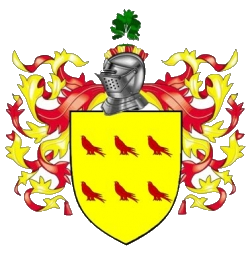
Families of the Lost Hamlets – The Rudkin family

Rudkin is not a common name in Rowley Regis and I only came across it while I was researching the Levett family. Yes, another rabbit hole for me to explore!

Harriet Levett (1872-1956) was the third of the four daughters of Richard Levett, he the second son of James Adshead Levett the Elder and brother to James Adshead Levett the Younger. Richard, born in 1836, was married to Mary Merris and they lived in Perry’s Lake, where Richard was a Boot and Shoe Maker and he also helped his brother out with brewing, as mentioned in my recent article about a court case.

Harriet’s mother died when Harriet was only six and subsequently she was staying with her grandmother Mary Levett in Gadd’s Green at the time of the 1881 Census, while her father and other sisters were living in Hawes Lane, and in 1891 she was in Perry’s Lake with her uncle James Adshead Levett and his son William, (also mentioned in the court case), although her father was by then immediately next door with his youngest daughter Mary Ann, aged 16 and a visitor Ann M Parkes, also 16, a dressmaker, so perhaps a friend of Mary Ann. 

On 13 May 1894 Harriet Levett married John Rudkin at Holy Trinity, Old Hill, when he was 26 and she was 22.

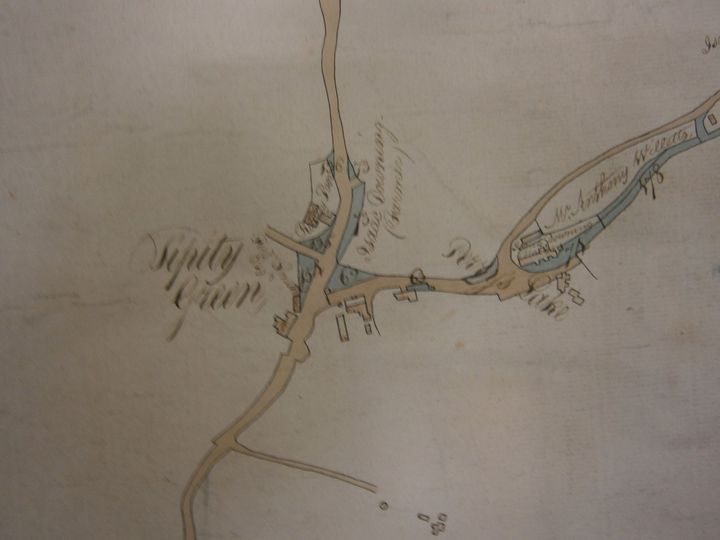
John Rudkin, born in 1868, was not a Rowley native, but he was living at 17 Tippity Green in 1881 and at 24 Perry’s Lake in 1891, lodging with Edward Payne, along with his brother William so he had  been living very close to Harriet for most of their lives, the boy next door, as it were. I say that John was not a Rowley native but his younger brother William was, born in Rowley Regis in 1875. They were two of the sons of William Rudkin. So I looked for John in the 1871 Census and found him living with his family William and Jane Rudkin in Cainham, near Ludlow in Shropshire. Now, where have we come across Cainham before? Ah, yes, when I was looking at migration patterns among the quarry workers in an earlier article when I found that quite a few sett makers had moved from Mountsorrel in Leicestershire to Rowley Regis to work, had married in Rowley and then moved on to Cainham in Shropshire. And sure enough, when I looked at this family, the pattern fitted again.

Copyright unknown, this photograph of the Clee Hills quarries in Shropshire shows that the quarrying area is not dissimilar to Rowley but without the surrounding heavy industry!

William Rudkin the Elder, John Rudkin’s father, was born in 1835 in Groby, Leicestershire. In 1851 he was living in Mountsorrel, Leicestershire where his father (also William) was a Quarry man and William himself was a Frame Work Knitter, another repeating detail as a Leicestershire occupation.In 1861, William was in Rowley Regis. The ten years between the two censuses were eventful for the Rudkin family.

The 1871 Census shows John Rudkin, with his father William, a Stone Cutter, who was living in Cainham with his wife Mary Jane (nee Parkes, I would later find). Jane, aged 25, had been born in Rowley Regis and their oldest child Sarah J, aged 14 was also born in Rowley Regis , while son Thomas aged 5 was born in Cainham, John aged 3 apparently born in Ludlow, and Elizabeth A, aged 1 also born in Cainham. And living with them were Thomas Parkes, his brother-in-law, aged 15, a labourer and his widowed mother-in-law Mary Parkes, both of them born in Rowley Regis. A classic Mountsorrel/Rowley/Cainham pattern!

And because I always try to find the birth registration in the GRO registers for my records, I was able to confirm that the mother’s maiden name of all the younger children was indeed Parkes.  So that all tied together nicely. Except…

Looking at the family in 1871, I noticed that the oldest child Sarah J was 14, born in 1857, but Jane Rudkin was only 25. It seemed very unlikely that she had had a baby at 11. Technically possible perhaps but unlikely. Sarah J must have been born to someone else. So I looked for Sarah’s birth registration – and there was no birth registration for a Sarah Jane Rudkin in the right period. There was, however, a registration of a Sarah Jane Parkes in the first quarter of 1856, with no Mother’s Maiden Name recorded which is usually an indication of illegitimacy. And then I found a baptism on 27 July 1856 at St Giles, Rowley Regis for Sarah Jane Parkes, the illegitimate daughter of Ann Parkes. Not Mary Jane, who was only eleven at this time. So, another puzzle – who was Ann Parkes?

Some more digging around showed that Ann Parkes was born in 1833 in Rowley Regis, the daughter of Joseph Parkes of Tippity Green. Ann Parkes and William Rudkin had been married on 26 Oct 1857 at Dudley St. Thomas, and their son Charles (1858-1861) was born in the last quarter of 1858, followed by Mary (1861-1862) and twins Ann and Maria in 1863, all in Rowley Regis. Now I was able to find William, Ann and Charles in Tippity Green in the 1861 Census. It appears that William accepted Sarah Jane into his household as she was shown as Rudkin in all subsequent censuses. Alas, Ann died, in childbirth or soon after the twins were born, as she was buried on 21 Jul 1863 at St Giles, Rowley Regis, aged 28 and of Perry’s Lake, shortly after the birth of the twins. Baby Ann died in October and was buried on 25 Oct 1863, followed a few months later by her twin Maria who was buried on 20 Jan 1864.

So poor William Rudkin had lost his wife and all four of his children in the space of six years. It is possible that Sarah Jane was also his child but equally possible that she was not as William and Ann did not marry until Sarah Jane was at least fifteen months old.

William, a working quarryman, must have had a lot of help for those new-born twins to survive even a few months. He was living close to his in-laws and no doubt they and other neighbours would have helped to look after the children. So perhaps it is not surprising that on 19 Oct 1863, (just three month’s after Ann’s death)  William Rudkin married again, at Dudley Saint Thomas, this time to Mary Jane, usually known as Jane, Parkes. Who appears to have been Ann’s sister!

Perhaps William felt Rowley was not a good place for him or perhaps better money was  on offer as they must have moved to Shropshire soon afterwards. William and Jane went on to have four children in Cainham – Edward Thomas (1866-1923), John (1868-1949) who married Harriet Levett and Edith Ann, (1870-1942). As the dates show, these three children all survived into adulthood unlike most of their earlier half siblings. Another son George Henry was baptised on 13 Oct 1872 at Knowbury. But by the time of the 1881 census, everything had changed again.

By 1881, Mary Parkes, now 68, was back in Tippity Green, living with her daughter Elizabeth Parkes, aged 28, the three Rudkin grandchildren, a granddaughter Annie Parkes, aged 6 and another Rudkin grandson named William who was aged 5 and born in Rowley. (Also a lodger William Foley, a miner aged 43). When you think how small the cottages in that area were, it must have been quite crowded.

Where were William Rudkin and Jane? William had died in Shropshire in 1872, just a couple of months after the baptism of their new son George Henry and William was buried on 10 Dec 1872 at St Paul’s church, Knowbury. I do not know what he died of and can find no other records about him but he was only 37 so possibly an industrial accident or perhaps a disease. And Jane? She had obviously moved back to Rowley with her mother and the children by 1874 because George Henry died and was buried at St Giles on 15 Feb 1874, aged 1. And she had had another child William in Rowley Regis in 1875. There is no way of knowing who was little William’s father but it could not have been William Rudkin, her late husband since he had died in 1872.

Jane herself was not in that 1881 Census entry because she, too, had died and had been buried at St Giles on 21 Apr 1878, aged 31.

So poor Mary Parkes, herself elderly, was now responsible for her four Rudkin grandchildren, although by 1881 both Thomas and John were working at the quarry.  

What became of the Rudkin children?

I have not been able to trace Sarah Jane Parkes or Rudkin after the 1871 census, there are no definite sightings of her under the name Rudkin and there are so many Sarah Parkes that it is not possible to be sure which if any of them is her.  She could have married, gone into service, died under either name – it remains a mystery.

Edward Thomas Rudkin joined the army at some point shortly after this, and when he married Kate Cook in Buriton, Southampton in 1887 he was a Corporal. Presumably travelling with the army, they had two daughters in India, one of whom died there. When they returned to England, they lived in Army Cottages in Kempsey, Worcestershire, presumably based at the Barracks there and later moved to Saltley in Birmingham where Edward was working as a Commissionaire at the Motor Works in 1911. By 1923, they had returned to the Portsmouth area where Edward died in 1923 and Kate in 1936. Their surviving daughter Edith married George Henry Day in Portsmouth in 1915 and she was still living there until she died on 27 May 1941, listed among civilian war deaths there so possibly killed in bombing raids on Portsmouth. She and George Day appear to have had three sons, the first born in Leicester. I wonder whether she had gone back to her Rudkin family there?  Pure speculation, of course!

Edith Ann Rudkin went into service and in 1891 she was living at 6 Siviters Lane, Rowley as a domestic servant to Dr Beasley. In 1901 she was still described as a domestic servant but was visiting a friend in Dudley. In 1908 she married a widower Charles Upton in Aston, Birmingham  and in the 1911 Census they were living in Hednesford, Cannock  with his two daughters from a previous marriage and Edith May, their own daughter born in 1910. Sadly little Edith May died in 1915. Edith Ann was a widow according to the 1921 Census and she died in Cannock in 1942, aged 72.

John Rudkin, my starting point for this family mini-study, had married Harriett Levett in 1894 at Holy Trinity, Old Hill and they had four children. In 1901 they were still living in Perry’s Lake with their son Lawrence (1895-1951) who was six. John was working as a hewer in a coal mine.

By 1911, they had left Rowley and were living in Rugeley Road, Hednesford, Cannock – yes, the same place as John’s sister Edith, nineteen miles from Rowley, according to Google maps. Whether Edith moved to be near John or vice versa, I don’t know but they were living less than a mile apart. By this time John and Harriett also had Edith (1904-1979), Mary (1907-1927) and William Thomas (1909 – ?). John was still working as a miner or Stallman at the pit face and now his son Lawrence, aged 16, was also working in the pit as a driver (underground).

In 1921, John and Harriett had moved again and were living in Kingsbury, near Meriden, the other side of Birmingham. All their children were still at home and again both John and Lawrence were working as miners at the Kingsbury Colliery.

Most of the children stayed in the Meriden area from then on, although it is possible that the youngest William Thomas settled elsewhere as he joined the Navy in 1927 and his service details note him as having been traced for his pension in 1949, though I cannot find any other definite information for him.

John and Harriet appear only to have had two grandchildren, one of them Betty, (the illegitimate daughter of Lawrence) who was born in Tamworth in 1926 and emigrated to the USA with her American husband in 1947, perhaps a War Bride. The only photograph I have been able to find of the Rudkin family in this country is of a young Lawrence in what looks like WWI army uniform, which was uploaded to Ancestry and was marked on the back as ‘Betty’s father’. Her application for naturalisation in the USA gives Rudkin as another name so it appears that this was an acknowledged connection.  So the Rudkin genes stretch over the Atlantic, it seems.

Lawrence Rudkin as a young soldier, possibly in WW1. Copyright unknown.

John’s daughter – another Edith – had married William C Monk in Sutton Coldfield in 1941 and had one son Peter in 1942 so he was their only grandson.

The Rudkins in Rowley

So none of the Rudkin family stayed in Rowley Regis, mostly they and their descendants ended up in Warwickshire or further afield and the name will be unknown to most Rowley folk.  

So why have I written in such detail about a family who had such a brief encounter with the village?

I have recently been reading some books by Gillian Tindall who is known, according to reviews,   as a superb ‘micro-historian’.  She is someone who writes about small communities, individual people, a village, a single house – in great detail. Her writing is fascinating and I learn from her writing constantly. The first book of hers which I read was ‘The house by the Thames’ and it is all about a single very old house which survives even now, between the Globe theatre and the Tate Modern on the Embankment in London. It is most interesting and I have learned much about the history of the area and the people who lived there. (I now have three other books by Gillian Tindall waiting to be read!) But it was in the first pages of this book that I read about the philosophy which drives her research and this sang to my heart. She wrote in the first chapter:

“the vast majority of men and women in every time do not leave behind them either renown or testimony. These people walked our streets, prayed in our churches, drank in our inns or in those that bear the same names, built and lived in the houses where we have our being today, opened our front doors, looked out of our windows, called to each other down our staircases. They were moved by essentially the same passions and griefs that we are, the same bedrock hopes and fears, they saw the sun set over Westminster as we do. Yet almost all of them have passed away from human memory and are still passing away, generation after generation –.”

“Witness to the living, busy complex beings that many of these vanished ones were tends to be limited to fleeting references on pages of reference books that are seldom opened. At the most, there may be a handwritten note or a bill, perhaps a Will, a decorative trade-card, a few lines in a local newspaper or a report from a long obsolete committee, possibly an inscription on a tomb. There may perhaps be a relevant page or two in an account of something quite other, or a general social description which seems to fit the specific case.

Scant evidence, you may say, of lives as vivid and as important to the bearers as our own are to us today. But by putting these scraps together, sometimes, with luck, something more coherent is achieved. Pieces of lost lives are genuinely recovered. Extinct causes clamour for attention. Forgotten social groups coalesce again. Here and there a few individual figures detach themselves from the dark and silence to which time has consigned them. They walk slowly towards us. Eventually we may even see their faces.”[i]

‘Neither renown nor testimony’

In Rowley Regis today, of course, there are very few old buildings and our ancestors did not live in our particular houses, look out of our windows or call down our stairs. But the landscape they gazed on has not changed so much and indeed with much of the polluting heavy industry gone or cleaned up, the local scene is perhaps now closer in appearance to the pre-industrial landscape our earlier ancestors would have known. They, too would have gazed across the valley to the Clent hills and been able to spot distant church steeples and the ruins of Dudley Castle, still visible today.

While I was researching Harriet Levett and her marriage to John Rudkin, I had realised that John had grown up in Tippity Green and Perry’s Lake, in the heart of the Lost Hamlets, and that his father had been married to not one but two Rowley girls, the older of whom had borne him four children in Rowley. The children had all died as infants, buried, like Ann herself, in Rowley Regis at St Giles and only one of her children Sarah J had grown to adulthood. Sadly this would not have been an unusual situation with babies in those days. Then I realised that, looking at other Rudkin family trees on Ancestry, that they only listed William Rudkin’s marriage to the second Parkes daughter Mary Jane. Poor Ann Parkes and her infant children had been lost in the mists of time.

I hope that my One Place Study is helping to make the history of the lost hamlets, with the complex web I keep finding of family relationships and intermarriages,  more coherent , as Gillian Tindall suggests is possible. And I hope, in particular, that this piece has helped to preserve the memory of this family, and especially of Ann Parkes, (1835-1863), daughter of Joseph and Mary Parkes of Tippity Green. This ordinary and short-lived Rowley girl, has previously been lost in that ‘dark and silence’ to which Gillian Tindall refers, and, although we may not see Ann’s face, I hope that she has at least ‘walked slowly a little way towards us’. 


[i] Copyright Gillian Tindall – The House on the Thames, published by Pimlico 2007. ISBN: 9781844130948

A double charge against Licensed Victuallers at The Portway Tavern

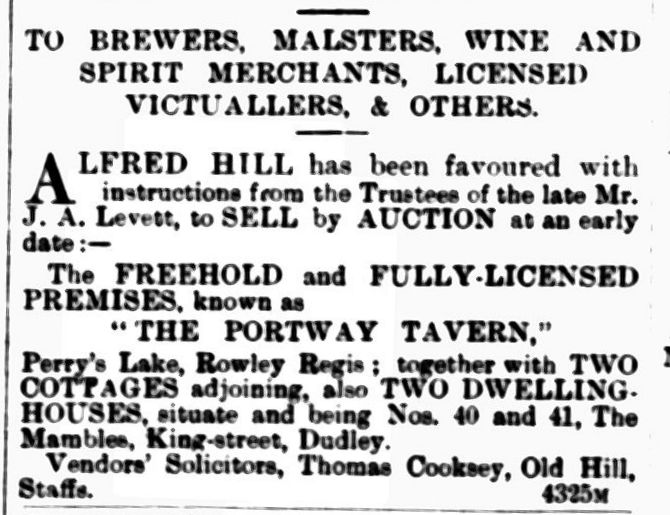
The Portway Tavern 1889 -– Concealment of Wort – a Midnight Brew – Heavy Penalty

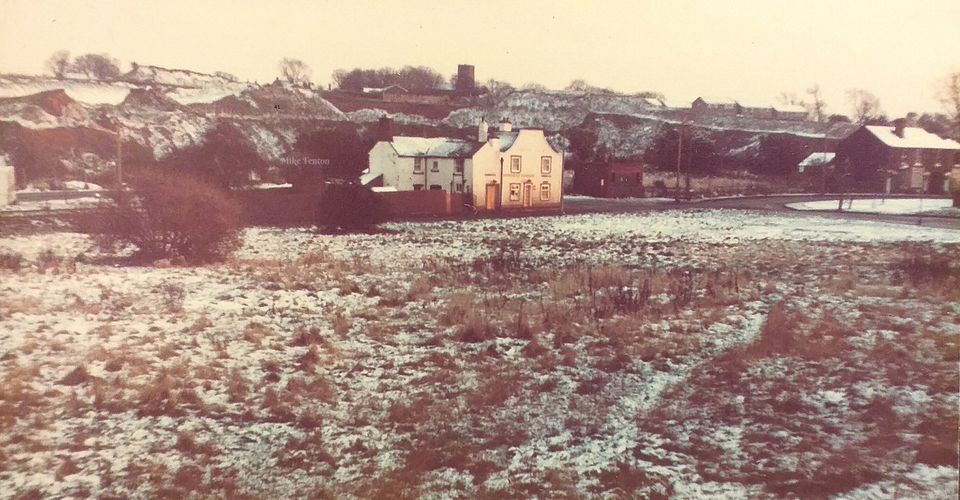
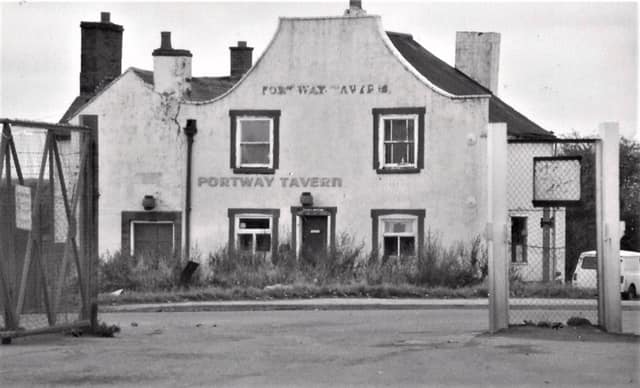
I came across this story while I was researching material on the Portway Tavern but am posting it separately as it is fairly detailed and lengthy. There will be a more general post on the Portway Tavern soon.

In 1889, James Adshead Levett Jnr and another man Joseph Pensotti of Cross Guns Street, Kate’s Hill faced a more serious charge of concealment of Wort.

A quick diversion – An Italian in Dudley?

The name Pensotti sent me off down a rabbit hole because I wondered how he came to be charged with this offence and whether he was Italian.  Mr Pensotti was not a Rowley man, in the 1891 Census he was listed at the Cross Guns Street address in Kates Hill but listed as a Post messenger. That was his occupation in a couple of earlier censuses too which showed that he had been born in Dudley but in 1851 he was a publican in Dudley and prior to that I found an entry for him in a trade directory when he was listed in Dudley as a “Barometer, Thermometer etc Manufacturer”, along with three other men, all of whom had Italian names – Charles CasseraCarlo Cetti, Andrew Comoli and Joseph Pensotti!

Intriguing. I wondered whether the ‘etc ‘ they were making included hydrometers which are using for checking the alcohol content of liquids? (almost certainly yes, is the answer!) Every brewery would be required to have these, I would have thought, as part of their tools of the trade. Perhaps his specialist knowledge led to him being involved in the brewing trade with James Levett.  

A little more research informed me that many makers of barometers in this period had originated in Italy and moved to London initially and gradually spread around the country, and it seems likely that these men were all of Italian descent although they may well have been born here. Another little glimpse of unexpected things in the Black Country! There is a most interesting website about Italian makers of fine instruments, many from the Como area of Italy[i]. Since the decorative cases for the barometers would have been made of wood, it is interesting to reflect that the fine woodworking skills required for this would not have been so very different from those famous Italian makers of violins, Stradivarius, Guarneri and Amato who were also from Northern Italy within a few miles of Milan. The barometer pictured here was not made locally and is a Torricelli barometer from the mid-1800s but illustrative of the sorts of instruments made by Italian craftsmen.

Torricelli barometer, copyright unknown but will be acknowledged on further information being provided.

It turned out from evidence given at the trial that Mr Pensotti took no active part in the business and both men were executors of the late James Adshead Levett. Who had died in 1878, more than ten years earlier! Evidence was given that the entry in the book was made jointly which was why they were both prosecuted. Quite why this was still happening so long after James’s death is another mystery but I will investigate further.

Back to the Wort

What is Wort, I hear you ask? Well, I had to look it up too. Wort is basically a liquid made from grain intended to be turned into beer by yeast.  Mostly water—about 80% to 90% for most types of beer—wort is mixed with extracts from the grain. This is what goes into the brewer’s mash tun, which is a large vessel where the brewer combines barley or other grains with hot water, initiating the process called mashing. Mashing is like a hot bath for crushed malted grains (usually barley). Immersing the barley in hot water releases enzymes that break apart the barley’s starches into simple sugars. This sugary substance is the unfermented wort.

The charge against Levett and Pensotti was that “they, being brewers, did, on the 31st March, use certain malt, to wit, 8 bushels, the brewing of beer, without making or having made an entry in the book duly delivered to and kept by them, as such brewers for such  purpose, as by the statute in that case made and provided, as was required to be made. “  They were also charged with concealing six gallons of wort, on the 1st May, so as to prevent certain officers of the Inland Revenue from taking an account of the said worts.

Tax evasion is nothing new, it appears. But I had not previously  realised how strictly the brewing business was regulated by the authorities. But it appears that every single brewing had to be accounted for and recorded in this book.

The defendants pleaded guilty to the second charge which was therefore not gone into entirely, the reporter notes, although there was the information given below.

The  entry for the two men in what was presumably the start of the brewing book, the court was told, stated that they intended to carry on the business of brewers for sale and which rooms within the premises were marked on a plan as those in which the brewing would be carried on. Other parts of the premises were not so marked but when an Officer (it is not clear whether this was a police officer or an excise officer) visited the premises on 1st May he found ‘practically six gallons of wort’ in the fowl house, which was not part of the approved area. Two brewings had apparently taken place during that day, one in the  morning and one was in the course of being collected. These worts ‘for no apparent reason’ were in the fowl house and was not brought to charge with the other wort. When spoken to about it, Levett had said that the wort was part of the first wort and had been put there to cool. The officers thought this was a very funny place to put it! The officers alleged that while they were making their survey, a son of Levett’s was heard to remark “they had got it now”, though they did not at the time understand what this referred to.

As for the other charge relating to malt concealment, it seems that brewers should make an entry in the brewing book twenty four hours before it was to be used. There was such an entry on the 29th March, which made the officer think that there would be two brewings on the first April.

The Witnesses for the Prosecution

The Policeman’s Story

Police Constable Himan gave evidence that he knew both of the defendants, as James Levett ‘carried on the business of the public’  which was part of his division. He remembered something in connection with the 30th March. He went to the defendant’s house that night from something he had heard about 12.15. He waited a few minutes outside the doors and at length saw them open. There were lights and lots of steam especially from the direction of the Brewhouse. Noticing the lights, he thought there was a police offence being committed. He therefore kept quiet and watched, and ultimately saw the defendant Levett come to the doors and look down the road, and afterwards heard him remark “It’s all right, Will,now.” Then his son William came and shut the doors. After that they appeared to be busy in the Brewhouse.

There being a space between the gates when shut the officer inserted a stick and lifted the bar which was placed across inside, and went into the Yard. He there saw the defendant Levett, standing by the door of the Brewhouse. He commented to Levett that he seemed busy and Levett responded that “We’re only brewing”. The Brewhouse door was open and he could see inside. He saw the son William and Levett’s brother Richard standing by the mash tub. One was emptying malt into it and he believed Richard was pouring in the malt while William was stirring it. He could see the steam rising from the tub. He told the court there was no doubt in his mind as to what they were doing, they were mashing malt up, he felt confident.

He noted that there were two females in the house at the time. He had first observed the brewing at about a quarter past twelve and from the time he first observed it to the time he went into the Brewhouse would be about twenty-five minutes. He was on the premises about twenty minutes to one. He saw Mr Levett, his son and his brother but did not see Mr Pensotti there and had never seen him in the house. He also noted that he had frequently seen lights and signs of persons being busy on Saturday nights but since this night he had not.

The Excise Man

The Excise Officer was John Stanislaus O’Dea, a good Black Country name if ever there was one! In fact I understand that it was common practice in those times for Excise Men to be drawn from outside the area so that they had no personal loyalties to distract them from their duties.

Mr O’Dea told the court that the defendant’s house was in his division. He delivered the Brewing Book and had surveyed the premises and made entries in the book. There was an entry in the book on the 30th March to brew on the 1st April. He visited the premises on the Monday and took the produce of the morning’s brewing. His survey book showed the temperature as regular. He was on the premises at nine o’clock in the evening and the brewing was then in operation and the produce of that brewing was collected next morning.

On being cross-examined, he had said that he personally knew nothing about the alleged brewing on the Saturday night or Sunday morning. The first intimation he had from the policeman was on about the 15th April. He was asked whether he had sought out the policeman or whether the policeman had sought him out, to which he replied that he had met the policeman on the road and he had mentioned it to him. When he had gone to the premises, on the Monday evening, he found the produce was all regular and also the brewing which had taken place in the morning.

He had had considerable experience as an officer, and it would all depend on the circumstances as to the time it would take to remove the traces of brewing. They brewed nine bushels of malt which should produce 162 gallons of beer. There were worts in the vessels, the results of the brew, at one o’clock. The defendants had about eight barrels but he could not tell how many barrels were used for ale. Wort could be fermented at the temperature of the atmosphere. The fowl house was about 9ft by 6ft. On the Monday he went into the cellar; no barrels were gone. There were plenty of barrels in the yard of the defendants had chosen to use them.

The prosecution then asked further questions and he said that the brewing premises were close to the house and that Levett’s brother and mother lived near.

The evidence for the defence

The Levetts had a solicitor to defend them, a wise decision, I think.  As lawyers in our courts do now, his first argument was that his clients had voluntarily pleaded guilty to the first charge of concealing the worts although he suggested that technically the question would have been raised as to whether it was or was not a concealment which had taken place, but over and above what the vessels would contain were these six gallons of worts which were put into the casks. Seeing the officer come onto the premises, the brewer, instead of letting them remain, foolishly, and, so far as the prosecution held, criminally, took the vessels into the fowl house. That was more a technical offence than a wilful intention to defraud the authorities of their proper due. No one could see why they wanted to conceal the worts as the duty on them only amounted to something like 1 shilling and 3 pence, knowing they were liable to such a heavy penalty.

The real point at issue with the other charge, however, was that it was alleged that on Saturday night or Sunday morning his clients used eight bushels of malt wort without entering it in the book. It was established beyond doubt that it was entered in the book that a brewing was to take place and that fact was in favour of the defendant. What became, he asked, of the 160 gallons which the prosecution alleged the defendants had brewed?

It would have been better if there had been any evidence to corroborate the police officer, because the witnesses for the defence would swear that the officer was never on the premises; his client was entitled to the benefit of any doubt about this. His client had pleaded guilty to one charge and could have pleaded guilty to the second charge but disputed this.

As regarded Mr Pensotti, he had nothing whatsoever to do with the business and was not liable for the first offence even if the prosecution held he was liable in the second. The prosecuting lawyer did not agree and said that Mr Pensotti had become liable by signing the entry.

The Witnesses for the Defence:

Richard Levett, the first witness, said that he was brewer for his brother. (Richard Levett was recorded in all other records I have seen as a Boot and Shoe maker, living in Perry’s Lake but this is another instance of people having more than one job and it may well have been that his brother did not pay him for this or perhaps in kind or he did this as a family habit or in lieu of rent.) He stated that he remembered the 30th March, the Sunday and the following Monday. He brewed on the Monday at one o’clock. He was on his brother’s premises on Saturday but went home about seven, and returned again at seven on Sunday morning. He did not see Police Constable Himan. He had brewed for his brother for twelve months and had never brewed for his brother on a Saturday night. He usually brewed on a Monday morning and it took him seventeen hours to get through the brewing. He lived next door to the public house and his mother lived next door but one. The prosecuting counsel commented that they were all relatives in that little corner with which he agreed.

He then referred to a date in May when the supervisor was about when he had begun to brew about one o’clock. They bought their malt ground. It took him six or seven hours sometimes to get up steam. He did not remember anything about putting wort down the pigstye(sic). His brother usually carried the malt down. It was then shot into the mash tub and was stirred up with the mash rule. The police had never come into the Brewhouse and spoken to him when he was brewing.

He could remember that he had never brewed upon a Saturday night or early on a Sunday morning, he had never seen a policeman at the Brewhouse door on a Saturday, Sunday or Monday night.

The magistrates wanted to know more about how the wort had got into the fowlhouse, the subject of the first charge. He put the wort into the fowl house. He told Mr Davies (the supervisor) that he put it there. He put it into cans.  He could work well up to the standard, that was to say he could get more out of the malt than was generally supposed to be by the law. He was told by his brother to put the cans in the fowl house to cool. (This evidence does appear to be somewhat less than consistent!)

William Levett, the next witness, was the son of the defendant and he also denied that brewing was carried on on the 30th March on his father’s premises. They brewed the following Monday and he helped. He said that Constable Himan did not come into the Brewhouse and see them brewing, as they never brewed late on Saturday night or early on Sunday morning. On being cross-examined he stated that Himan had never been on the premises when they were brewing. His father had never said anything to him about the policeman being there. He did not know the cans were in the fowl house. He had no reason to say, when the officers were inspecting the premises that “It’s only the fowl house.” He did not exclaim  “By —, he’s seen it now!”

Eve Taylor, charwoman, said she was cleaning the defendant’s house on Saturday night, the 30th March and was there till two o’clock. She had never seen any brewing there on Saturday night or Sunday morning. Cross-examined, she said that she was no relation to the Levett family. She had hot water to clean with and the small boiler was used to heat the water. She remembered the night because Mrs. Perry’s child had a fit. Mr Levett, his son and daughter were all the persons on the  premises at twelve o’clock. She did not see Richard Levett there after she went at ten.

Sarah Perry, daughter of defendant Levett, said that she was at her father’s house till eleven, and there were no preparations for brewing. She did not see her uncle Richard there after seven.

Nellie Levett, another daughter, said Constable Himan did not come to the house at all on the 30th March.

The Verdict

The Magistrates then retired briefly to consider their decision. After only a few minutes they returned and Mr Bassano said that they had decided to fine Mr Levett on the first charge of brewing £40 and costs; in the second case of concealing wort he would be fined £5 and costs.

As to Mr Pensotti, they felt that they ought to make him feel he had some responsibility and fined him £5 and costs in respect of the charge of concealing wort.

The total amount of fines and costs was £56 1s 6d.

What a long and convoluted tale!

The Levetts obviously closed ranks in their evidence but it does seem odd to me to have a charwoman cleaning at two o’clock in the morning! A tidy up and clean around would surely not take several hours, especially when it was dark and lighting was probably quite poor.

I do not doubt that it would have been possible for some barrels of beer to have been spirited away to other houses before the Monday if an illicit brewing had taken place. I wasn’t at all clear either whether these offences all happened on the same night or whether there was one policeman or more. Why was the policeman on patrol at that time of night in this sleepy hamlet (unless it was to look for after hours drinking in the pubs and beerhouses, which may well have happened on a fairly regular basis!)? With dark streets and cold nights, it’s hard to imagine that there would have been much else happening in Perry’s Lake on a cold March night to require a regular police presence and I would have thought that he would have been quite conspicuous in his uniform, loitering in Perry’s Lake late at night. One can’t help feeling that Mr Levett and his establishment , for whatever reason, were being kept an eye on by the authorities!

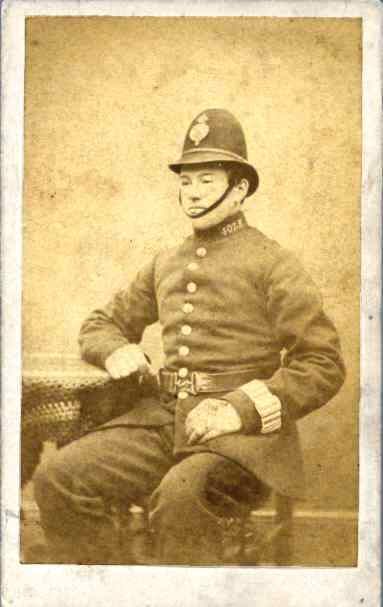
A typical policeman’s uniform in about 1880 – copyright unknown.

There was also no reference in the evidence described to any smell of brewing – and yet the smell is quite distinctive – I can remember when I worked in Smethwick for a couple of years and travelled there past the brewery in Cape Hill, the smell when they were brewing was very strong, it must have been apparent to anyone nearby that brewing was taking place, late at night on a Saturday – perhaps local people knew and just kept their mouths shut! Or perhaps there was no brewing, as the Levetts claimed. I am surprised that the police constable did not mention this smell when he was saying that he was sure they were brewing.

Who do you believe? What would your verdict have been? I would be interested to hear your views!


[i] This is the site about Italian craftsmen in the UK. http://italophiles.com/london_italians2.htm

Families of the Lost Hamlets – The Levetts

The Levett Family – with side Orders of Gaunts, Nocks and Fletchers!

Among what I think of as the ‘core families’ in the Lost Hamlets, ie the families who appear in every census so far  transcribed, are the Levetts.

I am ancient enough to remember a Levett’s butchers in Blackheath, just opposite my grandfather’s home in Birmingham Road. It was on the same side of the road as the Shoulder of Mutton public house and there is a story which tells that a Levett, who was a Butcher in Birmingham Road sold the land on which the pub was built and which had previously been used as his abattoir or shambles, and that he had specified that it should be called “The Shoulder of Mutton” as a nod to his trade. The Levetts Butcher, if my memory serves me correctly, was run by Fred Levett who was a  very traditional butcher and still had sawdust on the shop floor in the 1950s. As the daughter of a carpenter, I remember the small of sawdust with nostalgia! My research so far has not yet established a link to these Levetts but may yet do so.

My starting point when looking at the Levett family was that there were Levetts in Perry’s Lake in the 1841 Census. James Adshead Levett, aged about 35, was a Publican, running what became known as the Portway Tavern with his wife Mary, 25 and his children Richard, aged 5 and John aged 8 months, plus a servant girl Eliza Cooper who was 12. James Adshead Levett (1805-1878) was the first Levett baptism to appear in the Parish Registers and he was baptised on the 6 Jul 1805 at St Giles, the son of John Levett and his wife Elizabeth. Adshead was Elizabeth’s maiden name. But I will start with:

Earlier Levetts – John Levett (1777-1861) of Brickhouse

James’s father John Levett farmed for many years at Brickhouse Farm which was then adjacent to Cock Green which was between Tippity Green and Springfield.  John had married Elizabeth Adshead (1873-1822) at Wolverhampton St Peter on 22 December 1803. They had two children in Rowley, James Adshead Levett (1805) and also Katherine Elizabeth Levett (c.1813) who was baptised, for some reason, at Halesowen rather than Rowley on 30 Jul 1813 although it was noted in the register that her parents were ‘of Rowley’.

I have subsequently realised that there were extensive repairs to the roof and walls of the church in that period so the church may simply not have been in use.

John and Elizabeth Levett

If there were any other children born to the couple in that long period I have not yet found them although, as I found later, the Levetts moved around a lot more than I had expected and appear to have been nail merchants, so it is possible that there were children born to them and baptised elsewhere that I have not found yet. Elizabeth Levett, of Brickhouse, died in 1822 and was buried at St Giles on 5 Jun 1822, aged 39.

Elizabeth Adshead was the daughter of James Adshead of Wolverhampton and his wife Sarah Nock, born in 1783. James and Sarah had been married at St Giles, Rowley Regis by Licence on 16 Nov 1779, the marriage witnessed by her father Tobias Nock. In addition to Elizabeth, James and Sarah Adshead also had a daughter Harriet who was born in 1784. Sarah Adshead died in 1786 in Wolverhampton.    

Please see my post on this blog about the Nock family for more details about them.

Where was John Levett born?

I have not been able to find John Levett in the 1851 census although he was at Brickhouse in 1841 when it shows that he was not born in the County. (The 1841 Census says whether someone was born in the County they were now living in but it is a simple Yes or No, there are no clues as to where if the answer is No.) In 1851 there is an entry at Brickhouse Farm that he was a farmer of 66 acres of land, employing men and the head of the household but that he was away from home on the night of the Census and was enumerated at Birmingham. If so, I cannot find him in Birmingham or indeed anywhere else – perhaps whoever he was staying with in Birmingham thought he was being enumerated in Rowley! In the 1861 Census John, aged 84 and a retired farmer, described as a ‘gentleman’ born in London was living in Queen Street, Smethwick apparently with a Partridge family.

The London Levetts

It appears, however, that John Levett, the father of James Adshead Levett, was born in Stepney, London and was baptised on the 18th Apr 1779 at St Dunstan and All Saints, Stepney, Tower Hamlets, Middlesex. In the baptismal registers John’s father John is recorded as being a Victualler or a publican in Ratcliff which is in the parish of Stepney.

But that does not mean that the family had no previous link with Rowley Regis.  John Levett’s father was also a John Levett and his mother was Deborah Nock. They had married at St Giles, Rowley Regis on 13 May 1776 when John Levett Snr was a widower of St Dunstans, Stepney, London. This marriage was the first time that the Levett name appears in the St Giles Registers and the marriage was witnessed by her father Tobias Nock, just as he would witness his daughter Sarah’s marriage to James Adshead three years later. Perhaps Deborah and John Levett Senior had met while she was visiting her brother Tobias in Shadwell.

So John Levett, the son of John Levett and Deborah Nock and his wife Elizabeth Adshead, daughter of James Adshead and Sarah Nock were first cousins by their mothers. Definitely Rowley roots!

The Great Fire

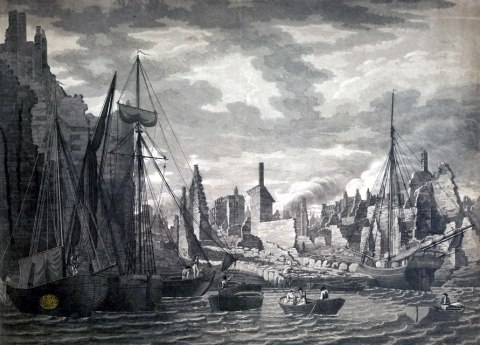
In 1794, many houses in Ratcliffe and Shadwell were destroyed by a fire which “consumed more houses than any one conflagration has done since the Great Fire of London”, and also destroyed many boats, including one laden with around £40,000 of sugar[i]. In fact only one house in Ratcliff survived, so John Levett’s pub must have gone, too. Deborah Levett nee Nock had died in 1794 so I thought for a moment that she might have died in the fire but she had been buried on 15 May 1794 and the fire was on 23rd July. So in less than 2 months, John Levett Snr had lost his wife, leaving him with at least five children to care for and then his pub. John Levett Jnr was 17 and the youngest Elizabeth only five.  More details on the fire in the piece already posted to this blog on the Nock family.

John’s uncle Tobias Nock the Younger, newly married to his second wife Mary Kitson, and his businesses would presumably also have been affected by the fire.

One has to wonder whether John Levett decided to send one or more of his children back to their maternal Nock family in Rowley Regis, while he rebuilt his business in Stepney. Many residents there were apparently accommodated in tents in the churchyard and it would inevitably take time to sort out insurance claims and rebuild properties. Perhaps this was how John Levett Jnr came to be in Rowley and an established part of the community there.

Eileen Bird, who is descended from James Adshead Levett, tells me that she thinks John was the only child to return to Rowley. Certainly the other Levett children appear in Stepney in many later records, though I have not looked into these in any detail.

John’s maternal grandfather Tobias Nock the Elder had died in 1791 and his grandmother Nock in Jan 1794 so perhaps he came back to Rowley to assist other members of the family. He is not mentioned by name in Tobias Nock’s Will, nor are any grandchildren, but his mother and aunts and uncles are all named and are beneficiaries.

Some background – The Economic Situation

In 1815 the Battle of Waterloo had taken place and, as the war with France ended, demobilisation of the Army led to mass unemployment as tens of thousands of men returned to their homes. In the same year the first of the Corn Laws was passed, which were tariffs and other trade restrictions on imported food and corn, including all cereal grains including wheat, oats and barley. These restrictions were designed to keep corn prices artificially high to favour domestic farmers but had a disastrous impact on the poor. Not only bread would have been affected, barley was used for making ale or beer so that trade would have been affected, too. In 1816 harvests were dire due to poor weather, causing widespread hunger and large scale emigration to North America, particularly from Ireland. 1816 became known as ‘the year without a summer’ due partly to a volcanic eruption the previous year in what is now Indonesia which disrupted weather patterns and caused famines across the world. Riots broke out in England against the Corn Laws which were seen as benefitting the landowners and farmers but keeping prices high for everyone else. Many in the working classes also saw their wages cut, compounding the problems. Armed guards had to defend MPs as ordinary people saw the laws as showing little thought for them. The Corn Laws, by the way, stayed in place until 1846.

Rowley Regis was clearly also affected by this. A report in Aris’s Birmingham Gazette on 2 September 1816 says “The subscription for the relief of the poor is now about £37,000. – The Committee have already extended relief to the poor of Spitalfields, Hinckley, Bilston, Bolton-le-Moors, Stockton, Dudley, Rowley Regis, Kingswinford, Sudbury, Bridport and Stockport; and also voted considerable sums for the relief of distressed parts in Northamptonshire, Bedfordshire and Buckinghamshire.” I was surprised to see that the distress in Rowley Regis and other Black Country towns was such that they were listed alongside other much bigger areas.

In the same paper on the 11th November that year a notice appeared signed by George Barrs which is shown here, which acknowledged a donation of £250 from the Right Honourable Viscount Dudley and Ward ‘for the relief of the almost unexampled Distresses of the Poor Manufacturers in this Parish”. Just above it is a notice from the Birmingham Workhouse about the claims being made on it, and to the right there may be seen a reference to a Committee for the Relief of the Manufacturing and Labouring Poor in Staffordshire, which had already raised more than £6000 for this purpose.

The problems were widespread in the area. It is possible that the individual nature of nail making in small workshops and without an overall employer contributed to these problems in the Black Country as nailers were reliant on what they could sell their nails for, there was no overarching employer to assist them.

John Levett in 1818

John seems to have been in Rowley for some years by 1818, (by then aged about  40) because he had married locally in 1803 and had been a Church Warden and the Overseer of the Poor for some time, which were roles generally only assumed by  known and respectable members of the community. This must have been a considerable responsibility in this period of poverty and distress. Although it appears that relations between the Curate George Barrs and his church officers in this period left much to be desired.

The year 1818 seems to have been a busy one for John Levett.

On 25 May 1818, in Ariss’s Birmingham Gazette, the following advertisement appeared:

“To Iron and Coal-Masters

To be disposed of by Tender, the Mines of Coal and Ironstone in an Estate at Rowley Regis, called the Brickhouse Farm, in the holding of Mr John Levett.

Proposals addressed to Mr John Lowe, of the Ravenhurst in Bordesley, near Birmingham (Postage paid) will be duly attended to. “

The Brickhouse Farm estate, according to J Wilson Jone’s book[ii], had been given on 21 August 1677 by Humfrey Lowe, the descendant of the Stewards of the Manors and Sheriffs of Stafford, as an endowment  for the maintenance and repair of St John’s Chapel, Deritend,  an old Roman Catholic church.  It would have been let by the trustees to John Levett (and many others before him) but the chapel presumably retained the mineral rights to what was under the ground.

So it seems possible from this that some of his farmland was going to be taken for mining of coal and ironstone and certainly Edward Chitham[iii] notes that a colliery at Brickhouse was leased by Joseph Fereday  and John Jones, possibly as a result of this advertisement. They were not very successful as a geological fault known as the Russell’s Hall fault ran through Rowley Parish and surveyors reported that the terrain was ‘very much thrown up and down by faults’. Such were the problems that Fereday and Jones went bankrupt in June 1829, followed in subsequent years by several later owners.

In July 1818 John Levett published this Notice in the Birmingham Gazette, after an apparent dispute about the accounts he had kept in his role as Overseer of the Poor in the previous year, which were, however, subsequently found to be correct.

In August 1818 about three months after the previous sale, an advertisement appeared in Ariss’s Birmingham Gazette for the sale of land at Old Hill. The advertisement in August was for two lots of properties and John Levett of Rowley is described as the Proprietor. The ad reads

 “Freehold Land and Building at Old Hill

To be sold by auction at the Dudley Arms, in Dudley, on Tuesday 25th day of August inst. at Four o’clock in the afternoon, in the following lots:

Lot 1: A desirable Public House, Stable, Garden and other Outbuildings, in the Occupation of Mr B Stokes, at Old Hill in the Parish of Rowley Regis and County of Stafford with a large Nail Warehouse adjoining, which, at a small expense, may be converted into a Malthouse, and two other Dwelling Houses and Nail Shops adjoining, with twelve acres of rich Arable, Pasture and Meadow Land, Tythe-Free, called the OLD HILL FARM, with the valuable Mines of Coal, Clay and Ironstone under the same.

These premises are bounded by Lands belonging to Lord Viscount Dudley and Ward and Mr Daniel Granger and front the Turnpike Road leading from Dudley to Hales Owen.

Lot 2: Eight other Dwelling Houses, Nail Shops and Gardens, in the Occupation of John Johnson and others, nearly adjoining the above Lot, together with five Acres if exceedingly good Meadow and Pasture Land with the valuable Mines of Coal, Clay and Ironstone under the same.

These premises are bounded by Lands belonging to the Rev G Barrs and Mr Pearce and adjoining the said Turnpike Road.

The above Lands and buildings may now be let for £150 per year.

This estate is within a few hundred yards of the Netherton Canal and Mess’rs Attwoods Iron Furnaces near Dudley.

*The land is very valuable for building upon, as a great part is fronting the Turnpike Road; and for further particulars enquire of William Bunch, Auctioneer, Dudley or the Proprietor Mr John Levett, Rowley. “

Now this sounds to me very much like the land and houses that had been left to Elizabeth Nock by her father Tobias the Elder. Even down to the name of one of the tenants.

Land at Old Hill

In 1793 Tobias Nock the Elder had left the following bequest –

“I give and devise unto my daughter Elizabeth Nock her heirs and assigns forever all those several closes or points of pasture land and also those five dwelling houses shops gardens and appurtenances situate at Old Hill in the parish of Rowley Regis in the County Stafford now in the several holdings of John Westwood, John Johnson, Shelley Garrett, Hannah Garrett and the Widow ohara.”

So, since Elizabeth did not die until 1842, how was it that John Levett, her nephew, was described as the Proprietor? Had Elizabeth made over the properties to him?  In her own Will, drafted in 1835, Elizabeth leaves most of her property to her niece Harriet Adshead including her ‘real estate (if any)’.

Whether the sale took place and how much money that raised we do not know.  Did John Levett need money because he had bought the rights advertised previously and some of which, perhaps, he was selling on? It seems unlikely we shall ever know.

Ariss’s Birmingham Gazette is a rich resource for local historians!  In February 1819, another Advertisement appeared, concerning John Levett. This stated:

Valuable live Stock and Farming Implements

To be sold by AUCTION, on the Premises, by W Bunch on Monday next, February 19, all the Farming Stock, etc belonging to Mr John Levett, at the Brick House Farm, in the Parish of Rowley Regis and County of Stafford, who has let the  principal Part of his Land; consisting of one Cow and Calf, seven exceeding good cows in calf, four useful Draught Horses and their Gearing, black half-bred Colt, 3 years old, bay Waggon Colt 2 years old, grey Filly Colt, of the Cart Kind, three Sows in Pig, five Store Pigs, three six-inch Wheel Carts with Iron Arms, six-inch Wheel Waggon with Iron Arms, three Pair of Harrows, two ploughs, Land Roll, Winnowing Machine, new Tax Cart with good brass mounted Harness, two Ricks of Oats – about 26 tons, two ricks of Hay – about 25 tons, and a large Quantity of other implements, which will appear in the Catalogues.

The Horses are well known to be good Workers; the Waggons, Carts, Ploughs and Harrows are nearly new; the Cows are known to be good milkers; the Hay and the Oats will be sold by the Ton, in such Quantities as will suit the Purchasers; and the Whole will be sold without Reserve.

The Sale to begin precisely at Ten o’Clock in the Morning.”

Now that is a substantial sale of seemingly all the stock, equipment and effects of a substantial farming operation. By someone who is leaving that profession of farming behind, it appears. Perhaps this was a reaction to the poor summer the previous year when crops failed because of the weather, as related above. But as we will see, John Levett continued to be described – including by himself – as a farmer of Brickhouse for many years to come. It’s a puzzle!

A new marriage for John Levett

Following his wife Elizabeth’s death in Rowley in late May or early June 1822, John Levett of Brickhouse Farm, Rowley Regis married barely nine months later for a second time to a widow Alice Ryan, in Edmonton, north of London on 25 Feb 1823. I was puzzled as to how he came to know Alice Ryan well enough to marry her in such a short time when she lived so far away but, of course, John Levett had London roots and probably had business dealings there as well as family connections. And she was a fairly wealthy widow so he probably wanted to marry her before someone else stepped in!

I have detailed this part of the story in a separate piece on my blog – A side helping of Gaunts, although it is only the history of this very small part of the prolific Gaunt family in a very restricted period!

John Levett the Bankrupt

In view of the economic woes in manufacturing in the period, perhaps it is not surprising that John Levett was not immune to financial problems. On 25th November 1826, only three years after his marriage to Alice, from Notices in Aris’s Birmingham Gazette, we find that John Levett was declared bankrupt. He was described as a ‘farmer, nail ironmonger, dealer and chapman’.

Copyright: Glenys Sykes

This description appears in this newspaper notice relating to his declaration of bankruptcy! I have also seen similar descriptions relating to other bankrupts at about this time, so perhaps it was not unusual for men of business to have several areas of interest balanced against each other.  Various further notices followed of the usual procedures involved in Bankruptcy, including meetings of creditors, usually held in Birmingham and later Dudley. This process went on for some years.

In July 1827 a Warehouse in Oldbury, adjacent to the Birmingham Canal and previously used as a Nail Warehouse by John Levett, was put up for sale by Thomas Goode, a solicitor of Dudley, who had been appointed by the Court to deal with this process, with the proceeds to be distributed to creditors presumably. In June 1828, Thomas Goode gave Notice in the newspaper that Creditors who had proved their debts against John Levett would receive a second and final dividend on their respective debts, on application to his office. There is no further mention of the bankruptcy then for many years and John and Alice disappear from public notice for some years.

Alice’s Will

On the 13th Jan 1844 , following Alice’s death on 6 Nov 1843, John Levett and Alice’s sister Hannah Finney, nee  Gaunt were granted:-

“Admon (with the Will and codicil annexed of all and singular the goods chattels and credits of Alice Levett (wife of John Levett/ late of Rowley Regis in the County of Stafford deceased was granted to the said John Levett, the husband and Hannah Finney (Wife of William Finney), formerly Gaunt, spinster, the sister of the deceased the surviving executors named in the Will as having both first sworn by common duty to administer. The said John Levett being as the lawful husband of the said deceased entitled to all her goods chattels and credits over which she had no disposing power and concerning which she is dead intestate.”

So John Levett was claiming the whole of Alice’s estate. What is unclear is whether this included the property which had been put in trust in their Marriage Settlement, presumably with his agreement, and it seems likely that the Trustees would have been duty bound to resist any attempt to set aside this trust. But by this time, all but one or possibly two of the Legg family whom Alice had tried to benefit from her London estate were also dead and, as will be shown in a separate piece, the family appear not to have derived any benefit from Alice’s Will.

And it appears that the matter of bankruptcy was still not resolved in 1844 as this notice appeared in the paper:

“12 January 1844 – Birmingham Court of Bankruptcy

In the Matter of John Levett, of Rowley, Farmer Mr Bolton of Dudley, applied to the Court for a meeting to choose trade assignees under this bankruptcy, which occurred eighteen years ago. It appeared that both the original assignees were dead and that a fresh appointment was necessary in consequence of property to the amount of £200 having recently fallen in to the estate. The application was granted with the proviso that the choice, the audit and the dividend should take place on the same day.”

Since this is only a few weeks after the death of Alice Levett, it seems likely that this claim relates to her estate. And her estate was certainly originally worth a great deal more than £200 so where that figure came from is unclear. And where the rest of her money went. Presumably not to her husband as nearly twenty years after the original declaration, this advertisement implies that John Levett was presumably still a bankrupt.

John Levett’s death was registered in the Smethwick area, he died on 15 September 1861 and was buried at St Giles on 19 Sep 1861.

The next odd thing is that in John Levett’s Will was not proved until 1876: The following is the statement at the end of his Will:

11 December 1876

Administration of the effects of John Levett, late of Rowley Regis in the County of Stafford, a Widower, who died 15 September 1861 at Smethwick in the said County was granted at the Principal Registry to James Adshead Levett of Perry’s Lake Rowley Regis, Licenced Victualler the son and one of the Next of Kin.

And ten days later:

21 December 1876

Special Administration of the effects of Alice Levett (wife of John Levett) late of Rowley Regis in the County of Stafford who died 6 November 1843 at Rowley Regis, left unadministered by the said John Levett and Hannah Finney (wife of William Finney) the sister the surviving Executors was granted at the Principal Registry to James Adshead Levett of Perry’s Lake Rowley Regis, Licenced Victualler. Special Administration (with Will) granted by the Prerogative Court of Canterbury January 1844.

So John Levett had not administered Alice’s estate and his son James Adshead Levett did not apply to administer his father’s Will, and that of his stepmother, until fifteen years after his father’s death. How very mysterious!

That convoluted tale deals with the Levetts up to John Levett’s death in 1861. I shall deal with John’s children James Adshead Levett and Catherine Elizabeth Levett and later family in a separate article I am working on which will follow shortly.


[i] https://www.historic-uk.com/HistoryUK/HistoryofEngland/Ratcliffe-Fire-of-1794/

[ii] J Wilson Jones, The History of the Black Country, published by Cornish c.1950.

[iii] Edward Chitham, Rowley Regis A History, published by Phillimore 2006. ISBN:1-86077-418-0

Families of the Lost Hamlets – A side helping of Gaunts

This piece arose from my research into the second marriage of John Levett of Brickfield to a widow Alice Ryan, in Edmonton, north of London on 25 Feb 1823. I was puzzled as to how he came to know Alice Ryan well enough to marry her in such a short time after the death of his first wife Elizabeth in June 1822 when Alice lived so far away. John’s children James Adshead would have been seventeen and Katherine nine when their mother died, so perhaps they stayed at Brickhouse or with family in Rowley or perhaps they went to London with their father. It was very common for widowers to remarry very quickly in those days especially if they had small children to be cared for but these children were somewhat older and could probably have been left at home, with James or other family in charge.

So I checked for Alice Ryan’s previous marriage and found that she had been married to Thomas Ryan (1777-1819) on 3 Apr 1800 at Bath Abbey, again by Licence.

Married by Licence

The use of Licences for marrying seems to have been quite common in this little group of families. A Licence cost a considerable sum of money to obtain and although it dispensed with the need for banns to be called on three successive Sundays in the parish church, most common folk used the traditional Banns which were free. Familysearch says that “From quite early times people of social standing who did not wish to attend the parish church to hear their banns called married by license. A marriage by license therefore became a standard symbol of social status.”  Other reasons for the use of a licence may have been that the parties differed in religion or did not attend the parish church because they were Nonconformists or Roman Catholics. Or that the parties were of full age but still faced family opposition to their marriage. Was Thomas Ryan a Roman Catholic, as he apparently came from Ireland and his mother and sister were still there? Was Alice a Quaker? I shall try to find whether the Licence still survives which might tell me more.

Alice’s marriage to Thomas Ryan

The witnesses at Alice’s marriage in 1800 in Bath to Thomas Ryan were Joseph Start (who was later named in both Thomas’s and Alice’s Wills as executor or trustee and who was a Woollen draper of Smithfield) and Lydia Gaunt – another Rowley name. But both bride and groom were described as ‘of this parish’.

Thomas Ryan was a haberdasher. A haberdasher at this time was someone who sells sewing notions including cloth, pins and thread or possibly clothing for men. At this period sewing machines had not been invented and many people made their clothes at home so this would have been a good trade to be in. At the time of his death in 1819 Thomas had premises at Number 80 Charlotte Street, on the corner of Goodge Street, in Fitzrovia, London so it seems he was quite a successful businessman, perhaps in 1800 he had been in business in Bath, which in 1801 had a population of 33,000. By the standards of the time, it was a large and important town. There would have been a tempting market for a haberdasher in fashionable Bath although Bath was by then apparently past it’s heyday.  However, historians in Bath have very helpfully digitised some historical directories for the period and sadly for my purposes none of these surnames appear in those directories.

Perusing the newspapers of the period, however, I did come across this extract from the Journal des Dames in January 1825.

Copyright unknown.

This gives some indication of what ladies – and gentlemen – of fashion might be looking for, and therefore haberdashers in such fashionable places as Bath might be stocking, although I doubt whether many ‘bonnets called bourrelets’ or ‘velvet great coats, lined with silk and trimmed with fur’ found their way to Rowley Regis!

When Thomas Ryan died on 13 Nov 1819, in his Will, proved on 3rd May 1820, he left all his property by now in Charlotte Street, London to his ‘beloved wife Alice’ with a request that an annuity of £20 per annum be paid to his mother Mary Moore in Dublin and provision was also made for his sister Susanna Byrne, also in Dublin, so it seems likely that Thomas Ryan was born in Ireland. I can find no trace of any children being born to Thomas and Alice and neither of their Wills make any reference to children. Thomas was buried on 21 Nov 1819 at St Giles in the Fields, Holborn, aged 42.

Alice wasn’t having much luck was she? Because at the time of her marriage to Thomas Ryan, she was already a widow – Alice Oakley, although Thomas appears to have been a bachelor.

Who was Alice? Her first marriage

So now it was time to find Alice’s first marriage to someone called Oakley (yes, another name which is familiar in Rowley although I have not yet found any link back to Rowley).

Nicholas Oakley was born in 1760 in Bathampton, Bath and died in January 1798 in Bathampton, aged 38. On 15 Sep 1794 at Walcot St Mary, Bath he had married – wait for it!… Alice Gaunt.  There was an advertisement in the Bath Journal for creditors and debtors to his estate to apply to his widow Alice Oakley in April 1798. So were the Gaunt family of such a status that their daughters spent time living in fashionable Regency Bath? Perhaps they were.

But I had found the link – Alice was a Rowley girl, born in Rowley in 1768, the daughter of Richard Gaunt and Lydia Fletcher. Suddenly, things fell into place. Alice was likely to have known John Levett from Rowley, albeit she was a few years his senior. That marriage to a widow in Edmonton links back directly to Rowley Regis.

Alice’s Will

Alice appears in the 1841 Census at Brickhouse Farm with her farmer husband John where she died on 6 November 1843 at Rowley Regis and was buried at St Giles on 11 Nov 1843. The Burial Register entry says that she was aged 75 and died of a diseased heart.

She left a nine page Will which I have transcribed – and a long laborious task it was. But it was worthwhile. Alice left complicated bequests and it appears that she and John Levett had had a Marriage Settlement when they married which was designed to protect much of the property which she had been left by Thomas Ryan, leaving the London properties and a property in Edmonton on the Great North Road in trust to provide the annuity for his mother Mary Moore which had been requested in his Will by Thomas Ryan and also for the benefit of her sister Lydia and specifically her eldest son Thomas and other children who were named in the Will. It seems likely that this was the Lydia who had witnessed Alice’s marriage to Thomas Ryan, although Lydia seems to be very much a Gaunt name, there are numerous Lydia Gaunts in records.

Alice’s sister Lydia Gaunt 1779-1837

This Lydia Gaunt was married to William Legg, a coachmaker of Chandos Street, London on 27 Jan 1805, (five years after Alice’s marriage to Thomas Ryan) at St Margaret’s Church, Westminster, London and both were ‘of this parish’. We know this is the same Lydia as this is detailed in Alice’s Will. So, had Lydia visited her sister who was living with her husband Thomas Ryan in London and met William Legg there? It seems likely.

Most of the people who appear in records in connection with Thomas Ryan were tradesmen of one sort or another and it is quite likely that Thomas Ryan knew William Legg, as Charlotte Street and Chandos Street are just half a mile apart, barely ten minutes walk. They may have attended the same church or used the same pubs. And they would have been serving the same sort of customers. If, as it appears, Ann had no children of her own, what could be more natural than that she should become close to the children of her sister Lydia, living only half a mile away and whom she was leaving behind when she married John Levett and moved back to Rowley Regis? In her Will, Alice made specific and generous bequests to each of Lydia’s children, Thomas, Charles, Arthur and Lydia.

The London Picture Archive has a picture of some premises in Chandos Street, taken in 1910 which shows some ladders and coach wheels leaning against a wall. The caption notes that the rear of the premises was “formerly a coach manufactory” – I wonder whether it belonged to the Legg family? The site specifies that photographs may not be reproduced without specific permission but this is a link to the photograph.

https://www.londonpicturearchive.org.uk/view-item?i=131033

Back to the maps again – Edmonton where Alice Ryan nee Gaunt, was living at the time of her third marriage, was on the Great North Road, eight miles from Shadwell where John Levett was born and where he had strong family connections.

Suddenly it did not seem so strange that the widowed John Levett should have known the widowed Alice, as it seems likely that Rowley families in the area would have known each other and certainly the Levett, Gaunt and Nock families, all business people of one sort or another, would have known each other well in the tiny village of Rowley Regis and were also apparently clustered in the same small area of London.

The Legal connotations

Part of the apparent intention of the marriage settlement referred to in Alice’s Will was to preserve the income from her properties in Charlotte Street and Edmonton, partly to meet her late husband Thomas Ryan’s annuity for his mother  but mainly for Alice’s ‘sole and separate use exclusively of the said John Levett’. In her Will Alice later left these valuable Charlotte Street premises to her sister Lydia’s family, although it seems that they may never have got them or possibly any benefit from them during Alice’s lifetime.

And Alice had good reason to try to protect her assets, bearing in mind that the first Married Women’s Property Act was not passed until 1870 and until that point, under the legal doctrine of ‘couverture’, a married couples were deemed to be one legal entity and all the attributes of that person were vested in the man. Married women could not own property, sign contracts or make Wills, though Alice tried to do so. The property of even widowed women passed to their new husbands on re-marriage. Another Married Women’s Property Act was passed in 1882 to close some of the loopholes in the first act.

So anything Alice had inherited from Thomas Ryan would become the property of John Levett, just as, if she had inherited anything from her first husband Nicholas Oakley  (although I have not yet found a Will for him and since he died so young, it is possible that he did not make one), that would have  become the property of Thomas Ryan on their marriage. I suspect that this is why Alice tried in her Marriage Settlement and subsequently in her Will to put much of her London property in trust for her heirs. With limited success, if any, as we shall see.

The Legg family

William Legg, Alice’s brother-in-law died in 1835, and was buried on 10 Jul 1835 at St Paul’s Covent Garden, which seems to have become the ‘family church’, leaving a handwritten but unwitnessed Will (apparently written in 1818). This left all his estate to his wife Lydia, according to a note on the Chancery copy of the Will, after two people had given evidence that the handwriting was that of  William. Lydia Legg was granted authority to administer the estate on 18 January 1836.

But two years later, on 26thJanuary 1838, a second note on the Will states that Lydia had now died, leaving the estate unadministered and permission to administer was granted to Charles Legg, their second son.  Lydia had died and was buried on 18 Aug 1837 at St Paul, Covent Garden, the same church as her husband.

So why was Thomas, the eldest son not doing this? Because he too had died and had been buried at the same church on 23 Jul 1837, not a month before Lydia died. Thomas was the son to whom Alice Gaunt had left most of her London property in trust with the request that he pay annuities from it to his brothers and sister. A third note on the Will states that just over a year later, on 5th February 1839, permission to administer was now granted to Arthur Legg, the last son, as Charles had also now died.  Charles’ death was registered in the March quarter of 1839 so he must have died during January or at the very end of December 1838 for Arthur to be making this application at the beginning of February.

This is by far the most complicated ‘will’ I have ever seen, because it was not properly drawn up and witnessed and the Legg family seem to have been very unfortunate in this period with both Thomas and Lydia Legg and two of their sons dying within a period of three years. But all the entries in various registers give their location as Chandos Street, where William had long had his coach building business and there is no hint that the family had any connections with Tottenham or Edmonton where Alice Gaunt had left her property in Trust for them, so I suspect that the family never got any benefitafter . Indeed, all but Arthur predeceased Alice, although she made no alteration to her Will after January 1833. The Lesson seems to be ‘Make a proper Will’, folks, it keeps things much simpler!

The remaining surviving Legg children were Lydia (born 1813) who may have married James Howes at St Paul Covent Garden on 15 Jun 1837, again weeks before the deaths of her mother and her older brother Thomas though I am not certain as this lady’s later census records give three different places  of birth, none of which is in London! Or it is possible that she also died as there are several possible burials for that name.

Arthur Wellington Legg (born 1816), and the last surviving son, also became a coachmaker . He married Sarah Judith Goward at Westminster St Margaret’s in 1841, and they had one daughter Lydia Alice Legg. Arthur died in 1851 and was buried in St Paul’s, Covent Garden, he was only 35. What a tragic family. So it seems that William’s Legg name died out with this generation as his only daughter had no children.  

Lydia Alice Legg (1844-1892) had an interesting life though, she was an actress with the stage name of Lydia Foote and there are numerous photographs of her online in various roles. There is also a short film about her on YouTube:

So on her mother’s side she was connected with a very successful and established theatrical family. She died unmarried and without issue in Thanet in Kent on 30th May 1892, aged 48 – not one of her paternal family made old bones – and she was buried at the Kensal Green Cemetery where her memorial, erected by “a dear friend”, described her as “a good daughter and a true friend”, adding that “her loss was irreparable” – her mother, also described in one census as a “Theatric” had died in 1891 and was also buried in Kensal Green Cemetery. The headstone for Lydia also mentions her mother and on the reverse records the death of “her devoted friend Charlotte Louisa Geater” who had died in 1944, aged 84. There is a touching image of a plaque with a picture of Lydia on the headstone.

So that is the tale of two Gaunt sisters Alice and Lydia and their families. They  had numerous other siblings which no doubt I will do some further work on when time permits.

But Alice’s third husband John Levett was much more than a simple farmer in Rowley Regis. He had other strings to his bow. He had certainly had considerable land holdings in the area, in addition to his tenancy of Brickfields Farm.  And perhaps the disputes about Overseer of the Poor accounts and the land transactions and sales in 1818 may indicate that he was already in trouble financially.

But you will have to go to the piece on the Levetts to find the rest of this story!

Addendum: I thought I had finished this article yesterday, apart from some tidying up but decided not to post it until the accompanying piece was ready. As I have mentioned in this blog previously, I know very little about London and the churches there and knew nothing about ‘St Paul’s Covent Garden’, the family church of the Legg family.

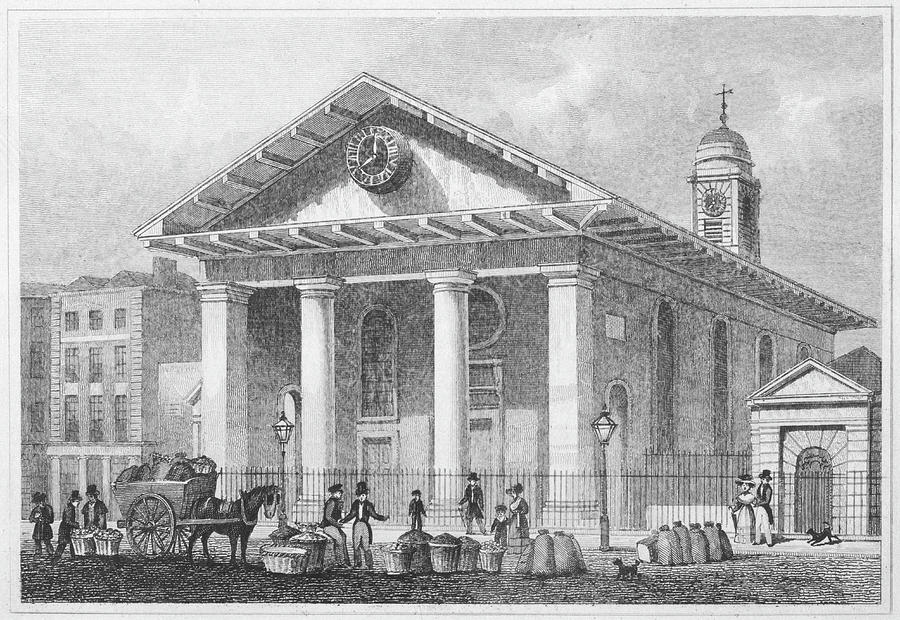
St Paul’s, Covent Garden, copyright unknown.

Imagine my surprise (and delight) just now to log onto Instagram to find that Lucia, the art restorer on The Repair Shop, had just posted a short film about this very church. She says “This is St Paul’s Church on the West side of Covent Garden – London’s West End. It’s the ‘Actors’ Church. [There are plaques to various famous actors shown]. Built by Inigo Jones (1573-1652) in 1631 at a cost of £5k, along with him designing the market square that is Covent Garden. He was also a set designer, loved the theatre. This church has a delightful ‘secret garden’  and lots of famous names. Of course I was only interested in finding the lucky cat that lives here… gone fishin’ ” If you would like to see the little film have a look at Lucia’s Instagram – whichis often packed full of fascinating knowledge on all sorts of subjects – she is luciainlondon123 on Instagram.

Families of the Lost Hamlets – The Nocks

A side helping of Nocks

This piece started out as part of my piece (still in progress!) about the Levett family but has got rather long so that I have decided to post it separately. But the Nock and Levett families were closely linked so keep an eye out for that instalment. And then there will be the Gaunts…

According to the Halesowen Parish Registers, on 6 October 1581, Johane, the daughter of Thomas Nocke, was buried there. This appears to be the only Nocke entry in the Halesowen Registers between 1559 and 1643 but I include it out of interest. There were Nocks in Dudley, too but I am still exploring these, there was certainly a Tobias Nock baptised there in the mid-1700s and a Tobias who was a cordwainer in business there in 1784 so it seems likely there is a connection. I shall continue to investigate this but have concentrated on the Rowley Nocks for the moment and have grouped these together below, although some of the connections are not clear.

The first Nocks to appear in the Rowley parish registers are in 1607 when Olyver Nocke married Jane Murlow. An Oliver Nock was baptised in Sedgley on 11 Mar 1575 and it seems likely that this is the same man and is another indication that there are family connections within the Dudley area. There are no baptisms of children recorded to Olyver and Jane in Rowley so perhaps it was the adult Olyver who was buried on 27  Jan 1612/13.

William and Anne Nocke  Entries 1610-1623

On 18th November 1610 a William Nocke married Anne Grove. The baptism of two daughters to this couple were noted in the register – Elizabeth on 28 March 1610 and Mary on 6 Mar 1611. It was noted in the Register in March of 1613 that William Nock had been one of the Church Wardens for the past year so William was obviously well respected in the village. Where exactly he lived is not clear.  This was followed by the baptism of son John on 15 May 1615, and Richard on 2 Nov 1617 and this is possibly the Richard Nock who was buried at St Giles on  19 April 1647.

On 17 September 1620 William, son of William Nock was baptised. This was followed on 23 Oct 1620 with the burial of a William Nock. Father or child? It seems likely that it was the child baptised in September 1620, as on 3 October 1621 another William, son of William Nock was baptised. Then on 25 September 1623 William Nock was buried – father or child?  There is no clue in the register but there were no further baptisms for children of William Nock so perhaps this time it was the adult  William.

John Nocke, Clark (sic) was buried in Feb 1624. The introduction to the Registers suggests that he may have been Parish Clerk. If so, he was an early example of the literate Nocks. Perhaps William and Thomas whose details I am listing were his sons, we do not know but certainly unless there are substantial gaps in the Registers, there were not  many Nocks about then in Rowley so it seems quite likely. And there were recurring Nock family names, for both boys and girls in these families in the records that follow.

Thomas Nocke  Baptisms 1624-1639

Another family of Nocks appears in the Registers in 1624 when Elizabeth, daughter of Thomas Nock, baptised on 6th November, there is no marriage recorded for Thomas so perhaps he was married elsewhere. This is the second time that the eldest daughter was named Elizabeth, William Nocke had also called his first daughter Elizabeth. If, as I suspect, William and Thomas Nocke were brothers, might their mother’s name have been Elizabeth? 

Then there is a record of the burial of a Thomas Nock in March 1626 and then, thirteen years later, the baptism of Jane, daughter of Thomas Nocke on 26 Jan 1639.

John and Anne Nocke 1641-1655

In 1641, on 10 February, a John Nocke married Anne Hill. This may well have been the John, son of William who was baptised in 1615, as he would have been about 25 in 1641. Hill is also a common name in Rowley and there were many Hills in the very early registers so they were definitely a long term Rowley family. I cannot find a baptism of an Anne Hill in Rowley at this time but there are notes of torn pages, etc so it is possible that a record is lost or that she was baptised elsewhere.

The baptisms of several children of John and Anne then followed. John, on 12 May 1642; William on 31 Dec 1643; Anne on 14 Feb 1646. Then there is a baptism of a Mary Nock on 6 October 1651. Mary was recorded as the daughter of John Nocke and Mary, not Ann.  So were there two John Nockes baptising children at the same time? Or was the name of the mother in the record for Mary an error, substituting the name of the child for the mother? It is impossible to be sure but there were no other baptisms for John and Mary in this period so it seems feasible that it was an error. Two more children were later baptised to John and Anne, so certainly it does not seem that Anne had died and John remarried – an unnamed child of John Nock was baptised on 16 Jul 1654 and Elizabeth on 29 Sep 1655.  After that, no more children were baptised for this couple.

Josiah and Judith Nock  Baptisms 1657-1663

In 1657, during the Commonwealth period, when the recording of life events was much changed, a new family of Nocks appears in the Registers. John, the son of Josiah and Judith Nock was born on 25th December 1657and baptised on 17th January 1657, followed by his brother Josiah, born on 5 June 1660 and baptised on 18th June. Another son Thomas was baptised on 13 Dec 1663 (after the restoration of the monarchy so the Commonwealth requirement to record dates of birth had gone!)

Nock burials in this period include Thomas Nocke who was buried on 5 July 1659 and William Nocke on 25 Dec 1664.

John Nock 1665

The name John Nock reappears in 1665, ten years after the last baptism for a child of John and Anne Nock, when Anne, daughter of John Nocke was buried on 23 January 1665, perhaps the Anne who had been baptised in 1646.

John and Joan Nock 1667-1680

Then on 19 October 1667, William, son of John and Joan Nock was baptised, followed by the baptisms to the same couple of Joseph on 22 September 1672, Thomas on 5 March 1675, and Mary on 7 September 1680. Was this the John who was earlier married to Anne? That would make this John 65 by the time the last child was baptised so I am inclined to think it was not but the next generation.

More Nock burials

Elizabeth Nock, widow, of Hales (Halesowen) Parish was buried at St Giles in July 1684 and Joane, wife of John Nock was buried on 5 September 1684. John Nock was buried on 20 December 1693 and Ann Nock, widow was buried on 22 January 1694.

Following the death of Joane, there is a confusing series of entries.

William and Dorothey Nock  – Baptisms 1687-1706

I have not been able to find a marriage for William Nock to a Dorothey but a Dorothy , daughter of John Williams was baptised at St Giles on 22 Mar 1662 which would make her about the right age to be marrying and having children in these  dates so this  may be her. On 25 Dec 1687 John, son of William and Dorothey Nock was baptised, followed on 21 April 1689 by their daughter Jone. On 8 April 1692 daughter Sarah followed and on 20 May 1694 another son Joseph. On 26 December 1695 Thomas was  baptised and on 4 April 1697 Samuell, then Ann baptised on 26 Dec 1701, Moses on 15 May 1704 and Mary on 14 Jul 1706.

Right in the middle of that sequence there was an entry on 2 Mar 1690 for the baptism of a William, son of John and Dorothey – or should that be William, son of William and Dorothey?  There are no other baptisms to a John and Dorothey at this period. John and William are both Nock family names and it appears that William and Dorothey already had a son John in 1687. It seems very odd that a second Dorothey should appear for this one baptism so I am inclined to think that this is an error and that this child was another child of William and Dorothey, and the date, a year after the baptism of Jone in April 1689 and before Sarah on 8 April 1692, means that he would fit very naturally into the sequence. That’s my theory, anyway! I may be wrong…

Joseph & Ciceley Nock appear just once together in this register when their daughter Sarah was baptised on 6 Oct 1695. Joseph Nock was buried on 23 November 1697, Ciceley Nock, widow was buried on 18 April 1710.

Thomas and Dinah Nock Baptisms 1695-1718

Also in 1695 another family begins baptising children at Rowley. John, son of Thomas and Dinah Nock was baptised on 2 February  1695/6, followed by daughter Ann on 14 May 1699, son Joseph on 4 January 1701/2, Elisabeth on 17 Dec 1705, William on 21 Nov 1708, James on 20 May 1711, Benjamin on 16 Feb 1716 and finally Sarah on 8 Jun 1718.

John & Hannah Nock Marriage and baptisms 1711-1718

On 21 May 1711 John Nock married Hannah Foley. It seems likely that John was the son of William and Dorothey who was baptised in 1687. And perhaps Hannah was the child of Thomas and Hanah Foley who had  been baptised on 10 February 1688 at St Giles.

Their daughter Mary was baptised on 23 March 1712 but buried less than a year later on 21 Feb 1713. Their son William was baptised on 15 May 1715, and daughter Sarah on 27 January  1717/18.

William Nock & Elizabeth Bibb Marriage and baptisms 1714

A couple of years after John’s marriage, William Nock married Elizabeth Bibb on 7 November 1714. Again, it seems likely that William was the son of William and Dorothey, he had been born in 1690, and was the brother of John. Elisabeth may well have been the Elisabeth who was baptised at St Giles on 1 August 1692, the daughter of Benjamin and Elisabeth Bibb

On 19 July 1715, their first child Elisabeth was baptised, followed by Jone on 8 Oct 1716, Benjamin on 8 Dec 1717, William on 15 Nov 1719, Tobias on 8 May 1721 who was buried on 29 Jan 1723/24, Joseph baptised on 28 Sep 1723, Dorothy on 11 Jun 1726, Tobias on 10 Jun 1727 and Phebe on 29 Sep 1731, the last child of the couple listed.

Enough, enough!

I am not going to attempt to list all the Nocks in Rowley (and all the Nocks entries from 1733-1744 are recorded as Knocks  and occasionally as Nocke which adds to the fun!) from here on, as they now become too numerous but I suspect that most of the later Nocks in Rowley parish are part of this family, although many of them fall outside the immediate area of the Lost Hamlets.

The child of William and Elizabeth I am following up from here on is Tobias Nock, baptised in 1728 and his descendants because he appears to have stayed in the village and possibly in Portway and he is the one who is linked to the Levett family which was where this research started. I will continue to research the other Nock children in this family as these Nocks are on my family tree so I will be researching them in more detail at some point.

Tobias Nock the Elder 1728-1791

Tobias Nock (1728-1791) was a Rowley  boy, probably born early in 1728 in Rowley as he was baptised at St Giles on 10 Jun 1728, the son of William and Elizabeth Nock.  He had married Catherine or Kitty Fletcher, apparently in Coventry, in 1750. They had at least seven children – Sarah in 1751, Deborah in 1753, Catherine in 1760, Tobias in 1764, (dying in 1765), another Tobias in 1766, Elizabeth in 1769 and Henry in 1773, all apparently in Rowley Regis. It is not possible now to be sure where Tobias lived but in his Will he left a substantial number of properties in Rowley, Old Hill and Oldbury, as well as his nail ironmonger’s business and specifically left the house in which he was living in Rowley to his wife Catherine. His son Henry also lived in Rowley at this time, probably in Portway House or Hall so it may be that Tobias lived there, too. Tobias’s house was evidently a substantial house so Portway Hall is a possible candidate.

Tobias Nock the elder died on 5 March 1791, presumably  in Rowley but he was buried on the 10th March 1791 in the Friend’s  Burying Ground at Dudley. (Quaker  records are very detailed) Interestingly another daughter of Tobias and Catherine, Elizabeth, born in 1769, died in 1842 and there is a note in The Annual Monitor of Quaker Published Memorials for that year that Elizabeth Nock, aged 74 and living in Dudley had died – and she was described as a Minister, most unusual for those days for a woman, though possibly more common in the Quaker movement. And I have noticed that amongst these Quaker or Presbyterian families, not only are the men literate but many of the women are, too, really quite unusual for those times. And also I have noticed that these men often left property or businesses to their wives, so that women were treated much more equally than elsewhere in society generally then.

The Nock family do not feature very much in the books about the history of Rowley Regis, I can find no mention of them in J Wilson-Jones’s book and only two mentions in Chitham’s book, one of those about a James Nock who kept a pub  in Reddal Hill, rather than Rowley village. Chitham notes that by 1860, amongst the Coalmasters in Rowley Regis were Nock, Wood and Nock in Rowley village so they were still active in business and commerce then. But neither writer mentions  the earlier Nock family so I was quite surprised to discover the extent of their businesses in the area and wealth  by the late 1700s and later.    

And Tobias Nock the Elder was a very wealthy man. In his will, proved in 1792, he left a large number of properties in Rowley, Oldbury and Old Hill to various relatives, plus a cash sum of £200 to his daughter Deborah, (married to John Levett Snr and living in London).  £200 would be worth about £38,000 today. He also left £50 each to his two Adshead granddaughters, worth about £9,500 now.

To his wife Catherine Nock:

“all the house and appurtenances wherein I now dwell and also all those twelve dwelling houses, shops, gardens and appurtenances situate in Rowley Regis aforesaid in the several holdings of Daniel Davis, William Downing, George Taylor, Josiah Winsor, Samuel Perry, Esther Bridgwater, Isaac Parkes, William Collouth, Joseph Windsor, James Carter, Joseph Smith and William Bolton and also all that croft of land called the Sling adjoining in his own possession with all his household goods and furniture to hold the same to his said wife during her natural life”

  • After her death, his household goods and furniture  were to be divided equally between his two daughters Catherine and Elizabeth;
  • After his wife Catherine’s death, all the said buildings and land above mentioned to his son Tobias Nock of London, Ironmonger, his heirs and assigns forever subject to the payment of two hundred pounds to his daughter Deborah Levett.

To sons Tobias and Henry:

  • all his stock in trade, money, outhouse and cart and all implements belonging to his trade. Subject to the payment of all his debts and also subject to the payment of forty pounds apiece to his three daughters Deborah, Catherine and Elizabeth to be paid to them at his decease and his  son Henry shall have one hundred guineas out of his trade [more]than his son Tobias.
  • To sons Tobias and Henry all that the freehold estate in Oldbury in the parish of Halesowen in the County of Salop in the several holdings of Henry Richards, Joseph Darby, Peter ffisher, Thomas See, William Stevens Kilsey, Thomas Danks, and Iseury Holloway to hold the same to their joint use during the natural life of his said wife Catherine Nock and after her decease he gave and devised the same to his son Henry Nock, his heirs and assigns forever subject to the payment of fifty pounds apiece to each of his granddaughters Elizabeth and Harriet Adshead.

To  Catherine Nock:

  • All the freehold estate situate in the parish of Rowley Regis in the County Stafford in the holding of Job Hawkner.

To Elizabeth Nock

  • all those several closes or points of pasture land and also those five dwelling houses shops gardens and appurtenances situate at Old Hill in the parish of Rowley Regis in the County Stafford now in the several holdings of John Westwood, John Johnson, Shelley Garrett, Hannah Garrett and the Widow O’Hara.

Jointly – what appears by my Stock Book to be saved by his hand from the date of his decease he gave equally amongst all his five children”

So, a detailed and extensive estate distributed around his family. Were his tenants nail-makers producing nails for him and his son to sell? It seems likely.

And in 1805 Catherine, daughter of Tobias and Catherine Nock, was married at the Quaker Meeting House in Stourbridge to Thomas Martin. She died on 9th March 1816 and was also buried at the Dudley Quaker Burial ground where her father had also been buried. So the Nock family clearly had a strong connection with the Society of Friends. In fact in his fascinating book ‘Men of Iron’ Michael Flinn states that “the greater part of the iron industry of the day was controlled by closely linked Quaker groups”. So it would not be surprising to find such a link. The Nock family appear to have been amongst the Rowley folk who were more than just nailers but also, like the Crowley family, moved during the late 1700s and onwards into selling and distributing the nails made in the Rowley area in London and possibly elsewhere.

The London connections of the Nock family

All of this is in the period when my 6xg-grandfather Edward Cole married in London in a Fleet marriage. It seems to me increasingly likely that families like the Crowleys and the Nocks employed local men from Rowley to transport the nails from Rowley to their London warehouses or to work for them there, leading to their presence in London at that time. Tobias’s Will leaves his business to his sons, along with “all my stock in trade, money, outhouse and cart and all implements belonging to my trade” so he definitely had a cart as part of his business.

Incidentally, the family of Ambrose Crowley of Stourbridge,  blacksmiths, nail factors and ironmongers, who had originated in Rowley Regis, were also Quakers, albeit some years before this. And their son Sir Ambrose Crowley II, who I mentioned in a previous post, was the ironmonger to the Navy so they were in the same trade, buying nails made in the Black Country and selling them in London. Crowley is known to have had a warehouse in Ratcliffe, Stepney and may have started his business there after he completed his apprenticeship but there is no definitive evidence on this.

Tobias Nock the Younger

Tobias the Elder’s son Tobias Nock the Younger moved from Rowley to London at some point in the late 1700s to set up as a nail monger and is described in his father’s Will dated 1791 as ‘Tobias Nock of London, Ironmonger ‘. Tobias the younger had married Frances Darby in St Giles church in Rowley on 17 Aug 1789 and their daughter Mary was baptised on 17 May 1790 in Shadwell.  Frances Nock nee Darby died in March the following year, presumably back at home, perhaps visiting family, as she was buried in St Giles on 6 Apr 1791.

On 20 Mar 1794 Tobias remarried to Mary Kitson, a widow, at Saint George In The East: Cannon Street Road, Tower Hamlets, and their daughter Katherine was born in Shadwell on 17 February 1795 – we know this because her date of birth was given at her baptism. Alas, Mary died in 1797 and there is a burial at St Paul, Shadwell of a Mary Nocks of  Shadwell High Street on 1 Mar 1797.

Tobias had a son Tobias born on 22 February  1799 in Shadwell. Again we know his date of birth from his baptism. Tobias was followed by Eliza in 1803, Deborah in 1806, William Cane Nock in 1811, Frances in 1814 and Edgar Hynson Nock in 1819.

 On 26 November 1807, Tobias Nock Junior (who was by then described in a Baptismal Register a “Nail Ironmonger” in Shadwell High Street ) had all five of his children baptised at once at St Paul’s Shadwell,  just six days after he had married his third – or possibly fourth – wife in the same church. The mothers of the children are listed against each child and the last three – Tobias in 1799, Eliza in 1803 and Deborah in 1806 – are said to be ‘by his present wife Sarah’. But Tobias had only married Sarah in the previous week so did she bear those children out of wedlock? Or is there yet another marriage to a different Sarah followed by a death and a burial that I have not yet found? Or did the priest misunderstand who their mother was? I do not know but will continue to ferret around this little rabbit hole, watch this space!

Had Tobias followed the Quaker practice of not baptising his infant children but succumbed to pressure from his new wife? It seems quite likely.

Looking at maps

I am not familiar at all with London and have had very little need to consider it up to now in my family researches so, unlike the Rowley area, I generally have not the faintest clue how most areas relate to each other. But I have now found three Rowley families – the Crowleys, the Levetts and the Nocks – with strong connections to the Shadwell/Ratcliffe/Stepney area in the 1700s. So I now have to look at maps to see where people from Rowley lived in London in relation to each other. I had no idea where Shadwell , the home of Tobias Nock Junior was nor Stepney where John Levett (his son-in-law) was born, nor how far apart they were. Google maps tells me that they are less than a mile apart, indeed Shadwell was within the Parish of Stepney. Is that coincidence? M W Flinn in his book ‘Men of Iron’ notes that Thames Street was traditionally the habitat of London Ironmongers’ and the road running through Shadwell and Ratcliffe was a continuation of this road.

Shadwell is in the docklands, on the bank of the river Thames, not far from Tower Bridge. According to Wikipedia, the area’s history and character have been shaped by the maritime trades.  Shadwell’s maritime industries were further developed with roperies, tanneries, breweries, wharves, smiths, and numerous taverns, as well as the chapel of St Paul’s where seventy-five sea captains are buried in the churchyard. The early growth and prosperity of Shadwell in this period has been linked to the road connections into London, which were maintained by wealthy taxpayers from Middlesex, Essex, Kent and Surrey, and presumably used on the way in from the Midlands.

I had hoped to include a map of the area but alas, it was held by the British Library which has been the subject of a disastrous cyber ransom attack which has disabled much of their operation for several months now so I cannot access it now.

There is apparently even today a Shadwell Basin, which is now a fashionable housing area in the Docklands.

St Dunstan’s church in Stepney, where John Levett and his siblings were baptised is recorded as being founded (or more likely rebuilt) by Dunstan himself in 952, and was the first church in the manor, was also known as “The Church of the High Seas” due to its traditional maritime connections. St Dunstan’s has a long association with the sea, with the parish of Stepney being responsible for registration of British maritime births, marriages and deaths until the 19th century. There is an old rhyme:

“He who sails on the wide sea, is a parishioner of Stepney”

I have noted previously that the maritime trades were very large users of nails, and ironmongery for ship building, etc. So perhaps this was an obvious place for a nail monger to have a business, in the docklands, near to the river.

The old saying ‘Birds of a feather flock together’ has some wisdom in it, what could be more natural than to choose to live near to other folk from your home community when settling in a new place where you knew no-one?

John Levett  was not mentioned in his grandfather Tobias Nock Senior’s Will but his mother Deborah  was. There will be a separate piece on the Levett’s shortly but John Levett was a farmer in Rowley in the first part of the 1800s and the Levetts were among the core families in the lost hamlets. His father was also a John Levett and his mother was Deborah Nock, they had married at St Giles, Rowley Regis on 13 May  1776 when John Levett Snr was a widower of St Dunstans, Stepney, London and a victualler or publican by trade. The marriage was witnessed by her father Tobias Nock (the Younger), just as he would witness his daughter Sarah’s marriage to James Adshead three years later.

Another Great Fire of London

In 1794, many houses in Ratcliffe and Shadwell were destroyed by a fire which “consumed more houses than any one conflagration has done since the Great Fire of London”, and also destroyed many boats, including one laden with around £40,000 of sugar. In fact only one house in Ratcliff survived, so John Levett’s pub must have gone, too. Deborah Levett nee Nock had died in 1794 so I thought for a moment that she might have died in the fire but she had been buried on 15 May 1794 and the fire was on 23rd July.

This is how the fire was described on historic-uk.com

At 3pm on 23rd July, an unattended kettle of pitch boiled over at Clovers Barge Yard, Cock Hill setting it on fire. These flames quickly spread to a nearby barge loaded with saltpetre, a substance used to make gunpowder and matches. The barge exploded violently, scattering burning fragments in all directions. Fires spread to the north and the east, consuming timber yards, rope yards and sugar warehouses.

Narrow streets and a low tide hampered fire fighting, and within a few hours the fire had destroyed 453 houses leaving 1,400 people homeless and displaced. The government erected tents as temporary shelter near St. Dunstan’s Church, whilst the Corporation of London, Lloyds and the East India Company  contributed almost £2,000 to the relief of the homeless.

Copyright: Unknown

I have a lot more material on this fire and the area and would be happy to write more on this if people would be interested.

Tobias Nock the Younger apparently stayed in Shadwell after the fire. He and his only brother Henry had inherited their father’s nail monger’s business in 1792 and appear to have managed it together until 1820 when a notice appeared in Ariss’s Birmingham Gazette stating that the brothers – Tobias of Shadwell High Street, Middlesex and Henry of Rowley Regis , nail ironmongers, had dissolved their partnership on  29 January 1820. But some if not all of Tobias’s descendants appear to have stayed in that area for some decades afterwards.

Meanwhile, back in Rowley… The Midlands Nocks – Henry Nock (1773-1835)

At this time Henry Nock, the only brother of Tobias, was living in Rowley and his address is shown in the records of the Presbyterian Chapel at Oldbury as Portway House.

Henry Nock had married Elizabeth Dixon (1777-1852)in 1793 at St Martins in Birmingham and he had stayed in the Rowley area, his children’s place of birth is shown in Presbyterian records as Portway House and the family appear to have later moved to Oldbury where he died in 1835.

Their children were Henry Dixon Nock, (1794-1870) who later moved to farm in Wigginshill in Warwickshire. Why Wigginshill I don’t know as there isn’t much information online about it, except that it had an early Quaker Meeting House. Perhaps coincidence but those Quakers do keep cropping up. Then came Elizabeth in 1796, Hannah in 1799, Agnes in 1802, Catherine in 1808, Ellen in 1809, Philip in 1812, Fanny in 1814, Edwin in 1818, and Joseph in 1820, all born in Rowley. I have not managed to research all of these but I am working on it!

One later descendant Harry Arthur Nock (1865-1946), son of Edwin above, lived for much of his life, according to census entries, in Delph House, Brierley Hill where he was apparently a Corn Merchant or Factor although intriguingly in just one census in 1891 he gives his occupation as a Civil Engineer and Surveyor as well as Corn Merchant – but only in that one census, in all the others he is a Corn Merchant. However, in 1923 he was well enough off to buy Ellowes Hall in Sedgley which was a substantial house and where his children were still living in the 1939 Register, although he was still at the Delph in 1939, retired and living with his eldest daughter Jessie who was an Elementary School teacherand appears not to have married. Harry died at Ellowes Hall (according to the Probate Grant) in 1946 but the house remained in the ownership of his family until 1963 when it was sold to Staffordshire County Council and demolished.  

The Henrys and the Harrys

There are dozens of Henry/Harry Nocks in the area, often close in age to each other, it was very much a favourite family name. They take some careful sorting out. For example, in 1851 there were two Henry Nocks, one living at 10 Dale End, Birmingham and a grocer and one at 44 Dale End, Birmingham and a Corn Dealer. This caused me some confusion although at present I have only been able to link the second Henry to this branch of the Nocks. Nevertheless the other Henry Nock was born in Tipton/Dudley so it seems likely that they were related in some way.

Tobias was another recurring name, in the Nock family, which may indicate an early connection between branches.

So that is a limited look mostly at the early Nock family, of Rowley Regis and Portway, with their many descendants, who appear mostly to have been in business in the Midlands, Dudley, Birmingham, Coventry, Oldbury, Brierley Hill, Sedgley, Sutton Coldfield, Smethwick – some as corn factors, some as farmers, others in various professions. They were a family of businessmen, dealers, shopkeepers, iron-founders, nail factors, iron-mongers and were mostly well-to-do by Rowley standards. They were literate, they kept a low profile, they left Wills – often leaving their estates to their wives, they appear as executors in the Wills of relatives, they were generally very respectable and very industrious. They appear to have been dissenters for many years and possibly to have Quaker connections.

As I have shown at least one branch moved to London in the late 1700s and it seems very likely that some descendants from that branch remained there. For any readers who have Nock connections, and I know there are many still in the area, I hope you find this interesting and even that this may give you some clues about your family tree – or perhaps you can give me some. Contributions welcome!

When I started looking at this family, I did not think I had any connection and had only one Nock on my family tree, William Henry Nock, known as Harry (of course!) and born in Waterfall Lane, Blackheath and who had married my second cousin Edith in 1959. I remember Harry with great affection, he was a lovely man, what Edith and my mother described as ‘one of nature’s gentlemen’.

Now I have dozens of Nocks in my tree, though most of them are very distantly connected to me.

A most interesting family!

The farms in and around the Lost Hamlets 2

WWII Farming Survey

In 1941 and over the next two years detailed surveys were carried out by the Government to assess the quantity and quality of farmland available to feed the nation during the War. The original forms , known as MAF (Ministry of Agriculture and Food) 32, can be seen at The National  Archives so on a recent visit I arranged to see the file for farms in Rowley Regis and photographed many of them, from which I have extracted the information which follows. With full copyright acknowledgment to The National Archives, I have used different sections of the form relating to one farm – Hailstone Farm – in this article but the same farms were available for each farm and I have extracted details below.

First Section: The first set of forms No.C51/SSY in 1941 listed various crops and how much land was in use for each sort of crop being grown. Under Small Fruit were listed Strawberries, Raspberries,Currants – black, Currants red and wite, Gooseberries, Loganberries and Cultivated Blackberries, with a sub-total for the Total Acreage of Small Fruit.

The next section was for Vegetables for Human Consumption. Flowers. And Crops under Glass. Here the crops listed were Brussels Sprouts, Cabbage (Savoys, Kale and Sprouting Broccoi), Cauliflower or Broccoli (Heading), Carrots, Parsnips, Turnips and Swedes (not for fodder), Beetroot, Onions, Beans – Broad, Beans – runner and French, Peas – green for market, Peas – green for canning, Pease – harvested dry, Asparagus, Celert, Lettuce, Rhubarb, Tomatoes – growing in the open, Tomatoes – growing in Glasshouses, Other Food Cops growing in Glasshouses, Crops growing frames – fruit, vegetables, flowers and plants, Hardy Nursery Stock, Daffodils and Narcissi – not under glass, Tulips –not under glass, Other bulb flowers – not under glass, other flowers – not under glass, with again, an acreage total for each category and a subtotal.

The third section was for Stocks of Hay and Straw on the holding.

This is the completed form for Hailstone Farm.

Copyright The National Archives Document MAF 32/604/177, Extract.

So this was a comprehensive assessment of what was being grown that summer on the farms and small holdings of the country. A remarkable number of these for Rowley were Nil returns – nothing being grown, I was beginning to think that the Rowley farms were remarkably unproductive.

What  happened next?

I have to confess that I cannot quite work out how the forms fitted togeether and whether they all went out at one time. But the information is pretty clear. Much more detailed surveys were compiled  on Form No. C.47/S S Y which went into the size, condition, usage of the farm, the number of men employed, details of Live Stock broken down into very specific detail.

The first section listed the Statute Acres for growing each of these crops on 4th June – Wheat, Barley, Oats, Mixed corn with wheat in mixture, Mixed corn without wheat in mixture, Rye, Beans – winter or spring, for stock feeding, Peas for stock feeding, not for human consumption. Then the acreage used for vegetables had to be listed – Potatoes – first early, Potatoes – main crop and second earlies, Turnips and Swedes for fodder, Mangolds and Sugar Beet. Kale – for fodder, Rape (or Cole), Cabbage, Savoys and Kohl Rabi for fodder, Vetches or Tares, Lucerne, Mustard – for seed, Mustard for fodder, Flax – for fibre or linseed, Hops – Statute Acres – not Hop Acres, the form says sternly – who knew there was a difference?

Then acreage of  Orchards had to be shown – those with crops, fallow or grass below the trees and those with small fruit below the trees had to be shown separately, and Small Fruit not under orchard trees.

Vegetables for human consumption (excluding potatoes) had a line to themselves but included Flowers and Crops under Glass. All other crops followed, including clover, Sainfoin, grass for mowing and got grazing. Then the form details information about the labour employed on the farm (not including the occupier, his wife or domestic servants). Followed by full details of the stock held, right down to the last piglet and hen, with horses required to be listed by their use and their age. 

A copy of the  form for Hailstone Farm is shown here, it makes interesting reading.

copyright The National Archives  Document MAF 32/604/177, Extract.

The next section of the form required details to be given of the Labour employed on the 4th June 1941, including the family of the occupier and whether regular or casual, whole or part time. Then a section on Motive Power on each holding had to be completed, water wheels or turbines  – in use or not, whether repairable if not in use, Steam engines, Gas Engines, Oil or Petrol Engines, Electric Motors or others – state kinds, the form says. It’s difficult to think of any other kinds, but there was obviously no excuse for not declaring it if there were any! Edit: A later part entry for one farm lists a horse – which was of course for many the main source of motive power for centuries, those or oxen. Then there was a section requiring information on Tractors held, of various sorts, with information required on the make and model.

Next the form required details of the rent being paid for the holding – if the land was owned by the occupier, the owner was required to give their best estimate of how much the rental value was. And how long the holding had been occupied by the current occupier.

copyright The National Archives  Document MAF 32/604/177. Extract

Later Survey

A later  Survey gave a detailed picture, not only of the amount of land held but how it related to such things as access to transport, condition of buildings, facilities and an assessment of whether the farm was being farmed efficiently. Again, this is the form relating to Hailstone Farm, part of the same form as previously.

Copyright The National Archives  Document MAF 32/604/177. Extract

There were a few copies of each of these forms relating to farms in Rowley. I have grouped the details under each farm and although they are, to some extent, repetitive, I hope they will be of interest.

Hailstone Farm

The name of the Occupier at Hailstone Farm was C or G Cartwright. What was he growing in that first survey? Ah, sadly, none of the crops listed, except that he had 6 tons of hay – just one entry!

At Hailstone Farm on the longer form, there were no additional labourers so all the work must have been done by the occupier Mr Cartwright and his family. He had one 3½ horsepower Oil or Petrol engine and no tractors at all.  His rent was £74 per annum. Under the length of tenancy, he stated that he had rented 35 acres for 16 years, 10 acres for 9 years and a further 7 acres for 6 years.

Farm Survey:     The survey was carried out on 16 July 1942.  The owner of Hailstone Farm, with 52 acres was Rowley Granite Quarries Ltd., which was based in Smethwick High Street. Mr Cartwright was a full time farmer, but occupied no other land and had no grazing rights elsewhere. T he farm was said to be conveniently laid out.

All of the land was classified as medium weight., as opposed to Heavy, Light or Peaty. The condition of the farm was judged to be naturally 50% Fair and 50% Bad, with fair access to roads, good access to railways. The condition of the farmhouse was fair but that of the farm buildings was bad. Farm roads and fences were in fair condition as was the general condition of the field drainage but there were no ditches nor cottages. No problems were noted with infestations of rabbits, rats or rooks, etc nor any heavy infestation with weeds nor derelict fields. Water supply to the farmhouse and buildings was by pipe and to the fields by stream. There was no electrical power supply at all. The condition of the arable land and pasture was judged to be poor and, although fertilisers were used to some extent on arable land, they were not used at all on grassland. The overall verdict on management of the farm? It was graded B (out of a possible A, B or C, it appears). Of the possible reasons for this, it was noted that this was due to personal failings – a lack of ambition! They certainly weren’t pulling any punches, were they?

Turner’s Hill Farm

T E Monk at Turner’s Hill Farm was another nil return on the first form. The later form showed that he had no additional workers and no machinery. He was paying £67 per annum for 27 acres and had rented it for 13 years in 1941.

Farm Survey: Carried out on 31 Aug 1943. Turner’s Hill Farm was also owned by Himley Estates. Mr Monk was described as a ‘spare time’ farmer who was also a Factory Employee., with no other land or grazing rights.  The farm was said to be conveniently laid out. The farm conditions showed that the soil was 50% Medium and 50% Light and the proportions of the farm was judged to be naturally 40% Fair and 60% Bad, with good access to roads, and fair access to railways. The condition of the farmhouse and buildings was fair. The farm roads were good and fences were in fair condition as was the general condition of the field drainage although the ditches were noted as Bad. There was one cottage within the farm area. No problems were noted with infestations of rabbits, rats or rooks, etc nor any heavy infestation with weeds, there were no derelict fields. Water supply to the farmhouse and to the farm buildings and fields was by pipe. There was no electrical power supply at all. There was no seasonal shortage of water noted. The condition of the pasture land was good and fertilisers were used adequately on grassland. The overall verdict on management of the farm? It was graded B (out of a possible A, B or C, the reason given for the downgrading was ‘Divided Interests’, presumably relating to Mr Monk’s other employment.

Old Portway Farm

The first form for Old Portway Farm, occupied by Phoebe Cooks, showed just 2 tons of hay.

But the more detailed form showed that Mrs Cooks was growing a total of three acres of Main Crop potatoes, turnips/swedes and mangolds. She had 8½  acres of mowing grass and 15 acres of grazing grass plus 2½  acres of rough grazing – there seems to have been a lot of this in Rowley, perhaps due partly to the effects of quarrying and mining settlement. She had three workers, one male and one female whole time workers and one part-time male. These cared for her 6 cows in milk, her 6 cows in calf but not in milk and 1 bull (used for service). There was one other female cattle aged between one and two years, giving a total of 14 cattle. There were no sheep or pigs but she had 85 fowls over 6 months old, 68 under 6 months and 3 ducks! The remaining live stock consisted of three geldings and one other horse.

On the next page, Mrs Cooks stated that she had one wholetime family worker (male, so not herself) and one part-time casual male worker. She also, like Mr Cartwright at Hailstone Farm, had one 4hp horsepower Oil or Petrol engine and no tractors at all.  Her rent was £56/10shillings per annum for 29 acres. Under the length of tenancy, she stated that she had rented the land for 30 years.

Farm Survey: Carried out on 22 May 1942. The owner of Old Portway Farm, with 26½  acres, we can now see, was again Rowley Granite Quarries Ltd., which was based in Smethwick High Street. Mrs Cooks was a full time farmer, but occupied no other land and had no grazing rights elsewhere.  The farm was said to be conveniently laid out.

All of the land was classified as medium weight, as opposed to Heavy, Light or Peaty. The condition of the farm was judged to be naturally 100% Fair, with fair access to roads, and good access to railways. The condition of the farmhouse and buildings was fair. There were no farm roads and fences were in fair condition as was the general condition of the field drainage and ditches. There were no cottages. No problems were noted with infestations of rabbits, rats or rooks, etc nor any heavy infestation with weeds, there were 2.5 acres of derelict fields. Water supply to the farmhouse was by pipe and to the farm buildings fields by well. There was no seasonal shortage of water noted. There was no electrical power supply at all. The condition of the arable land was judged to be fair and of the pasture good and, although fertilisers were used adequately on arable land, they were only used to some extent on grassland. The overall verdict on management of the farm? It was graded A (out of a possible A, B or C, it appears).

Lower Portway Farm

Joseph Cooks, at No. 17 – Lower Portway Farm had even less hay – he had nothing entered on his farm on the first form but more detail on the second.  He had two acres growing the same crops as Mrs Cooks, plus 5 acres of mowing grass and 10½ acres  of grazing grass. He had 3 cows in milk and two in calf with their first calf plus a bull under 1 year old which was being reared for service. No sheep or pigs but 120 fowls over 6 months, 50 fowls under six months and three ducks. He had no horses!

Farm Survey: Carried out on 14 May 1942. The owner of Lower Portway Farm, with 17¼   acres, was Himley Estates Ltd, with an office address in Dudley. Mrs Cooks was a full time farmer, but occupied no other land and had no grazing rights elsewhere.  The farm was said to be conveniently laid out.

All of the land was classified as light weight, as opposed to Heavy, Medium or Peaty. The condition of the farm was judged to be naturally 100% Fair, with good access to roads, and fair access to railways. The condition of the farmhouse, farm buildings and farm roads was fair. The fences and ditches were in fair condition and the general condition of the field drainage and ditches was good. There were no cottages. No problems were noted with infestations of rabbits, rats or rooks, etc nor any heavy infestation with weeds, there were no derelict fields. Water supply to the farmhouse and the farm buildings was by pipe and to fields by stream. There was no seasonal shortage of water noted. There was no electrical power supply at all. The condition of the arable and pasture land was good and fertilisers were used to some extent on both arable and grass land. The overall verdict on management of the farm? It was graded A (out of a possible A, B or C).

175 Dudley Road

The Danks brothers were listed on the first form at 175 Dudley road and they had just 1 ton of hay.

The later section shows that they were farming 15½ acres, of which they were the owners. The farmer was described as a part-time Dairyman, with no other land or grazing rights. All of the land was classified as light weight and the farm was said to be conveniently laid out.

Farm Survey: Carried out on 20 Sep 1943. The condition of the farm was judged to be naturally 40% Fair and 60% Bad, with good access to roads and to railways. The condition of the farmhouse and farm buildings was fair. There were no farm roads. The fences and ditches were in fair condition and the general condition of the field drainage and ditches was fair. There were no cottages. No problems were noted with infestations of rabbits, rats or rooks, etc nor any heavy infestation with weeds, there were no derelict fields. Water supply to the farmhouse, the farm buildings and to fields was by pipe. There was no seasonal shortage of water noted. There was electrical power from the public company for light and power, which was used for household but not farm purposes. The condition of the pasture land was good (no arable land)and there was adequate use of fertilisers on the grass land. The overall verdict on management of the farm? It was graded A (out of a possible A, B or C).

The Stores’, High Street, Rowley Regis

Samuel Goode was listed at ‘The Stores’, High Street, Rowley Regis and he, too had a zero return on the first form. On the later form he had no crops, no workers and no animals – or at least none of his own, he had a note saying that he had no fowl of his own but let a corner piece of land to someone called Jackson who had about 50 fowl there.

He had no additional labour, no machinery and held 7 acres at a rent of £3/10shillings which he had rented for 7 years,  noted in pencil at the bottom of the form as for rough grazing only. I wonder where his land was?

Farm Survey: Carried out on 2 Sep 1943. As might be expected he had a nil return to almost all of the questions on the last section, though his land was classed as 100%light and was not stated to be derelict but the proportion of the farm which was naturally bad was 100%. There were no buildings and the water supply to his field was noted to be by ‘pit’. No power!  Fertiliser was used to some extent on what was classed as grass land but the holding still managed to be classed as A, somehow.

Brickhouse Farm

The first return for the Brickhouse Farm was completed by the Borough Surveyor at the Old Hill Offices  of the RRUDC and he listed a half acre of onions being grown and half a ton each of Hay and Straw. The later form reported that there were 6 ¼ acres growing oats, 2 acres growing first early potatoes and 15 acres with main crop potatoes, 1 acre growing vegetables for human consumption, 1 acre bare fallow, and 45 acres of mowing grass, plus 17 acres of rough grazing. Contrary to what is stated elsewhere on these forms, he states that there are two full time male workers or 21 and one under 18, and four casual seasonal workers, giving a total of seven. Perhaps these were actually Council employees, rather than specifically employed by the farm. There were no animals on the farm other than one horse, a gelding.  But a later part of the form shows that this was apparently the only local farm with a tractor so they did not need to keep many horses.

The next part of the return for Brickhouse Farm shows that it had no men working it and that 57 ½ acres had been rented since April 1939 for a mere £12. Presumably this land was what later became the Brickhouse housing estate. A second return by the same officer still employed no men but boasted a 25hp Fordson tractor. Here 49 acres was owned by the Council with an estimated rent value of £85pa, and a further 38¼ acres rented at £19/2/6. I suppose this could include the land on which the Grammar School was built in the early 1960s. Of this land, 67 acres had been held for only 2 years and 20¼ acres for 5 years. Perhaps the Rowley Regis Council was buying up land as it became available for future uses.

Farm Survey: Carried out on 11 Oct 1943. The owner of Brickhouse Farm, with 70  acres is shown to be Rowley Regis Boro’ Council. The full time farmer was noted as a Bailiff but he occupied no other land and had no grazing rights elsewhere.  The farm was said to be conveniently laid out.

All of the land was classified as medium weight, as opposed to Heavy, Light or Peaty. The condition of the farm was judged to be naturally 50% fair and 50% bad, with good access to roads and railways. The condition of the farmhouse and the farm buildings was fair. The farm roads and fences were fair and the general condition of the field drainage and ditches was fair. There were no cottages. No problems were noted with infestations of rabbits, rats or rooks, etc nor any heavy infestation with weeds, there were no derelict fields. Water supply to the farmhouse and the farm buildings was by pipe and to fields by pit. There was no seasonal shortage of water noted. There was no electrical power supply. The condition of the arable land was judged to be fair and of the pasture poor and fertilisers were used adequately on arable land and grassland. The overall verdict on management of the farm? It was graded A.

Throne Farm

W Skidmore at Throne Road had 4 tons of hay on the first form.  The next form shows that he had two additional full time workers but no motors of any sort or any tractor. His 33 acres was apparently valued at a rental of £40 and he had occupied it for 20 years.

Mr Skidmore was growing 1 acre of turnips and swedes for fodder and 2 of mangolds with 20 acres of mowing grass and 10 of grazing grass. He had two adult male workers who looked after 17 milking cows and 3 cows in calf. He also had a sow in pig and 5 piglets aged 2-5 months but no fowl of any sort. He had 2 mares and 5 other horses, 7 in total.

Farm Survey: Carried out on 16 Jul 1942. Mr Skidmore was the owner of the farm and that he was a full time farmer, he occupied no other land and had no grazing rights elsewhere.  The farm was said to be conveniently laid out. The soil was deemed to be naturally 50% medium and 50% light. The proportion of the farm which was naturally good was 60%and 40% fair, with good access to roads and railways. The condition of the farmhouse was fair and the farm buildings good. The farm roads and fences were fair and the general condition of the field drainage and ditches was good. There were no cottages. No problems were noted with infestations of rabbits, rats or rooks, etc nor any heavy infestation with weeds, there were no derelict fields. Water supply to the farmhouse and the farm buildings was by pipe and to fields by stream. There was no seasonal shortage of water noted. There was electrical power supply used in the farmhouse and for farm purposes. The condition of the arable land was judged to be good and of the pasture fair and fertilisers were used adequately on the arable and grassland. The overall verdict on management of the farm? It was graded A.

Farm Survey: Carried out on 12 Sep 1944. Mr Skidmore also owned land at Whiteheath Farm, 31 acres of this. All of the land was classified as medium weight, as opposed to Heavy, Light or Peaty and the farm was said to be conveniently laid out. The condition of the farm was judged to be naturally 25% fair and 75% bad, with good access to roads and fair  access to railways. There was no farmhouse, farm buildings or farm roads and fences were good and the condition of the ditches and the field drainage was fair. There were no cottages. No problems were noted with infestations of rabbits, rats or rooks, etc nor any heavy infestation with weeds, there were no derelict fields. Water supply to the fields was by stream. There was no seasonal shortage of water noted. There was no electrical power supply. There was no arable land and the pasture was rated fair and fertilisers were used adequately on the grassland. The overall verdict on management of the farm? It was graded A.

1 Oakham Farm

David Whitehouse at 1 Oakham Farm had nothing to list  on the first form.  But the next form shows that he was growing maincrop potatoes, turnips/swedes and mangolds, and there were 16 acres of mowing grass and 20 of grazing grass. Two whole time men over 21 were employed and one 18-21 year old. There were 8 cows in milk, no poultry but three mares, plus one unbroken gelding and one other horse.

The next section shows that he had just one full time male family worker – presumably himself and no engines, although he did add that he had one source of motive power – a horse! He owned 1 acre and had rented a further 44 acres for £54pa for 11 years.

This farm was owned by F W Gould who had an address in Tipton. The farmer was full time and had no access to other land or grazing rights. All of the land was classified as medium weight and the farm was said to be conveniently laid out.

Farm Survey: Carried out on 5 Aug 1942. The condition of the farm was judged to be naturally 65% good and 35% fair, with good access to roads and railways. The condition of the farmhouse the farm buildings was fair as was the condition of the farm roads, fences and the field drainage. There were no ditches or cottages. No problems were noted with infestations of rabbits, rats or rooks, etc nor any heavy infestation with weeds, there were no derelict fields. Water supply to the farmhouse was by pipe and to farm buildings and fields by pits. There was no seasonal shortage of water noted. There was no electrical power supply. The condition of the arable land and pasture land was rated fair and fertilisers were used adequately on the arable land but only to some extent on the grass land. The overall verdict on management of the farm was graded B, with a note that the reason for this was ‘personal failings – lack of Ambition’.

2 Oakham Farm

Bert Whitehouse at 2 Oakham Farm was another farmer with nothing to list on the first form. But the next form shows a name of Joseph Whitehouse  –  brothers  to David, perhaps? – at 2 Oakham Farm which had 13 acres of rough grazing, and one adult man working. There were 10 cows in milk and 50 fowl, plus 21 ducks, with one horse which did not fall into any of the agricultural designations, perhaps a riding horse.

This farm also had one additional full time worker – a  daughter. There were no motors or tractors either and the ten acres of land had been rented for 35 years, the rent was £28pa.  

Farm Survey: Carried out on 11 Aug 1942. Mr Whitehouse was noted as the owner of the farm and was a full time farmer, though with no access to other land or grazing rights. All of the land was classified as medium weight, as opposed to Heavy, Light or Peaty and the farm was said to be conveniently laid out. The condition of the farm was judged to be naturally 100% fair, with good access to roads and fair  access to railways. The condition of the farmhouse and the farm buildings was fair. There were no farm roads and fences were bad and the general condition of the field drainage and ditches was fair. There were no cottages. No problems were noted with infestations of rabbits, rats or rooks, etc nor any heavy infestation with weeds, there were no derelict fields. Water supply to the farmhouse and the farm buildings was by pipe and to fields by pits. There was no seasonal shortage of water noted. There was no electrical power supply. There was no arable land and the pasture was rated fair and fertilisers were used adequately on the grassland. The overall verdict on management of the farm? It was graded B with a note that the holding was farmed by an old widow who ‘lacked management’. This is slightly contradictory because elsewhere on the forms the farmer is described as Bert Whitehouse but perhaps the farm was owned by his mother.

Lamb Cottage, Throne Road, Whiteheath

J Matthews at Lamb Cottage, Throne Road, Whiteheath had nothing to list on the first form.  The second form shows that he had no crops but 4 acres of grazing grass and 2 acres of rough grazing. His livestock comprised one sow kept for breeding, 3 piglets aged 2-5 months and 10 under 2 months. There were 25 Fowls over 6 months, 4 ducks, 6 geese, 2 turkeys over 6 months and 8 under 6 months. But no horses.

Details on the next page show that he had rented just 6 acres for one year at £6. And had neither additional workers nor motive power. Of this land, a pencil note adds that 2 acres was rough grazing.

Farm Survey: Carried out on 2 Sep 1943. This farm was owned by Mr Cartwright of Hailstone Farm. The farmer Mr J Matthews was described as a part-time farmer and his other occupation was given as Farm Worker.  He had no access to other land or grazing rights.

All of the land was classified as medium weight, and the farm was said to be moderately conveniently laid out. The condition of the farm was judged to be naturally 100% fair, with good access to roads and railways. The condition of the farmhouse and that of the farm buildings was fair. The condition of the farm roads, fences and ditches was fair as was the general condition of the field drainage. There were no cottages. No problems were noted with infestations of rabbits, rats or rooks, etc nor any heavy infestation with weeds, there were no derelict fields. Water supply to the farmhouse and the farm buildings was by pipe and to fields by stream. There was no seasonal shortage of water noted. There was apparently an electrical power supply to the house but not the rest of the farm. The condition of the pasture land was rated fair (no arable land)and fertilisers were used adequately on the grassland. The overall verdict on management of the farm was graded A.

Warrens Hall Farm

At Warrens Hall Farm, the Wooldridge Brothers had nothing to enter on the first form. They were growing 7 acres of oats, 2 of mangolds and 1½ acres of kale for fodder on the next. There was 30 acres of mowing grass and 45 of grazing grass, plus 16½ acres of rough grazing and 69 acres of golf course!  For this they had one whole time and one part time seasonal worker – there were 20 cows in milk, and 12 in calf but not in milk. Under Poultry, there were 60 fowls over 6 months old and 40 under, 5 ducks and 4 turkeys over 6 months old, the first turkeys I have seen mentioned in these returns. The horses included 3 geldings and 2 other horses.

The next part of the form shows that there was one whole-time male family worker, plus one male and two female part time workers, with – again – no motive power of any sort. The annual rent for the 171 acres was £110 and it had been rented since 1913, 28 years.

Farm Survey: Carried out on 11 May 1942. Warren’s Hall Farm was owned by the Himley Estates Ltd with an office in Dudley. The farmer was recorded as full time and the farm included access to 69 acres held by Dudley Golf Club. But the farmer had no other grazing rights.

All of the land was classified as medium weight, and the farm was said to be moderately conveniently laid out. The condition of the farm was judged to be naturally 10% good and 90% fair, with fair access to roads and railways. The condition of the farmhouse was good and that of the farm buildings was fair. The condition of the farm roads, fences and ditches was fair as was the general condition of the field drainage. There were no cottages. No problems were noted with infestations of rabbits, rats or rooks, etc nor any heavy infestation with weeds, there were no derelict fields. Water supply to the farmhouse and the farm buildings was by pipe and to fields by stream. There was no seasonal shortage of water noted. There was apparently an electrical power supply to the  house and farm. The condition of the arable land was good and the pasture was rated fair and fertilisers were used adequately on them both. The overall verdict on management of the farm? It was graded A.

Who  completed the forms?

All of these forms were prepared by independent officials, one recording field information and visits taking place over a period of two years in all and the primary record being completed by another official at a later point. The visiting officials were J Griffin who seems to have visited some sites in July, August ,  September  and October 1942, August, September and October 1943, and September 1944.  C A Dickinson visited a couple of farms in May 1942.

The signing off of the primary record seems to have been the responsibility of E M Powell or E M Casstles and happened sometimes months or even more than a year later. The writing of the E M in the signatures is identical so I suspect that it was the same person who was a woman who got married!

Summary

These forms related to the farms which I could identify in the file as in and around the area of the Lost Hamlets. There were a few more forms with vague descriptions of the land they referred to – (land off …Road, etc) – often small areas and usually owned by companies or contractors and not with local family names that I recognised and I have not included these in this piece. Nevertheless I hope that I have covered most of the farms and smallholdings known to local people.

The information gathered was clearly to inform the Government of what capacity for growing food there was and where labour such as the Land Army should be directed, as well as controlling the distribution of food in the form of livestock, chickens, pigs etc so as to safeguard the ration system. And now, thanks to The National Archives, the best part of 100 years later, we can use it to build ourselves a picture of farming life in the hamlets during the Second World War.

It does appear that the farms in this area were, mostly through no fault of the farmers, generally of only fair or poor quality, partly due to historic industrial processes including quarrying and mining which resulted in subsidence and spoil tipping with consequent damage to the farmland above and around the mines and quarries. This was recognised at much earlier times than this war, as Farmer John Levett at Brickhouse Farm was reporting in 1820 that much of his farmland could not be used because of undermining and spoil tipping. Although some of this external damage  will have settled and greened over to some extent after the mines closed, it seems likely that even more waste chemicals and other substances were deposited in unrecorded dumping in later years and as local industries diversified and expanded. The damage to the quality of the soil seems likely to have persisted for many years, if indeed  it was ever very good. Alas, much of the land on the Rowley Hills had always been ‘rough grazing’ and it seems that farming in Rowley was often a struggle and the farmland did not, could not feed many people, even in the 20th century, other than for dairy purposes.

I hope you have found this an interesting chapter in the story of our local Farms.

Pubs in the Lost Hamlets 1 – The Bull’s Head

There was no shortage of places for folk to have a drink in days gone by, in Rowley and around. Hitchmough’s work on Black Country pubs is an amazing and most interesting read, packed with information and stories. (Hitchmough’s Guide to Black Country pubs – an invaluable source for local historians is at longpull.co.uk ) He lists 29 pubs in and around Rowley, 7 with a Whiteheath address in addition to the ones in the Lost Hamlets. Not all of them will have been operating at the same time and most of them have long since disappeared but in their time, there were a lot of them!

For the purposes of this study, I shall look at the main pubs in the Lost Hamlets in separate posts, as there is too much information for each of them to fit them into one piece

I am starting with the BULLS HEAD which was at 1, Dudley Road, Springfield, (Tippity Green), Rowley Regis. This is the view that most people now would recognise, from Anthony Page’s Second book of Rowley Regis images.

Copyright Anthony Page.

According to Hitchmough, who is the fount of all knowledge on such issues, the owners of the Bull’s Head were Ferdinando Dudley Lea-Smith, Thomas Benjamin Williams and Lizzie Bate of Rowley Regis, Ansells Ltd. (acquired in 1946) and later Sue Whittall and Mark Franks [1997].

It is entirely probable that there was a public house or hostelry of some sort on the site before formal licensing was introduced but the LICENSEES were as follows:

Joseph Bowater [1834] – [1854]

Mrs. Eliza Bowater [1860]

Elizabeth Bowater [1861] – [1865]

William Henry Hingley [1868] – [1870]

William James Hingley [1867] – [1874]

William Williams [1875]

Thomas Benjamin Williams [1875] – [1891]

Thomas William Williams [1892] – [1900]

Howard Woodhouse [ ] – 1909);

Simeon Dunn (1909 – [1912]

Thomas Benjamin Williams [1911]

Gertrude Fletcher (1913 – [ ]

John Hughes [1916] – 1932

Hitchmough has later licensees listed but I have stopped at about 1920 as my study is really looking at this earlier period.

This map is dated about 1803, copyright Bob Adams. It shows a substantial building on the site of the Bull’s Head which was probably a hostelry even then. There is not much other development, the buildings above it are marked Poor and are presumably the Poorhouse which fits with later census routes. The windmill is just visible in the middle at the bottom, the tiny building with sails, in the ownership of J Alsop, according to this map. There is no development to the North side of Tippety Green but the building opposite the Bull’s Head may be the Mill Farm. I suspect that the tiny square there is the Tippity Green Toll House but that is just a guess! Perrys Lake is already quite a substantial area with several buildings shown.

This hand-drawn map looks to date to about the same period and was shown on Facebook by Roger Slater. It too shows the same buildings but possibly also shows the ‘green’ area. Presumably the bar shown across the road to Perry’s Lake is the Toll Gate.

Joseph Bowater, the first licensee listed by Hitchmough, was also a butcher and it was quite common in those days for licensees to have other full time occupations in addition to the pub, including butchers, farmers and boilermakers in this area. In the 1841 Census, Joseph Bowater was listed as living in Tippity Green and his occupation was shown as a butcher. His age was shown as 50 and with him was Elizabeth Bowater, also 50 with no occupation shown, and also William Cooper, a Male Servant, aged 20, and Catherine Hargrove a female servant aged 25. The two men were both born in Staffordshire, the two women were not.

Also living there were three other men, all labourers. Since Joseph had already been the licensee for several years, it appears that he was combining his butchery business with the pub which was probably why the pub was called the Bull’s Head. (In similar vein, the Levett family apparently sold or let land near their butchery business in Birmingham Road, Blackheath for the erection of a pub (first licenced in 1857) and specified that the pub should be called the Shoulder of Mutton which is, as far as I know, still there and still a pub.)

So it appears that as early as 1841 Joseph Bowater was operating also as a lodging house keeper at the pub. A Joseph Johnson Bowater was baptised at St Giles on 13 Jul 1788, the illegitimate son of Ann Bowater, one wonders, as ever whether his middle name is a clue to his father’s identity. And  I was very interested to note from the parish register that sixteen years later in 1804, a child Elenor was baptised, the ‘base-born’ daughter of Daniel Johnson and Elizabeth Bowater , unusual in this register for the father of an illegitimate child to be named – perhaps the Bowaters and the Johnsons were near neighbours!

There were other Bowater families in the area at the time, the first Bowater mentioned in the Parish Registers of St Giles is in 1740.

In 1851 the census gives  clearer picture – Joseph Bowater, 64 still showing as living in the first entry in Tippity Green, is a Vittler (a corruption of Victualler – someone who supplies Victuals – food and drink) and Butcher who was born in Rowley and his wife Elizabeth, 66 who was born in Birmingham. Joseph is also employing a butcher Luke Lashford aged 21 who was also born in Birmingham (also referred to in my post about the Redfern family), two female general servants, born in Halesowen and Tipton respectively , a fourteen year old lad from Dudley described as an Inn Servant and a visitor William Bowater 40, born in Rowley. 

Whereas Tippity Green came in time to be used as the name of the street running from Dudley Road to Perrys Lake, it seems that at this time the names of various small hamlets referred to a group of dwellings and small businesses grouped together, often round an open space or Green rather than a linear row of houses, as shown on the early maps above, hence Tippity Green, Cock Green, Brickhouse Green although quite where one stopped and the next started is not so easy to work out. One thing I have learned is not to get too hung up on precise addresses at this time.

Bowater was clearly keeping the Bulls Head Inn , licensed premises even though the Census does not mention it by name and this is borne out by that little word in the description of one of his employees – Inn servant! And when I looked at the Enumerator’s Route which Ancestry provides at the beginning of each census piece, the enumerator actually mentions the Bulls Head Inn although he doesn’t identify it on the Census sheet itself, how contrary and unhelpful for us later local historians centuries later!

Incidentally, the next entry in the census is for two people described as Almspeople so that gives us a clue that the almshouse was somewhere very close to the Bulls Head. One of those was Thomas Beet, my 4xg-grandfather, then aged 88 and blind.

There is remarkably little information about Joseph Bowater that I can find. There is one baptism in St Giles in 1829 for James, son of Joseph and Mary Bowater of Cock Green, a labourer which is roughly in the same area as the Bull but there were a lot of Bowaters around and there is no real evidence that this is the same Joseph.  By 1841 our Joseph was married to an Elizabeth but no children of that marriage are listed anywhere that I can find. Joseph appears to have died in 1857 and was buried on 23 Jan 1857 at St Giles, aged 70, his abode given as Tippity Green and his cause of death shown in the Burial Register as old age.

Elizabeth or Eliza Bowater then appears to have taken over the licence as she is shown by Hitchmough as the licensee until at least 1865. In the 1861 Census, she is still in Tippity Green, aged 71 and a publican, living with one Elizabeth Bowater, 71, publican and one house servant and one boarder, a stone dresser so the butchery business appears to have ceased or at least not to have a butcher there. There was a grocery shop listed next door in that census, occupied by Benjamin Rock so perhaps he was using part of the premises which had previously been used by the butcher.

Inquests were often held in local pubs and the Bull’s Head was no exception. A report in the Stourbridge Observer on January 1 1865 told of

“An adjourned inquest was held at the BULLS HEAD, Perry’s Lake, on Wednesday last, before E. Hooper, Esq, Coroner, touching the death of Henry Parkes, a collier, 44 years of age, who met with his death through falling down a coal pit on the 21st ultimo. On that day, the deceased and several others who all worked for Mr. Mills of Gornal went to the office to receive their wages. Deceased left the office first, and walked towards the pit to pay his club money. One of the men heard a sound, and immediately missing deceased, some tackle was procured, and a miner named Edwards and another man descended and brought deceased from the bottom of the shaft. He was quite dead. The pit according to witness’s statement, was fenced all round, and was not at work. A man and a boy have both lost their lives previously, by falling down the same pit. After the first inquest, the Coroner and Jury went to view the pit.

At the adjourned inquest, on Wednesday, Mr. Baker, Government Inspector of Mines, was present, and also Mr. Homfray, solicitor, with Mr. Mills, on behalf of the proprietors of the colliery.

Some further evidence was taken of the state of the fencing round the pit, and William Morgan, the banksman of the pit, was called by Mr. Homfray. He stated that the pit was in the same state when the Jury saw it as at the time of the accident.

Mr. Mills was also sworn, and deposed to the same circumstances, and promised that new iron railing should be placed round it.

The Coroner summed up, impressing upon the Jury the fact that there was no evidence as to how the deceased got into the pit. If they were of opinion that the pit was properly fenced of course, would be accidental; but if they thought that the pit was not properly fenced, they would leave the matter in the hands of the Government Inspector.

The Jury retired for ten minutes, and then returned a verdict of Accidental Death, accompanied with the opinion that the pit was not properly fenced at the time.”

Poor Henry Parkes and his family and just before Christmas, too. After publishing this piece I was contacted via Facebook by Luke Adams who was able to give me more information. His wife was related to the Mr Mills referred to above and Luke thinks that the reporter misheard the name of the place, which he gave as Gornal but which Luke thinks was probably Gawne Hill which was the site of a mine and very close to the Bull’s Head. This makes a lot of sense to me, as I had found the Gornal reference odd. Thanks, Luke!

The Bull’s Head also acted as a community venue and several meetings of striking miners and pottery workers were held there at various times, as reported in the local press.

William Hingley took over the licence from at least 1868 so I looked for a death or burial for Elizabeth Bowater at or around that date. But there was no such burial at St Giles anywhere near that date. However, there was a death registered in the Dudley Registration District in the September qtr of 1866 for an Elizabeth Bywater of about the right age. And FreeREG shows that an Elizabeth Bywater was buried in Upper Gornal on August 1866, aged 70 which is exactly the right age for Elizabeth Bowater. Upper Gornal? The abode recorded in the Burial Register  is the clue here, she had been in the Union Workhouse there, just along the road from Upper Gornal and if, as I surmise, she had had no children to look to her welfare, this might well be where she ended up if she became infirm.

I had noticed when looking at the Bowaters in censuses that they rarely employed anyone from the village, always from the surrounding area, perhaps they did not endear themselves to local people.

There is an article on the workhouses.org.uk site from the Dudley Guardian here on the Dudley Workhouse, including an article dated April 1866 so particularly timely for this Elizabeth which gives a ‘pen and ink sketch’ of the new workhouse, well worth reading and fairly positive, considering the general reputation of workhouses at that time.

https://workhouses.org.uk/Dudley/#Post-1834

The Licence for the Bull’s Head was now taken over by William Henry Hingley [1868] – [1870] and then William James Hingley [1867] – [1874]. I do wonder whether these two were actually the same man. Certainly a newspaper report in the Stourbridge Observer on 28 September 1867 has William James.

In the 1871 Census William J Hingley is recorded as being 32 and a licensed victualler, born Rowley Regis. He had married Ann Maria Barnsley in 1862 at Netherton and children Caroline M, born  1864, William H, born 1867 and Mary born 1869 were listed in  the census, all born in Rowley Regis. His father Titus Hingley was also a publican, running the Heath Tavern in Cradley Heath – the licensed trade is another that often ran in families.

Did he keep a good house? I suspect it depended who you asked…

A report in the Stourbridge Observer on 28 September 1867 says:

“At the Petty Sessions, on Wednesday last, before H. G. Firmstone, E. Moore, and F. W. G. Barrs, Esqrs, William James Hingley, landlord of the BULLS HEAD, Tippitty Green, was charged by Superintendent Mills with unlawfully and knowingly permitting drunkenness in his house on the 9th instant.

Police-sergeant Powner said that he visited the defendant’s house after eleven o’clock. He found about forty men in the house, several of whom were quite drunk. Two of the men were playing at dominoes, and four others at cards. About one o’clock in the morning he heard great screaming at the defendant’s house, and some person shouting ‘Murder’. He visited the house again just before two o’clock, and there was fighting going on, the defendant taking no notice.

Defendant admitted that there were a number of persons ‘fresh’, but he did what he could to get them out. Fined 5s and costs.”

So it sounds as though he was popular with some people!

The Police were obviously keeping an eye on the Bull’s Head. A report in the Stourbridge Observer on 21 February 1874 relates:

William James Hingley, landlord of the BULLS HEAD INN, Rowley, was charged with a similar offence [being open during prohibited hours] on the 8th inst.

Police-constable Cooper said he visited defendant’s house on the above date at 5.40pm and found a man and a woman there. The landlady was warming some ale. The man gave the name of Joseph Whitehouse of Dudley. Defendant’s wife said the two people said they were travellers, and she was getting them something to eat and drink, when the officer came in. Joseph Whitehouse also gave evidence. The case was dismissed.”

So he was let off here. Certainly convictions on licensing matters for a licensee were not a trivial matter. At the Annual Licensing Meeting of the Rowley Regis Petty Sessional division, held at Cooksey’s Hotel, Old Hill on 27 August 1870, the County Express reported that the landlord of the Boat Inn, Tividale who had two convictions recorded in the previous year, had his licence taken away altogether, two more had their licenses suspended, and five landlords, including William’s father Tobias in Cradley Heath were ‘cautioned in reference to the future conduct of their houses’. Numerous beer house keepers around the area applied for wine and spirit licences which were all refused except one. Nine men applied for a licence to keep a beerhouse and all but one of these were refused, too. So frequent offences might well lead directly to a loss of livelihood.

But an advertisement in the Dudley Herald on the 7 March 1874 seems to show the whole brewing apparatus  being sold off.

“Unreserved sale ….. at the BULLS HEAD, Tippetty Green near Rowley Regis ….. the whole of the

excellent brewing plant, well seasoned hogshead and half hogshead ale casks, 350 gallon store cask,

2 and a half pockets fine Farnham and Worcester hops, malt, whiskey, stock of old and fresh ale,

crossleg and oblong tables, rail back benches and forms, quantity of chairs, 4-pull beer machine, tap

tables, malt crusher, iron boilers, vats, coolers, fowls, stock of hay etc. together with the neat and

clean household furniture…..”

Whether this sale went ahead we do not know because certainly William James Hingley was still landlord of the Bull’s Head in June of that year when the following report appeared in the Stourbridge Observer

“William James Hingley, landlord of the BULLS HEAD, Tippetty Green, Rowley, was charged by Police-sergeant Walters with selling ale during prohibited hours on the night of the 13th inst, to wit, at 20 minutes to twelve.

Defendant’s wife pleaded not guilty.

Police-constable Jackson said that he visited the defendant’s house at twenty minutes to twelve o’clock. When he heard some persons laughing and talking. Witness pushed the door, but it was fastened. He got over the wall and found several men sitting in the bar, and some women. Cole had a glass of liquors, as also had a man named Joseph Baker. A woman named Priest had a stone bottle full of ale. He went to the front door, and met the woman coming out. Witness told Mrs. Hingley of it. She said the ale was filled before eleven o’clock. Witness saw the bottle filled.

Defendant said it was club night, and there was a dispute over a bondsman, and could not help it.

Sergeant Mills said defendant had been previously convicted; although it had been some time since.

The Bench considered it a bad case, and fined defendant 20s and costs.”

Whether or not these issues led to the Hingleys giving up is not known but Thomas Benjamin Williams took over the licence at latest in 1875 which is very close to that date and the sale.

Thomas Benjamin Williams was born on 6th August 1844, at Glasbury on Wye, Radnorshire. He married Alice Susannah Darby on 8th September 1874 at Rowley Church. He died in 1908.

The Baptisms Register at St. Giles’, Rowley records the baptism on 15th August 1875 of Ella Mary, daughter of Thomas Benjamin, publican of Tippetty (sic) Green and Alice Susannah Williams,

(Thirty-five years later on 29th July 1911 Thomas Raymond (b. 9/7/1911), son of Thomas Benjamin and Jessie Williams, brewer, The Croft, Rowley Regis was also recorded, the next generation!)

So the 1881 Census for the Bull’s Head has Thomas Benjamin Williams (36), licenced victualler, born Glasbury;  Alice S. Williams (39), wife, their children Ella M. Williams (5), Florence Williams (2), daughter and Lizzie Williams (7 months), daughter, all born in Rowley Regis plus Louisa Plant (14) and Hannah Horton (14), both general servants and born Rowley Regis. The Williams family employed people from the village in contrast with the Bowaters.

Sadly Florence died in December 1883 and was buried at St Giles on 10 December, aged 5 and Ella Mary Williams died in December 1888, aged 13 and was buried at St Giles on the 20th December.  So in the 1891 Census there were Thomas Williams (46), licensed victualler, born Glasbury, Radnorshire, Alice S. Williams (39), wife,  Lizzie Williams (10), daughter, scholar, Thomas B. Williams (8), son, scholar, all born Rowley Regis and Ellen Hill (22), a general servant, born Rowley Regis.

Anthony Page had this photograph in his Second Book of Rowley Regis photographs and he dated this to the late 19th Century. The buildings to the right of the house are the brewery. Perhaps the people standing outside are the Williams family.

An article in the Black Country Bugle in January 2003 had the following tale to tell:

‘Tippetty Green – The Tromans Family – And The Rowley Quarries’ by Peter Goddard

“The BULLS HEAD was a little more upmarket thanks largely to the efforts of Thomas Benjamin Williams and his wife ….. Thomas had left the quarries to take the tenancy of the BULLS HEAD and it was here that their children were born – Lizzie and Thomas Benjamin Jnr. The pub prospered much to the reported displeasure of the Levett family who were running the PORTWAY TAVERN …… One night the windows of the BULLS HEAD were mysteriously smashed. The following night, Thomas, always called Master by his wife, was seen leaving his pub with a poker up his sleeve, and setting out over Allsops Hill. The following day it was reported that the windows of the PORTWAY TAVERN had been broken during the hours of darkness! The BULLS HEAD suffered no further damage.

Having worked in the quarries Thomas knew the hardships the local families suffered and during very severe periods he would send a cart to Old Hill Bakery for a load of bread which he distributed free of charge to his customers.

…..The pub continued to improve its trade and Thomas eventually purchased the freehold and began to brew his own beer. The business made rapid progress and Thomas purchased other pubs in the area, including the WHEATSHEAF at Turners Hill and the GRANGE in Rowley Village. They had 14 pubs in all and to meet the demand they built a bigger brewery on land to the rear of “The Turnpike” immediately opposite the BULLS HEAD. Williams’ [This is a useful clue to the whereabouts of the Turnlike!] Fine Rowley Ales continued at the Rowley Brewery until 1st November 1927 when they began to purchase beers from the Holt Brewery of Birmingham. Thomas (Jnr) had taken over the business when his father died in 1908. Ansells Brewery bought out the Holt Brewery and being keen to expand further, made a bid for young Thomas’ business. After protracted negotiations an ‘attractive’ offer was finally made and accepted and the enterprising business of T. W. Williams and their Fine Rowley Ales finally came to an end…..”

Copyright NLS Creative Commons.

https://maps.nls.uk/index.html

This map, the OS 25” to the mile, was surveyed in 1881 and revised in 1914 and it shows the site of the brewery in Tippity Green. It ceased brewing on 1st November 1927.

So although the list of licensees shows other people at different periods between 1900 and 1911, the pub was still in the ownership of the Williams family.

So in the 1901 Census, Thomas and Alice Williams were still at The Bulls Head, Thomas now listed as a brewer rather than just a publican with their children Lizzie, now 20 and Thomas Junior, 18 and one general domestic servant Maria Parsons, aged 19. Next door on Dudley Road was still a grocer’s shop where Hannah Povey (or possibly Dovey) was noted as the shopkeeper. Living with her and her husband Charles Povey (or Dovey), who was a self-employed haulier, were her daughter Isabella, Isabella’s husband Simeon Dunn who was also listed as a brewer and their five children. Simeon Dunn was listed as the licensee from 1909, the year after Thomas Williams’s death, until 1912 when the licence went back to Thomas Junior for a couple of years. So these were obviously closely connected with the family and reinforces  my feeling that the grocery shop was part of or intrinsically connected with the Bull’s Head.

The Parish Register notes on 15th September 1909 the baptism of Wilfred, son of Simeon and Isabella Dunn, brewer, of 1, Dudley Road, the usual address of the Bull’s Head and the 1911 Census has Simeon Dunn (45), brewer, Isabella Dunn (43), wife, married 23 years, James Dunn (22), son, coal haulier,  (perhaps with his grandfather/step-grandfather Charles Povey/Dovey?), William Dunn (19), son, a bricklayer’s apprentice, Amy Dunn (18), daughter, Arthur Dunn (15), son, blacksmith’s striker, Lily Dunn (12), daughter, Florence Dunn (9), daughter, Hilda Dunn (6), daughter, Wilfred Dunn (1), son, all born Rowley Regis. Simeon and Isabella’s descendents are still very much around today.

Norma Postin also confirmed in a comment on this piece about the descendents of Simeon and Isabella Dunn – “I am one of them as they were my gt grandparents . My grandfather was James Dunn. Isabella was the daughter of Hannah and her first husband Samuel Wittall. Isabella later married Charles Dovey. Simeon and Isabella’s daughter Florence married John Noott in 1927 , and lived at Rowley Hall .” Thanks, Norma, the web of connections around the Hamlets is always interesting!

Luke Adams also added some more information on Facebook about Gertrude Fletcher, the landlady in 1913 and who was Luke’s wife’s great-grandmother. She was apparently pretty formidable and well known as the sole proprietor of a series of pubs and cider houses such as The Plough in Halesowen, which was quite unusual for a woman in that time. Coincidentally, she was also the granddaughter of Mr Mills, mentioned in connection with the death of Henry Parkes. And he even supplied a picture of her!

Gertrude Fletcher, Copyright Luke Adams.

The invaluable ‘I remember Blackheath and Rowley Regis’ Facebook page and community can add some interest to the picture, too. In 2021 Simon Hancox showed a picture of a Williams Fine Rowley Ales blue and white Pint tot, owned by his mother and which was thought to come from the Bull’s Head. Simon’s mother lived at Rowley Hall which he says was owned by the William’s family so their property holdings in Rowley were obviously substantial. A rare and possibly now unique piece of Rowley history, I show it here, if Simon has any objection to this, I will of course remove it.

Copyright Simon Hancox.

As I said in the original piece, I had no doubt that there are many local residents who have memories of this pub, so much a part of the lcoal community over such a long period which has been confirmed on the Facebook page ‘I remember Blackheath and Rowley Regis! Many people had lived there or had friends who lived there or had held family celebrations of various sorts there, many happy memories.

I had asked whether the pub is still open or whether it has suffered the fate of so many pubs now and had closed down. Immediately this piece was published, several people reported on the Facebook page that the Bull’s Head is currently closed and looking sad and run down, there seem to be various rumours about potential future uses though no mention of it reopening as a pub to the regret of many people. Another community asset lost and the long usage of the site as a pub apparently at an end. Many thanks to everyone who added information and answered my question.

The family of Joseph and Ann Maria Redfern, Part 2

Later Redferns after 1851

Following on from my last piece about the older children of this couple, this piece looks at the children born after the 1941 Census.

By 1851, the family was still on Turner’s Hill, Joseph still a labourer but now with his age given as 48 and his place of birth as Rowley Regis as were the whole family. Maria was now 50, Eliza 20, Joseph 18, William 16 both boys working as labourers; Ann at 13 was still a scholar. In the interim between the censuses, Solomon, aged 9, John aged 7 and Samuel aged 5 had all been born. All were described as scholars.

Incidentally, when I looked at later Censuses, I noticed that Joseph’s widow Maria, later described herself as the widow of a Highways Labourer and in 1871, he described himself as a Furnace Labourer, although he and Maria had a boarder who was a Highways Labourer so perhaps he moved from one job to the other. Certainly other Redferns were Furnace Labourers, gruelling hot work for much of the year, I suspect. Their family has grown in ten years.  

In 1851 Eliza is still living at home, now aged 20, Joseph aged 18, William, aged 16 and Ann, aged 13, the two boys were working as labourers and Ann and the younger children were Scholars. But Elizabeth, like her mother, had no occupation shown. Also Solomon, aged 9, John, aged 7 and Samuel aged 5 had come along. The household is almost next to Turner’s Hill Farm so they were pretty high up on the hill.

Henry Redfern

I also noted that there was another Redfern in the later censuses, living with Joseph and Ann Maria and later with his own wife and family. This was Henry Redfern who was born in 1854, the illegitimate son of Eliza Redfern. Henry was baptised at St Giles on 22 Mar 1854 as the son of Eliza Redfern of Turners Hill with no father named and appears to have been raised by his Redfern grandparents as he was with them in the 1861 and 1871 censuses, and after his mother had married Daniel Hughes in 1859 and moved to Dudley.

Family trees on Ancestry state that on his marriage certificate in 1875 (when Henry married his cousin Elizabeth Redfern), his father’s name was given as Luke Lashford. I can find only one reference to this name in the locality and this was in 1851 when a Luke Lashford, born in Birmingham, was living and working as a butcher for Joseph Bowater at the Bulls Head in Tippity Green – the dates fit, so presumably this is Henry’s father.  After this census Luke Lashford disappears without trace. I cannot find a death for him, nor any other record of him later, it does look as though he may have ‘done a runner’! Fortunately, the Redferns were obviously a very supportive family for Eliza.

Henry worked for most of his life in the stone quarries and he and Elizabeth lived on Turners Hill all their lives, it appears from censuses, and had nine children. Their children were Mary A (1874), Henry (1875), Eliza (1878-1878), Joseph (1879), Martha (1882), Louisa (1885), Walter (1889), Sarah Jane (1891) and Ernest (1895) – another nine great-grandchildren for Joseph and Ann Maria.

It seems likely to me that, since Henry worked in the quarry for at least forty years, he may appear on some of the numerous photographs of quarry workers which are in various books and online. Alas, I have no way of identifying him if so but perhaps some members of the Redfern family might recognise a family likeness. Do tell if you can!

Younger children of Joseph and Ann Maria Redfern

Solomon Redfern 1841-1928

Solomon stayed in the hamlets all of his life, working in the quarry. He married Mary Ann Mole of the Club Buildings, Hawes Lane, on 8 Feb 1863 at St Giles when he was 21 and she was 22. They initially lived in Hawes Lane, possibly at the Club Buildings but by 1881 they were back in Perrys Lake where they stayed for the rest of their lives. In the 1901 Census, the address is given as Hailstone Quarry, following on from Perrys Lake in the list so perhaps they were further up the hill, actually within the quarry. Family members may be able to tell me this.

Solomon’s children:

Solomon and Mary Ann had six children that I know of.  These were William (1863-1863), Ann (1864-1948), Alfred (1866-1940), Edward (1868-1871), William (1872-1956) and Samuel (1876-?).

Of those children, the first William died aged 15 weeks, sadly not unusual in those days.

Ann (1864-1948) married Eli Eades at Reddal Hill church on 19 Dec 1891. They had three children, Annie in 1893, William G in 1895 and Jesse in 1901. Eli Eades was a draper and died in 1023. William appears to have followed him into this trade and they may have had a shop in Long Lane, somewhere in the area of Shell Corner. Ann lived on until 1948.

Alfred (1886-1940) stayed in Perrys Lake in Rowley, marrying Kate or Catherine Whithall, also of Perrys Lake on 25 Dec 1887 at St Lukes, Cradley Heath.  He appears to have worked at the quarry for his whole life and they lived at 12 Perrys Lake but had no children. He died in 1940 and Catherine died in 1954.

Edward (1868-1871) had died at the age of three and was buried on 12 Nov 1871 at St Giles, Rowley Regis.

William moved to Threlkeld in Cumberland to work in the quarry there, at some point between 1891 when the census shows that he was still in Perry’s Lake and 1900 when he married Sarah Ann Airey in Threlkeld. They had five children – Ernest in 1901, Edith in 1902, Alfred in 1903, Mildred in 1907 and Annie in 1909. By 1939, William and Sarah had moved to Langcliffe, Craven where William still gave his occupation as a Limestone quarryman. Their son Alfred lived next door but one with his family, he was also a quarryman.  William died in 1956 and Sarah in 1957, they are buried together in Langcliffe, Craven District, North Yorkshire, England.

I could at first find no trace of Solomon’s youngest child Samuel after 1901 when he was still living at home. None of the online family trees had any further information on him either. He did not appear to have died between 1901 and 1939 in the UK, he did not die in the First World War, I could not find him in the 1911 or 1921 Censuses . Did he start using another name? Did he emigrate?

But I think I have now found him. The 1939 Register, (which was not a census but a listing of the whole population taken by the Government just before the Second World War and which was to be the basis of rationing and later used by the NHS, ) is a useful source as it shows dates of birth, addresses, implied family groups, occupations but not places of birth. Many newer entries are redacted, blacked out for 100 years from their date of birth because those people are or are assumed to be still alive, although people who have died can be opened up. But I could search the Register for the whole country for a Samuel Redfern born in 1876. There were six Samuel Redferns in the whole of England and Wales in 1939 who had been born between 1875 and 1877. Of these most were in Derbyshire or Cumberland. But one was in the Cockermouth area, where, as I showed in a previous post, quite a number of Rowley quarry workers had settled, recruited by the quarries there for their sett making skills. Those had included William Redfern, Samuel’s brother who had settled in the Threlkeld area.  

It appears that Samuel had followed his older brother up to Cumberland, he had married in the Cockermouth area in 1908 to Mary Elizabeth Charters and they had two children William Lawrence in 1909 and Mary Frances in 1911. In 1939 Samuel was living in Rakefoot, Embleton, Northumbria with his wife and daughter, his occupation was given as a Roadstone Quarry Worker – the granite connection again! Using this information I was then able to find the family in the 1911 Census in Wythop Mill Nr Cockermouth and in Tile Kiln Cottage, Arlecdon, Cumberland in the 1921 Census, Samuel always working in quarries.

John Redfern 1844-1929

John was living at 26 Rowley Village in 1911, with his two daughters Ann Maria 1871- and Phoebe 1880.  He had married Leah Tromans on 24 December 1865 at Dudley St Thomas and states in the 1911 Census that they had had 8 children of whom only four were still alive in 1911. I can only find the birth registrations for six children between their marriage in 1865 and 1890, the last child I can find was John, born in 1883. The first two children Martha (1866-1866) and Sarah Ann (1868-1868) had both died in their first months and were buried in St Giles. It is possible that there were another two stillbirths which would not be registered but which would still be counted by the family as their children.

Some of the trees on Ancestry have a photograph of a farm called Upper House Farm, Wolferlow in Herefordshire, attached to the information about this John, stating that John farmed there with his son John before returning to Ockbrook, Derby and Stanley, Derbyshire where the family had originated from, a Moravian settlement , where John’s grandfather German Redfern had lived.

This may be possible and may come from family information, since the trees are those of Redferns. However, this may not have been over a prolonged time period as both John and his son John are in the Rowley and Blackheath area for all of the censuses that I have been able to find and all of their children were born in the area.  John the older died in Rowley Regis in 1948. Neither of them appears to have any farming experience from their listed occupations which does not necessarily preclude a period of farming, family members may be able to explain how this came about. There were certainly Redferns farming in Wimborne, Dorset but I have not looked at the Derby Redferns in any detail. His father was given as John Redfern, a labourer and hers as Joseph Stokes, deceased, also a labourer. The witnesses were Joseph Stokes and Jane Hadley.

Leah Redfern died in 1905 and was buried on 17 Aug 1905 at St Giles, aged 58. John Redfern , of 26 Rowley Village, where he had lived with his family for many years, died in 1929, aged 85 and was buried at St Giles on 4 Mar 1929.

John’s children

John and Leah’s known surviving  children were Ann Maria born 1871, Joseph born 1875, Phoebe born 1880 and John born 1882.

Ann Maria 1871-1955, Phoebe 1880-1955

Neither Ann Maria or  Phoebe married and they lived in Rowley Village with their father until his death in 1929, after which they appear to have continued to live together in the same house. Online family trees record that Phoebe died on 9 February 1955 aged 75 and Ann Maria died only a few days later on the 17th, aged 84. Whereas Ann Maria seems to have taken care of domestic life for the family, Phoebe worked, in 1901 as a Nail Bag Maker, in 1911 as a ‘counter of nuts and bolts’ in Rowley, in 1921 as a ‘weigher of nuts and bolts’ at T W Lenches in Ross, and in 1939 as a ‘checker of nuts and bolts’ so it appears likely that she worked at Lenches all her life.

Joseph Redfern 1875-1943

Joseph married Eliza Stokes at St Paul’s Church, Blackheath on 22 Apr 1895. He was 21, a labourer and gave his abode as 74 Halesowen Street while Eliza was also 21 and gave hers as 97 Halesowen Street.  They had at least seven children and in 1911 were living at 91 Rowley Village. He was then working as a Brick Kiln Labourer. Their children were Joseph (1896), Ethel (1899), Doris (1902), May (1905), Leonard (1908) and Lily (1910) and Annie (1912). In 1901, the family were living in Rowley Village and Joseph was working as a labourer at the Cement Works; in 1911 they were at 91 Rowley Village, and Joseph was working as a Brick Kiln Burner; in 1921, still living at 91, Rowley Village, Joseph was working as a Yard Labourer at T W Lenches. The 1939 Register shows Joseph living at 6 Limes Avenue, Blackheath and working as a Works Watchman. With him is his daughter Ethel with her husband Thomas Astley, and Joseph’s youngest daughter Annie.

Although Joseph is noted as a Widower in the 1939 Register, Eliza appears still to be alive and she is listed in the 1939 Register in the Staffordshire Mental Hospital near Stafford, she lived until 1957 by which time she was back in Rowley Regis. There may have been an assumption that Joseph was a widower on the part of the person completing the 1939 Register as Joseph was living alone in Limes Avenue. Joseph died in December 1943 and was buried on 18 Dec 1943 at St Giles, Eliza in 1957.

John Redfern 1882-1948

John married Annie Crumpton in about 1906, in the Stourbridge Registration District. They went on to have at least nine children – Leah – 1906-1906, Percy in 1907, Lily in 1910, Phoebe in 1913, John in 1915, Arthur James in 1919, Harry in 1922, Hilda in 1924 and Stanley in 1928. The family lived in various roads in Blackheath and John was at times a labourer but in 1921, a storekeeper at British Thompson Houston. In 1939, the family were living in Grange Road and John was listed as a general labourer and also as an Air Raid Warden. Annie died in 1947 and John died in 1948.

So all of John and Annie’s  children stayed in the Rowley and Blackheath area for the rest of their lives.

Samuel Redfern

Samuel Redfern 1845-1911

Samuel was the youngest child of Joseph and Ann Maria and by 1861, at 15 years of age he was already a labourer, still living at home with his parents on Turners Hill. In 1871 he was again still living at home and both Samuel and his father were described as Furnace Labourers. In 1891, Samuel appears to have been a patient in the North Lonsdale Hospital, Barrow in Furness where he was described as a ‘Stoker at the Steelworks’. Yet another instance of Rowley men moving up to the North for work, in this case in the steel industry, rather than quarries. But he did, after all, come from a family where many of the men were furnace workers.

After that, records become sparse for Samuel. In 1901 he is still in Barrow in Furness living with his wife Sarah, formerly Hartley and a son named in the census as Henry H Redfern, Samuel’s occupation given as a Steelworks labourer. Samuel and Sarah had been married in Barrow in Furness in 1896. But there is no birth registration for a Henry Redfern in this area in 1882, I suspect that Henry was actually, as so often in those days, put down as Redfern because that was the name of the head of the household and he was actually Henry Hartley, that Sarah was a widow at the time of her marriage to Samuel and Henry was one of three sons of that previous marriage. And there is a Birth Registration for a Henry Hartley in Barrow in Furness in 1882 and a Henry Hartley appears in the 1911 Census in Barrow in Furness, too. So I do not think Henry was Samuel’s son.  

Samuel appears to have died in Barrow in Furness in the early months of 1911. His widow Sarah remarried in 1912.

Redfern Overview

Any errors in this research are all my own, corrections welcome. I have looked at Redfern Trees online and sometimes used those to guide me to additional information (I have said so where I have done this) but generally I have only included information where I can confirm information and sources.

So although I have not gone any further back from Joseph and Ann Maria in that first 1841 census, in two generations they had between them 11 children and at least 54 grandchildren in the Rowley area or within a few miles, shown on this screenshot here (of the Redfern part of my own family tree – Joseph is the paternal grandfather of the husband of my 1st cousin 3x removed, so not exactly closely related!). 

Copyright: Glenys Sykes, all rights reserved.

The screenshot is, I’m afraid, much too small for you to read the details but Joseph and Ann maria are at the top just under those little green symbols. And I couldn’t even get all of the grandchildren on the screen, too many of them, the tree is too wide but it gives an idea of how big their family was! And the majority of them stayed in the Rowley and Blackheath area, although a few went North, no wonder there are still many Redferns in the area today.

There are several Redfern family trees on Ancestry and the Redfern Family website https://redfernsworldwide.com/   and One Name Study which I mentioned in my last article so plenty of opportunities for co-operative researching!

More family studies from the Lost Hamlets coming in due course!

The Redfern Family in the Lost Hamlets 1

The 1841 Census for the Lost Hamlets has one family of RedfernsJoseph Redfern was living on Turners Hill, a labourer, with his age given as 35. His wife Maria (sometimes Ann Maria), nee Priest, has her age as 40. Joseph and Maria appear to have been married at Tipton on 16 Jul 1827. Maria sometimes used Ann Maria and sometimes Maria, in records throughout her life. Their children Sarah aged 12, Eliza aged 10, Joseph aged 8, William, aged 6 and Ann, aged 4 completed the family, all of the children were born in Rowley Regis.

In later censuses, Joseph gave his age as 48 in 1851, giving a birth year of about 1803. I can find no baptism for a Joseph Redfern in the area in that year, so it is possible that he was born elsewhere, though he consistently says in censuses that he was born in Rowley Regis. Another possibility is that he was baptised in a non-conformist chapel. Certainly, the Priest family into which he married had very strong connections with the Presbyterian Chapel in Cradley Heath which was also in the parish of Rowley Regis.

Maria or Ann Maria gives her age in 1851 as 50 which gives her birth year of 1801. The only baptism I can find for this period of a likely Ann Maria is Maria, the daughter of Cornelius and Mary Priest of Bournbrook , Cradley Heath who was baptised at St Giles, Rowley Regis on 4 Oct 1801. But this is by no means certain, there may be another baptism somewhere that I have simply not been able to find.

The fact that Joseph and Maria were married in Tipton perhaps argues that she was not connected to the Cradley Heath Priests but I cannot find another Maria or Ann Maria baptised in the Tipton area either. And since Maria had had a baby out of wedlock, it seems possible that her family sent her to stay with relatives in Rowley to hide the shame for the family (possibly their view, not mine!). And it seems that David Priest , living with his family in Gadds Green in 1841 was born in Cradley Heath and directly related to the Priest families there so they would have been known to each other and were probably related.

At various points Joseph gives his occupation as a labourer or a furnace man or a furnace labourer. This seems to have been a common occupation for the Redferns as at least two of his sons were also furnace labourers. In 1856, at his son Joseph’s marriage his occupation was given as a Blast Furnace man. One census entry notes that he is a furnace labourer in a coal mine (fires were kept burning at the bottom of shafts to pull air through the mines and reduce the build-up of explosive gases) but others were noted as Blast Furnace labourers, a very different job. I am unsure where the nearest blast furnaces were to Turner’s Hill, possibly at Tividale/Tipton where there were extensive iron works and at least three furnaces shown on the 1st Edition OS Map though there were almost certainly others in the area including Brades where a furnace is also shown. If Joseph was working at the iron works in the Tividale/Tipton area, this may account for the marriage at Tipton church.

Ist Edition OS Map, copyright David & Charles, surveyed about 1830. Several furnaces and iron works are shown on this map including ones at Tipton and Dudley Port, also at Brades.

Ann Maria

The name Ann Maria is used frequently in the family from this point on, often, it appears, with the name Maria being used day to day. Almost all Joseph and Ann Maria’s children and many of their grandchildren named one of their daughters Ann Maria so they are liberally scattered around the family tree!

Are they on my family tree?

Yet again, having thought when I started this study that I had no connections with the Redferns, I now find that I have two, so far, as Cornelius Priest was already in my family tree!  I suspect that the more I look in detail at the families in the Lost Hamlets, the more I shall find that my lines are married into them at some point, sometimes several points, perhaps a natural result of them living in such small communities with limited contact with other communities.  So yes, they are on my tree!

Who was Thomas Priest?

Thomas Priest, aged 15 was also living with the Redfern family on Turners Hill. The 1841 Census does not show relationships within households. Thomas was baptised at Dudley St Thomas on 26 Mar 1826, the son of Ann Maria Priest and there is no name shown in the Register for the father so he was probably illegitimate. Joseph and Ann Maria were married in July 1827, fifteen months later so this was certainly not a hasty marriage shortly before or after Thomas’s birth. There are several family trees on Ancestry which suggest that this Thomas was the illegitimate son of Ann Maria and Joseph, born before they were married.

My expert consultant on such issues agreed with me however that, at this time, when parents of an illegitimate child subsequently married, that child usually then became known by the father’s name and is shown in sequence in censuses as the oldest child whereas step children tend to be listed after full children. Since Thomas is shown at the end of the household in 1841, and with the name Priest, not Redfern, and after Joseph and Ann Maria’s other younger children, I suspect that he was not Joseph Redfern’s child but a stepson. It was very common at that time for stepchildren to use their stepfather’s surname or to swap between the two names so the later use of the Redfern name is not conclusive. The only document I can find which lists Thomas as Priest is the 1861 Census when Thomas was living in between his stepfather and stepbrother. I suspect that the enumerator knew that Thomas had grown up in the Redfern household and perhaps thought of him as a Redfern so that the use here is an enumerator error. Certainly all of Thomas’s children were registered as Priest, not Redfern.

At his own marriage to Emma Moreton in 1850, at Dudley St Thomas, Thomas gave the name of his father as Joseph Priest, a Furnaceman, not Joseph Redfern – although he was also a Furnaceman!

There was at least one Joseph Priest in the area who is of about the right age and could have been this man but although there was one family of Priests at Finger i’ the hole in 1841 there is no Joseph listed there and other Priest families appeared to have been in Blackheath and especially in Cradley Heath (which is also where I theorise that Maria’s family were living). It is also possible that the priest asked ‘What is your father’s name and Thomas replied ‘Joseph’ and this was attached to Thomas’s surname of Priest so that gave Joseph Priest. Or Thomas may simply have invented a father’s name, rather than have that space empty, thus showing that he was illegitimate, something that genealogists find is not uncommon with illegitimate children.

A DNA test might prove the final answer to this, perhaps the current members of the Redfern family have done this and established the answer to their satisfaction!

Certainly in later years, Thomas remained in the hamlets, at one stage he and his family were living next door to other members of the Redfern family for several decades.

I shall do a separate post about the Priest family.

Where had the Redferns come from?

One of the crests associated with the Redfern family, courtesy of Andrew Redfern.

Wikipedia suggests that Redfern is an English surname of French Norman origin. It originally appeared as De Redeven.

The first Redfern mentioned in the St Giles’s Parish Registers is the baptism of Ann, the daughter of William and Sarah Redfern on 9th December 1792, followed by John, their son on 20 May 1798. This John must have died, (although I cannot find a burial for him), as another John was baptised to William and Sarah on 11 Jul 1802.

In 1813,Elizabeth, daughter of William (a farmer) and Sarah Redfern of Piddocks Green, Rowley Regis was baptised on 5th August, in June 1815 Edward, son of William and Sarah of Plants Green, farmer,  was baptised . Plants Green was certainly in the Old Hill/Cradley Heath area but I do not know where Piddocks Green was, it may well have been the same place, place names were sometimes quite flexible.

On 19th January 1817 Henry Smith Redfern, base born son of Mary Redfern of Turner’s Hill was baptised (there may just be a clue as to the identity of his father there, although I haven’t looked any further into that!).

On 15th July 1821, William, son of John and Mary Redfern of Turners Hill, a nailer, was baptised, followed by sister Rebekah on 7 September 1823. On 25 September 1825 Joseph, son of John and Mary, now described as a labourer and of Lye Cross was baptised. On 9 Mar 1828 Mary Ann Redfern of Lye Cross, died, aged 28 of Fever.

On 4 December 1832 Esther Redfern of Mincing Lane, aged 30, died of diabetes.

On 7 Jul 1833 Elizabeth Redfern of Dudley Wood was buried, aged 27, having died of decline.

On 16 Oct 1839, John Redfern of Turners Hill, aged 9 months died of measles.

On 13 February 1848, Harriet, daughter of William (a miner) and Ann Redfern of Portway was baptised.

On 2 December 1849, William Redfern of Turners Hill was buried, aged 81, the cause of death being given as Old age.

So clearly there were Redferns in the area, including Turner’s Hill and Lye Cross as early as 1821.

Both Joseph and Ann Redfern give their place of birth consistently in all censuses as Rowley Regis. And yet, I cannot find baptism for a Joseph Redfern in Rowley or in the surrounding area.

At least some of Joseph and Ann Maria’s children were baptised at Dudley St Thomas, Joseph and Eliza both on 12 Aug 1832, with Joseph’s occupation given as a Furnaceman and their abode as Rowley Regis. William was baptised there on 2 Jul 1837 and Ann Maria was baptised the same day.

Also at St Thomas, John, son of John (another Furnaceman) and Mary Redfern of Portway, was baptised there on 18 Oct 1835.

So it appears that these Redferns moved between St Thomas at Dudley and St Giles at Rowley, which seems to be quite common for families living in this area. And there were Redferns scattered around both Rowley and the wider neighbourhood after about 1790.

To muddy the waters, Solomon (one of Joseph and Ann Maria’s later children, to be covered in a later post) appears to be a Redfern family name. There are Solomon Redferns in Stockport in Cheshire in 1866 and in Meltham near Huddersfield in 1852, though that name is spelled Redfearn.  And in Denton, Lancashire in 1866. Although all of these Solomons were married to a Mary so it is possible that they are all the same person, moving around!

Online trees trace Joseph’s birth to Stanley in Derbyshire, but I have not investigated this possibility any further, since Joseph himself believed that he had been born in Rowley Regis and there were certainly Redferns in the area at that time.

So this is the Redferns in the Lost Hamlets in the 1841 Census. Since this is such a short piece, I will add some details about:

Joseph and Maria’s older children (those listed in the 1841 Census)

Sarah Redfern 1829-1885

The oldest daughter Sarah, who was aged 12 in 1841 was no longer in the household by 1851. In fact she was living at 84 Snow Hill, Birmingham where she was a servant in the household of Josiah Blackwell, who was a grocer. She was described as a House Servant but there were also three other Assistant Grocers living in so there would have been plenty to keep her busy. Snow Hill Station was, of course, the Birmingham Station familiar to those of us who used the train into Birmingham, that trains from Rowley and Blackheath later ran in to on the Great Western line but the station was not built until 1852 so it was not open when Sarah was working there. But a long row of shops remained long afterwards, running down the hill. Rowley Regis and Blackheath Station did not open until 1867! But even without the busy station that Snow Hill became later, there must have been quite a contrast between the rural outlook of Turners Hill and the increasingly busy city of Birmingham.

On 25 Dec 1854 Sarah Redfern was to marry William Damby or Danby, a miner, at Dudley St. Thomas.

Her father Joseph’s occupation then was given as a Furnace labourer and a Joseph Redfern was one of the  witnesses, possibly her brother Joseph who would have been 21 by this time but more likely to have been her father. Sarah and William had ten children, born in Cradley Heath and then The Knowle before William died at The Knowle in January 1873, aged only 41. He was buried in St Giles. By 1881 Sarah had moved to Dudley with the younger four of her children. Among the children of the couple were several with the recurring Redfern names, including Ann Maria (known as Maria) and a Solomon. Sarah died in December 1885, aged 58 and was buried on 20 Dec 1885 at St Giles, with her abode shown as 26 Cinder Bank, Netherton.

So Sarah does not appear in the hamlets after the 1841 Census, although at one later stage she was living at The Knowle, just around the corner from Lost hamlets.

Eliza Redfern – 1831-1909

The next daughter was Eliza, born in about 1831/2, and baptised on 12 August 1831 at Dudley St Thomas was still at home in 1851. On 15 Jun 1859 Eliza married Daniel Hughes at St. James Church Parish, Dudley, and the couple made their home in Dudley, where they had 5 children. Eliza died in September 1909. So Eliza only appears in the hamlets in one more Census, the 1851, before moving to Dudley.

Joseph Redfern 1833-1912

Joseph stayed firmly on Turners Hill, all his life, and married Ann Maria Taylor in 1856, another Ann Maria! Was she related? There were certainly Taylors living on Turners Hill so I shall check this out. Emma Redfern was born in the June qtr of 1854, but Joseph and Ann Maria did not marry until June 1856 so it is not known whether or not Emma was Joseph’s child. However, she was always described as his daughter on census returns and used the name Redfern until her marriage so she may have been. Joseph and Ann Maria went on to have Thomas in 1856, William in 1858, Sarah in 1860, Ann Maria in 1864, Samuel in 1866, Joseph in 1869, John in 1870 and James in 1873.

In 1861 there were three Redfern families living in a row on  Turners Hill, this Joseph, his brother (or half-brother) Thomas Priest/Redfern and his father. By 1871, Joseph was working as a labourer in a ‘potyard’, presumably Doulton’s factory. In his census entry in 1901, Joseph was, at 69, still working as a labourer in the stone quarry. In 1911, still at Turners Hill, he was noted as a pottery labourer but also Old Age Pensioner, a whole lifetime of hard physical labouring of one sort or another.  

He states in 1911 that his marriage had resulted in 9 children of whom only four were still alive. Ann Maria died in 1903, buried on 14 Jul 1903 and Joseph died in 1912. He was buried on 07 May 1912 at St Giles, his abode given as 3, Turners Hill.

William Redfern 1835-1917

William also stayed in the hamlets, living on Turners Hill until his marriage to Elizabeth While in Halesowen in 1871, when he moved to 6 Perry’s Lake where he stayed until his death in January 1917. William and Elizabeth had no children. William was a general labourer all his life, sometimes working at the pottery and his last census entry in 1911 he stated that he was an “Old Age Pensioner, Retired Labourer Moving Pipes”. William was buried at St Giles on 17 Feb 1917. Elizabeth died in 1926 and the entry in the Burial Register at St Giles says that she was ‘late of Perrys Lake’.

Ann Redfern 1838-1919

Ann Maria married Frederick Hadley in the Dudley Registration District in the last quarter of 1857, (although I only know this from GRO Index and have not yet found the marriage).  They lived in Lye Cross for a while before moving to Turners Hill and they had at least eight children: Joseph in 1859, William in 1861, Mary in 1863, Ann Maria in 1865, Thomas in 1868, Sarah in 1871, Eliza in 1877 and Ellen in 1881. They stayed living on Turners Hill, next door to Ann’s older brother Joseph until their last census entry in 1901. Frederick died in 1909 and was buried at St Giles on 31 Jul 1909. Ann died in 1919 and was buried at St Giles on 13 Mar 1919.

Thomas Priest or Redfern 1823-

Thomas was the illegitimate son of Ann Maria or Maria Priest, probably not the son of Joseph Redfern. He married Emma Morton on 10 June 1850 at Dudley St  Thomas. Emma had two children before this marriage, John in 1847 and Sarah in the March quarter of 1850. It is not clear whether these were Thomas’s children although they both subsequently used the Priest surname. Thomas and Emma had at least a further eight children: Joseph in 1854, Thomas in 1857, Ann Maria in 1858 (who died the same year), Ann Maria and Elizabeth (twins) in 1859, Mary in 1862, Eliza in 1865 and Emma in 1867. Emma, wife of Thomas died in 1895 and was buried on 04 Aug 1895 at St Giles.

Thomas Priest died in January 1905 and was buried on 19 Jan 1905 at St Giles, with his abode still given as 2 Turners Hill so he had lived there for nearly 50 years.  

So this is all relating to the Redfern family as they were shown in the 1841 Census. There were more children born to Joseph and Ann Maria later but I will cover them in another post.

The Redfern Family One Name Study

There is a website about the Redfern family which is linked to a Redfern One Name Study and this may be of interest and allow Redfern family members to join forces to compare their information. Andrew Redfern who runs the website and study would welcome contacts with members of the Redfern family wherever they are. Here is the link:

https://redfernsworldwide.com/

The Farms in the Lost Hamlets

As I have mentioned before, although the landscape around Rowley became industrialised and scarred by mining, clay extraction and quarrying, much of Turners Hill remained open countryside and in use for farming, supplying the local population with milk and eggs until well into the 20th century and much of the area on the hill is now being returned to a green condition as quarries are filled in.

There were several farms on the Rowley side of Turners Hill itself, and this post is principally about Freebodies Farm, Hailstone Farm and Turners Hill Farm with a mention of Lamb Farm, nearer to Portway Hall. To local people these farms were often known by the names of the farmers living there at the time but on maps their traditional name are usually shown.  Of the local farms, there were apparently at least four dairy farms in the area in the 1920s and 30s, run by the Monk, Richards, Merris and Skidmore families.

At an early stage there was a Mill or Windmill Farm at Tippity Green although this was not identified in the later censuses, it appears to have been on the site of the former parish windmill and this area was subsequently quarried away.

This photograph of the Ibberty (later Tippity) Manorial Mill appears in J Wilson Jone’s book, The History of the Black Country which was published in about 1950 although the date of the photograph is not known.

In 1841 Edward Alsop aged 60 was listed as a farmer at the Wind Mill Farm in Tippity Green, with his presumed wife and four children, plus a male servant. Next listed on the Census was Elizabeth Lewis, aged 40, an ironmonger, with her family and then Joseph Bowater who was a butcher and subsequent licensee of the Bulls Head so that is the correct area in Tippity Green. Neither the Alsop nor Lewis families are listed in the area by the time of the next census.

There was also a Knowle Farm but this is not quite within the area of the Lost Hamlets and I have not indexed the Census for this area.  

Also, the late Anthony Page has a picture in his first book on Rowley of Warren’s Hall Farm which was over the top of the hill on the Oakham Road, a large white house. It later also had riding stables and later still became a residential Nursing Home before being demolished and replaced by housing. Again, it is not quite within my study area and I have not indexed the census for this area.

Portway Farm, also slightly outside my study area, still exists though no longer in farming use, perhaps the only one of all these farms to have survived as a building to the present day.

The Censuses

The Censuses are not consistent about how the farms were recorded. Sometimes they were not listed by name. Where I have been able to identify the farms I have shown the results under details about each farm. To date I have only transcribed censuses for the Study area up to 1881. Later ones will follow in due course and I hope to upload the transcripts to a website for the Study at some point. 

Not all the censuses include the acreage farmed by each farm but where they do, they vary considerably from one census to the next which does not help with the identification process.

Where on Turners Hill were the farms?

I was very unclear until recently exactly where each of these farms was although I think I have them identified now. No doubt someone will help me out if I have this wrong!

Freebodies Farm and Hailstone Farm were next to each other down a lane on the left off the Turners Hill Road, above the Hailstone quarry with the Hailstone Farmyard being at the end of the track in the area shown on OS maps as Gadds Green. Hailstone Farm occupied the two buildings shown on the left on this photograph and Freebodies the three buildings on the right.

The date of this photograph is not known (copyright also unknown but will be gladly acknowledged if informed) but the two farms are very much on the brink of the quarries so probably 1960s.

Turners Hill Farm was further up the hill, on the right.

Turners Hill Farm, 1969. Copyright: Mike Fenton

Many of the fields were divided not by hedges but by stone walls which is a very common practice in areas where there is a ready supply of stone for use, as in the Cotswolds and in the Yorkshire Dales. There were some hedges, though, because Reg Parsons who grew up at 2 Turners Hill in the late 1930s told me that his mother loved the wild sweet peas which grew in the hedges near there. He remembered Vera Cartwright with the milk cart which delivered daily to Blackheath, Whiteheath, Langley and Rowley Regis, seven days a week. Before the advent of milk bottles, milk in most parts of the country was taken round in churns and cans and the cans were taken into the customer’s house to be dispensed into their own jugs. This was not just in Rowley, my husband can remember, as a boy, helping his uncle with his milk round in Gloucester where the same system was used. He also said that the horse or pony would know the route and stopping places where they would wait patiently for the milk to be dispensed before moving on to the next stop.

Reg Parsons also remembered that there was a field below his home on Turners Hill which was used as an fuel dump in the Second World War, he remembers piles of Jerry Cans on concrete bases and also an anti-aircraft gun (known apparently as Big Bertha) near the Wheatsheaf pub. My mother used to be on fire watch sometimes during the war, with the St John’s Ambulance brigade and  she also remembered the gun there. Sarah notes that one of her grandfather’s fields was requisitioned by the army so this would have been for the fuel storage that Reg remembers and she also tells of family memories that during the war a German bomb landed on one of the fields killing a cow. And during air raids, the ponies pulling the milk carts had to be unharnessed in case they bolted, with all the potential loss of milk and vehicles. Later, in the 1950s, six caravans were put on the site which were lived in by local people.

Many people have mentioned their memories of the Cartwright family who farmed at Hailstone Farm on Turner’s Hill for many decades and who had a riding school, as well as the milk round. Sarah Thomas has written a fascinating book called Hailstone Farm about life on the farms there which she has published privately and, having come across my study online, she has very kindly sent me a copy but with the stipulation that she does not wish to have any of the contents to be put on social media. However, she tells me that she has deposited copies of the book in national and local archives so it would be well worth enquiring, if you are visiting local archives or perhaps Blackheath library, whether they hold a copy. Certainly Dudley Archives lists a copy and Sandwell Archives appear to but do not specify where it is held and it is not reservable through the library system. The book is full of photographs and pictures of documents and family memories and history. I will not be reproducing anything from it but it will inform me about the farms and where they were so that this study has a more accurate record of the farms and their ownership over recent years.

Freebodies Farm, Turner’s Hill

There has been, if not specifically a farm, then an area known as Freebodies on Turners Hill for centuries.

A Survey of English Place Names refers to it as an ‘early-attested site in the Parish of Dudley , a name of the manorial type, deriving from the family of Frebodi  found in Dudley in 1275 and 1327’. Bear in mind that for centuries the main route from Rowley to Dudley ran over Turners Hill so directly through the site where Freebodies Farm later was.  There was, may still be, an area of Dudley called Freebodies in the Kates Hill area of Dudley and the Freebodies Tavern was there until very recently.

The Morgan website has a large amount of well documented and referenced information on local families and the area and notes that a document in the Dudley Archives shows that there was a Deed Poll in about 1550 by a William Chambers Alias Ireland assigning ancient ecclesiastical land of the Priory of St John’s at Halesowen. A number of his descendants for the next 150 years appear in the local records of Rowley Regis and Dudley, using the names ‘Chambers alias Ireland’  These include intermarriages with the Darby family. The name Ireland is sometimes spelled ‘Ierland’ or ‘Yearland’. The same document demonstrates that they owned ex-monastic lands at Rowley called Freebodies, and this reference recurs in a number of later Darby wills. If you have Chambers/Irelands/Darbys or Cartwrights on your family tree it is well worth looking at this site https://www.morganfourman.com/  Sadly I have none of these names in my tree!

A survey by Lord Dudley’s Stewards in 1556 produced a rent roll in which William Ireland’s Freebodys, later called Freebury Farm is recorded, suggesting that it was established before the neighbouring Hailstone Farm.

A Will of John Chambers in 1870, implies that the farm on Turners Hill was originally part of the Freebodies estate. Certainly, John Chamber’s brother William was an executor of his will and was described as a farmer of Rowley Regis.

At other times it was known as Freebury Farm. Spelling was very variable in those days!

Censuses for Freebodies: At Freebodies Farm in 1841 were Josiah Parkes and his family (including Sophia Cole who was mentioned in my earlier article about the Cole families around Turners Hill, and one male and one female servant.

However, there is no mention of Freebodies in the 1861 Census nor any farmer listed in Gadds Green.  However, listed as Farmhouse, Turners Hill and as a farmer of 30 acres is William Smith, aged 54 with his wife Sarah and his Levett granddaughter, plus two servants. Was this Freebodies?

In 1871 there is no mention of Freebodies Farm but two households are listed as ‘adjoining Hailstone Farm’ – John Bradshaw, an agricultural labourer aged 26 with his wife and his 11 month old son plus his brother aged 21 and also an ag lab. The brothers had both been born in Haselor, Warwickshire and his wife in Solihull. Also described as living ‘adjoining Hailstone Farm’ was a blacksmith Henry Russell aged 33 with his wife and daughter. So both of these households were from outside the area. It is possible that the land of the two farms was being worked together and the farmhouse used to house either farm workers or tenants.

The next building listed is Brickhouse Farm which was some distance away in Cock Green on the Dudley Road and which was being farmed by the Levett family with one ag lab and one female servant. There is sometimes no accounting for the routes taken by census enumerators!

Or was there a well established path across the fields between Hailstone and the Dudley Road at Springfield which everyone used? This seems likely as Reg Parsons mentioned to me that his father, on his way home from work, would sometimes get off the bus at Springfield to buy something from the shop there and would then cut up over the  fields to home. This does seem more practical than the residents up on the hill always having to walk down to Perrys Lake, along Tippetty Green and to the Knowle that way. There is certainly a Footpath marked on the 1904 OS Map, here, running from Knowle Farm to Hailstone Farm and also further on up Turners Hill. .

Copyright: Alan Godfrey Maps

Hailstone Farm

A lease in Dudley Archives dated 1796 is for a lease of 21 years to Samuel Round, farmer, of  Hailstone Farm (a messuage called Freeberrys alias Fingerhold – that Finger ‘I the Hole popping up again!) so it seems likely that the farm was established by the late 1700s.

Sarah’s Cartwright grandfather had been born on Hailstone Farm but the family then moved elsewhere, again this makes me think of the information on the Morganfourman site that the Cartwrights were closely linked to this area as far back as the 1500s. He took over first Lamb Farm in 1912 and then Hailstone Farm in 1924 and ran their businesses from there, including the riding school established by Sarah’s mother and the milk round (which had originally been started in the early 1900s when the family were living at Lamb Farm), later taking on the tenancy of Freebodies in addition in 1932, subletting the house to tenants. In addition to the Riding School, there were some Gymkhanas there – much more detail about this and photographs in this article in the Black Country Bugle in 2019. https://www.pressreader.com/uk/black-country-bugle/20191106/281505048027440

Later part of the family moved to another farm at Bewdley and Sarah’s mother and father continued to live at Hailstone until the 1960s when the lease was terminated and the land taken back for quarrying.

There is much more detail in the book about the farms, their construction, plans, photographs, invoices etc from the business in the book, a real very personal record of a Rowley Farm in the 20th century.

Censuses for Hailstone Farm

In 1841, the farmer at Hailstone Farm was Samuel Round who was sixty, with three servants, possibly the Samuel Round mentioned above who was granted a lease in 1796 or possibly his son . I can find no trace of Hailstone Farm or the Round family in 1851.

In 1861, Keturah Round, a married lady of 54 was at Hailstone Farm with several children though no spouse and she is described as the Head of the household though not a widow. She had married Edwin Round in Dudley in the Sep qtr if 1854 and was previously Wheale.

In 1871 Hailstone Farm was occupied by Elizabeth Stickley, a widow with her occupation given as Farmer with her two sons John aged 37 and Thomas aged 27, both described as Farmer’s son, along with Ruth Lees, a servant but possibly also related to Elizabeth Stickley as her maiden name was Lees. In the previous census this family had farmed at Oatmeal Row, Cakemore, next door to some ancestors of mine!

In 1881, there is no mention of Hailstone Farm, and no farmer listed but there are three households listed as Hailstone Hill. Susan Jones, who was 50 and a widow was listed as an annuitant aged 33, born in Middlesex, as were the two young nieces living with her who were scholars. Her femail servant was born in Kingswinford. It is tempting to think that this was Hailstone Farm. One of the other houses was occupied by Joseph Hooper, a Farm labourer, aged 48 and born in Cleverley, Shropshire and his wife Ann aged 54, born Thame, Oxfordshire. The tenants in this area certainly almost all came from outside the area, it seems.   

Turners Hill Farm

Maps show Turners Hill Farm higher up Turners Hill from the other two farms and there is also a reference on some maps to Cloudland though not on recent maps.  There appears to be a large House there, too, Turners Hill House and sometimes the owners of this house were also described as farmers. It is possible, since there is evidence that the Downing family had other land in the area which they let out, that farming was not their principal occupation and that most of the land was farmed from Turners Hill Farm, rather than house.

Censuses for Turners Hill Farm/House

At Turners Hill in 1841 was Joseph Downing with his wife Nancy, son Isaac and two female servants.

By 1851 still on Turners Hill but with no name given for their residence was his widow Nancy Downing with their son Isaac, aged 35 who was a ‘proprietor of lands’ and three unmarried daughters, all described as annuitants, plus a Thomas Whitehouse who was probably Nancy Downing’s brother as her maiden name was Whitehouse. Thomas Whitehouse was a widower, and also a ‘proprietor of lands’ like his nephew.

By 1861 Isaac Downing was still living on Turners Hill, with his three sisters. This time he has given his occupation as “Principal occupation: general superintendence of the cultivation of land. “The Enumerator has added Farmer. But Stephen Parsons on Facebook commented that he remembers that in his time there was a large house on the right of Turners Hill Road which was Turners Hill House, and that Monks Lane ran below it which led to Monks Farm and the quarry. There was also an area in this location called Cloudland on some maps. So were the Downings perhaps  living at Turners Hill House but contracting out the farming? It seems likely. I was interested to see on the Facebook page that Linda George has receipts signed by Isaac Downing in 1855 and 1856 for the letting of a farm at Darby’s Hill to Samuel Cook so the Downing family may have had substantial land holdings around the area.

The Downing siblings, still all unmarried, were still on Turners Hill, in 1871, Isaac, now 55, described as Landowner and Farmer and also on Turners Hill and described as a farmer of 88 acres in 1871 is William Whitehouse, a widower, with his two teenage sons a female servant and a farm labourer. I note that a William Whitehouse had been one of the witnesses of Joseph Downing and Nancy Whitehouse in 1810 so may well have been an uncle or cousin to the Downings.  This census is the last one showing this Isaac Downing, as he died in November 1874 and was buried in St Giles.  

There was also listed in 1871, however, a farmer of 60 acres on Turners Hill, James Bridge aged 28 with his wife Anne, one female servant and one agricultural labourer so this may have been Turners Hill Farm. By 1861 Ann Bridge, now a widow aged  39 was the farmer at Turners Hill Farm, by now farming 40 acres and employing 2 labourers, a cowman and a waggoner.

By 1881, there is the family of Samuel Woodall, an Engineer and Iron Founder listed first under Turners HIll, probably at Turners Hill House. He was 35 and born in Dudley. His wife Mary was born in Birmingham. In addition his two brothers and a sister were also living with them, with three female domestic servants, again all born outside Rowley. I presume this was the house previously occupied by the Downings.

Listed at 5 Turners Hill was William Giles, aged 30 – a farmer of 70 acres employing one additional man. This presumably was Turners Hill Farm. He and his wife were born outside Rowley, though not a great distance, being from Kingswinford and Cakemore respectively.  Their elder two children aged 8 and 6 had been born in Enville, Staffordshire, the two younger aged 4 and 2 in Rowley Regis.  

The Parish Registers

The Chambers family

On 31 October 1544, Margrett, wife of William Chambers was buried, so there were already Chambers in Rowley at this date. In 1558 William Chambers was buried. Between the two dates three Chambers girls – Mary, Margaret and Agnes were all married at St Giles. The records from 1558 to 1566 are noted by the Vicar, Adam Jevenn, as being missing. (I wonder whether he was an early ancestor of the Jeavons families in Rowley and Blackheath?)

In 1575, Jone, as daughter of John Chambers was baptised and in 1602, John, son of Thomas.

On 12 Feb 1603, a child William was baptised, described as the son of Edward Shakespurre and Joane, d. of Christopher Chambers.  Freebodies is not mentioned but certainly Christopher Chambers was associated with Freebodies then .  In January 1641, Edward, son of William Chambers of Freebodies was baptised at St Giles, in 1744 another William Chambers of Freebodies was buried . Christopher Chambers was one of two people appointed in 1650, along with three others to be ‘Collectors for the poore’ which implies a certain social standing in the parish. At times, the Chambers used the name Irelands, too. Sometimes their abode is given as Churchend though it is not clear where this was. Certainly there were 152 Chambers entries in the Parish Register between 1539 and 1684 for baptisms and burials, 1539-1754 for marriages. On occasions Chambers were also churchwardens.

By 1723, with the burial of Elinor Chambers, widow,  her abode was shown as Ffreebodies. Another branch of the Chamber, however was at Brickhouse in 1724. In 1727, Christopher Chambers of ‘ye ffinger i’ the hole’ was buried. Another branch of the Chambers was described in a marriage in 1732 as ‘of Tividale’. So the Chambers seemed to be scattered right around Turners Hill over several centuries.  

The Downing family also had a long term presence on Turners Hill. The first Downing entry in the Registers is in 1644 when Robert, son of John Downing of Warrley was baptised, with  numerous entries after that, the first Isaac Downing (that we know of) being baptised at St Giles in 1672. In 1814 Isaac Downing, of Turners Hill was buried aged 75, having died of Asthma.

Back in 1722, Mary, wife of Isaac Downing ‘de ffox oak’ was buried but he appears to have remarried the following year and had a child Samuell  baptised at St Giles, with an Isaac Downing of Foxoak  being buried in 1727, probably not the same man but possibly related.

On 23rd July 1815, Isaac , son of Joseph and Nancy Downing, was baptised and Joseph’s occupation was given as a ‘Beast Leech’ – someone who treated sick animals. Joseph and Nancy were still on Turners Hill in the 1841 Census. A daughter  Mary Ann was baptised to them in 1818, followed by Lavinia in 1821 and Amelia in 1823. Another Isaac Downing was married to Elizabeth Nutt in 1815 so there were several Isaacs around then. Joseph Downing, originally a ‘beast leech’ and later a farmer died and was buried in St Giles on 2 Jan 1849.

Not all the Downings in the area were so well-to do – Mary Downing, aged 69 of Perry’s Lake was buried in April 1821, having died of cold. In 1823 William Downing, son of Joseph Downing a miner, died in the Poorhouse. In 1828 an Isaac Downing of Perrys Lake died aged 88 of natural decay so presumably there was some connection shown by the use of the name Isaac. There were also Downings in Mincing Lane, in Windmill End and in Portway, all apparently in labouring jobs of various sorts. By the 1840s another branch of Downings were living in Gorsty Hill and another in Waterfall Lane.  

Only the Downings on Turners Hill appear to have been wealthy and one wonders whether perhaps one child might have benefitted from a scholarship to the Old Swinford Hospital and been able subsequently to have gone into a profession which improved his circumstances. I would dearly love to find out a list of Rowley boys who attended that school!

Lamb Farm

Lamb Farm was, according to Roy Slim, in an article in the Black Country Bugle in 2021, a small farm adjacent to the Lion Farm which later gave its name to the Lion Farm Estate, near Whiteheath so slightly out of my main study area but included here as there were connections to Freebodies and Hailstone Farm . Roy says that the Throne Farm, farmed by the Skidmores, was much larger than either of them and I presume that the local roads with royal names were so named because they were on land formerly part of this farm. Throne Road, Throne Crescent, Queens Drive, Hanover Road, Tudor Road, Windsor Road, Stuart Road. And I am interested to see that some of the modern roads there, built where the quack was, also have names with Royal connections, Sandringham Drive, Palace Close, Majestic Way, with the Vikings, Celts, Druids, Goths, Romans and Saxons getting a mention, too!

After the Cartwrights moved to Hailstone Farm in 1924, Lamb Farm was let to various tenants, including Hawleys, Hewitts, Slims, Matthews and Skidmores. Roy Slim has also written about his family’s time there.

Lamb Farm was sold for development in 1945.

Local memories of the farms

On the ‘I remember Blackheath and Rowley Regis’ Facebook page, Raymond Kirkham remembered that he had known the farm halfway up Turners Hill as Cartwright Farm. This would have been Hailstone Farm, as at the time Raymond was growing up, the Cartwrights were working the area of both farms from Hailstone Farm and, although they leased Freebodies too and farmed the land, the house was let to tenants. He noted that the farm further up at the top of the hill was Monk Farm and this must have been Turners Hill Farm. He said that this whole area was his playground when he was growing up and his family got their eggs from the farm.

Ian Davies remembered Hailstone farm well, as he was related to the Cartwright family. Ian’s Geordie grandfather lived with the Cartwrights at Lamb farm, near Portway Hall, when he first moved south in the early 1900s. He remembers that by the 1950s George Cartwright had moved away to a farm near Bewdley and Hailstone Farm had been taken over by their daughter Vera and her husband George Thomas. George taught Ian to ride. The quarries were already threatening to swallow the farm back then. The narrow track from Turners Hill had quarries close on both sides. The farmhouse and top of the land were swallowed up by the Tarmac mega-quarry, The lower area stretching down to Springfield was used for housing.

Ian also remembered Lamb Farm which was on the left going down Throne Road, immediately after Portway Hall. He used to walk past the drive on the way to his grandparents’ house in Newbury Lane. He thinks that St Michael’s School was built on the land and that in the 1800s Portway Hall colliery was on the farm’s land and he thinks this was responsible for the subsidence that ultimately forced Portway Hall to be demolished.

Ian also kindly added a link on the Facebook page about memories of Blackheath and Rowley Regis to an article written by Sarah Thomas in the Black Country Bugle which appeared in Nov 2019, including various photographs.

https://www.pressreader.com/uk/black-country-bugle/20191106/281505048027440

There are obviously several family connections to the Cartwrights still in the area as Margaret Higgs said that George Cartwright was her father’s uncle, her grandmother was George Cartwright’s sister.

 Mark Northall  said that his father Frank Northall had worked at Cartwright’s farm as a lad.

Jill Watkins-Beavon had lived in Gadds Green which was the land opposite Hailstone farm, later her fmily lived in one of the four houses in the quarry.

William Perry remembered in 2018 that his father had told him that when he was young he would walk up Turners Hill to Cartwright’s (Hailstone) farm where they had a lovely horse that he used to stroke.

So this is all the information that I have found to date about the farms in the Lost Hamlets, all disappeared now into the quarry but helping to sustain the local populace in their time, and about the families who farmed them over the centuries. More information would be very welcome and this can be added, corrected or a further post done if sufficient additional information is found.