There was a report in the February 2013 Edition of the Newsletter of the Black Country Geological Society about Rowley Rag, the local granite which provided work for so many local people. One of their members Julie Schroder had visited the Threlkeld Quarry and Mining Museum the previous year which lies in the valley between the Blencathra mountain and the village of Threlkeld, close to Keswick in the Lake District. What, she pondered, is the connection with Rowley Rag?
Julie wrote
“The museum is housed in an unprepossessing building, but inside is an Aladdin’s cave of historical and geological treasures. We learned that the quarry opened in the 1870’s, initially to supply ballast for the Penrith – Keswick railway. The stone is a light grey in colour and was also used for kerbs and as dressed stone to face buildings. But there was also a demand for 4 inch ‘setts’ for roadways, which required the expertise of skilled stone dressers. And where better to find this expertise than in the quarrying community of Rowley Regis?
In the 1870’s some skilled quarry workers answered the call from far away Cumbria and took their skills to Threlkeld. One of these was our guide Donald’s grandfather. In Donald’s words: “My Grandfather on my mother’s side moved from Rowley in the 1870s as a sett maker. My Grandmother was a Levett. I believe they were butchers in Black Heath”. That was all Donald could tell us, but I felt that there’s a story here waiting to be unearthed.
I wonder how big was this exodus from the Black Country? Do you have any connections with the sett makers who went to Threlkeld?” asked Julie.
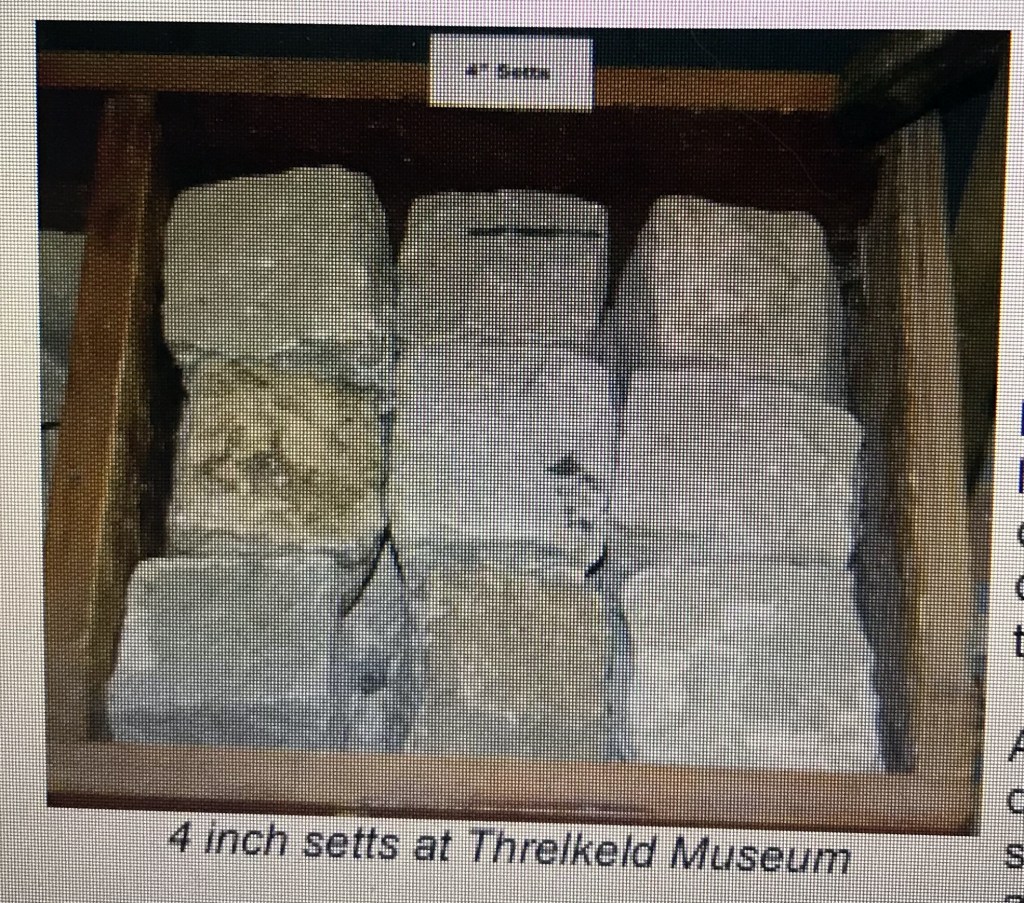
Copyright: The Black Country Archaeological Society
On the ‘I remember Blackheath and Rowley Regis’ Facebook page a while ago Natalie Gazey mentioned that some families from Rowley had moved to Threlkeld in Cumbria in about 1900, as the quarry there needed their expert skills in making stone setts from granite. And Joyce Neech commented at the time that her great-aunt had retired there and wondered whether there was a connection.
So, yes, it seems that many Rowley folk, including myself, have a connection or two to the sett makers who went to Threlkeld. So I have spent a few hours finding out more about this expedition.
As with my previous information gathering about migrating workers, the Censuses were my first port of call. Mining for various minerals has been going on in the Cumbrian area since at least the 1600s and very possibly since Roman times. But Threlkeld is a very small village and it was a quick job to see in the censuses whether anyone born in Rowley Regis was living there. The 1870s had been mentioned as a possible start date and Natalie had said that her family had gone up there in about 1900.
The 1871 Census showed that there were Lead miners in Threlkeld who were from Devon and Cornwall but none from Rowley. In 1881, again, there were no Rowley folk there. Of course, these were only snapshots every ten years so it is possible that some people had come and gone in the intervening years. The overwhelming majority of the population there was native to Cumbria and mostly from an even closer area.
By 1891, that had changed. By then, there were thirty-six people living in and near Threlkeld who had clearly moved there to work at the quarry.
In the nearby village of Wanthwaite, St Johns-in-the-Vale, living in Blencathra Vue, there was a household headed by James Holcroft, a widower aged 38, a Granite Quarryman with his two nephews William Taylor, aged 16 who was a quarry labourer and James Taylor, aged 9, a scholar and Martha Haywood, aged 23 a domestic servant, all born in Rowley. James was still in St Johns in the next census in 1901.
Martha Haywood was to be married on 7 Dec 1891 to Thomas Smith, aged 22. Perhaps this was the Thomas Smith of Rowley Regis who was living along the row with Thomas Hill at the time of the Census. Or she may have married the Thomas Smith, a local lad, who was living with his family next door. Sadly this Martha appears to have died in Sept 1893 in St Johns, aged only 25 aand no children appear to have been born to this marriage.
Two doors away again in 1891 were John Clark aged 50, a sett maker born in Leicestershire and his wife Merriel, aged 39 who had been born in Staffordshire, although their four oldest children had been born in Shropshire, the next three in Yorkshire and the youngest aged 1 in Penrith, Cumberland, a familiar pattern from my previous studies, reflecting family movements between quarrying areas. Moving on another house and there was George Burns, aged 33, a quarryman, born in Shepshed in Leicestershire where there was – of course – a large quarry, less than ten miles from Mountsorrel. His family were all born in Leicestershire. So not all the sett makers came from Rowley Regis.
Next door to him in Blencathra Vue was Thomas Hill, aged 24, a sett maker, born Rowley Regis, as were his wife Sarah aged 23 and their children Annie aged 5 and Edward aged 3. Lodging with them were Thomas Smith, aged 18, a Mason, born Rowley Regis (later to marry Martha Haywood in St John in the Vale), and John Bishop aged 18, also a mason but born in Mountsorrel, Leicestershire. Also William Dowell, aged 18 and William Dingley aged 36, both born in Rowley Regis, and William Wood, aged 36 from Graby , Leicestershire, John Sowell aged 30 from Yorkshire and Ben Derrey from Leicestershire. All these lodgers were single and all the last five were sett makers. These houses appear from later census details to have been two up, two down cottages without bathrooms or toilets, they must have been very crowded.
Their widowed neighbour George Noon, aged 40, was from Mountsorrel, all of his five children had been born in Durham.
A little way along the terrace was Thomas Clift, aged 22, lodging with a local family who was a general labourer and gave his place of birth as Portway, Staffordshire. (I have Clifts on my family tree, though somewhat earlier than this – but they lived in Lye Cross, Portway so were almost certainly connected! ) By 1901, Thomas was still in St Johns in the Vale but was married to a local girl and had three children born in Threlkeld.
A couple of doors down were Frederick Edwards who was 37 and a quarryman gave his birthplace as Staffordshire, as were his wife Ann Maria and their four children. I have been unable to find out for sure much about this Frederick Edwards. Edwards was a relatively common name in the area, well before the Rowley men arrived.
Two doors on again were Thomas Morton, aged 24 and a sett maker with his wife Maria, aged 21 and their son Thomas, aged 2, all born in Rowley. Thomas was my 1st cousin 3xremoved. They must have moved back and forth to Rowley at some point because by 1901, they were living in Northumberland (Thomas still working as a sett maker) and had three more children all born in Rowley Regis and then two more born in Blencathra, Cumberland in 1898 and 1900. Also in his household in 1891 were seven single lodgers aged between 18 and 30, including William Dowell aged 18 and William Dingley, aged 30, both from Rowley Regis, the others from Leicestershire, all sett makers.
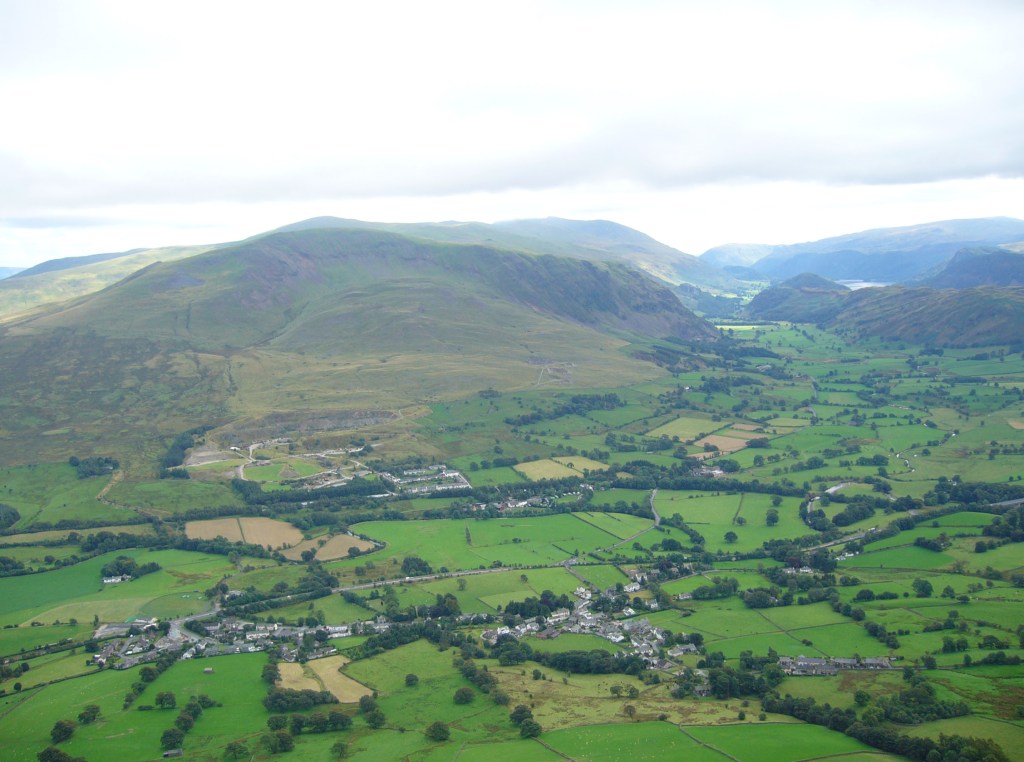
By Tango22 – Own work, CC BY 3.0, https://commons.wikimedia.org/w/index.php?curid=3826239
All of these were living in Blencathra Vue as it is listed in the census or Blencathra View in other records – and a glorious view it must have been, this is a very unspoiled area even now. The impression is that this must have been a terrace or terraces of cottages built for incoming workers. There is the pattern which became familiar when we were looking at the Mountsorrel and Shropshire connections in an earlier post, of young men moving to an area where their skills were in demand, where they lodged with local people or with fellow immigrants, often ten or a dozen to a cottage. I can find no reference to Blencathra View on modern maps but it seems likely that either it fell into dereliction or acquired other names in later years. Next time I visit my sister-in-law in Penrith, we may just go exploring and see whether we can find a likely row of houses!
Interestingly, in Church Street, Keswick, only a couple of miles away, was an Emily Mayo, born in Tividale who was a widow aged 60 and who was a Bookseller and Stationer, also there in 1901.
1901
By the time of the 1901 Census, there were still some Rowley people in the Threlkeld area. Thomas Hill who had been in St John in the Vale in 1891 was now living in Threlkeld village and giving his age as 39 (thirteen years older than the previous census!) and was now a quarryman and Innkeeper. His wife Sarah and children Annie and Edward were still at home, Annie working as a Barmaid and would marry a local man in 1904 and Edward gave his occupation as a Lead washer at the mines. Their domestic servant Elizabeth Davis, aged 18 was also born in Rowley Regis.
Also in the village was William Redfern, aged 25, a sett maker, born Staffordshire and married to a local girl with their 11 month old son.
However, the overwhelming majority of Threlkeld residents were locally born.
Over in Quarry Cottages in St Johns in the Vale, Thomas Clift was still in residence and had married his local girl Laura and was still a granite quarryman. Further along the row Samuel Knight, aged 22, born in Rowley, a Granite Kerb Dresser was lodging with a local family. It appears that young men who fancied a change of scene were still making their way to Threlkeld. Quarry Cottages seems to be the new name for Blencathra View because again, just along the row is James Holcroft, now 48 with his nephew William Taylor still living with him, but now with William’s locally born wife and their two small children. Both James and William were described as Granite Stone workers. Also still boarding with them was his nephew James Taylor, now aged 20, born Rowley Regis – an engine driver in the granite quarry.
Next door was George Long, aged 45 who was also a quarry worker, born in Strensham, Worcestershire but his wife Rebecca, aged 43 came from Rowley and their three children had been born in Birmingham, Rowley Regis and Threlkeld.
Samuel Dowell aged 27 was also living in Quarry Cottages with his wife Alice aged 29 and a boarder Frank Levett, aged 22, all from Rowley and both men working in the quarry. Samuel Dowell had married Alice Levett at St Lukes church in Cradley Heath on 16 Sep 1895, Alice was 23 and living in Rowley Regis , and was the daughter of John Levett who was a butcher in Garratts Lane, Old Hill. That Alice did have a brother Frank according to the 1881 Census so this was probably the Frank Levett boarding with them.
A few doors along was Frederick Edwards, a widower, aged 46 and his four sons, William aged 22, Joseph aged 20, Alfred aged 18 and Thomas aged 16, all born Rowley Regis and all working in the quarry. Frederick’s daughters Martha, aged 9 and Alice aged 7 had been born in Threlkeld.
Next door to Frederick was Thomas Hackett, also a widower, aged 32 with his children William, aged 8, Ellen, aged 6, both born in Rowley Regis and Thomas aged 1 born in Threlkeld. There is only one GRO Death registration for a female Hackett in the Cockermouth Registration District in this period and that is for Sarah Ann Hackett who died in the June quarter of 1900, aged 32. The birth registration for Thomas, in the December qtr of 1899 shows her maiden name as Davis. Also in the household were Jesse Hackett (28) and what appears to be his wife Mary Hackett (28) who was described as a Housekeeper (Domestic). Jesse gave his place of birth as Baptist End, Worcestershire but Mary was from Rowley Regis.
Again, the majority of residents, including those working in the quarry were locally born in Cumberland though there was a sprinkling of workers from Leicestershire. It appears that marrying locally made it much more likely that you would stay in the area.
Emily Mayo was still in Keswick, still running her stationery and bookshop there.
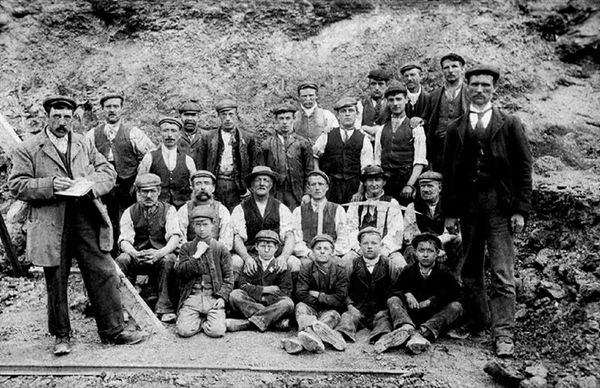
Hailstone quarry workers, about 1910, shared by Ronald Woodhouse. Some of these may have been to Threlkeld or even been born there, they would certainly have known the families who went there.
1911
By 1911 the numbers of Rowley people had reduced considerably again. In Threlkeld there was only Robert William Stuart, aged 30, a quarryman who was born in Threlkeld and his wife Annie (nee Hill) who was 27 and their lodger Edward Davies, aged 24 and also a quarryman and described as a cousin were both from Rowley so it is likely that Edward was Annie’s cousin. Robert and Annie had been married in the Penrith Registration District (which covers Threlkeld) in 1904 and Annie appears to have been the daughter of Thomas Hill who had been in the area for the two previous censuses.
Frederick Edwards was still living in Quarry Cottages in St John’s in the Vale, with his son Alfred aged 28, a quarryman and daughter Alice aged 16 who was their housekeeper. Frederick and his wife Annie had been married in 1876 at Gornal, although Frederick was living in Perry’s Lake. Annie had died in 1896.
Also in Quarry Cottages Frank Levett , now 34, had married Annie Hindmoor Benbow in Threlkeld in June 1901 and they had three children, all born locally.
William Redfern , now aged 38 was also still living there with his wife Sarah Ellen (nee Airey) they had been married in 1900 locally and had four children, all born in Threlkeld.
James Taylor, now 29, (the nephew of James Holcroft) was by now married to Jane, nee Young Watson, and they had a one year old daughter.
Thomas Hackett, still a widower, now aged 42 was still in Quarry Cottages with his children William, (now aged 18 and a sett maker like his father), Ellen, aged 16, both born in Rowley Regis and Thomas aged 11 born in Threlkeld. The cottage is noted as having just four rooms so quite where they fitted in their boarder Elizabeth Harding, aged 38, a dressmaker and her two children aged 12 and 11 is interesting! Perhaps best not to ask…
In Keswick, Ellen Dora Long, aged 21 born in Rowley Regis and single, was a housemaid.
1921
By 1921, even fewer Rowley born people remained. Alfred Edwards, now 38 and still a quarryman, was living with his father-in-law Robert Stuart and Robert’s Rowley born wife Annie . Alfred’s wife Sarah Jane was the sub-post mistress in Threlkeld and they had a son Ernest, aged 6. Their boarder Edward Davies, aged 33 and born Rowley Regis was still with them, as in the previous census. So this family had strong Rowley connections.
In Lake Road, Keswick, Ellen Dora Long, aged 31, born in Rowley Regis and single, had advanced from housemaid to Cook!
So these are the official records I have been able to find which reflect the migrations between Rowley Regis and Threlkeld, apologies if I have missed anyone. There may have been shorter trips which were not captured by the censuses at ten year intervals but certainly the names mentioned by several members of the ‘I remember Blackheath and Rowley Regis’ Facebook page are included here. And the Levett family mentioned by one of the volunteers at the Threlkeld Mining Museum.
GRO Births, Marriages and Deaths
Another set of records which can show where families were at any given time since 1837 is the General Register Office Indexes of Births Marriages and Deaths. These are divided into quarters of the year and when I started working on my family history, you had to go to Somerset House in London and physically haul down the huge original registers and check each quarter separately. And it was very busy and if someone else had the volume you wanted to check, you just had to wait until they had finished with it. Time consuming, difficult to access, but still sometimes important. These days the indexes are available online, births and deaths through the GRO website, but also through Ancestry and FindMyPast . And they have been transcribed by FreeBMD, the sister organisation of FreeREG so I was able to spend a few hours today checking for births and deaths for some of the Rowley names in the Threlkeld area from 1880 through to 1930. And then to check some of those entries against marriages to see where those marriages had taken place. To do that in a matter of a few hours would have been unimaginable only a few years ago!
As a result of that, I was able to establish that there were four children born in the Cockermouth Registration District between 1883 and 1889 to a Hackett family, with a mother’s maiden name of Billingham. Now there is a Rowley combination if ever there was one! And sure enough, I found a marriage for a James Hackett and Ellen Billingham in the Dudley Registration District in the June qtr of 1882. But in fact this James Hackett was not a quarry worker and he was living in 1901 with his family in Workington, on the Cumberland coast, where he was working at the steelworks there. One can never assume even when something looks so obvious!
Similarly the family of Hackett/Sloan who baptised three children in the same registration district came from Ireland and Lancashire and were also living in Workington. And the family of Hackett/Walker who had nine children in the same Registration District between 1897 and 1914 were also in Workington, though James, the head of the household and his uncle William who as living with him were both from Old Hill. So some but not all of the local Hackett families in Cumberland came from the Midlands and not all were involved with quarrying. Quarrying was not the only mobile skill!
There were Redfern births registered in the area between 1895 and 1910 and, interestingly a marriage of a Redfern in 1937. Similarly there were Dowell births in 1903 and then with a different mother’s maiden name in 1913 and 1919.
The Levett births in this period relate to Frank Levett who married Annie Hindmoor Benbow in 1901 and they had two children in 1902 and 1907. By 1911, Frank and Annie, with their children Sidney, James and John were living in Threlkeld with Annie’s parents James and Elizabeth Benbow, both men working as stone dressers. James Benbow was born in Clee Hill, Shropshire, Elizabeth in St Johns in the Vale, Frank Levett in Rowley, Annie and their first two children in Threlkeld and the last child in St Johns. A real granite area blended family!
But also in the June qtr of 1901, when Frank Levett had married Annie Benbow, Amy Levett, Franks sister, had married William Henry Edwards also in the Cockermouth RD. It is tempting to think that this was a double wedding! Sadly, the original registers do not appear to be available online so I cannot check this but it seems a coincidence that brother and sister married in the same area and the same time period.
William Henry Edwards aged 32 and Annie, aged 35 were living in Threlkeld in 1911, with their two children and both William and Annie were born in Rowley. The local schoolmistress was boarding with them. So were these the grandparents of the tour guide who was quoted right at the beginning of this post? I think they probably were. And he was quite correct, the Levetts still had a butcher’s shop in Birmingham Road, Blackheath, just opposite my grandfather’s house, in the 1950s when I was growing up, I can remember the smell of the sawdust which used to be scattered on the floor!
Joyce Neech has noted that her great-aunt , a later Martha Haywood (born in Rowley in 1891 and the niece of the Martha Haywood who was in Threlkeld in the 1891 Census) retired to Threlkeld after working most of her life in Rowley Regis so some connections obviously remained so that she knew enough of the area to want to live there. There were other Haywoods not so far away, including a family of Haywoods in Sheffield, at least one of whom was married in the Cockermouth area. But all of the Haywood families who were registering births in this area from 1903 onwards were in Workington and working at the steel works, which is also a trade associated with Sheffield. So how Martha came to retire to Threlkeld remains something of a mystery. But this Martha had nine brothers and sisters and her father had ten, one of who was married to a Redfern so it was entirely possible that one or more of these retained connections with the Rowley people who had stayed in Threlkeld. And yes, Martha Haywood is on my family tree, too – my 5th cousin, once removed!
So there was a certainly strong connection at this period between quarrymen and their families in Rowley and Threlkeld and some of those who had travelled to the area stayed there and some apparently have descendants there to this day. I hope this might be of interest to anyone who has this connection on their family tree. Rowley genes are spread around the country, it seems! It will certainly add some interest to my next visit to Penrith to see my sister-in-law and I shall be viewing the countryside with new interest.
 rowleyregislosthamlets.co.uk