Edward was baptised at St Giles, on 17 Feb 1818, the fourth son of Edward Alsop and Betty (nee Hodgetts). Their abode was shown at that time as ‘Windmill’ and his father’s occupation as miller. On 29 July 1838 FreeREG shows that Edward married Rebecca (often spelled Rebekah) Clift (also known as Parkes) at Christchurch, West Bromwich. Edward was shown as a bachelor and a farmer of Rowley, of full age and Rebecca as a spinster of Rowley, also of full age. Whether Edward was older at baptism than usual I don’t know but with a baptism in 1818, it seems likely that he was only just of full age, which was 21 in those days! Or perhaps he lied… Edward’s father’s occupation was shown as farmer and Samuel Parkes as a Nail Factor.
The man Rebekah names as her father in the marriage entry was Samuel Parkes who was a Nail Factor, business families marrying into other business families again. There were many members of the Clift family living on the Portway/Oldbury side of Rowley and it appears that Rebekah was baptised as the illegitimate daughter of Sarah Clift of Mincing Lane. Rebekah gave her own surname as Clift and the name of her father at her marriage as Samuel Parkes and her mother Sarah appears to have been living with Samuel Parkes in the Club Buildings in 1841 and in Bell End in 1851 when she was shown as his wife but I have not been able to find a marriage between Sarah and Samuel . Rebekah also gave her maiden name as Parkes when the births of her children were registered. Whether Samuel was actually her father is unclear but it appears that she considered him such.
In the 1841 Census, Edward was living at Yew Tree, with Rebecca whose age was shown as 25, so it appears that she was a little older than Edward whose age had been rounded down to 20. Also listed living with them was a daughter Mary (actually registered and baptised as Mary Ann), aged 3 and a son Joseph, aged 6 months. Edward was shown as a Ag Lab. MaryAnn was baptised on 19 October 1838 at St Giles when the abode was given as Windmill and also, apparently, 9 December 1838 when the abode was given as Mincing Lane. This seems very odd. But both entries appear in the parish register, just a few lines apart and there is no other female Alsop born in the area in that period. I suspect, though I cannot be 100% certain, that this may have been a private baptism in October, often performed at home when a baby was in danger of dying. Then, if the baby survived, another ceremony was held a little later to ‘receive the baby into the congregation’ of the church. Joseph was baptised on 14 March 1841 when his parents were living in Yew Tree where Edward was a farmer, confirmed by the 1841 census. And another son Samuel Edward was born in 1844, baptised at St Giles on 14 March 1844, but his mother Rebecca was buried the same day with a note on the burial entry in the register that she had died in childbirth.
Poor Edward’s family life seems to have been badly affected by Rebecca’s death. By the time of the 1851 Census he had moved to Barr Common, Great Barr where he was farming 39 acres with just one labourer sharing the house with him. His daughter Mary Ann appears to be in service as a house servant, aged 12, at a farm in Handsworth, Birmingham. Joseph is living with his maternal grandmother in Bell End, Rowley and Samuel Edward is living with his paternal grandparents at the Mill Farm.
In the 1861 Census Edward was still farming at Barr Common but he had re-married in 1859 in Aston, Birmingham to Eliza Paviour , a widow, nee Billingham. With that maiden surname you will probably not be surprised to hear that Eliza, although she had been living in Aston at the time of her marriage to Edward, gives her place of birth as Rowley and there is a baptism at Park Lane Presbyterian chapel in Cradley in 1814 which may relate to her. However, her age in censuses varies in each census and her estimated year of birth from those ages ranges from 1813 to 1820, with three instances of 1817! Edward and Eliza appear not to have had any children.
Also in this census his son SamuelEdward, by now aged 17, was also living with him.
By 1871Edward and Eliza were still farming at Barr Common but by 1881 Edward was described as a retired farmer and they had moved to Birmingham Road, Great Barr. Eliza died in 1889 and Edward remained in Great Barr in 1891 and 1901, dying in July 1901 and he was buried at St Margaret’s Great Barr on 27 July 1901. His substantial probate in December 1901 showed that he left more than £7,000 which was a substantial sum in those days.
Edward and Rebekah’s children:
Mary Ann (1838-1859)
As already mentioned above, Mary Ann was baptised twice and was apparently in service in Handsworth in 1851. It was not unusual for girls to go into service so young, brutal as we might find it today, and it appears that her two younger brothers were also separated and being cared for by different grandparents at that time. However, I was, at first, unable to find much trace of Mary Ann after that census.
At least one family tree on Ancestry has Mary Ann recorded as marrying a William Ward in Moxley, Staffordshire in 1864 and subsequently moving to Yorkshire but her father’s name in the FreeREG entry of that marriage record was shown as Henry so definitely not our Mary Ann.
However I did find a death and burial of a Mary Ann Alsop in Great Barr in August 1859. Great Barr was where Mary Ann’s father had moved to following her mother’s death and where he was also buried after his death. This Mary Ann was aged 20 which is the correct age. Bearing in mind that in the 1861 Census Edward’s son Samuel was also living at the farm with his father, it does not seem unlikely that the children, as they grew up, moved to live with their father, especially as Mary Ann could housekeep for him. I have not been able to find Mary Ann in any later censuses and I think that this is our Mary Ann.
Curiously the Civil Registration Death Index through FreeREG shows two entries for the death of Mary Ann Alsop in Walsall RD in this quarter, with the second entry being inserted below the first and in a different handwriting and with the page number being one different – very odd! But the GRO online search couldn’t find either of them so I couldn’t even order them to satisfy my curiosity! However, I did raise a query with the GRO, and some correction has been made and I have now been able to obtain Mary Ann’s Death Certificate.
Not easy to read but this confirms that this Mary Ann was indeed the daughter of Edward Alsop, farmer and that she died of phthisis (tuberculosis), aged 20 on 12 August 1859 at Great Barr. She had been suffering from phthisis for three years.
So two baptisms and two death registrations for this poor girl in her short and hard life.
Joseph 1841-?
Joseph was baptised at St Giles on 14 March 1841, when his parents were living at Yew Tree where Edward was farming. In the 1841 Census his age was given as 6 months and that census was taken on 6 June so presumably he was born sometime in December 1840, though his birth was not registered until the first quarter of 1841. In 1851, aged 9, he was living with his maternal grandmother Sarah Clift/Parkes in Bell End and he was still there in 1861, aged 20 when he was a warehouseman. His widowed grandmother, by then 65, was listed as a shopkeeper. This is not the first time we have found members of the Alsop family keeping a shop in Bell End, one wonders whether the tenancy was passed around the family as others moved on!
But after that, Joseph disappears. Searching for him has been difficult because he had a first cousin also named Joseph Alsop, also born in 1841, son of his father’s older brother Joseph Alsop and Sarah Eliza Dingley and who at one time also lived in Bell End…. Only by looking at the name of the groom’s father in various marriages was I able to establish that none of the marriages of Joseph Alsop in the surrounding area in following period was this Joseph. He was not with his father and brother in Great Barr in 1871 and I can find no other Joseph born in Rowley Regis in 1840/41 in any of the later censuses, all the entries I can find relate to his cousin. I cannot find a death registration for him in the UK nor a burial any where locally.
It occurs to me that Joseph may have emigrated, perhaps after his maternal grandmother died, as he was living with her in the last two censuses but I have not found any specific records of Sarah’s death or of him emigrating. There is no evidence of him living with his father in later life and his only sister died in 1859, so perhaps new adventures appealed. Certainly his brother had emigrated to Australia by the mid-1860s, perhaps they went together or one followed the other.
In the meantime, none of the other trees on Ancestry who have this Joseph on them have any information after 1861 either which probably means that there is no more information to find about him, at least at present.
Samuel Edward (1844-1933)
Samuel was baptised at St Giles on 14 March 1844, the same day that his mother was buried. This left his farmer father with three children, including a new born baby, under the age of six. It seems that he got a lot of help from his family, as the two boys were later living with grandparents, Samuel was with his paternal grandparents Edward and Betty Alsop at the Mill Farm, off Tippity Green, while his father had moved to farm in Great Barr.
By 1861 Samuel was living with his father in Great Barr and I found a newspaper report in the Walsall Free Press and General that, in June 1863, “Samuel Edward Alsop, farmer, Great Barr, pleaded guilty to carting night soil through the streets during prohibited hours . It appeared that, on Friday last, the night soil had been brought from West Bromwich, and that the waggon passed along Bridge Street during prohibited hours. Under the circumstances, the defendant was sentenced to pay a fine of 1 shilling and costs.” Which does not seem to be a very severe punishment – one cannot help thinking that if the smells associated with this work were so unpleasant that they could not be transported through the streets when people were out and about (I presume this was the restriction!), and bearing in mind that it was June and possibly quite warm, the magistrates had some sympathy for poor Samuel!
As mentioned above, Samuel’s father had remarried in March 1859, and his sister Mary Ann had died in August 1859 so perhaps Samuel Edward decided that there was not much to keep him at home. Certainly by 1867 he had been in Victoria, Australia long enough to marry his wife Matilda Blazeley. They appear to have settled in Condenand then Camperdown, Victoria and they had at least six children.
I found this obituary for his son Samuel, which gives some of the story of his father’s early life in Australia.
I was very interested, looking at some of his children on other family trees on Ancestry to see that his son Henry Alsop, born in 1871 in Victoria, was married in Australia and subsequently settled in New Zealand. The reason for my interest? His bride was a Lily Dingley – born in Wolverhampton – another Alsop/Dingley connection and one that showed that the close connectionns between these families had crossed the world, not confined to the Rowley area. And Dennis and Lily were married in the Wesleyan church by a John Adams. And the witnesses at the marriage were Lily’s mother and Grace Rose Adams, presumably related to the Wesleyan Minister. Lily’s parents were Dennis Dingley (born in Titford, Oldbury) and – wait for it… Betsy Alsop (born in Rowley Regis, the daughter of Joseph Alsop and Sarah Eliza Dingley)… So Henry married his second cousin. What a cluster of very familiar Rowley and Blackheath names – I wonder whether there was a mini-Rowley settlement there?! It must be challenging to move to the other side of the world, leaving all your loved ones behind – what could be more natural than for people to settle near to others from the same area and who had the same connections back at home?
Samuel Edward returned at least once to England, sailing back in April 1896, apparently, from passenger lists, alone and he returned to Adelaide arriving back in Albany in November of that year.
He died in July 1933 at Camperdown and is buried there.
Conclusion
So of Edward and Rebekah’s three children, the only definite issue was Samuel Edward’s children in Australia. After Edward’s death in 1901, an advertisement appeared in the Walsall Observer on 17 August, giving details of the auction of the contents of Edward’s house in Birmingham Road, at the behest of the executors of Edward’s Will so it seems likely that there were none of his children in England to take possession.
The Allsopp Genealogy website
In the course of my research on this twig of the Alsop family tree, I found the Allsopp Genealogy website (https://allsoppgenealogy.com/ ), run by Dennis Allsopp in Australia and he is also working on a One Name Study for the Allsopp family. It is an extensive and well documented website and if you have any Alsop connections, you will find it of interest. Dennis has kindly placed a link to this blog on the site as he thinks it may be of interest to some of his members, including this delightful illustration he has created about the Rowley Alsop family.
Whether Dennis has direct links to the Rowley Alsops I do not know but he has noted that Staffordshire was a ‘hotbed for the Allsop name’ and he is continuing to add names to his One Name Study.
I shall continue the story of the Rowley Regis Alsop family in my next piece, with Mary Ann and Rhoda’s stories still to come.
When I am working on a family study for my OPS, I use many different sources, family history search engines, censuses, parish registers, newspaper reports, academic papers – anything which throws additional light on the family I am looking at. In my mind, the variety of different sources helps to build a bigger picture of the family and how they conducted their lives and adds to the interest, rather than simply a list of names and dates.
As regular readers may remember, in my first piece on the Alsop family I referred to an interesting paper I had found which related the skills and training of mill wrights to the development of engineers in later times, as they were accustomed to complex machinery and the need for accurately made parts so that the moving machinery operated smoothly. I had noticed that there seemed to be a number of Alsops/Allsops/Allsopps who were millers in the surrounding area, at least from the early 1700s and very possibly earlier.
A recent online search for ‘Alsop + millers’ brought up a few interesting links and one of these was a link for an Allsopp Genealogy website. A very interesting website too, very well set out and extensive and including reference to an Allsopp One Name Study. I sent off an email, mentioning the OPS and my Alsop family study and asking whether the owner of the website had noticed a lot of Alsops who were millers.
I received a very prompt reply from Dennis Allsopp, who is in Australia, he had clearly looked at my posts on WordPress and he asked whether I would allow him to place a link to the study on the website, as he felt that visitors to his site would find it interesting. Of course, I am very happy for this to happen. Dennis described Staffordshire as ‘a hotbed for the Allsop name, especially around Walsall’ which tied in with my findings. He had not observed a great number of millers in his database but did comment that many were shoemakers or cordwainers – which again ties in precisely with my findings!
Not even 12 hours after my first contact with Dennis, he had read, it seems, quite a few of my posts about the Alsops and related those to the family and their place in the Industrial Revolution. He talks, in his link to my blog, about the technical skills of the family and their transition from artisan craftsmen to modern engineering in the Black Country and elsewhere. And, having written about this, he had then added this fabulous image, incorporating names, dates, a mill and machinery , all designed and done in less than a day after I had contacted him! This sort of contact is one of the things which make this study so worthwhile!
So, if you have Alsop links by name or in your family tree, do go and look at the Allsopp Genealogy website, this link goes to the page about the Lost Hamlets but if you click on the home button at the top, there is a huge amount to explore. I am very impressed by (and tbh, somewhat envious of) the technical skills used here.
Dennis is also working on the Allsopp One Name Study and there is a Facebook page, too where Dennis has also apparently put a link to my study. Thank you, Dennis!
Just to think that I thought the Alsop family would be a quick easy Family Study, a bit of a recreation from some of the more familiar Rowley families – but it seems that every family I look at expands in this way and provides new areas of interest!
Joseph, the third son of Edward Alsop and Betty (nee Hodgetts), was baptised at St Giles on 14 January 1816, so may have been born late in 1815.
Joseph married Sarah Eliza Dingley on 4 December 1836 at Clent. In the 1841 Census they were, from the description of the enumerator’s route, living at the bottom of Rowley village, very near to Lillypot Row, with their 3 year old son Edward and also Nahan (Nathan?) Dingley, aged 14, presumably a relative of Sarah. Joseph was a shop keeper.
In the 1851 Census, Joseph and his family are shown as living in Blackheath. But then, so is everyone else in nine pages! Trying to work out whether these were actually the same place, I looked at the route described by the enumerator. The enumerator’s route, however, is slightly – but only slightly – more informative when trying to work out exactly where they were living and then only if you know where other named individuals were also living, as routes are often defined by reference to the occupants or sometimes the builders or owners of particular houses. I do not have that knowledge! So:-
“All that Part of the Parish of Rowley Regis called Blakeheath [a common spelling variation then and later in the document the writer consistently spells the name as Bleakheath] , commencing at two houses lately built by James Preece [no help at all!], taking both sides of the road up to the Endowed School, then Lillypot Row, Barton [at this period Barton seems to have referred to an area around what is now the Britannia Inn. The historical meaning of barton refers to a barley farm and I am interested to note this as I know from other studies that at least one farmer of this land was also a publican on the site and perhaps grew barley for use in brewing his beer] and up to the Partridge’s on that side only, then along Siviters Lane, taking New Ross and Shepherd’s Fold including the Yew Tree Lane and Hyams Hill House, and Scotwell Cottage, thence to Benjamin Adshead [again, no help, except that I was interested to see that there were Adsheads living in this area as I had previously only come across this surname in connection with the Levett family] taking that side of the village to the National School.”
The Enumerator’s route for the adjoining part of the 1851 Census reads :
“All that Part of the Parish of Rowley Regis called Mincing Lane, taking Bell End, MackMillans’s Green, the North side of the village including 2 houses at Whiteheath Well, Spring Row, the Parsonage, Hawes Lane, Club Buildings, the Mill Farm House and Tippity Green, ending at Joseph Parkes.”
From various descriptions, Mackmillan’s Green appears to have been below Bell End, perhaps opposite to what is now the entrance to Britannia Park.
Copyright: Alan Godfrey Maps. Surveyed 1883, revised 1902.
So it appears that the line of what was or is now called Birmingham Road was the boundary between these two Enumerator’s sections and that Joseph and his family were living somewhere at the bottom of the village, between Lillypot Row and Siviter’s Lane, on the side where Britannia Park is and possibly where the Tesco is now and possibly in the same place as in 1841. But this time, Edward was described as a farmer of 7 acres, so not a big farm.
Joseph and Sarah had six children: Edward (1838-1908) who is looked at in the rest of this piece; Joseph (1841-), Eliza (1844-); William (1845-1846); Elizabeth (1847-) and Rhoda Ann (1849).
Rhoda is quite an unusual name but appears several times in the Alsop family, both in Rowley Regis and as far afield as Shropshire, Gloucestershire, Derbyshire, Cambridgeshire and London in the 1700s and early 1800s. Presumably this Rhoda was named after Joseph’s youngest sister Rhoda (1821-1903)of whom more anon.
In this piece I will deal with their eldest son Edward who had an extensive and busy family. The others will follow soon! I hope…
Joseph and Sarah’s children:
EdwardAlsop (1838-1908) married Sarah Whitehouse at St Edmund’s Dudley on 25 December 1858. Sarah’s family lived in Portway. It was not unusual to have weddings on Christmas Day in those days, as this was the one day that workers were on holiday and would not lose pay. Perhaps also it was a day that families often got together to celebrate so that a separate celebratory gathering was not necessary.
In the 1861Census, when this Edward was living in Rowley Village with Sarah and their eldest son Joseph, aged 3, he was a cordwainer or shoemaker, a trade which he passed on to others in his family and in which he appears to have built up a successful business in the Blackheath area.
Edward and Sarah had six children, all blessed with the usual Alsop names, leading to some confusion at times. I apologise in advance if I confuse you, too! These were : Joseph (1859-1932), Eliza (1863-1939), Mary (or Polly) (1865-1938), Alfred (1871-1900), Alice (1875-1887) and Annie (1879-1954).
Joseph Alsop (1859-1932)
Their eldest son Joseph, like his father and brother, became a boot and shoe maker, he had a shop for many years in Oldbury but moved back to his father’s business in Blackheath after his father’s death. It does appear, looking at the locations of the family in various censuses and wills that they kept a connection to a shop in this immediate area for many years. Other records refer to 4 Long Lane and others to Market Place, Blackheath. And as seen before, the boys in the family appear to have been placed in businesses of their own, even if in the same trade, but carefully situated far enough apart not to compete with each other.
Joseph married Annie (Susannah) Grosvenor at Quinton in 1880, they had three sons. The eldest Edward (1881-1946) was in Barnsley Hall Mental Hospital in the 1921 Census and apparently remained there, dying there in 1946.
I can remember when I was growing up in Rowley in the 1950s there was an absolute horror of people being ‘taken to Barnsley Hall’ and I know from other people I have researched that quite often people who were admitted to mental hospitals, including some who were admitted after shell shock in WW1 military service, never came out. Whether Edward was admitted for these reasons we cannot know but it is possible that he remained there for most of his adult life.
Joseph and Annie’s other sons were Alfred (1886-1973) who married Elsie Oakley in 1909 and was a Master Shoe Maker, staying in the Blackheath area for the rest of his life. Alfred and Elsie appear not to have had any children.
And Horace (1892-1945). In the 1911 Census Horace, then 19, is recorded proudly as ‘Student – Arts Degree’. This is the first time I have come across a member of this family graduating, which Horace clearly did as he became a secondary school teacher and later an Inspector of Schools. He married Hilda Lusty in 1917 and was a schoolmaster in Norwich by 1921, where he stayed for the rest of his life.
Joseph died in 1932 and his Probate Record describes him as ‘of Long Lane, Blackheath, I have been unable to find a record of his burial and Susannah died in 1933.
Eliza Alsop (1863-1939)
Edward and Sarah’s daughter Eliza married James Stafford (1864-1940) who was a Boot and Shoe Maker in 1886 (although he later became a publican and also, at some point a shopkeeper); they lived in Mott Street, Blackheath in 1891, just around the corner from Eliza’s parents, later at the Quinton end of Long Lane in 1901 and later still in Riddins Street, Old Hill (which was apparently somewhere in the Brickfields area) in 1911 and 1921.
And Hitchmough confirms that James Henry Stafford was indeed the licensee of the Riddins Tavern from about 1905 – 1930. What fascinated me about the entry in Hitchmough was the name of the previous licensee – John E French [1899] – [1901]. Hang on, we already know about a John French who was a licensee, the son-in-law of Hannah Alsop, Eliza’s aunt. And although he was dead long before this, he did have a son John E French. Was it possible that Eliza and her husband took over the pub from her cousin?
Well, no, apparently not! The John Edgar French (1881-1973) on the Alsop family tree was born in Belbroughton in 1881 and was a farmer whereas the publican John E French was, according to various censuses, born in 1866 in Cradley Heath. And our original John French (1832-1886) was the son of George French, and was born, as was his father, in Wardington, Oxfordshire. The Cradley John E French was the son of Andrew and Ann French who were both from County Mayo, Ireland. Just a strange coincidence, it seems! But it is tempting to wonder what connections there might have been further back…
James and Eliza had two daughters Elsie (1889) and Lily May (1893) and one son James Leonard (1898). Eliza died in January 1939, her death being registered in the Rowley Regis Registration District so she had not moved far from her Rowley roots, James died in 1940.
Mary (or Polly) (1865-1938)
Mary [usually known as Polly] Edward & Sarah’s next daughter, married Alfred Adams (1865-1943) in 1889, he was a Solicitor’s Clerk. In the 1921 Census, which asks for the name of employers, Alfred says that he was employed by T Cooksey and Co., Solicitors, of Old Hill. They stayed in the Blackheath/Cakemore area for the rest of their lives.
Polly’s husband Alfred Adams is related to me as a distant cousin, through my maternal line, and I will be doing a separate piece about the Alsop premises in Blackheath and how they relate to my Rose/Adams/Parsons family.
Alfred and Polly had four sons, Eli Percy (1890-1891), Alfred Theodore (1894-1960), Bertram Leslie (1897-1992) and Harold Cyril (1902-1974). Of these, Eli died in infancy, Alfred and Cyril appear to have stayed in the Halesowen/Cakemore area and Bertram, who was a Civil Servant lived in various places including Nottingham, Doncaster and London, but died in Bournemouth. Alfred does not appear to have married though both his brothers did. He was noted in the 1939 Register as living with his retired father and his occupation , very unusually for a man in those times, was shown as ‘unpaid domestic duties. Since he died in Powick Mental Hospital in 1960, it is possible that he suffered from some disabling condition.
This Alfred was a second grandson of Edward & Sarah’s who appeared to have long term residence in a mental hospital. It seems very sad that this should have happened and that it appears to have been relatively common to have people confined in these hospitals for such long period but there appear to have been relatively few effective treatments at that time, conditions such as PTSD were not defined (although shell shock was) and it was many years before a campaign was undertaken to move people who were capable of being released into the community.
Polly died in the second quarter of 1938, aged 73 and Alfred Adams in 1943, aged 78.
Alfred Alsop (1871-1900), was born in 1871, in Rowley Road, Blackheath (which was another name for Birmingham Road at that point), and was less than one month old at the date of the 1871 Census (which took place on 2 April 1871). In 1881 the family were stillat Birmingham Road, living next door to the Shoulder of Mutton, a property with which they appear to have retained a connection well into the 1900s. More of that in my next piece. Alfred was then a scholar. In 1891 he was still at home with the family (who had moved from Birmingham Road to 122 Halesowen Street), now aged 20 and a journeyman bootmaker, following the family trade. He married Flora Jones, who was a dressmaker, on 20 March 1895 at St Paul’s Blackheath, Flora being a Quinton girl. Alfred’s sister Polly (Mary) and her husband Alfred were the witnesses at the wedding. Alfred and Flora had two sons Arthur William Alfred (1895-1979) and Harry Leslie (1897-1954). Sadly, Alfred died on 18 July 1900, aged 29 and was buried at St Paul’s on the 20th. His widow re-married in 1908 to James Adderley and Flora, by this time a widow again, died in Hove, Sussex in 1845. Her son Harry was living in Hove in 1939, working as a Motor Mechanic and died in Hove in 1954. His older brother Arthur died in Eastbourne, Sussex in 1979, a period of fifty years between those deaths so presumably they had all moved to Sussex at some point. So this was another branch of the family who moved a long way from Rowley Regis.
Alice (1875-1887)
Alice was born at Birmingham Road, next to the Shoulder of Mutton and was listed as a scholar, aged 6 in 1881. Alas, this was the only census in which Alice appears as she died in 1887 and was buried at St Paul’s, Blackheath on 1 September 1887, aged 12.
Annie (1879-1954)
Annie was also born at Birmingham Road, and was there in 1881. In 1891 she was with the family in 122 Halesowen Street when she was a scholar. As the youngest child she was still at home in 1901, at Halesowen Street, with her parents and their grandson Arthur, son of Alfred, mentioned above.
Where exactly did the Alsops live?
I was still trying to sort out the exact location of these addresses in my own mind, as more and more family addresses seemed to link back to this immediate area. So I looked in more detail at the censuses for this area. In the 1891 Census, the list goes:
123 High Street: George Darby, Grocer and his family.
Next house:
122 Halesowen Street: Edward Alsop, Boot & Shoe Manufacturer and family.
Then:
123 Halesowen Street: Henry Bennett, General Outfitter and his family.
And then:
124 Halesowen Street: The Shoulder of Mutton, Thomas Miller Gun Wadding Manufacturer and Licensed Victualler – interesting combination!
It appears, from carefully reading the extensive information in Hitchmough about the Royal Oak Inn (which was later demolished to make way for the roundabout in the Market Place) that George Darby was born in The Royal Oak as his father owned it and that the Darby family owned extensive properties in this area and, again, all the family were involved in different businesses and pubs.
So I think that the households listed above ran across the west side of the market place, where the Midland Bank and Burtons were later so that the Alsops were in the middle of that row of shops. And it seems quite possible that this is the same place sometimes known as 3 Market Place, where Edward Alsop died in 1903. The Royal Oak was sometimes described as in Halesowen Street and sometimes in High Street so it can be quite confusing!
I have found this photograph in Anthony Page’s Second Book of Blackheath Photographs which shows this area (albeit slightly later) and refers to the Shambles which ran from the back of some of the shops in Birmingham Road and the Shoulder of Mutton (which had been built on land originally owned by the butcher who had asked for the pub to be named after one of his products!) into Market Place and High Street. And I think that the Alsop’s shop and home in this photograph was between the advertising hoarding and the Shoulder of Mutton. The Royal Oak faced them, on the far right of this photograph, with a van parked outside. The Darby family hired various means of transport from the pub so this may well have been one of their vehicles.
The day after publishing this, and by pure coincidence, I was amazed to see a postcard photograph of this very area from the other direction which Phil Sims posted on Facebook. The pub on the right is the Shoulder of Mutton. And Phil has very kindly allowed me to add it here. When the scan is enlarged, the names can be read on the shops which place the photograph about 1905, I think.
Copyright: Phil Sims
Back to Annie
Annie married William Leonard Butler in 1907, and they continued to live in Halesowen Street. They had one daughter Vera May Alsop Butler in 1908. Although Vera later moved to Mucklow Hill with her husband Reginald Hiscock, Annie stayed in Blackheath. In 1939 she was living at 3 Halesowen Street (which as so often may have been the same house previously numbered 122 which appeared from the census return to be immediately adjacent to or on the Market Place). William Leonard Butler died in 1949 and Annie in 1954, they are buried together in Quinton Cemetery. Annie’s Probate entry still refers to her as ‘of The Market Place, Halesowen Street, Blackheath so there was an Alsop connection to that address as late as 1954. Does anyone remember Alsop’s Shoe shops? I don’t, I’m afraid but it must have been before my time, nor have I found any advertisements for the shop or business .
Summary
So this was the family of Edward Alsop, (eldest son of farmer Joseph Alsop), and Edward’s wife Sarah Whitehouse. Edward’s family started and expanded the boot and shoe making of the Alsops.
As usual, the Alsops were in trade, always willing, it appears, to diversify into new areas of trading and to ensure that their children also had business opportunities and training or education to take later generations into the professions. A far cry from the millers/farmers only a few decades earlier, but clearly the business acumen and drive of the Alsops was fully present in this branch of the family.
Their six children had given Edward and Sarah the fairly modest (for that time) total of thirteen grandchildren.
In my next piece I will look at the other younger children of Joseph and Sarah.
This very short piece looks at the next younger children of Edward and Betsey (nee Hodgetts) Alsop , having dealt with their eldest daughter Hannah in my last piece. This piece covers Sarah, John, Thomas andMary. Joseph will be looked at in the next piece, as he has turned out to have quite a lot of information available about him, and the remaining children Edward, Mary Ann and Rhoda will be in the final piece.
This picture (copyright unknown) shows the view to Turners Hill from Hawes Lane which would have been very familiar to the Alsop family, their farm was just over the wall! They must also have had good views of Turner’s Hill, and this was before the hillside quarries really ate into the hillside, and their own quarry also created a very large hole! I am not sure what the enormous heap on the right is, as I am not aware of any mining in this immediate area which would create spoil. Perhaps it was material from their quarry or perhaps it was Alsop’s Hill which appears on the 1902 OSMap. I think that the houses on the left are in Tippity Green and it is possible that by this time, the mill and farm may have disappeared.
Sarah Alsop (1805-1884)
Sarah was born early in 1805 and baptised on the 2 June 1805 at St Giles. In 1841, 1851 and 1861 censuses she was living at Mill Farm, one of several unmarried children of Edward. In 1871 she had moved to Mincing Lane where she was living with her sister-in-law, Eliza Alsop (widow ofJoseph) . In this census she is described, at the age of 69, as an ‘idiot’ which does not have quite the same meaning as it might today but implies some sort of mental condition or handicap. However, by 1881 she had moved to 93 Rowley Village where she was living with Jesse Patrick, a tailor and his wife. By now Sarah was 77 but there is no mention in this census of any health issues. Whether Sarah was suffering from dementia we cannot tell nor whether any health issues might have prevented her from marrying but it seems unlikely that she would have lived to such a great age if she had suffered from Downs Syndrome or some such disability. It is possible that she had some degree of learning difficulties and certainly she was looked after with the family until at least 1871. She never married.
Sarah died in Rowley Regis and was interred at St Giles on 27 April 1884, aged 79 and ‘of the village’.
John Alsop (1807 -?)
John Alsop, named presumably for his grandfather John Alsop, was baptised at St Giles on 4 October 1807. And that is the only definite information I can find of him. I cannot find a burial or a marriage for him in Rowley Regis or the surrounding area. The period of his younger life was before censuses, of course, so there are no clues there. There is a possible baptism for a John Alsop, son of John and Mary Alsop at Dudley St Thomas in 1839, the father being a baker who could be the right man. But I cannot find that couple in the 1841 Census so that is also inconclusive. There are three other trees on Ancestry which have John on them but none of them have any further mention. It is tempting to assume that he died in infancy but no subsequent sons were called John, as often happens when an infant dies and a later sibling is given the same name, especially when it is a family name. So John is a mystery!
Thomas Alsop (1809-1865)
Thomas was baptised at St Giles on 29 October 1809. He was living, unmarried, with his family at the Windmill Farm in 1841, in 1851 when his occupation was given as ‘Farmer’s son’ and in 1861 when, at 51, he was the farmer at Blowershill Farm (otherwise known as Mill Farm or Windmill Farm), farming 35 acres. His father had died in 1860 so Thomas had taken over the farm but there is no reference at any stage to him being involved with the milling trade, unlike two of his brothers. He was still single in 1861 and his unmarried sisters Rhoda and Sarah were also living there. John Wright, a labourer and carter born in Rous Lench , near Evesham, Worcestershire, was also living there. Another instance of labour being brought in from outside the area, even for relatively unskilled work for which one would have thought there would have been suitable local candidates.
Thomas Alsop, of Blower’s Hill, was buried at St Giles on 10 July 1865, aged 54, having outlived his father by only five years. In the next census, his sister Sarah, as related above, had moved to live with her sister-in-law in Mincing Lane which would tie in with this.
Mary Alsop (1811-1813)
Mary was baptised on 24 November 1811 at St Giles and buried there less than two years later on 17 October 1813. The entry in the Burial Register has her abode as the Windmill and the cause of death as a ‘bowel complaint’, a very common cause of death for infants, not only then but for more than a century to come, before water supplies and sewage disposal conditions were improved in the area which helped gradually to reduce the number of infant deaths.
The next brother, Joseph, turns out to have quite a lot of information available so he will probably have a post of his own, hopefully very soon.
Of Edward’s children, I will look in this piece at Hannah, the eldest daughter and her family, many of whom were – at least initially – involved in milling and associated trades. The other children will be the subject of later posts.
Hannah Alsop (1801-1870)
Hannah was baptised at St Giles on 11 October 1801. On 21 June 1824 she married Isaac Mallin at Clent and they moved to Dudley Port where Isaac ran a grocer’s shop and also worked as a Corn Factor for the rest of his life. At the time of the marriage they were both described as ‘of Rowley Regis’.
Apologies for the poor quality of this picture. This image, uploaded by D Bickley (to whom copyright presumably belongs) is believed to show the grocer and corn factor’s premises at 8 Dudley Port, home of Isaac and Hannah Mallin. The middle building with the red roof is the premises in question and this also shows numerous outbuildings at the rear where presumably Isaac stored the corn and other materials he dealt with.
The Mallin family
Isaac Mallin, son of William Mallin and Ann nee Woodhouse, was born in 1800 at Portway where several Mallin families were farming in the 1841 Census.
The Mallin/Mallen family had many connections on the Oldbury/Portway/Tividale side of Rowley, and in the Brades area. They first appear in the Rowley Parish Registers in 1718 when Elizabeth, daughter of William Mallin was baptised at St Giles and recur frequently after that, using the names Abraham, William and Isaac repeatedly in all branches of the family which adds considerably to the task of sorting out who was who! They were business people, like the Alsops, mainly farmers, with at least three Mallin families listed separately in Portway in the 1841 Census but they also worked in associated trades and generally married into families in associated trades. Isaac and at least one of his sons became grocers and Corn Factors who would have many dealings with Millers. Others became Millers or worked in jobs associated with milling in some way.
I was also interested to note that Hannah’s maternal grandparents were Mallins, so she may have been related to her husband although I have not pursued further research on this line yet. It appears from baptismal records that Hannah’s maternal grandparents lived in Cakemore, so came under the parish of Halesowen, which at this time included Oldbury and certainly there were numerous Mallins still in this area in the 1800s so again there is this association with the Cakemore/Brades area.
The Mallin family – or at least some them – were, by the standards of most local families I have studied so far, well-to-do. A report of the death in 1838 of Mr Abraham Mallin of Tividale, aged 81, notes that he was formerly of Brades Hall and a report of a burglary in 1871 at the home of another Abraham Mallin of Oldbury lists some of the items stole on Christmas Day 1870. These included “six silver teaspoons, two silver table spoons and a pair of silver sugar tongs; two old Guineas; three gold dress rings; a silver pin; two pairs of gold ear-rings; a gold locket and a brooch.” This implies a level of living standards and prosperity quite outside the experience of most ordinary Hamlet folk, I suspect!
Isaac and Hannah had nine children – John (1824-1880), Ann Eliza (1831-1904), Joseph (1833-1912), Elizabeth Emma (1833-1897), Isaac (1835-1852), Abraham (1836-1902), Edward James (1838-1922), Hannah Alsop (1841-1918) and Mary Jane (1844-1910). The ties with Rowley Regis and the Mill remained close. The first seven children were baptised at Rowley, the last two at Tipton. Several of the boys learned milling skills, presumably from their grandfather so must have worked with him at the windmill.
Hannah died in 1870, aged 68 and was buried at St Giles, Rowley. Isaac died in 1885, aged 84, of Dudley Port and was also buried at St Giles, on 24 March 1885. His Will was proved in June of that year and his son Joseph and two of his sons in law were executors. His estate seems relatively modest, after his long business life – £286. 6s. 8d – but perhaps he had distributed some of his assets before he died.
Isaac and Hannah (nee Alsop) Mallin’s children
John Mallin (1824-1880)
John was baptised at Rowley Regis on 21 November 1824, the family abode was shown as ‘Windmill’ and he later gave his place of birth as Rowley Regis, later children of the couple gave their place of birth as Dudley Port or Tipton. In the 1841 Census John was listed at Portway, living with his paternal grandparents William and Ann Mallin, his occupation was shown as Male Servant. Also listed is an Elizabeth Mallin, aged 18, who I suspect was the Elizabeth Mallin, illegitimate daughter of Rebekah Mallin of Portway who had been baptised on 25 December 1822 so another grandchild. So he was effectively an agricultural labourer for his grandfather, not an uncommon situation in those days which gave occupation and training, though possibly not much pay!
In the 1851 Census John was living at Dudley Road, Tividale as Head of his household and was a provision dealer. His sisters Elizabeth Emma aged 23 and Ann Eliza aged 20 plus his brother Edward James aged 11 were also living with him. His younger siblings were still in Dudley Port with their parents and it seems reasonable to assume that his sisters kept house for him and probably helped in the business. This seems to be a recurring pattern in the family, there are several instances of groups of the children living together away from the family home but working in businesses which may well have been satellites of the main business in Dudley Port.
John married Rebecca Wright , by Licence, at Dudley St Thomas on 19 October 1854. Rebecca’s father was a wine merchant in Dudley so this is another example of business families inter-marrying with other business families. Their son Isaac Henry Mallin was born in the September quarter of 1855 although he was not baptised until 26 December 1858 at Dudley St Thomas. Rebecca Mallin died in the September quarter of 1856, the death notice for her which appeared in the Worcestershire Chronicle describes her as “the beloved wife of John Mallin and the only daughter of Mr H Wright of Dudley”. So Henry’s baptism is well after this date but he is still described in the baptism record as the son of John and Rebecca Mallin, of Dudley Port with no mention of her being deceased. John’s occupation was given in the baptism record as a Miller.
In late 1855/early 1856 a John Mallin, presumably this John Mallin, as Miller of Rowley Regis, was declared bankrupt. There is just one newspaper notice that I can find which names Joseph Mallin of Rowley Regis, a Miller as bankrupt, on exactly the same date as John, but no mention of John in that notice. Had they been partners in business I would have expected both of their names to appear. But this is the only one of numerous notices appearing in the press about this bankruptcy to name Joseph, all of the others only name John. Also, by 1861 Joseph was employed by the New Union Mill in Ladywood Birmingham, as Company Secretary, a position he held for several decades. I do not think that the company could have employed a bankrupt in this position of trust, so I am inclined to think that this one notice was an error.
There was also one Press advertisement in November 1860 for the Rowley Flour Mill to be let at a low rent. It included outbuildings and two dwelling houses. This states that ‘the Mill consists of 18-horse condensing engine, driving three pairs of French Stones, with Dressing, Bolting and Smutting machines, Bean Mill, etc all in excellent repair’. So it sounds as though someone had invested money in equipment, perhaps this debt had led to the bankruptcy. Enquiries were directed to Isaac Mallin, Corn Factor at Dudley or Joseph Mallin at the New Union Mill, Birmingham. This was just a couple of months after the death of Edward Alsop who had perhaps continued milling until his death and it may already have been known that John would not be returning from the USA.
It appears that John Mallin moved soon after his bankruptcy to the USA, as he appears in a Street Directory in Chicago in 1867 as a Miller and in the 1870 Census in Chicago, as a Miller. Trees on Ancestry also suggest that a John Mallin in New York in the 1860 census was also him but that John Mallin gave his place of birth as Canada so would not seem to be the same person. Living with him in Chicago in 1870 is a lady who appears to be his wife Mary and four children, Louisa aged 21, Andrew, aged 16, Jane aged 14 and Ada aged 12 who were presumably Mary’s children from a previous marriage as John was in England at the time of their births, although they appear to have adopted his surname. It is unclear when John died.
John’s son Isaac Henry remained in England for a period. He was living with his Mallin grandfather and two of his aunts at Dudley Port in 1871 but he then also moved to the USA. A Voter registration form dated 1892, shows him living in Mill Avenue, having been in the Precinct for one year, the County for 12 years and the state for 16 years. Isaac became a naturalised citizen and later married and remained in the USA until his death in Chicago in 1921.
I have found John’s parents Isaac and Hannah Mallin in every census during their lives apart from 1861 when I cannot find either of them anywhere. They were at 8 Dudley Port at the shop in censuses before and after that but in 1861 their son Edward James was there with his two younger sisters, with Hannah described as a grocer. They do not appear to be with any of their other children so far as I can see or anywhere else in the country. Then in the next census they are back in Dudley Port so they had not retired. I wonder whether they had gone to visit their eldest son John the USA. I don’t suppose I shall never know! I cannot find them on any passenger lists but those are not exhaustive so it seems possible that they had gone to visit their eldest son.
So it appears that John and his descendants settled in the USA and they appear not to have returned to the UK.
Ann Eliza Mallin (1831-1904)
Ann Eliza was born in about 1831 in Dudley Port. I have not found her baptism. She was living in Dudley Port with her parents in 1841 and in Tividale with her brother John in 1851. By 1861 she was living with her brother Joseph at the Union Flour Mill in Ladywood, Birmingham where he was the Company Secretary for many years. After Joseph’s marriage Annie Eliza moved back to Dudley Port and was living with her father in the 1871 and 1881 Censuses. By 1891 she was back in Aston, housekeeping for her brother Joseph again, he was a widower by this time but had his seven children living with him, ranging in age from 24 to 10. By 1901, Joseph, by now aged 68, had taken up a new occupation of Cycle Fitter and Annie was still living with him in Bolton Road, Aston, sharing housekeeping duties with her niece Lucy.
Annie died on 5 March 1904 at 18 Dawson Street, Small Heath, Birmingham, still living with her brother Joseph and was buried at Yardley Cemetery. She had never married but appears to have spent her whole life housekeeping for members of her family.
JosephMallin (1832-1912)
Joseph was born in 1832 and baptised at Rowley Regis on 23 September 1832, his parent’s abode given as Dudley Port and his father’s occupation as a grocer. In 1841 he was with his parents and siblings at the grocer’s shop in Dudley Port, aged 8. In 1851, he was living at Wombourne with the miller there and his occupation was also given as a Miller, so clearly more than one of the Mallin boys had learned the family trade from their grandfather Alsop. By 1861, Joseph was living in a company house in Ladywood, Birmingham where he was Company Secretary and Clerk to the Union Flour Mill. His sister Annie Eliza was also with him, as mentioned above, keeping house for him and they had one female servant, aged 15.
The New Union Mill, Birmingham where Joseph worked as Company Secretary for many years. Copyright unknown.
On 14 April 1865, Joseph married Mary Ann Morgan at St Barnabas church, Edgbaston, she was a Birmingham girl, born in Great Barr. They had eight children: Lucy Beatrice Rose (1867), Francis Joseph Edward (1868), Arthur William (1871), Charles Isaac (1872), Walter Herbert (1873), Albert Howard (1874), Charlotte Florence (1879-1879) and Harriet Lilian (1880). Mary Ann died in 1883, aged 41 and was buried at Witton Cemetery, Birmingham. That left him with several young children under ten so it is perhaps not surprising that his sister Annie Eliza moved back to keep house for him, apparently staying for the remainder of her life. Joseph never re-married.
By 1891, at the age of 58, Joseph was living in Stratford Place. Aston, with Annie and all of his surviving children and was described as ‘living on his own means’. All the children aged 16 or more were working, Lucy as a barmaid, Francis as a Warehouseman, Arthur, Charles, Walter and Albert as Clerks and the youngest two – Frederick and Harriet were still scholars.
In 1901, Joseph and Annie were at 120 Bolton Road, Small Heath, Birmingham, and six of the children were still at home, aged from 34 down to 20. Joseph had perhaps seen a business opportunity and had become a Cycle Fitter. Perhaps rotating things still appealed to him, mill wheels, bicycle wheels…
These were not very large houses but some of the houses in Bolton Road were three storeys so this may have been one of those.
In 1911, Joseph, now 77 and a pensioner, was living at 18 Dawson Street, Aston, with his son Frederick who was still unmarried and worked as a traveller in hardware. His sister Annie had also been living there with him until her death in 1904.
Joseph died in March 1912 and, like his sister, was buried at Yardley Cemetery. Most of Joseph’s working life had been involved with mills but that link seems to have been broken after him and none of his offspring seem to have gone into the mill business.
Joseph’s children appear to have remained settled in Birmingham, where they were all born, and not come back to the Tividale/Dudley Port/Rowley Regis area.
Elizabeth Emma Mallin (1833-1897)
Elizabeth Emma was baptised on 27 April 1828 at St Giles, Rowley Regis. Her parents were said to be of Dudley Port and Isaac’s occupation was given as a Huckster, which means someone who sells or offers goods, sometimes with implications of inferior goods or questionable sales techniques.
Elizabeth is not living in Dudley Port with her family in the 1841Census so must have been visiting elsewhere, possibly with family. Elizabeth’s sister Hannah was born in the first quarter of 1841 so it is possible that a member of the family took Elizabeth to stay with them, to help their mother.
Searching the 1841 census for Elizabeth, I found an Elizabeth Mallin, living in Church Vale in West Bromwich but she was shown aged eleven and there were twenty three children of various ages at this address, almost all of whom were described as pupils, although there was only one adult who might be in charge who was described as a governess, plus a couple of servants. The enumerator’s route described Church Vale and the Parsonage but there was no mention of the Parsonage in the listed people nor a clergyman of any sort. Living with the Governess Mary Hartland, (who was only 25) the Head of the Household Timothy Hartland appeared to be a bricklayer with the same surname and a baby aged one, also with that surname, followed by the children aged from 3-17. It seems very strange. So, if this was a somewhat chaotic establishment, I suppose the age might be wrong. But I then noted that in the 1851 Census, Elizabeth’s sisters Hannah and Mary Jane were also shown as boarders at this same address so it obviously was a boarding school and it seems that this was the correct Elizabeth Mallin. So it appears that the Mallin family were sufficiently prosperous to send their daughters to boarding school.
In 1851 Elizabeth Emma aged 23 was living at Dudley Road, Tividale with her oldest brother John who was then a provision dealer. Her sister Ann Eliza aged 20 plus her brother Edward James aged 11 were also living there.
On 5 June 1855Emma Elizabeth married Jabez Baker, a Land Surveyor, at St Giles. They had four children: Joseph Edward was born in 1859 in Wolverhampton; Walter Jabez in 1862 in West Bromwich; Elizabeth Emma in 1866 also in in West Bromwich and Agnes Louise in 1869 in Lenton, Nottinghamshire.
In 1861Elizabeth and Jabez were living at Railway Street, West Bromwich with their son Joseph Edward and also Mary Baker, Jabez’s widowed mother and a servant girl. Jabez was shown as a Land & Mine Agent.
By 1871, the family, now including all four children (but not Jabez’s mother) were living in Lenton Sands in Nottinghamshire where Jabez was employed as an Engineer. Their neighbours here included an Estate Agent, an Insurance Superintendent, a Photographer, a Police Constable and a shop keeper – and several lace makers, so it seems to have been a reasonably comfortable area. In 1881, the whole family were at 233 Derby Road, Lenton and Jabez’s occupation is shown as a Mining Engineer. By 1891, the family had moved to Loughborough Road, West Bridgford , Jabez still a mining engineer with their two daughters in the household, daughter Elizabeth Emma under her married name of Beardsley and Agnes Louise, still unmarried.
Jabez Baker, died on 18 Jun 1897, aged 70 and Elizabeth Emma nee Mallin died two months later in August 1897 and was buried on the 14 August 1897 in Nottingham. All four of their children remained settled in the Nottingham area for the rest of their lives.
Isaac Mallin (1835-1852)
Isaac was born in Dudley Port and baptised at Rowley Regis on 20 April 1834. In 1841 and in 1851 he was living at home with his family in Dudley Port. He died on Typhus Fever, aged 18 on 4 February 1852 and was buried at St Giles, Rowley Regis on 10 February 1852.
Abraham Mallin (1836-1902)
Abraham was born in Tipton (almost certainly in Dudley Port) and was baptised at St Giles, Rowley Regis on 17 July 1836. In 1841 and 1851 he was living at home with his family at 8 Dudley Port. No occupation is shown for him in 1851 but he was 15, a working age for boys in those days, so was probably working in the family business in some way.
On 3 April 1861 Abraham married Ann Hargrave Blewitt, daughter of Joseph Blewitt, Butcher (another Mallin marriage into another business family) and just four days later on 7th April the 1861 Census shows the happy couple living in their own household in Dudley Port with Abraham’s occupation shown as a Corn Factor, (an occupation which his father also followed in conjunction with his grocery business). Again, note the connection to the Milling trade, corn had to be milled, this was the family area of expertise.
Abraham and Ann had six children: Mary Louisa (1862); Isaac (1864); Jessie Blewitt (1868); Samuel (1870); Ada Sarah (1873) and Emma Gertrude (1876).
By 1871, the family were living at 37 Halesowen Street, Oldbury where Abraham was still following his trade of Corn Factor. He was two doors away from the ‘Hope and Anchor’ pub and next to the Canal side which may have been the means by which much of the corn was moved around. But perhaps he had business problems as by 1881 the family was living in Danks Street, Tipton and Abraham was listed as a labourer.
In 1891, the family had moved again – back to 8 Dudley Port, Isaac and Hannah’s home where Abraham was once more working as a corn factor, his father having died in 1885. The 1901 Census has the family still in Dudley Port, apparently now at 123 Dudley Port, rather than Number 8, where the family business had been for decades, but Abraham was still a Corn Factor so the number may just have changed.
Abraham died in February 1902, aged 65 and was buried on 7 February 1902 at Tipton Cemetery. It appears that their daughter Jessie and her husband then took over the business as Ann was living with them there at 123 Dudley Port, in 1911. She died in 1919 and was buried on 19 March 1919, like Abraham, at Tipton Cemetery.
Abraham and Ann’s children mostly stayed in the Dudley/Walsall area and lived no further away than Birmingham so closer than many of their cousins. None of them, however, returned to Rowley Regis.
Edward James Mallin(1838-1922)
Edward was born in 1838 in Tipton and was baptised on 3 July 1838 at Rowley Regis. In 1841, he was with his family in Dudley Port; in 1851 he and his two sisters Elizabeth and Ann Eliza were living with his oldest brother John in Tividale; in 1861 he was listed as a machinist in Dudley Road, Tividale with his younger sisters Hannah, listed as a grocer, and Mary Jane. Perhaps this was the same shop that his brother John had been living in in 1851, a second family grocery, in addition to the one in Dudley Port, to serve the growing community of Tividale.
On 28 March 1865 Edward married Sarah Whitehouse at Harborne. His occupation was shown as a Licensed Victualler and his father as Isaac Mallin, Corn Factor. Sarah’s father, also an Isaac, was also a publican, at the Cottage of Content in Harborne. Alas, Sarah died in September 1866, and was buried at Holy Trinity, Smethwick, aged 26 of Canal Bank, Harborne/Smethwick which appears to be where her father’s pub was also situated. Canal Bank was also where Edward’s brother Abraham was living at about this time so perhaps this was how Edward and Sarah met or perhaps they lived with Abraham, as we know that it was very much the Mallin family practice for siblings to live together.
On 4th December 1866 at Edgbaston Parish church, Edward married widow Ann Ralph (nee Butler), Joseph Mallin was one of the witnesses. The 1871 Census shows Edward (although he is, for some reason, shown as Edward Isaac in this census) as a Licensed Victualler at the Britannia Inn Tipton, where Annie and her two children Lizzy Ralph (Eliza Ann 1862) and SusannaRalph (1864) were living with them. Edward was licensee from 1868-1873. Annie and Edward had six children: Georgina Gertrude Ann (1867), Edward James (1869), Edith May (1871), John Henry Butler (1873), Albert Victor (1876-1889) and Walter William (1879).
Edward was a publican for much of his life, around Tipton, Willenhall and Dudley, although he was declared bankrupt in 1873 when he was the landlord of the Saracen’s Head which was in Stone Street, Dudley. Nevertheless, he continued to hold a license in later years and was licensee of the Three Crowns Inn, Willenhall from 1891-1904. Edward’s son, Albert Victor Mallin b 1877, died there in 1889.
In 1881 he and Annie were living in Cobden Street, Walsall and he was working as a Goods Guard.
The 1891 Census shows Edward is living at the Saracen’s Head with his wife, Ann (previously Ralph, nee Butler), children, Eliza (Lizzie Ralph), Edward James (b1869), May (Edith May b. 1871), John (John Henry Butler Mallin b. 1873) & Walter William Mallin b 1879). In 1896, his wife Annie died there. In the first quarter of 1897, while still living at the Three Crowns, Edward married widow Louisa Jane Flude (nee Lloyd b. 1849) but she died in 1899, aged 48, also while living at the Three Crowns Inn.
Hitchmough tells us that Edward James Mallin was the Licensee at the Gough Arms from about 1908- 1911.
In the 1911 Census Edward James Mallin (b1838) was living there with wife number four, Rose Hannah Mallin (formerly Griffiths, nee Booth, b. 1843) who he had married in 1902. Also living there was his son, John Henry ButlerMallin (b. 1873).
In 1921, Edward and Rose were living at 33 Fisher Street with John. Edward, at 85, was finally described as retired! Rose Hannah died in the first quarter of 1922 and, after his long and eventful life, Edward died a few months later in the third quarter of 1922, though I have not been able to find their burials.
Of Edward and Ann Butler’s six children, Georgina and Albert died in childhood.
Edward James (1869-1949) stayed in the Willenhall area, marrying Fanny Hoggins there and having six children. He worked as a gas lamp lighter and later a gas stoker and died in 1949 in Bilston.
Edith May (1871-1957) married William Allen in July 1891 and had four children with him before his death in 1898 (he thus misses appearing with Edith in either the 1891 or the 1901 censuses so I have limited information on him or his occupation), she then married Harley Chamberlain in November 1898 in Wednesfield with whom she had another son, also named Harley. Harley Chamberlain Snr died in 1937 and in October 1942 Edith appears to have married for the final time, to William T Mason in Wolverhampton. It appears that, like her father, Edith worked in the licensed and hotel trade much of her life and in 1921 she was Manageress of the Angel Hotel in Queen Street, Wolverhampton and in 1939 she was managing an off-licence in Bushbury Lane, Wolverhampton. In the 1921 Census Edith described herself as a widow, whereas in fact Harley Chamberlain was alive and living in Smethwick then, working as a Stable Man at Guest Keen and Nettlefolds; he described himself as married but perhaps they were separated. Harley died in 1937 in West Bromwich. Edith died in October 1957 in the Wolverhampton area, aged 86.
John Henry Butler Mallin (1873-1946)
John never married and lived most of his life with his father and then his brother Edward James. In 1891 he is listed as a ‘plater’, in 1901 as a mechanical engineer, in 1911 as a fitter and turner, in 1921 as a tool maker. In the 1939 Register he is noted as a ‘heavy worker’. John stayed in Willenhall and Bilston for his whole life. He died in 1946 and his Will named his niece Alice Maud Withington as his executor (along with Gordon James Smart, solicitor’s managing clerk.).
Walter William Mallin (1878-1909)
Walter William did not marry either and also lived with his father until his death in 1909, aged 31. Like his brother John, in 1891 he is listed as a ‘plater’, and in 1901 as a mechanical engineer. Walter was buried at the Bentley Cemetery, Willenhall on 11Jun 1909, his address given as High Street, Portobello, Willenhall and his age as 31.
So this branch of the Mallin family, although starting out in Tipton, mostly ended up in the Willenhall/Wolverhampton area and had no apparent further association with Rowley Regis.
Hannah Alsop Mallin(1841-1918)
Hannah was baptised on 21 January 1841 at St Martin’s Church, Tipton. She was, apparently, baptised again at St Giles, Rowley Regis two years later on 23 April 1842. This is unusual! But I have checked birth and death registrations for that time and it is not the case that the baby Hannah who was baptised at Tipton died and a later baby given the same name. Hannah Alsop Mallin really was baptised twice in different churches.
In the 1841 Census, Hannah, aged 4 months, was living at home in Dudley Port with her parents. In 1851, she, with her younger sister Mary Jane, was at the same Church Vale School which her older sister Elizabeth had been at in 1841. In 1861, Hannah was living in Dudley Road, Tividale with her brother Edward and sister Mary Jane. Hannah was shown as a grocer.
On 21 June 1864 Hannah married Frederick Duesbury, a Clerk, at St Giles, Rowley Regis. Frederick’s family were quite middle class, his father was listed, amongst other occupations, as an appraiser, an auctioneer, and a solicitor’s managing clerk. Other members of the Duesbury family were in the medical profession and Frederick also appears to have had various occupations.
Frederick and Hannah had eight children: Frederick William Ambrose (1865-1907), Arthur Edward (1867), Alexander Clifford (1869), William Herbert (1872), Ada Alice Jane (1875), Georgina Louisa (1877), Alfred Ernest (1879) and Harry Roland (1882).
In 1871 the family were living at St John’s Road, Kates Hill when Frederick was listed as a Varnish Manufacturer (the factory was apparently the Faraday Works at Monmore Green, Wolverhampton). By 1881 the family had moved to Cromwell House, Hill Road, Kates Hill where the family were still living in 1911, the last time Hannah appears in a census. Also living with them was Catherine, sister of Frederick Duesberry and Frederick had specified in his Will that a home should be provided for his sister or an annuity paid to her.
This 1928 image shows Dixons Green and Kates Hill which clearly had some superior dwellings! Copyright unknown but will be acknowledged on receipt of information.
Frederick died in September 1905, leaving a gross sum of £14,000, equivalent to over a million pounds today. Hannah died in September 1918, aged 77.
Of Frederick and Hannah’s children:
Their eldest son Frederick committed suicide in 1907, with reports at the inquest of financial and other problems, leaving a widow Mary Amelia nee Butler with two small children.
Arthur, who continued to run the varnish factory, married Myra Jordan in 1901 in Dudley and had one son John Frederick in 1904, Arthur died in 1934, having remained in the Dudley/Willenhall/Wolverhampton area all his life.
Alexander married Catherine Williams in 1902 and they had two children. He died in 1952 in the Walsall Registration District.
William disappears without trace from records after the 1891 Census when he was living at home, aged 19 and described as a Woollen Draper’s assistant. I can find no trace of him after that, no death registered, no census entries, no marriage. It is possible that he emigrated. There is a H W Duesbury listed on a ship from Australia in 1943 by which time he would have been 71 but that man was described as belonging to the Australian navy so unlikely to be our man, although possibly a descendant.
Ada Jane and Georgina both remained unmarried and appear to have shared a house in Stourbridge Road, Dudley after the death of their parents. Ada died in 1951 and Georgina in 1962.
Alfred was also a director of the family varnish manufacturing company, he married Florence Eley Dando in 1905 in Dudley and they had two sons. They continued to live in the Dudley area, Florence dying in 1934. It appears that Alfred may have re-married in 1935 but this is not certain and I am unable to find Alfred in the 1939 Register. However, he died in Dudley in 1949 so may have been out of the country in 1939.
Harry Rowland was working in the Varnish business in 1911. In 1920 he married Hilda Vincent in Sunderland, County Durham. In 1921 he was living in Sunderland and describing himself as a Master Confectioner. Harry and Hilda, a music teacher, had one son. Hilda’s full name was Hilda Whitehouse Vincent and I was interested to see the Whitehouse name which is also so common in Rowley Regis. Hilda was born in County Durham but her mother Hannah Whitehouse was born in West Bromwich! Hilda’s father was an organ builder so perhaps he built some organs in the flourishing non-conformist chapels in the Black Country and met Hannah there, perhaps it was he also who taught Hilda to play music so that she later became a music teacher.
Harry died in 1967, Hilda had died in 1959, both in Sunderland.
So Frederick and Hannah remained living close to Rowley Regis in the Kates Hill area of Dudley and their children and grandchildren mostly remained in the Dudley/Wolverhampton/Walsall area. They were perhaps the most prosperous of Isaac and Hannah’s children.
Mary Jane Mallin (1843-1910)
Mary Jane was born in the third quarter of 1843 in Dudley Port and baptised at Tipton on 5 August that year. In 1851 she was at the Church Vale School in West Bromwich with her older sister Hannah and in 1861 she and Hannah were living with their older brother Edward in Dudley Road, Tividale. In 1871, aged 27, she was at 8 Dudley Port, her father’s shop, with her widowed father, sister Annie and nephew Isaac Henry. Isaac Snr was still described as a Corn Factor whereas Mary Jane and her sister Annie were shown as having no occupation, so perhaps they were not working in their father’s business or perhaps, as in so many cases I have come across, the occupations of women were not considered worth recording.
On 23 June 1875, aged 31, Mary Jane married widower John French, aged 45, variously described as a farmer of Sandy Fields, Sedgley or a Licensed Victualler, whose first wife Eliza nee Butler had died in September 1874. Eliza was the sister of Annie Butler who had married Edward Mallin in 1866. John French had been the Licensee of the Earl Dudley’s Court House Inn, Gospel End, Bull Ring, Sedgley from 1860-1871, according to Hitchmough.
In the 1871 Census, when John and Sarah French were living at the Court House Inn, Susannah Ralph, Annie’s daughter by her first marriage and Georgina and Edward Mallin, children of Edward and Annie Mallin were visiting the Frenches, listed as nieces and nephew. This confused me as Mary Jane and John French did not marry until 1875 but when I looked further into the relationships I realised that Eliza and Annie Butler were sisters. There was also another niece visiting, Mary Berry, aged 16 who was the daughter of John French’s sister Sarah. So it seems John French was quite hospitable to members of the family.
An article in the Wolverhampton Chronicle in September 1861 relates, with reference to:
“Applications For New Licenses…..
Mr. John French, of the COURT HOUSE, Sedgley, was opposed in his application for a renewal of his license by Mr. Homer, on the grounds that a large organ or musical box had been introduced into the house, which played secular music on week-days and sacred music on Sundays. There was no other complaint against the house, and the license was therefore renewed.” So it seems that he kept quite a lively house there.
John and Mary Jane’s daughter Augusta was born in Sedgley in 1877 and John French was later the licensee of the Talbot Hotel at Belbroughton where their next two children were born: William Henry in 1879 and John Edgar in 1881.
John French died in February 1886, aged 56, at Belbroughton. His Will, which had been written on 5 July 1879, just a couple of weeks before the birth of his first son William on the 21st, (his daughter Augusta had been born in 1877) and was proved in May 1886, probate granted to his executor Frederick Duesbury, Mary’s brother-in-law, the other named executor Benjamin Smith having renounced the probate and execution of the Will. It is not a complicated Will but is not very helpful as it refers to his wife, unnamed and just his wife, not his beloved or dear wife as the majority of Wills seemed to in those days. Provision is also made for his children but again these are neither named nor numbered, perhaps wisely as he and Mary did have another two sons after William, John in 1881 and Frederick in 1883. A solicitor’s note is attached to the Will stating that John French was formerly of Sandy Fields Sedgley but late of Belbroughton, Licensed Victualler.
Of these children Augusta MaryFrench (1877-1910) died in 1910 in Wolverhampton, aged 32 and unmarried.
William Henry French(1879-1949) was with his family in Belbroughton in 1881 but I was at first surprised to see that in 1891, aged 11, he was in the Orphan Asylum in Penn Road, Wolverhampton, while his widowed mother (living on her own means) was living in St Phillips Terrace, Penn nearby, with her other children. A little delving revealed that the Wolverhampton Orphanage had been founded in 1850 by a local lock manufacturer to provide a home for children left orphaned by a serious outbreak of cholera. It had later expanded and provided an education for the boys there and was located in handsome buildings, so may well have provided William with a good education. William went on to become a Director and Company Secretary to a local company ; he married Ellen Haydon in Aston in 1911 and they had two children. They lived in the Penn area of Wolverhampton, William died in Bilston in 1949, and Ellen in 1965.
John Edgar French(1881-1973)
John Edgar became the farmer of the family, following his father into the trade, although it appears that he moved farms several times and certainly John French’s Will had directed that the rents and profits from his real estate should be paid to his wife for the life or for the duration of her widowhood and on her death or remarriage that income should be used to maintain his children. Then that when his youngest child reached the age of twenty one, the real estate should be sold and the funds split equally between his children. So there did not appear to be a family farm for John to take over.
In 1901, John was living in Penn Road, Wolverhampton with his mother and siblings when all three brothers were working as Clerks for a hollowware manufacturer . Both his sister and mother died in 1910 and in 1911 John was a farmer at Manor Farm, Shareshill, Wolverhampton where his two brothers were also living with him, William a Despatch Clerk for the Holloware company and Frederic a Manufacturer’s Clerk at a Safe and lock Works. John was noted as an employer but the number of employees is not noted. By 1921 John had married Minnie Sortwell and his brother Frederick was still single and living with them at Old Fallings Lane, Bushbury. Although Minnie was born and grew up in Essex, they were married in 1920 in Hampshire. I found a newspaper article about Minnie stating that she had passed her third year nursing examinations at Wolverhampton General Hospital so perhaps they had met during her time there. In the 1939 Register John was farming at Seisdon in Staffordshire and Minnie was described as ‘incapacitated’ . He and Minnie do not appear to have had any children. I cannot find a definite death record for Minnie French but a woman of her age died in 1962 in Birmingham. If she had died in hospital, rather than at home in Wolverhampton, this might well be her. This Minnie was buried in Erdington so perhaps not, as John French died in 1973 in Penn, Wolverhampton, his home area. But it is also possible that they were separated.
Frederic CecilFrench
Frederick’s birth was registered in 1883 with that spelling but in many later records, including his baptism at Clent in November 1883, his name appears as Frederic. The variation persisted throughout his life. His marriage and his death were registered as Frederick, his Will and Probate record him as Frederic. It seems likely to me that in his own and family circles he was Frederic but in cases where officials were keeping records, they may have assumed the more common spelling.
Following his father’s death in 1886 when Frederic was only three, his mother appears to have moved to the Penn area of Wolverhampton. It is possible that Frederic also went to the school at the nearby Asylum as certainly William had. All three brothers had become Clerks by 1901 so presumably had a reasonable standard of literacy. By 1921 Frederic was the Managing Director and Secretary of a Company of Lock Manufacturers.
In 1924 Frederic, by then 41, married Adelaide Cecila Jaffa who was 38, in Egremont, in Cumberland and they settled in Penn Road and then at 8 Merridale Lane, Wolverhampton where they were still living in 1939. It appears that they did not have any children.
At some later point Frederic and Adelaide moved North as they both died in West Kirby, Cheshire where Adelaide had been born and perhaps where she had family. She died in 1970 and Frederic in 1972.
So yet again, most of these descendants of Mary Jane settled away from Rowley Regis, mostly in the Wolverhampton area.
Summary:
So these were the descendants of Hannah Alsop, eldest daughter of Edward Alsop and Betty Hodgetts. She had been born in the Mill Farm at Rowley Regis in 1801, and her husband Isaac Mallin came from a business family that had many links with milling. They had nine children and seven of those had children, giving Hannah and Isaac at least forty-eight grandchildren.
Hannah kept her associations with Rowley Regis, although she lived at Dudley Port after her marriage and she was baptised and buried at St Giles. Her older children were also baptised there and there are indications that at least the older boys may have learned milling skills from their grandfather Alsop. Later children tended to base themselves around Dudley.
As noted previously these children and their own children tended to marry into families like themselves, business people, traders, publicans, shopkeepers, merchants. Some were clearly comfortably off, some became quite prosperous, few of them appeared to end up in the relative poverty of many residents of the Lost Hamlets.
But many of these descendants ended up away from Rowley Regis and the Lost Hamlets, living in an arc ranging from Kates Hill and Dudley, round to Walsall and Wolverhampton.
My next pieces will move on to Edward Alsop’s other children and we shall see whether they remained in Rowley or moved further afield.
The Alsops only just count as a family of the Lost Hamlets, as they lived at Windmill Farm from about 1764 and were there in the 1841 Census, right on the edge of the Lost Hamlets area where they originally operated the Windmill. In this first piece I will look at John Alsop and his family and his son Edward. Edward’s children will be the subject of another piece.
Windmill Farm was off Tippity Green and Hawes Lane, the windmill was between the church and Tippity Green, opposite the Bull Public House and where the Windmill is shown on this Ist Edition OS map. The quarry which developed on this land was marked on the 1892 OS Map as Alsop’s Hill Quarry so the family obviously retained control for many years.
Reprint of the 1st Edition Ordnance Survey, Copyright: David & Charles
The Role of the Miller in Society
Where there were farmers growing crops requiring milling and where there were people needing flour, not to mention bakers, Millers were important and necessary in society. Some home grinding was possible with small querns or grinding stones but later two millstones one on top of the other – the bottom one stationary and the upper rotating to grind grain between them to crush the seed, remove the husk and crush the germ inside. The Romans developed this method further by using power to drive the runner stone, at first by horse or donkey but later using water power.
The Domesday Survey records more than five thousand water mills in England, the wind mill was not introduced into England until about 1185.
During the medieval period, there was a customary law known as Mill Soke. The Mill would be built by the Lord of the Manor and his tenants were obliged to bring their corn to be ground there, by the Lord’s Miller and he retained a percentage of the ground flour as his ‘toll’, usually about one fifteenth. Millers were apparently not popular in the communities they served, often accused of taking more than their entitlement (it was noted that the Miller’s pigs were usually the fattest in the village) or adding material, such as alum, to pad out the flour which would, of course, affect the subsequent baking with the flour but would increase the profit for the miller. In 1872 Dr. Hassall, the pioneer investigator into food adulteration and the principal reformer in this vital area of health, demonstrated that half of the bread he examined had considerable quantities of alum. Alum, while not itself poisonous, by inhibiting the digestion could lower the nutritional value of other foods.
The Rowley Windmill was a manorial Mill. It occurs to me that it may have suited the Lord of the Manor to recruit his Miller from outside the community and he would certainly have needed a miller who knew the business and how to operate the machinery.
By 1750 the tradition of ‘soke’ was disappearing and millers bought grain direct from farmers and sold flour direct to his customers. White bread also became more popular so millers had to install extra equipment, more storage was needed and mills became larger. Between 1750 and 1850, the population of England tripled to nearly 17 million so more flour was needed.
Copyright: Paul Harrison. This painting shows Heage Mill, in Derbyshire, probably painted in about 1850, this mill is very similar to the remains of the windmill in Rowley Regis, shown in this photograph published by Wilson Jones.
Copyright: Wilson Jones.
By 1850, the traditional windmill or watermill had arrived at a developed state, with many operations becoming automated. The growth of canals and later railways made it possible to distribute flour more easily and quickly. But as new large automated mills with steel rollers rather than stones were built, traditional millers could not compete, particularly in urban areas. In rural areas, some diversified by milling animal feed as well as flour but by the early years of the 20th century, traditional flour milling had all but ceased.
This timeline certainly fits in very well with what we know of the Rowley windmill. In November 1860, an advertisement appeared in the Birmingham Journal, giving details of the Rowley Flour Mill to be let at a low rent, with two dwelling houses and good access to both canal and railway. The Mill was said to consist of “an 18 horse condensing engine, driving three pairs of French stones, with Dressing, Bolting and Smutting machines, Bean Mill, etc all in excellent repair.” So it was using relatively modern technology and money had been spent on equipment. But Edward Alsop had died in August of that year so perhaps no-one in the family had the skills or was prepared to continue traditional milling, especially if they were already well established in other work.
The role of the Millwright in the development of mechanical engineering
I recently read an interesting paper [i]which examined the importance of technical competence in the development of the Industrial Revolution. This suggests that the manufacturing and maintenance of relatively sophisticated devices using high quality materials (such as in mills) required top quality mechanical competence. In the early stages, this competence mattered more than schooling or literacy. The paper focuses on a particular group of craftsmen, millwrights and wheelwrights or simply known as ‘wrights’. These were originally highly skilled carpenters specialising in the planning, construction, improvement and maintenance of mainly water-powered machinery. The paper calls these the engineers of the pre-industrial era. They suggest that the agility and efficiency of the English Apprenticeship system also helped to produce high-skilled mechanics who in turn apprenticed others to pass on their knowledge. The skills developed by these ‘wrights’ later enabled them to be at the forefront of other engineering work, including steam engines – so when mines needed pumps and lifting gear and when factories began to be set up these men were the ones who knew how to install the machinery and the power sources which drove them. Was it a coincidence that many of these factories, especially those in the weaving industries, were known as ‘mills’? And although the Midlands did not have textile mills in the same way as the North-East, they certainly had many other areas of work and factories requiring similar engines and similar skills.
Some of the best-known engineers of the Industrial Revolution originally apprenticed as Millwrights, including James Brindley, the great builder of canals during the early canal era after 1750 and John Rennie the co-inventor of the breast-wheel water mill and who built the first steam driven flour mills. The millwrights were seen as all-round technically competent craftsmen and textile engineering installations categorised their equipment as either ‘millwright’s work’ or ‘clockmaker’s work’.
The report quotes John R Harris, a historian of technology during the Industrial Revolution, as saying “so much knowledge was breathed in by the workman with the sooty atmosphere in which he lived rather then ever consciously learnt”. Which I think sums up very nicely the versatility and dexterity of many of our Black Country workers, well before literacy was common. Specific skills were recognised and valued, some men described themselves as nailers or labourers but many others were more specific, many of my male Rose ancestors were rivet makers, others were furnacemen or puddlers, quarrymen were stone cutters or sett makers. I recently saw a remark that competent people in the Black Country made chains, less able made nails but I do not think it was as simple as that. Each village made a particular type of nail – Dudley folk made horse nails – whereas chains tended to be made in the Cradley area but each nailer would learn the skill from their own family so such small differences remained very local. And other skills, such as ramrod making, jew’s harp making, gun making, bladed tool makers were all present locally and usually appear to have been family based skills and very possibly keenly restricted to family!
The authors of this report urge recognition of the ‘crucial role of mechanically trained and highly competent craftsmen in the Industrial Revolution’, which they suggest correlates closely to the distribution of mills and millwrights centuries ago, even as early as the Domesday survey, as the forerunners of the mechanical engineers who enabled much of the Industrial Revolution.
Millers in Rowley Regis
So, milling as a profession required certain skills which were clearly, in the Alsop (and Mallin) families passed through the generations. Although they may not have actually built the mills or the milling machinery, so were not technically ‘millwrights’, millers required quite a high level of engineering skills to operate and maintain their mills, and were not unskilled workers but likely to be in considerable demand by the owners of manorial mills to operate them safely and efficiently. And such owners may have preferred to bring in millers from outside the immediate area whose loyalties would lie with the mill owner, rather than the local populace. From my research, the children of the Alsop family appear considerably more likely to move away from the area and settle elsewhere, than most of the core families I have examined so far in this study.
The Alsop Family
The Alsops were not a family who had been in the parish for very long (at least in contrast to some of the local families who had been there for several centuries) and they were not as prolific as some of the Hamlet families. There are only 28 Alsop entries in the whole of the printed parish registers for Rowley Regis and only 34 results for the parish in FreeREG.
John Alsop (1744-1809)
John Alsop was born in about 1744, calculated from his age at burial which may not have been very accurate, such details are only as accurate as the knowledge of the person giving the information at the time of the death so with older people unlikely to have first hand knowledge. I searched FreeREG for the period 1730-1750 for a baptism in the area around Rowley Regis. There were three John Alsops baptised in the period. The first was baptised on 30 October 1734, the son of John and Mary Alsop. The second was baptised on 7 April 1740, the son of John and Elizabeth Alsop and the third on 9 September 1748, the son of Thomas and Mary Alsop. All three were baptised in Walsall where there are other later Alsop connections. I was very interested to note, whilst I was researching John Alsop, that another John Alsop aged 70 (which tallies with the last baptism above if the age was accurate)was buried in 1818 in Walsall and that his abode was also at ‘Windmill’. Perhaps the Alsop family were Millers and the Rowley John Alsop had moved to Rowley, with his specialist skills, specifically to operate the windmill there. As to which, if any, of these is the John who moved to Rowley, we cannot be sure.
John first appears in the Rowley Parish Registers in 1764 when his daughter Elizabeth was baptised, the first of five daughters – who were baptised to John and Elizabeth (nee Gough) Alsop. Then followed Hannah in 1766, Rachael in 1768, Lucy (1770-1791) and Mary in 1773. Elizabeth Alsop died in childbirth in 1773, (which I have concluded as Mary was baptised on the same day that Elizabeth was buried). A child of John Alsop was buried in November 1773 but no name is given but this was probably the motherless Mary .
John Alsop’s daughters
There is no further clear mention of any of John Alsop’s daughters in the Rowley Registers, other than the burial of Mary in 1773 and Lucy in 1791. There are no marriages for the other daughters in Rowley Regis but I think I have found their marriages elsewhere.
Elizabeth Alsop (1764-1794)
I think that Elizabeth Alsop married widower John Cooper (1761-1797) at Harborne, on 16 July 1782. Cooper’s first wife Mary nee Smith had died in March 1782 and their daughter Sarah (1782-1793) was baptised on the day of Mary’s burial so John re-married very quickly, partly, one would think, to give Sarah a mother. Elizabeth and John Cooper had five children, all baptised in Rowley Regis: these were Joseph (1783), Esther (1785), Elizabeth (1787-1811), Edward (1790-1794) and George (1792). Elizabeth died in 1794 and was buried at St Giles, so when John died in 1797 their surviving children would have been orphans. There are numerous Coopers in the area after that, especially in the Oldbury area but I have not been able to identify what happened to the children after that, although they may have been taken in by family.
Rachel Alsop (1768-1836)
It seems likely that Rachel Alsop married John Fenton at St Martin’s (in the Bullring) in Birmingham on 7 October 1788 and it appears that this couple went on to live out their lives in Aston, Birmingham where they had at least five children: John (1791), Isaac ((1793), Charles (1800), Sarah (1803) and Henry (1806). This Rachel died in 1836 and I think JohnFenton died in 1843. If this is the correct couple, they were living in Potter Street, Aston which is just behind what is now Aston University and in the 1841 Census John is shown as a Steelworker.
Hannah Alsop (1776-1824)
Hannah married Benjamin Edge, a chain maker of Tuckies in the parish of Broseley, Shropshire in a Quaker ceremony in Worcester in April 1801 when she would have been 35, she was said to be of the City of Worcester. They lived in Coalbrookdale, certainly most of their married lives and at the time of their deaths, Hannah died in 1824 and Benjamin in 1845 and they appear to have had at least one child James Edge (1808-1887) who continued to live there for the rest of his life.
So only one of John Alsop’s daughters stayed in Rowley after her marriage, the other daughters settled in Birmingham and Coalport respectively and it appears that their children stayed in those places.
John Alsop’s second marriage
After Elizabeth’s death, John Alsop then married Sarah Bate, a widow, at Clent in 1780. Sarah’s husband John Bate had died in 1775, he and Sarah had had three sons and a daughter between 1770 and 1776. Perhaps John, with his several daughters, was keen to have a son to inherit his mill and farm. Edward Alsop was baptised at St Giles on 30 December 1781, the son of John and Sarah Alsop, he appears to have been their only child.
John Alsop died and was buried at St Giles in 1809, aged 65. Sarah Alsop, of the Windmill, died and was buried in February 1813, aged 76, of Dropsy.
Edward Alsop (1781-1860)
In 1841 John’s only son Edward Alsop, aged 60 with his wife Betty (nee Hodgetts), also 60, were living at the Mill Farm with their children Sarah aged 35, Thomas aged 30, Mary Ann aged 20 and Rhoda aged 15. There was also a Male Servant John Morteby, aged 15 who was not born in the County. Again, perhaps it suited millers to employ family members to keep their knowledge within the family or to bring in servants from outside the local community.
The 1851 Census is helpful, concerning farms and this has Edward Alsop, by then 70,as a farmer of 40 acres, employing 2 labourers. And in 1851 there were two men listed in his household, one a cowman and one a waggoner. I wonder whether Alsop was already quarrying by that time and required a waggoner to transport stone from the quarry?
EdwardAlsop had married Betty Hodgetts of Clent on 7 Jun 1801 at Clent, and his abode was also shown as Clent. It may be that there was a family connection for the Alsops in Clent as his father had also married there but there were also a large number of Alsops in Walsall.
Edward and Betty’s first daughter Hannah was baptised on 11 October 1801 at St Giles, Rowley Regis. Then followed Sarah in 1805, John in 1807, Thomas in 1809, and Mary in 1811, (who was buried aged 1 in 1813), Joseph in 1816, Edward in 1818 – in these latter two baptisms the occupations of the fathers were being shown and in these two Edward Snr’s abode was shown as Windmill and his occupation as a Miller. Next came Mary in 1820 and Rhoda in 1821 and now his occupation was shown as farmer, so perhaps the milling was becoming less important.
Betty Alsop nee Hodgetts, died in July 1854 aged 74 and her abode was given as ‘The Mill’. Her cause of death was noted as ‘old age’. Hodgetts is not an unknown name in the area. I have not yet researched Betty Hodgetts myself but other researchers who have her on their trees on Ancestry indicate that she was born in Halesowen and that her father was Timothy Hodgetts and her mother Mary Mallen – Mallen is a name which will recur later.
Edward Alsop died six years later, aged 78 in 1860 and was buried at St Giles on 7 September 1860, no cause of death noted. The Mill was being advertised for rent only a few months later so it was obviously still operational and fully equipped at that point, when milling ceased completely is not known.
The next piece will look at the children of Edward and Betty.
[i] The Wheels of Change: Technology Adoption, Millwrights, and the Persistence in Britain’s Industrialization Joel Mokyr, Assaf Sarid, and Karine van der Beek+ which I was able to download free from academia.edu
Edward Alsop, of Alsop’s Hill and Alsop’s Quarry, died, aged 78 and was buried at St Giles on 7 September 1860, his abode given in the Burial Register as Blower’s Hill. Does anyone know where this was? I didn’t! And no-one in the local Facebook page knew either when I appealed there. But clearly the name was quite unremarkable to local officials who recorded information in parish Registers, compiled Poll Books and drafted Wills. They must have known where Edward was referring to. But I was puzzled, I had seen nothing to indicate that Edward had moved anywhere else, he appeared to have lived all of his life in the Windmill Farm. But I could not find Blower’s hill on any maps or in any online archives.
So I have been exploring down a little local history and genealogical rabbit hole, trying to find out where Blower’s Hill was.
Blower’s hill
The spelling and punctuation vary slightly but usually the Alsop family appear to have spelled Blower’s with an apostrophe – making Blower’s a possessive adjective. And often they did not capitalise Hill, as if it were just a description of part of the landscape, rather than a defined area.
I considered various issues:
What had this area been called before the Alsops arrived?
First of all, although the land there was known later as Alsop’s Quarry or Alsop’s Hill, it must have been called something before the Alsops came along in the mid-1700s. And it would probably have taken a few years/decades/generations of the family living there before it became associated with their name. Even then, although many records and maps show the land they farmed as Alsop’s Hill or Alsop’s quarry, the family appear always to have called it Blower’s hill.
So perhaps the earlier local descriptive name was ‘Blower’s Hill’, either for the windmill, which was apparently a manorial mill, so long established there.
Copyright: Glenys Sykes – my artist’s impression of Blower’s Hill!
Or perhaps the land was known by the name of a previous owner, since mostly the Alsops used a possessive apostrophe in the name and it was very common in this area for places to be named after their owners, such as Gadd’s Green, Darby’s Hill, Perry’s Lake, etc, etc.
So – were there any Blower families locally?
I searched all four volumes of the Rowley Parish Registers (1539-1849)for the name Blower and found just one! In 1573. a Thomas Davies married Agnes Blowere. So at some point there was at least one person called Blower or Blowere known of in the parish even if it was 200 years earlier! But when I extended the search on FreeREG to surrounding parishes (including 100 additional places within 7.5 miles) I found that , between 1750 and 1850 there were 314 entries of baptisms, marriages and burials in surrounding parishes. There were Blowers in Harborne, Halesowen, Wombourne, many, many in Penn, others in Oldswinford, Brierley Hill, Dudley, Sedgley, and especially latterly, in Bilston and Wolverhampton. Most of those are on an arc to the west of Dudley, between Harborne and Wolverhampton.
I was especially interested to note the marriage of a Susannah Blower to Joseph Hill at Clent in 1769, Rowley was a chapelry of Clent and quite a lot of Rowley people married there. And, of course, there were lots of the Hill family in the Lost Hamlets. And I also noted the marriage of Letticia Perry to John Blower in Sedgley in 1825 – hmmm, Perry’s Lake/Blower’s Hill, are immediately adjacent to each other in Rowley – interesting, perhaps their families had property interests in common!
So although there were very few Blowers in Rowley Regis in later centuries, there were plenty in adjacent areas.
The Electoral Records
Second: Another important clue lay in the Poll Books. Edward was shown in the 1837 and later Poll Books consistently with a house and land at this address, which was described as Blower’s hill Farm. I found Poll Book entries as early as 1837 – just after electoral reform had been enacted which would have given Edward the right to vote – and all of these identify his only property in Rowley Regis Parish as Blower’s hill farm, which was a house and land occupied, implying it was being farmed.
These voting rights were an important part of political and social reform in 19th century Britain. There are interesting articles with further information here ( https://www.nationalarchives.gov.uk/education/resources/what-caused-the-1832-great-reform-act/ ) and here(https://en.wikipedia.org/wiki/Reform_Act_1832 ), and on numerous other pages. But it was not universal suffrage, the vote given to all men (and certainly no women!). The right to vote was extended to small landowners, tenant farmers, shopkeepers and all householders who paid a yearly rental of £10 or more. So the holding of property had presumably been checked before being recorded in the Poll Books.
What did the family call it?
Thirdly, at least Edward’s generation of the family were calling it ‘Blower’s hill’, rather than Alsop’s Hill or Windmill Hill, over many years.
Answering my own question!
So I have gone through again all of the records I have found for Edward Alsop, looking carefully at the descriptions in those records.
And, finally, fourthly, looking carefully at the wording of the Probate record for Edward’s Will, shown here, it actually says that he is ‘late of the Mill Farm Blowers-hill in the parish of Rowley Regis.’ And his son Thomas and daughter Rhoda, as executors, are said to be ‘of Blowers-hill aforesaid’.
Copyright: Probate Office.
Which shows, it seems, that Blowers-hill was the name by which the area of land farmed by the Alsops was previously known, and that it and the Mill farm were one and the same place.
Another old Rowley place-name detected and, I believe, placed geographically, at least on my mental map!
Over the last few weeks, I have been doing some of the basic preparation work for more possible family studies, for the Hipkiss and Whittall families. This is going to be a slow painstaking task, as they were quite prolific and, especially for the Whittalls, the spelling variations make this quite challenging. But I have done a lot of searching through censuses and parish records and made pages and pages of notes. And I am nowhere near ready to write either of them up but I needed a break from the Hipkisses and Whitalls!
So I decided to take a temporary diversion and look at something quite different, to give my brain a rest! I decided to look at the farms in the Hamlets in the 1841 census, starting with Windmill Farm at the junction of Hawes Lane and Tippity Green, the Alsops , millers and farmers, newish (by Rowley standards) to the parish, smallish family, no connections to my tree. Very refreshing.
Copyright: J Wilson Jones.
Ibberty or Tippity Mill, Wilson Jones calls it the Manorial Mill and this is presumably the Mill which the Alsops operated. This photograph appears in his book A history of the Black Country and he appears to have taken the photograph himself. There is no indication of when this was taken but the book was published in about 1950. However, the Mill does not appear on the 1902 OS map so perhaps it was a photograph he acquired from someone else.
Copyright and date unknown but I think this map is part of a copy of the map drawn up before 1800 for the Rowley Regis Enclosures. You can see that John Alsop was renting quite a bit of land here which subsequently became Alsop’s quarry. And in the middle at the bottom is a small oblong which has the name J Alsop , the word Mill and a little diagram of a windmill above the word Mill, although almost obscured by the plot number. So this shows where the Alsops were living, milling and farming. The Mill appeared to have an access road, too which has subsequently disappeared, unless, of course, it later became the site of the Club Buildings? The Alsops had arrived in the parish by 1734, possibly as Millers as there are various Alsops in nearby areas who were also millers.
But, as so often happens, when I got started on the Alsops, they turned out to be quite interesting and worthy of a post of their own to my blog (to follow soon!). And as I started to gather information on the children of Edward Alsop, who was the farmer there in 1841, I found that his second son Joseph had married a Sarah Eliza Dingley and was living in 1841 at the bottom of Rowley Village where he was a shopkeeper.
Straightforward enough so far, and I was interested to see the Dingley name, as I was at school with a Geraldine Dingley, back in the 1960s and I hadn’t come across it in other researches. Because Sarah Eliza had given her full name in the Census, I was able to find her marriage easily on FreeREG, she had married Joseph Alsop at Clent in 1832. And, as I could calculate her birth year from later censuses, I found her baptism on 25th December 1812 at Halesowen. She was the daughter of Ira Dingley (1789-1864) and Elizabeth nee Cooper (1788 -?), the eldest but one, I found, of about ten of their children baptised at Halesowen church. That sounded good, Ira is a relatively unusual name so should be easy to trace. As indeed he was. We will ignore for now that there were at least three more Ira Dingleys to follow in short order, son and grandsons which did complicate sorting them out later. But never mind…
This family all baptised their children at Halesowen, this was before Blackheath St Paul’s was built but they lived in the Hill area of Blackheath, Long Lane, Cocksheds, Gorsty Hill, Malt Mill Lane.
There are clues in these names, I think – Gorsty Hill was probably rough heathland with lots of prickly gorse bushes, the Long Lane really was a long lane leading from Rowley all the way to the King’s Highway at Quinton, there must have been some poultry business at Cocksheds and a brewer’s Malt Mill somewhere in the area – most pubs brewed their own beer but they needed Malt and therefore maltsters.
I was able to find this later Ira’s children William (1810-1842), Sarah Eliza (1812-?), Elisabeth or Betsy (1815-?), Ira (1819-1855), Henry (1822-1885), Paarai (1823-1905), Neri or Nari (1829-?), Edmund (1829-?) and Edward (1830-?). Imagine what it would have been like in that household? Two people called Ira, one called Paarai and one called Nari? Did you shout for me? Recipe for confusion…
I was particularly interested in Nari or Neri, that really is an unusual name. But I do have two other Neris on my family tree – my great-grandfather and great-great-grandfathers were both Neri or Nari Ingley or Hingley – my aunt knew her grandfather and pronounced his name ‘nar-eye’ but he usually spelled it Neri.
How about that for a coincidence? Neri Hingley/Ingley and Neri Dingley, both living within a mile of each other? They must have known each other, surely?!
Neri Ingley /Hingley
So my 2xg-grandfather Neri Ingley (1824-1901) – the spelling varied between Ingley and Hingley for quite a long time about this period – was baptised in 1824 at St Giles, the son of John Ingley and Mary nee Hackett of Old Hill. This Neri married three times – to Mary Slim (1827-1861), with whom he had eight children, then to widow Ann Aldridge nee Whitehouse ((1823-1869) with whom he had my great-grandfather Neri (1862-1934) and finally to Maria Taylor (1832-1906) with whom he had two more sons. Busy lad.
Just to complicate my family tree, Neri Ingley was my 2xgreat-grandfather through Ann Whitehouse and their son Neri, but his third wife Maria Taylor was also my 2xgreat-grandmother through her first marriage to James Hewitt and their son Joseph. Although the 1861 Census just gives the abode of James and Maria Hewitt simply as Blackheath, they were living next door to William Taylor, who was Maria’s older brother and his wife Phoebe (and his step- daughter Sarah Whittall) and next to them was William Dingley, followed by the Hadley family so it seems very likely from this juxtaposition of families that they were living in this same area around the top of Gorsty Hill as in 1881. And the enumerator, in the description of his route, states that he was starting from the market place in Blackheath and covering both sides of the road towards Halesowen, to the top of Gorsty Hill which confirms this.
Lots more to untangle there – and another Hipkiss!
Neri Dingley
Neri Dingley was born a few years after Neri Ingley, he was baptised at Halesowen in February 1829, the son of Ira Dingley and Elizabeth nee Cooper. I have been unable to find any trace of him after his baptism, he is not listed with the rest of his family in the 1841 Census, he has disappeared. After a lot of checking and head scratching, I have come to the conclusion that Edward Dingley, apparently born about 1830 and Nari may be the same person. Edward appears in the 1841 Census, aged 10, as a son of Ira and Elizabeth but there is no baptism for him, I have checked all the way through the Halesowen Registers. Ira and Elizabeth Dingley had all of their other children baptised, why would they not have Edward baptised? And when Edward marries Matilda Johnson in 1856 he gives his father’s name as Ira Dingley. And he names his second son Nari. I can’t prove it but I suspect Ira became known as Edward.
Ancestry Hints
Perhaps this dearth of information about Nari/Neri Dingley accounts for some confusion. When I started to research this Neri on Ancestry, I was pleased to see that there were 14 hints for him, as although I always check sources for these hints, they can be useful shortcuts. This number of hints is often a sign of someone who has already been fully researched by others and it is possible to check their sources to satisfy yourself that you are researching the same person.
But when I looked at the hints, they all related to Neri Hingley, not Neri Dingley. I know because most of them referred back to my original research on Neri Hingley which had been faithfully copied by someone else! But it did throw me for a little while. They were definitely not the same person. Surely the two men had no actual family connections? I had not found any in my forty years of family history research.
The Dingley family in Long Lane/Cocksheds Lane
While I was doing the basic research on the family of Sarah Eliza Dingley, which was where I first came across the Dingleys, I found myself looking at her older brother, William Dingley, (1810-1842) and filling in his family. There were a number of Dingleys living in Cocksheds Lane, Gorsty Hill, Malt Mill Lane and Long Lane, over a number of decades, another family who tended to settle near each other. One census record in 1881 caught my eye.
Ira Dingley(1836-1894)
Amongst the children of William Dingley and his wife Rebecca nee Hadley, was another Ira Dingley , Sarah Eliza’s nephew who, in the 1881 Census, was living with his wife Phebe and their daughter Eliza in Malt Mill Lane. They had had seven children between 1854 and 1873, with most of the familiar Dingley names, including yet another Ira (1869). Checking for the marriage of Ira and Phebe, I discovered that they had married in 1858 in Halesowen church and that she was a Hipkiss, the daughter of Thomas Hipkiss, nailer. I just can’t get away from Hipkisses, it seems, they lie in wait for me and leap out when I’m not expecting them.
Copyright: Mark Bryan who posted this picture of Malt Mill lane on Facebook in 2015. He thinks it was taken about 1900 and it appears to feature a Chapel Witness Procession, possibly for Whit Sunday. (I wonder whether the little building on the far right was the Malt Mill?)
And the Whittall family
The Whittalls lie in wait, too, it seems. Because by the time of the 1881 Census, Ira and Phebe were living in Malt Mill Lane, next door to a Joseph Whittall, his wife Ann and their son James, Joseph born in Gorsty Hill, Ann in Old Hill and James in Blackheath. No direct connections obvious there, I thought, though worth some more checking.
Also living with Joseph and Ann was a Hannah Taylor who was shown as Joseph’s sister-in-law and her son Joseph Taylor who was 3 years old. Joseph’s place of birth was Cocksheds, so he hadn’t moved far. His mother Hannah gave her place of birth as Chalford, Gloucestershire. That stopped me in my tracks. I already had a Hannah on my tree who was born in Chalford, Gloucestershire – that seemed a strange coincidence – was this the same Hannah? It was indeed. The name had stuck with me because I live only a few miles from Chalford now and know it well.
The Aldridge family
Hannah Aldridge had married Benjamin Taylor in 1872 and she was my great-great-aunt, the daughter of Ann Aldridge (1823-1869) who had been born in Rowley Regis but married a canal boatman David Aldridge from Chalford , Gloucestershire in Dudley in 1846 and had borne him two children, George Aldridge (1848-1908) and Hannah (1850-?) in Chalford before he died in Dudley in 1855, whereupon she had obviously moved back to the Black Country with her two children. In 1841Ann had been living with her mother Hannah (nee Hodgetts) and step-father James Bird, her mother’s second husband, and she was living with James and Hannah again in Blackheath in 1861 (having been in Chalford with her husband in 1851). Ann’s maiden name was Whitehouse, the daughter of Joseph Whitehouse (1799-1828).
So, if Hannah was the sister-in-law of Joseph Whittall, how exactly was she related to him? Well, Joseph Whittall was the step-father of Benjamin Taylor, Hannah’s husband. Joseph’s wife Ann Whittall in this census had previously been married to Samuel Taylor who had died in 1852. What was this Ann’s maiden name, I wondered? I checked my family tree again. She was AnnIngley – daughter of John Ingley and Mary nee Hackett. So … Ira Dingley was living next door to Ann nee Ingley who was the sister of Neri Hingley.
But that was not the only link in this complicated family. Ann Whitehouse, mother of Hannah, had married again, after the death of her boatman husband. In April 1862 Ann Alldridge had married – taraaah! – none other than my great-great-grandfather Neri Hingley. So HannahTaylor, nee Aldridge was Neri’s step-daughter. Hannah was living with her step-aunt in 1881. I’m not sure how that made Hannah Taylor Joseph Whittall’s sister-in-law as I reckon she was his step-niece in law but she was certainly family of some sort! And Ann Whitehouse/Aldridge/Hingley’s son Neri Hingley (1862-1934) had married Phoebe Hodgetts (1865-1922) and had five daughters including my grandmother Beatrice Hingley.
There are two pages of the 1881 Census for Malt Mill Lane which read like a list from my family tree, this seems to have been another area where, once carefully examined, everyone was related to everyone else. Margaret Thompson, your great-grandparents George Eades and Elizabeth nee Harris were on the previous page, so no doubt these families would have been well known to them.
So, I finally arrived at the conclusion that (a) my attempt to move away, for a while, from researching Hipkisses and Whittalls had not really succeeded (and may never quite succeed) and (b) Neri Dingley and Neri Hingley may not have been related by blood but their families were certainly living very close if not next door to each other in the Gorsty Hill/Cocksheds area over a period of several decades and must have been closely socially intertwined. Neri Dingley may even have been named after Neri Ingley/Hingley, as he was born a few years after him.
I think I’ve worked it all out, made all the links, for now. But I have barely started on the other Dingleys so there may be more links to come!

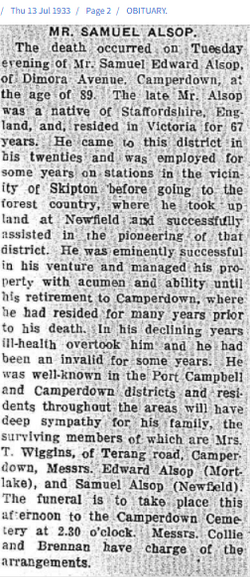
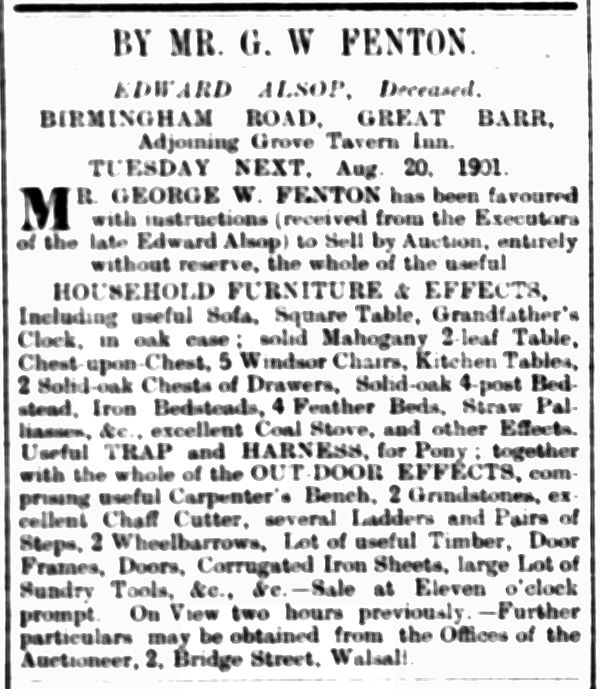
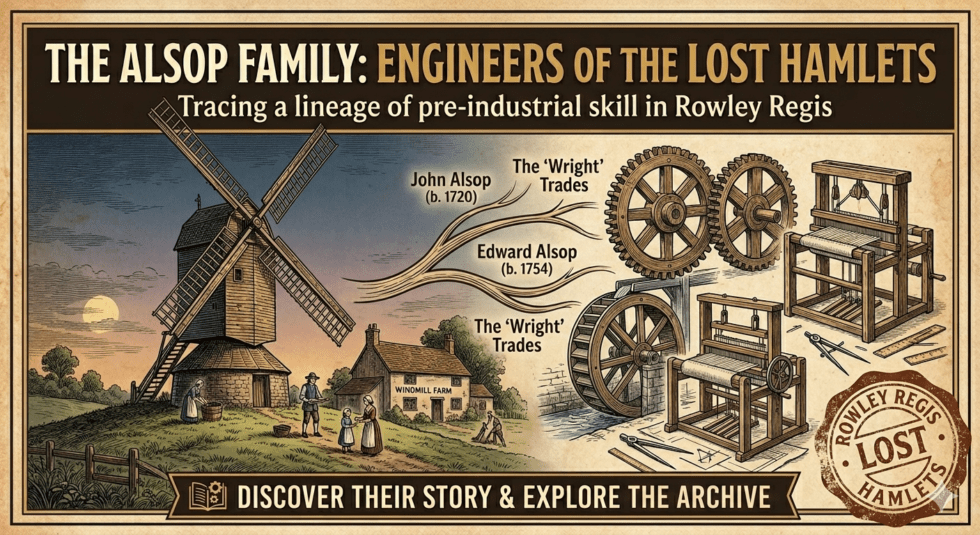
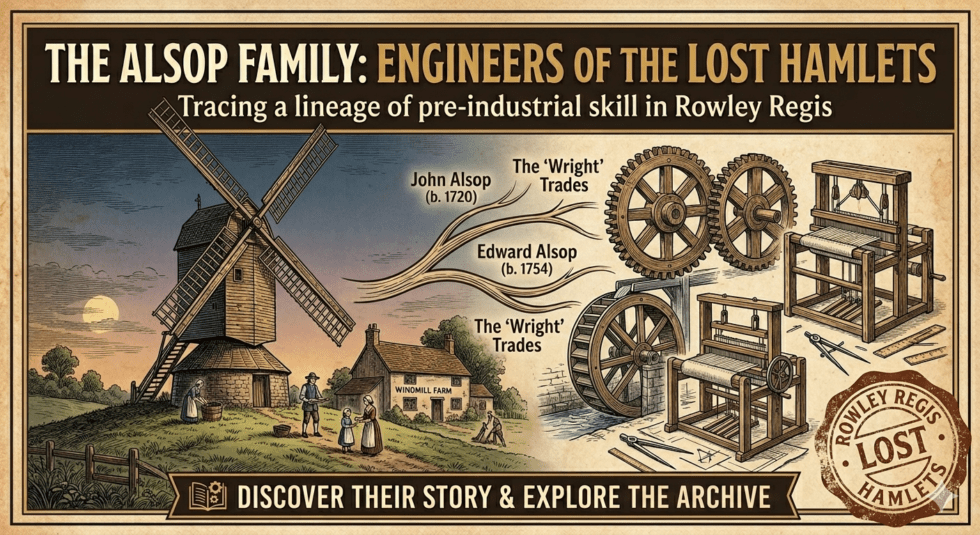
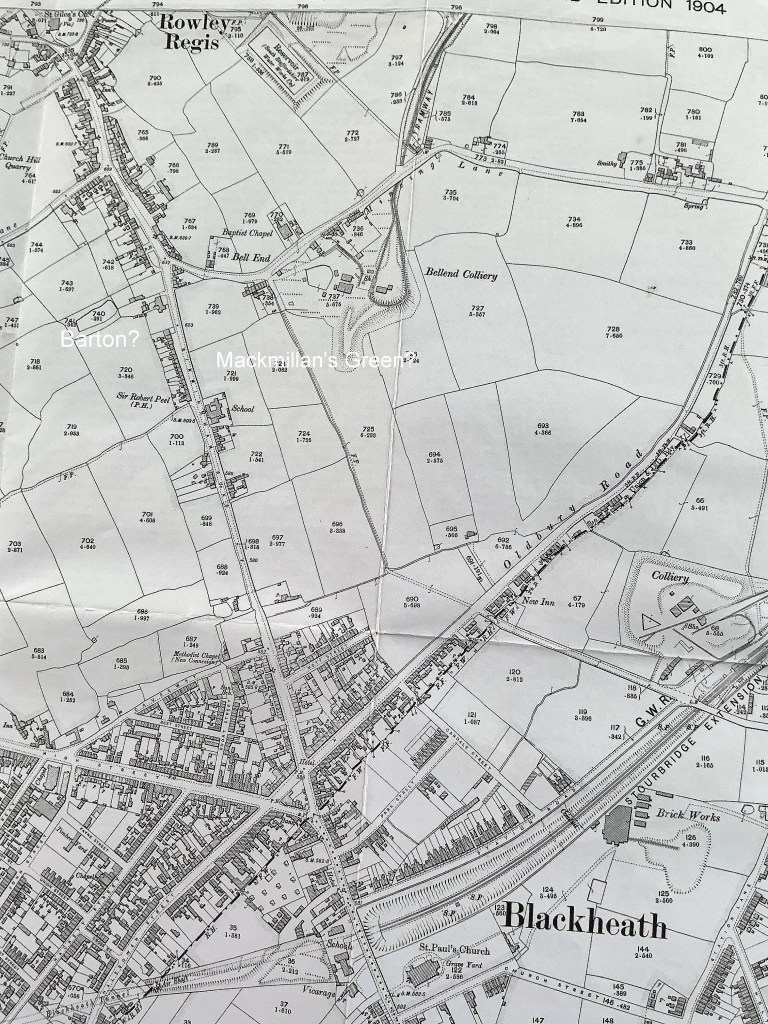
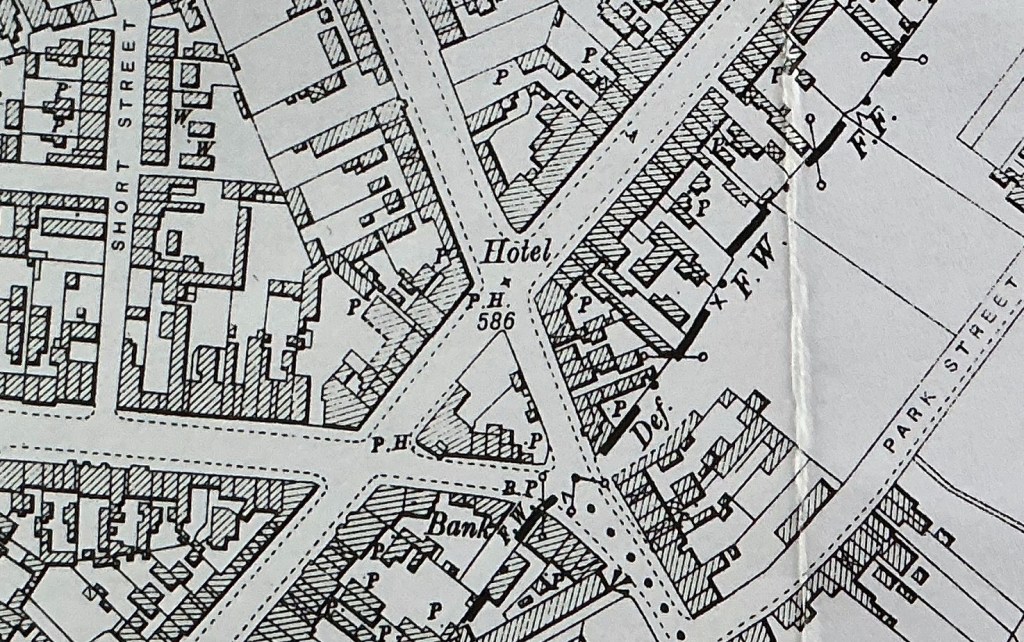
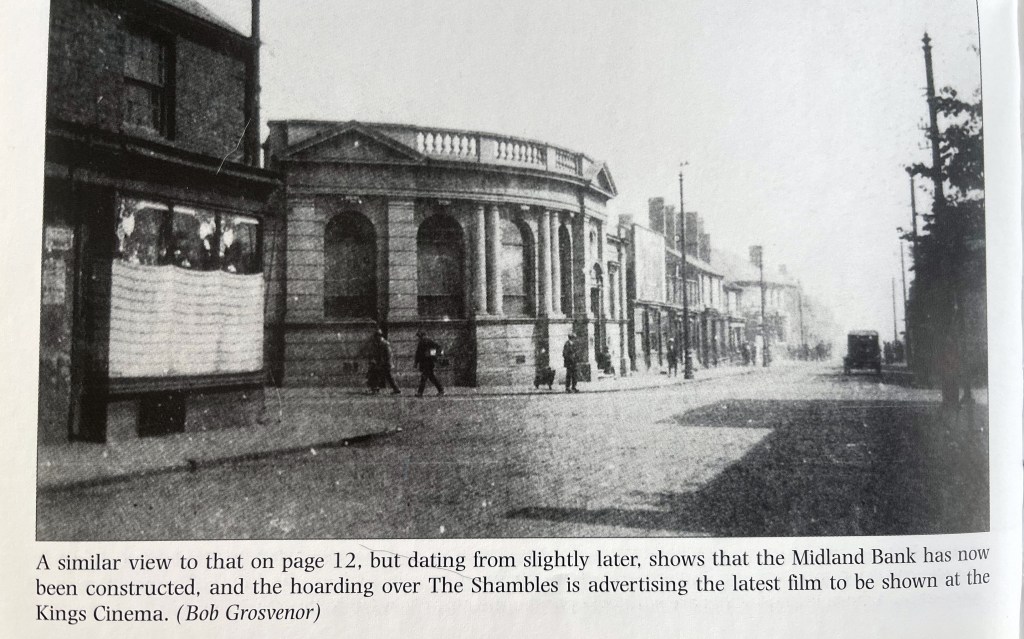
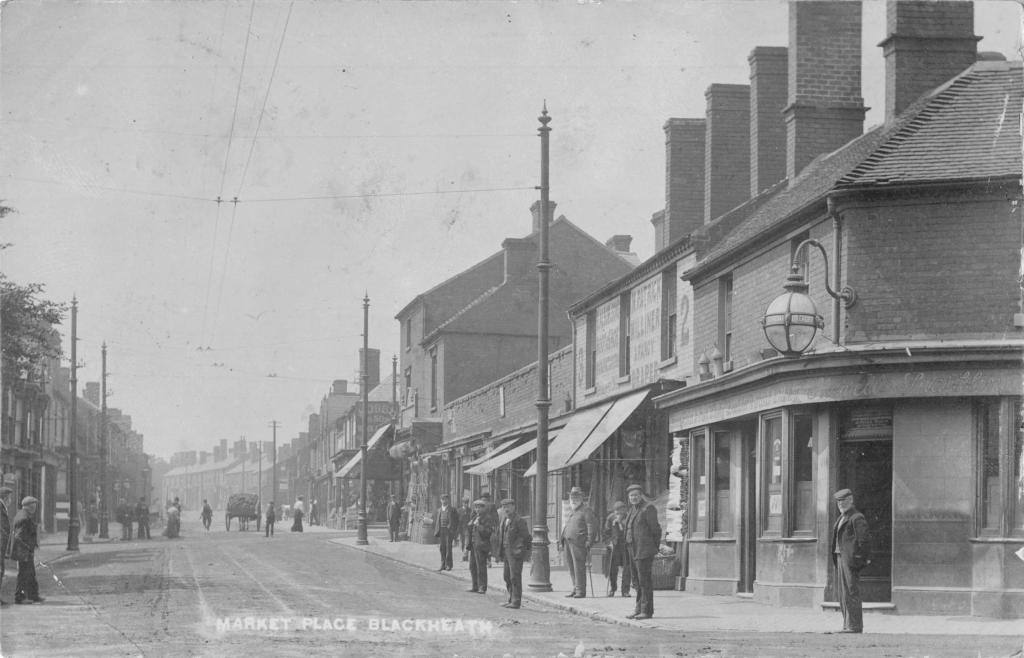
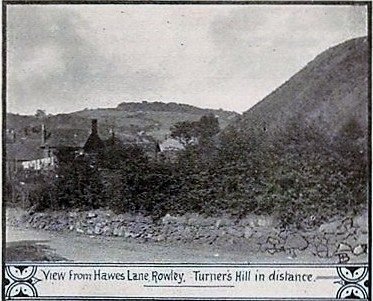
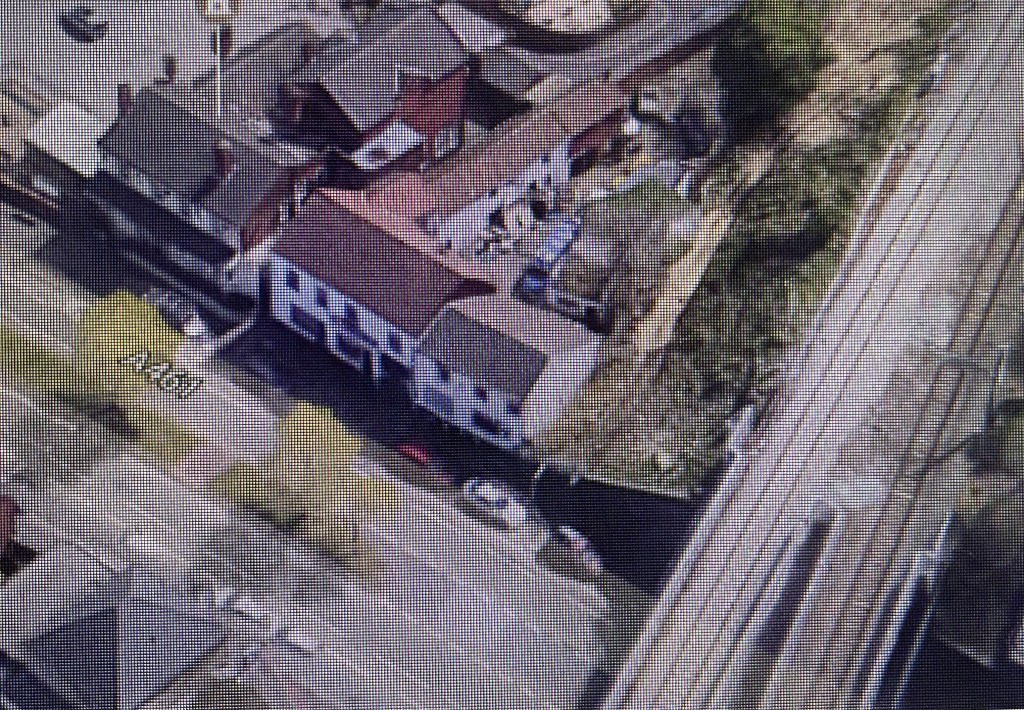
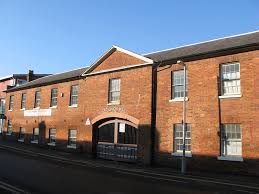
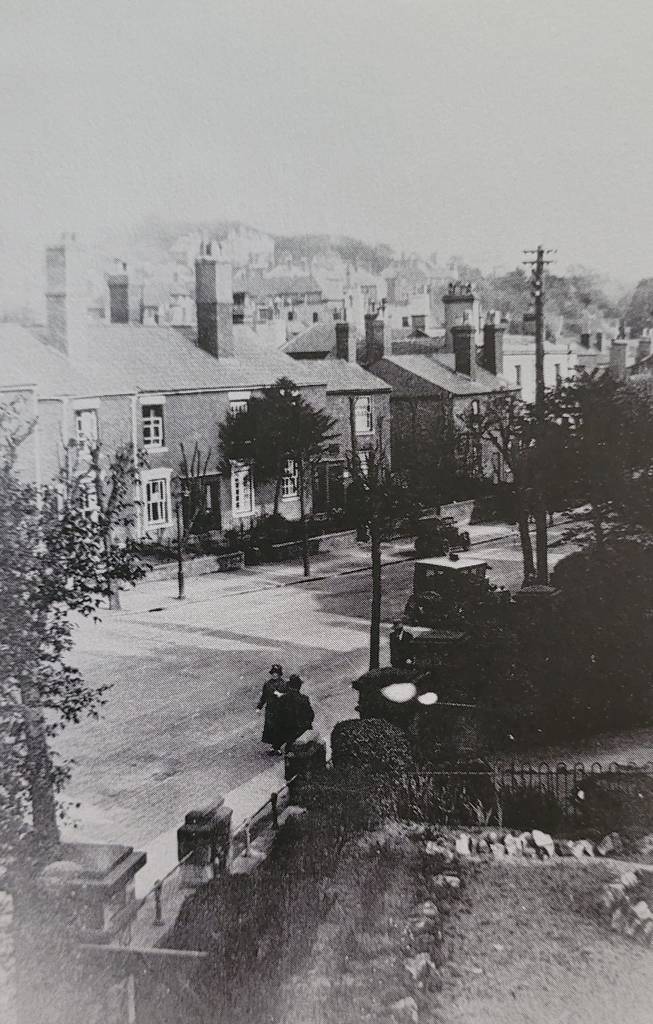
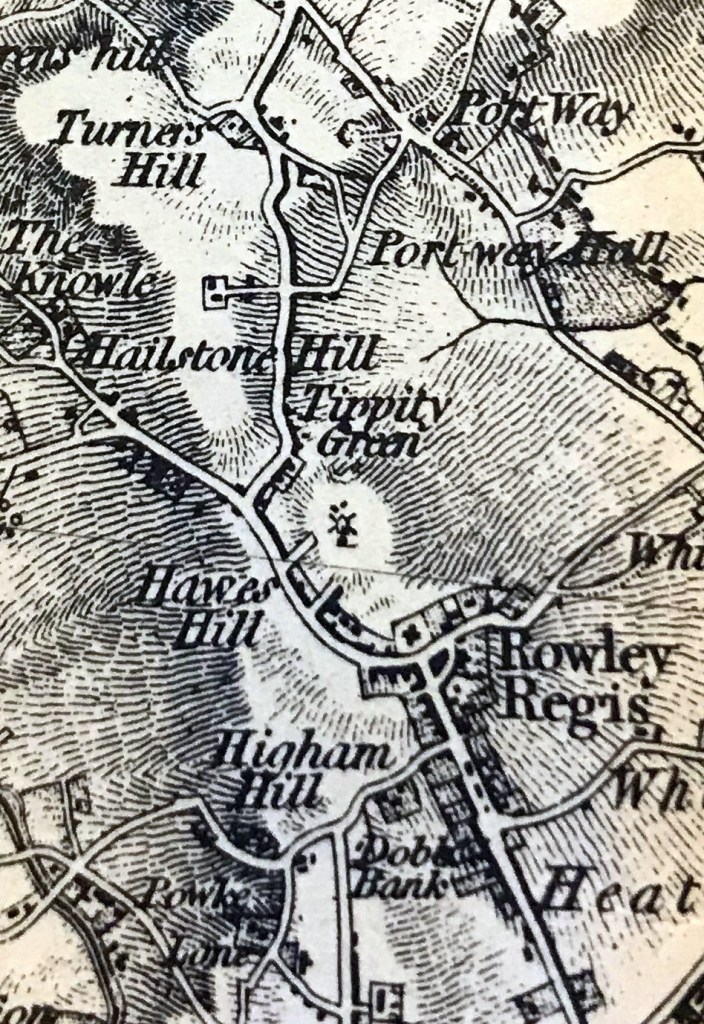
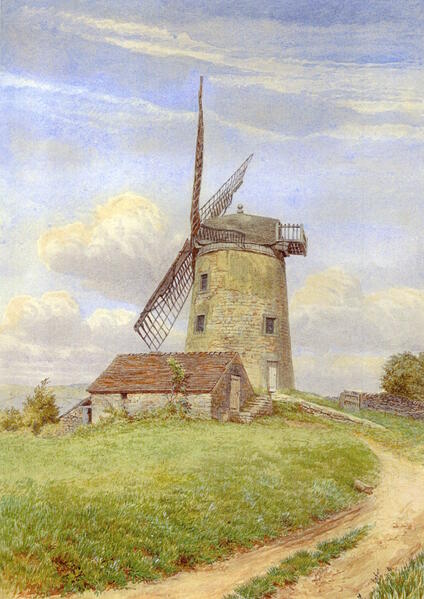
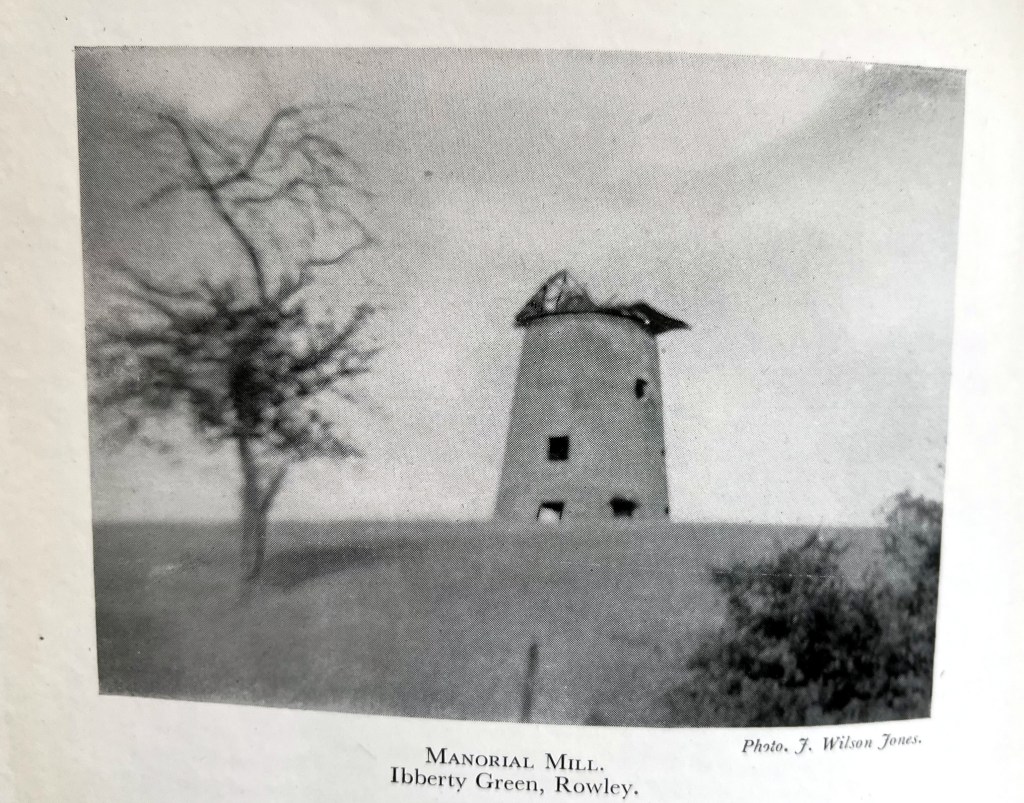


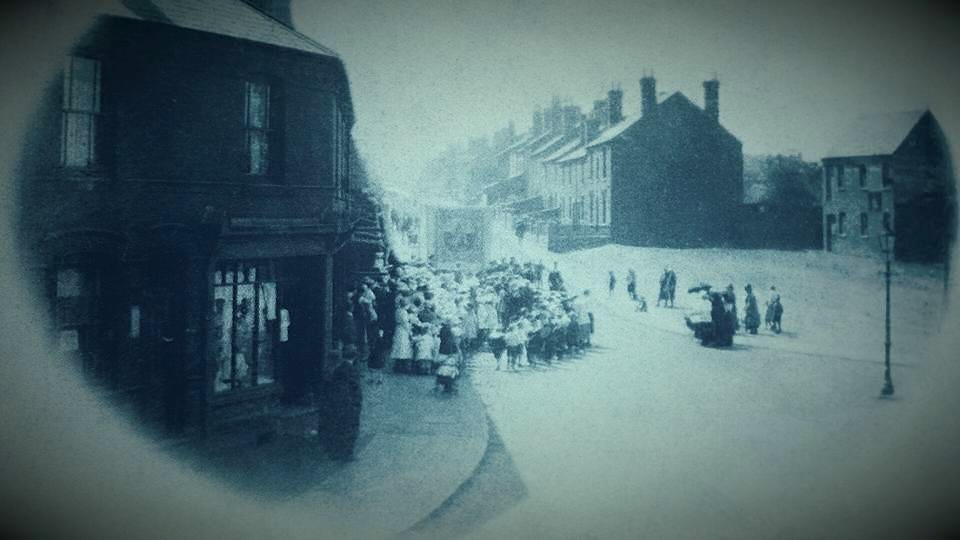
 rowleyregislosthamlets.co.uk