Sorting out the early Coles in the Rowley area is a bit like trying to knit with overcooked spaghetti. I think I have them sorted out and suddenly a strand slips and it all unravels. Repeatedly. It isn’t helped at all that different branches use the same Christian names – Edward, John, Benjamin, William, Sarah, Fanny, ten a penny, they are!
In the 1841 Census, there are seven Cole households in the hamlets or immediately adjacent. (Bear in mind when looking at these that in the 1841 Census adult ages were rounded down to the nearest five, though children were recorded with their actual ages. Supposedly, because occasionally adult’s actual ages are recorded).
Perry’s Lake
In the 1841 Census, there were a total of fourteen households in Perry’s Lake, of which three were Coles and one a married female Cole sister. It appears from the order in which they were listed that they did not live in a row but were within a very close distance of each other. This is borne out by maps which show clusters of houses, sometimes appearing to be around a yard or close.
The sons of Edward Cole and his wife Phebe
Edward Cole Jnr, aged 30, was baptised at St Giles on 4 June 1811 so he actually was 30, the figure wasn’t rounded down. He was living with his wife Fanny/Frances (nee Smith),who had been baptised 13 Sep 1819 at St Giles, a daughter of William and Elizabeth Smith. Her age in the Census is shown as 20 but she was about 22) they are living in Perry’s Lake, with their two children William, aged 4 (baptised 17 Sep 1837 at St Giles) and Benjamin aged 1 (baptised 8 June 1840).
A few doors away, John Cole, is shown as aged 35. He was baptised on 20 Mar 1803 at St Giles so he was actually 38. He was living with his wife Sarah (nee Willetts), possibly the Sarah Willetts baptised at Dudley St Thomas in 1808 living with their six children. The children are Anne aged 12, baptised 19 Oct 1928 St Giles, Edward aged 10, John aged 8, Hannah aged 5 and Eliza aged 3. None of the children after Anne were baptised at St Giles or any other Anglican church that I can find. It seems very possible that they were Methodists as we know that there was a Methodist Chapel in Perry’s Lake from before 1840, so very possibly there at the time of their births. Although no records have been found for this chapel from this early date, The National Archives have a Non-Parochial Register dating from 1814-1824 showing baptisms for families from Rowley Regis which may have been performed by a visiting Methodist Minister or at Dudley which appears to have been his base.
Again, a few doors away, Benjamin Cole is shown as aged 30. He was baptised on 27 Jul 1806 at St Giles so was almost 35. , with his wife Phebe (nee Smith) and their three children Eliza aged 8, Joseph aged 4 and Ann, aged 1. (Although Benjamin and Edward both married Smith girls they were not sisters, but may well have been cousins. I still have work to do on that line.)
These three are all nailers and are brothers, the sons of Edward Cole and his wife Phebe, nee Perry. Edward had died in 1821, so there is no entry in this census for him. Phebe, his widow, remarried in 1839 to Thomas Lane and was living with him in Dudley in 1841, along with her youngest daughter Ann Cole.
EdwardSnr and Phebe had had seven children in all, four boys and three girls, two of whom had died as children. In addition to the three sons listed above their daughter Mary, married to Henry Taylor, was also living in Perry’s Lake with their six children.
The family of John and Elenor/Nelly Cole
The Knowle
John (70) and Elenor/Nelly (70) Cole were at the Knowle in the 1841 Census, just round the corner from Tippity Green so not strictly within the Lost Hamlets but included here for completeness and to illustrate how close to one another they all lived.
John and Elenor had had five daughters and five sons, of whom at least three died in infancy, possibly more as I can find no trace of other children at present.
Their son David was the farmer at Slack Hillock, of whom I have written previously on this blog. It was said at his inquest that David could not read the label on the bottle of mixture which poisoned him because it was the middle of the night and he had not lit a candle. But the important implication of that is that he could read.
Their daughter Maria married George Taylor and lived in Rowley Village. There is a substantial memorial still in the St Giles churchyard to George and Maria and their children. George was variously described as a nail manufacturer (rather than nailer) and later he became the Relieving Officer for the village, later succeeded by his second son John. Of their seven children, only one William married and had children – although he did have eleven! The other children stayed living together in Rowley Village until the ends of their lives. More prosperous family members.
Their youngest daughter Nanny married Joseph Walters of Oldswinford and they lived in Lye, then Slack Hillock where Joseph farmed and kept the Sportsman and Railway pub, (according to Hitchmough) and finally Rowley village again where they both died. Was this the same farm that Nanny’s older brother David had farmed? I do not know but will try to find out. This is another prosperous couple and their sons kept pubs in Rowley Village later.
At their marriage in Harborne, both Nanny and Joseph signed the register and theirs are assured signatures, well practised curves and not awkwardly scribed as is often the case with people who do not write much. Notice also that the witnesses are Nanny’s sister and brother-in-law George and Maria Taylor, showing that they too had practised signatures.
I wonder how they met? Did Joseph visit Rowley to buy nails through Nanny’s father? There have been previous indications with the Cole family that they may have been involved in shipping nails elsewhere and I think it is possible that they were more than simple nailmakers. Or did Nanny meet him when he rented a farm to her older brother? David died four years after the marriage so he was farming at Sleck Hillock at the time they would have met.
All three of these marriages were apparently to successful people who had known skills and their children often went into business locally. These Cole children were literate.
Freebodies Farm
There is also a single Cole at Freebodies Farm on Turner’s Hill, Sophia Cole, born in 1819. She was the daughter of Joseph Cole who had died of a fever, aged only 24, in Sep 1919 – only three weeks before his daughter’s baptism. Sophia was part of this branch as her father Joseph was another son of John and Elenor/Nelly Cole. Joseph’s widow Ann (nee Smart) had later married Josiah Parkes in 1825 and Sophia, Joseph’s only child, was living with them at Freebodies Farm in 1841. Although she is marked as a servant, that was not uncommon in such a situation. Sophia went on to marry a John Cole (oh joy!) who was a butcher and they moved to Darby End where they had one son Joseph Thomas in 1851. This branch of the Coles did appear to be mainly on the Lye Cross side of Turner’s Hill.
The Previous Generation:
John Senior and Edward Cole Senior , the fathers of these families were also brothers, the sons of William Cole (1734-1784) and Mary Price ((B.1731), it is possible that some of the other Coles may yet link back to them or to William’s parents Edward and Dianah Cole, the ones who married in a Fleet marriage and then returned to Rowley to raise a large family.
The Lye Cross Coles
Up on Turner’s Hill is another Edward Cole, aged 40, also a nailer, son of Edward Cole(70) and Sarah of Lye Cross. He was married to Leah Clift, at Sedgley and it was their daughter Sarah who I wrote about in my blog last week, ‘A wandering Cole’.
At Lye Cross in 1841 are Edward (aged 70) and Sarah Cole, nee Johnson, parents of the Edward above, with their son Henry and two other children. I have not yet identified Edward Senior’s parents.
At Cock Green , just around the corner from Tippity Green, is another Benjamin Cole, aged 44, a jobbing smith, with his wife Elizabeth (nee Hadley) and their seven children. I have not yet worked out where this Benjamin fits into the Cole jigsaw!
Summary
The purpose of this article is to give a glimpse of the way that these families tended to remain close to each other and where they were living in relation to each other and to the Lost Hamlets in 1841. Note, too that almost every name of a spouse listed here is also a well known Rowley family name, naturally enough they married the people around them, adding to the complications of researching our Rowley Roots!
I will update it in future as I show how their families expanded and moved around the area. Because of the constant use of certain common Christian names, it can be difficult to be certain that these relationships are correct but I shall continue to work on this. Still knitting with cold spaghetti here!
Not all of the Coles, as I have learned, stayed in and around the Rowley hamlets. And previous posts have noted that women often had to move with their husbands for work and make new homes in distant places. Sarah Cole was one of these women.
Sarah Cole was born, probably, in 1826 and was baptised on the 11th June that year, the third child of Edward Cole and Leah, nee Clift, whose address was given at various times as Oakham, Turner’s Hill, Portway and Lye Cross. (Leah’s uncommon first name was useful as it enabled me to trace the family later and to be confident that I had the right family.) It is not impossible that all four of these locations are actually the same place, place names did vary with who was making the record and there do not appear to have been any definitive boundaries in this area. Even if they were not the same place, they are all quite close together.
I say Sarah was probably born then (and Sarah’s age does become of particular interest later in this story) because the baptismal registers do not show dates of birth at this period and civil registration had not yet started so there is no way of knowing her actual date of birth. But her older brothers were baptised Joseph in May 1823 and Edward in March 1825(who died in April of that year) so it’s pretty likely that she was born close to the date of her baptism.
Looking at Sarah in the Censuses
In the 1841 Census Sarah was living on Turner’s Hill with her parents and brother Joseph , plus two more siblings Edwin 12 and Mary Ann 11.
A baby Catharine Cole was born in the second quarter of 1843 in the Dudley Registration District, with no mother’s maiden name indicated which usually means that the child was illegitimate. The baby died the following year, aged 1 year and six months and was buried at St Giles on 10 Nov 1844, with her abode given as Lye Cross and the cause of her death as ‘inflammation’. As far as I can see from the 1841 Census there was only one female Cole of child bearing age in Lye Cross and that was Sarah Cole who I think was her mother. A later child of Sarah’s was baptised Caroline but known as Kate, so perhaps she liked the name. Unless I buy the Birth Certificate, I will not know for certain so perhaps I will, one day!
By the time of the 1851 Census Sarah had married her first husband John Winwood on 29 Jul 1846 at Tipton St Martin. He was a widower, of full age, a Labourer. And they were living with her parents on Turner’s Hill. Their firstborn child William, abode given as Lye Cross, had lived for only a few weeks but they now had two daughters Hannah, born in 1847 and Charlotte born in 1850. Sadly Charlotte died in June of that year, a couple of months after the Census. Another daughter Caroline was born in 1852 and another Mary Ann was born in September 1855.
Alas, they did not have long together, John and Sarah. On 12 Apr 1856 John was killed in an accident at work at Rounds Green Colliery. He was on the top of an old pit frame to assist in taking it down when it fell with him, killing him outright, according to a Mines Accident Record.
So Sarah, with her three daughters was left living, presumably, with her parents and with little means of support, although like most women in this area, she was a nailmaker. Eighteen months later, on 20 Nov 1857 Sarah married Jonas George Walker Holdsworth at St Edmund’s, Dudley. Jonas was a Yorkshireman, a collier.
In the 1861 Census, the family were living in Ashes Road, Langley along with Sarah’s mother Leah Cole, by now a widow, and Sarah’s daughters Hannah, Caroline and Mary Ann Winwood and a new baby, son Joseph Holdsworth, who was 1. So Sarah had already moved from Turner’s Hill/Lye Cross, albeit only a mile or two away, down the Portway.
At some point between this census and the next, the whole family moved to Yorkshire. Looking at family events helps to narrow donw when this happened. Another son William was born in the second quarter of 1862 in Oldbury. And another, John in the last quarter of 1864, both in the West Bromwich Registration District so probably in Langley.
Sarah’s daughter Mary Ann Winwood, from her first marriage and born in 1856, had died in April 1867, aged 12 and was buried in Oldbury Cemetery. Both Death Registration and burial, however, were in the name of Mary Ann Holdsworth, her stepfather’s name but that was not unusual in those days. So it appears that the family were still in Oldbury in 1867. And Sarah’s oldest daughter Hannah was married to George Holloway in 1868 in Dudley and they had remained in Oldbury so it is possible that Jonas and Sarah moved north after that. But it is also possible that Jonas moved back first while Sarah stayed to see her daughter Hannah married.
In December 1870, Sarah’s mother Leah, who was living with Sarah in 1861, died in Yorkshire and was buried in Rawmarsh which is near Rotherham.
In the 1871 Census Sarah is living in Hall Street, Rawmarsh, apparently in the household of a Thomas Etheridge, aged 24, a labourer who gives his place of birth as Stourbridge. I say apparently because the enumeration is less than clear about where one household stops and the next starts.
In the same household are Sarah’s daughter Caroline and her husband William Potter or Leather who had been married in the Rotherham Registration District in the first quarter of 1871. William was a Lancashire man, a miner or labourer. He was illegitimate and his birth was registered in 1847 as William Leather, his mother’s name. The following year his mother married Thomas Potter and it appears that William then used the name Potter – sometimes. Up until and including the 1891 Census the whole family were listed as Potter (apart from their daughter Sophia who was staying with Sarah and was listed as Leather. But from 1901 onwards the family were known as Leather. It is, to say the least, very confusing!
Also in the household in Rawmarsh are Sarah’s youngest son John Holdsworth, aged 6 and another lodger John Henry Smith, aged 18, a puddler born in Oldbury. Puddlers worked in iron foundries, another skill which would enable people to move.
So where was Jonas Holdsworth, Sarah’s husband,in that census? And where were Sarah’s two other sons by Jonas, Joseph aged ten, born Rowley and William aged eight, born Oldbury? I found them listed as Inmates and Scholars in the North Bierley Union Workhouse, in Clayton, Yorkshire, which was thirty miles away from Rawmarsh and under a different Poor Law Union. There is no Jonas Holdsworth listed in the Workhouse and I cannot find a death for him in this period. But immediately above the two boys on that 1871 census page is a George Holdsworth, aged 44, a collier, born in Halifax. Jonas had a second name of George and he was a collier and also born in Halifax. An age of 44 gives a birth year of 1827, Jonas was born in 1825. I think that this is the same man. There is also a Jonas Holdsworth in the neighbouring Bradford Workhouse in the 1881 Census, place of birth not known and described as an Imbecile, which probably accounts for the loss of information over the period, especially as he appears to have moved from one workhouse in the group to another and possibly back again. This Jonas seems to have been chronically ill and died in 1885, aged 60 (so born in 1825, the correct age) after at least 15 years in the Workhouse system and was buried in Clayton St John, with his abode in the parish register entry for his burial marked as the Clayton Workhouse so I strongly suspect this is our man.
The Age Puzzle!
Meanwhile…in September 1871, Sarah Holdsworth, daughter of Edward Cole, was married at Rawmarsh. She gave her age as 43, which was a bit of a white lie because she was nearer 45. But either way, she was considerably older than her new husband Thomas Etheridge – yes, the one whose household she was living in earlier that year in the Census. He gave his age as 24 in the census but that is also slightly uncertain. I have not been able to find his birth registration but his baptism was in March 1848 which would make him 23 in 1871 so this census entry appears to be correct. He gives his age on the marriage record as 20 – four years younger than on the Census, she as 43, quite an age gap. In the 1861 Census, Thomas was living with his family in Parsonage Street, Oldbury but born in Brettell Lane which is in Amblecote, and he was then shown as 12. So it seems likely that in 1871 he was about 22, so it appears that neither the 1871 Census or the marriage show his correct age. Later censuses show him as 40 (in 1881), 45 (in 1891) and 57 (in 1901) – not exactly consistent! But many illiterate people were not absolutely sure of when they were born.
There are no photographs that I can find of Parsonage Street, which was on the Oldbury/Langley border and which has several connections with Sarah’s family but this is the chapel there which probably gives an indication of the sort of houses which were there, probably of a design and size similar to thousands of other Black Country houses of this era. Copyright unknown but will be willingly acknowledged on supply of information.
Sarah’s ages in the Censuses are even more varied. Up to 1871 her age appears to be shown correctly but in 1881, her age is shown as 45, a drop of 9 years since the 1871 and in 1891 her age was given as 50. It appears that when you are living in a place where no one knows your history you can get away with quite a lot.
Did Sarah and Thomas know each other before they arrived in Yorkshire? How did they come to be living in the same house in Rawmarsh? They had both previously been living in Oldbury. Why did Thomas move from Oldbury to Rawmarsh, near Rotherham? His brother John, two years younger was also in Rawmarsh in 1871, working as a Puddler so probably the brothers moved together for work but we do not know. Their father GeorgeEtheridge was a furnaceman and John had been born in Cwmbran where there was a large foundry and steel works, then George’s younger children were born back in the Black Country so this is yet another instance of men moving to other places for work and then back again. In 1871George was still in Parsonage Street, Oldbury but his son Pharoah was born in Jun 1873 in Wombwell , Yorkshire which is where two of Caroline’s children were born so George had obviously followed his sons up to Yorkshire quite soon. George Etheridge was born in 1826, the same year as Sarah Cole, I wonder what he thought of Thomas’s marriage?
Why was Sarah separated from her husband and older sons who were thirty miles away in the Workhouse? We do not know.
A bigamous marriage?
How could Sarah marry Thomas Etheridge when it appears that her husband Jonas Holdsworth was alive and would be for another 15 years? Again, we do not know. There are several possibilities. Jonas may have been injured or suffered a stroke which resulted in him being admitted to the Workhouse. If Sarah had no means of supporting all of her children, the two older boys may have had to go into the Workhouse with their father. Perhaps Sarah moved to Rawmarsh to be with her daughter Caroline who was married there. This part of the family appear to have been in Rawmarsh since at least December 1879 when Sarah’s mother Leah died and was buried in Rawmarsh.
Did Sarah and Jonas separate for some reason after arriving in Yorkshire? Might Sarah have discovered that Jonas already had a living wife in Yorkshire, left behind when he moved to Oldbury to work, so that her marriage was null and void? I have not found any evidence of this but this would have left her free to marry Thomas Etheridge. Or was this a bigamous marriage? This was far more common than you might think at this period where marriages had broken down and divorce was very expensive and rare among working class people. So move to an area where you are not known and tell everyone you are a widow or widower. It is a total mystery but this last marriage lasted nearly thirty years, despite the age difference.
Later Years
In the 1881 Census, Thomas and Sarah were living in Wath-on-Dearn , near Rotherham in Yorkshire, where Thomas was working as a Forgeman at an Ironworks. He gave his age as 40, Sarah as 45! Also with them was Sarah’s son John Holdsworth, though shown under his step-father’s name, now 16 and a labourer at the Ironworks and also Emma Holloway, aged 13, described as a visitor. Emma was born in Oldbury and was the eldest daughter of Hannah, Sarah’s daughter.
In the 1891 Census the surname for Thomas and Sarah is shown as Hedgewood. Which I suppose may be how the enumerator heard Etheridge. At a pinch – perhaps the Black Country accent strikes again! They were living in Widnes, Lancashire and I only found them because I was searching Sarah’s grandchildren through her daughter Caroline (who was also living in Widnes)and Caroline’s daughter Sophia Leather aged 6 was shown in 1891 living with Sarah and Thomas as a granddaughter. And Sarah is shown there as born in Rowley, Staffordshire and Thomas as Worcestershire so that all fits. Had it not been for the presence of Sophia that night of the census, I would never have found them!
Sarah appears to have died in Widnes in 1900, or possibly in 1887.
There do not appear to have been any children born to Sarah and Thomas Etheridge, which is not surprising given that she was already 45 when they married.
What became of Sarah’s children?
Of Sarah’s children, Hannah Winwood stayed in Oldbury with her husband George Holloway living in Parsonage Street for much of the rest of her life and had ten children there, of whom five survived. She died in 1917, aged 70.
William and Caroline Leather nee Winwood emigrated to Schenectady ,New York as did most of their family, appearing in US censuses from 1920 onwards. Their oldest child William Leather was born in 1875 in the Barnsley area and I discovered from a photograph of his original birth certificate, uploaded to Ancestry by an American descendant, that his birth was registered by SarahCole, his grandmother who had been present at the birth, rather than either of his parents. William and Caroline had seven children, the first two born in Barnsley, Yorkshire and the others in Widnes where Thomas was working in a copper works. Caroline died in New York in 1928, aged 76.
Joseph Holdsworth survived his time in the Workhouse and was married in 1880 in Halifax. He stayed in the Bradford area for the rest of his life, dying in Bradford in 1926, aged 67.
William Holdsworth also survived but he appears to have moved back to the Oldbury area, marrying Annie Smith with whom he had seven children, (very possibly the Annie Smith who was living in Hawes Lane, Rowley in the 1881 Census) and later living in Halesowen Street, Blackheath where he was a hairdresser. If this seems an unlikely occupation for him, it is worth noting that many workhouses trained their young charges in occupations such as tailoring or hairdressing which would enable them to earn their living later. His date of death is unclear but may have been in 1915.
There are no indications that either Joseph or William were in contact with Sarah, or with each other but it is not impossible.
John Holdsworth , Sarah’s youngest child, was with his mother and stepfather Thomas Etheridge in Wath on Dearn, Yorkshire in 1881 when he was listed as Etheridge, born Oldbury and, aged 16, working as an Iron Works labourer – the family trade! But in records after that he used the name Holdsworth and on 22 May 1888 he had married Ann Hayfield (born in Oldbury) in Christchurch, Oldbury – both giving their address as 19 Parsonage Street and went on to have a first child in Oldbury and a further three children in Widnes. John’s half-sister Hannah was living at 18 Parsonage Street in 1881 so they must have been in contact. By 1901 he was back in Watery Lane, Smethwick, working at a Silver Works and a further two children were born there. He died in 1903, aged only 39.
A Wandering Cole
So, like many wives, Sarah moved for her husband’s work. More than once. And, as with quarries and sett making, the metal working skills and adaptability of Black Country men led them to find work in many other areas where metal working and foundry work were important.
Although Sarah left the Black Country in about 1869 and there is no record of her ever returning, at least three of her children remained or made their way back to the area. And from visiting grandchildren it is apparent that at least some of the siblings stayed in touch with Sarah and with each other too. We know from Shipping Passenger Lists that Caroline made at least three trips back to the UK after moving to New York, though we cannot know where she went on these visits.
There are recurring places – Parsonage Street, Oldbury, Widnes, areas of Rotherham, Yorkshire and Lancashire which crop up in the life stories of various children.
One Rowley woman, three husbands, nine children, thirty-one grandchildren – (that is to my knowledge, there may have been more grandchildren). And her Cole descendants were scattered across the Oldbury area , Birmingham, Yorkshire, Lancashire and New York.
Sarah Cole, I think, was quite a woman to be reckoned with!
There was a report in the February 2013 Edition of the Newsletter of the Black Country Geological Society about Rowley Rag, the local granite which provided work for so many local people. One of their members Julie Schroder had visited the Threlkeld Quarry and Mining Museum the previous year which lies in the valley between the Blencathra mountain and the village of Threlkeld, close to Keswick in the Lake District. What, she pondered, is the connection with Rowley Rag?
Julie wrote
“The museum is housed in an unprepossessing building, but inside is an Aladdin’s cave of historical and geological treasures. We learned that the quarry opened in the 1870’s, initially to supply ballast for the Penrith – Keswick railway. The stone is a light grey in colour and was also used for kerbs and as dressed stone to face buildings. But there was also a demand for 4 inch ‘setts’ for roadways, which required the expertise of skilled stone dressers. And where better to find this expertise than in the quarrying community of Rowley Regis?
In the 1870’s some skilled quarry workers answered the call from far away Cumbria and took their skills to Threlkeld. One of these was our guide Donald’s grandfather. In Donald’s words: “My Grandfather on my mother’s side moved from Rowley in the 1870s as a sett maker. My Grandmother was a Levett. I believe they were butchers in Black Heath”. That was all Donald could tell us, but I felt that there’s a story here waiting to be unearthed.
I wonder how big was this exodus from the Black Country? Do you have any connections with the sett makers who went to Threlkeld?” asked Julie.
Copyright: The Black Country Archaeological Society
On the ‘I remember Blackheath and Rowley Regis’ Facebook page a while ago Natalie Gazey mentioned that some families from Rowley had moved to Threlkeld in Cumbria in about 1900, as the quarry there needed their expert skills in making stone setts from granite. And Joyce Neech commented at the time that her great-aunt had retired there and wondered whether there was a connection.
So, yes, it seems that many Rowley folk, including myself, have a connection or two to the sett makers who went to Threlkeld. So I have spent a few hours finding out more about this expedition.
As with my previous information gathering about migrating workers, the Censuses were my first port of call. Mining for various minerals has been going on in the Cumbrian area since at least the 1600s and very possibly since Roman times. But Threlkeld is a very small village and it was a quick job to see in the censuses whether anyone born in Rowley Regis was living there. The 1870s had been mentioned as a possible start date and Natalie had said that her family had gone up there in about 1900.
The 1871 Census showed that there were Lead miners in Threlkeld who were from Devon and Cornwall but none from Rowley. In 1881, again, there were no Rowley folk there. Of course, these were only snapshots every ten years so it is possible that some people had come and gone in the intervening years. The overwhelming majority of the population there was native to Cumbria and mostly from an even closer area.
By 1891, that had changed. By then, there were thirty-six people living in and near Threlkeld who had clearly moved there to work at the quarry.
In the nearby village of Wanthwaite, St Johns-in-the-Vale, living in Blencathra Vue, there was a household headed by James Holcroft, a widower aged 38, a Granite Quarryman with his two nephews William Taylor, aged 16 who was a quarry labourer and James Taylor, aged 9, a scholar and Martha Haywood, aged 23 a domestic servant, all born in Rowley. James was still in St Johns in the next census in 1901.
Martha Haywood was to be married on 7 Dec 1891 to Thomas Smith, aged 22. Perhaps this was the Thomas Smith of Rowley Regis who was living along the row with Thomas Hill at the time of the Census. Or she may have married the Thomas Smith, a local lad, who was living with his family next door. Sadly this Martha appears to have died in Sept 1893 in St Johns, aged only 25 aand no children appear to have been born to this marriage.
Two doors away again in 1891 were John Clark aged 50, a sett maker born in Leicestershire and his wife Merriel, aged 39 who had been born in Staffordshire, although their four oldest children had been born in Shropshire, the next three in Yorkshire and the youngest aged 1 in Penrith, Cumberland, a familiar pattern from my previous studies, reflecting family movements between quarrying areas. Moving on another house and there was George Burns, aged 33, a quarryman, born in Shepshed in Leicestershire where there was – of course – a large quarry, less than ten miles from Mountsorrel. His family were all born in Leicestershire. So not all the sett makers came from Rowley Regis.
Next door to him in Blencathra Vue was Thomas Hill, aged 24, a sett maker, born Rowley Regis, as were his wife Sarah aged 23 and their children Annie aged 5 and Edward aged 3. Lodging with them were Thomas Smith, aged 18, a Mason, born Rowley Regis (later to marry Martha Haywood in St John in the Vale), and John Bishop aged 18, also a mason but born in Mountsorrel, Leicestershire. Also William Dowell, aged 18 and William Dingley aged 36, both born in Rowley Regis, and William Wood, aged 36 from Graby , Leicestershire, John Sowell aged 30 from Yorkshire and Ben Derrey from Leicestershire. All these lodgers were single and all the last five were sett makers. These houses appear from later census details to have been two up, two down cottages without bathrooms or toilets, they must have been very crowded.
Their widowed neighbour George Noon, aged 40, was from Mountsorrel, all of his five children had been born in Durham.
A little way along the terrace was Thomas Clift, aged 22, lodging with a local family who was a general labourer and gave his place of birth as Portway, Staffordshire. (I have Clifts on my family tree, though somewhat earlier than this – but they lived in Lye Cross, Portway so were almost certainly connected! ) By 1901, Thomas was still in St Johns in the Vale but was married to a local girl and had three children born in Threlkeld.
A couple of doors down were Frederick Edwards who was 37 and a quarryman gave his birthplace as Staffordshire, as were his wife Ann Maria and their four children. I have been unable to find out for sure much about this Frederick Edwards. Edwards was a relatively common name in the area, well before the Rowley men arrived.
Two doors on again were Thomas Morton, aged 24 and a sett maker with his wife Maria, aged 21 and their son Thomas, aged 2, all born in Rowley. Thomas was my 1st cousin 3xremoved. They must have moved back and forth to Rowley at some point because by 1901, they were living in Northumberland (Thomas still working as a sett maker) and had three more children all born in Rowley Regis and then two more born in Blencathra, Cumberland in 1898 and 1900. Also in his household in 1891 were seven single lodgers aged between 18 and 30, including William Dowell aged 18 and William Dingley, aged 30, both from Rowley Regis, the others from Leicestershire, all sett makers.
All of these were living in Blencathra Vue as it is listed in the census or Blencathra View in other records – and a glorious view it must have been, this is a very unspoiled area even now. The impression is that this must have been a terrace or terraces of cottages built for incoming workers. There is the pattern which became familiar when we were looking at the Mountsorrel and Shropshire connections in an earlier post, of young men moving to an area where their skills were in demand, where they lodged with local people or with fellow immigrants, often ten or a dozen to a cottage. I can find no reference to Blencathra View on modern maps but it seems likely that either it fell into dereliction or acquired other names in later years. Next time I visit my sister-in-law in Penrith, we may just go exploring and see whether we can find a likely row of houses!
Interestingly, in Church Street, Keswick, only a couple of miles away, was an Emily Mayo, born in Tividale who was a widow aged 60 and who was a Bookseller and Stationer, also there in 1901.
1901
By the time of the 1901 Census, there were still some Rowley people in the Threlkeld area. Thomas Hill who had been in St John in the Vale in 1891 was now living in Threlkeld village and giving his age as 39 (thirteen years older than the previous census!) and was now a quarryman and Innkeeper. His wife Sarah and children Annie and Edward were still at home, Annie working as a Barmaid and would marry a local man in 1904 and Edward gave his occupation as a Lead washer at the mines. Their domestic servant Elizabeth Davis, aged 18 was also born in Rowley Regis.
Also in the village was William Redfern, aged 25, a sett maker, born Staffordshire and married to a local girl with their 11 month old son.
However, the overwhelming majority of Threlkeld residents were locally born.
Over in Quarry Cottages in St Johns in the Vale, Thomas Clift was still in residence and had married his local girl Laura and was still a granite quarryman. Further along the row Samuel Knight, aged 22, born in Rowley, a Granite Kerb Dresser was lodging with a local family. It appears that young men who fancied a change of scene were still making their way to Threlkeld. Quarry Cottages seems to be the new name for Blencathra View because again, just along the row is James Holcroft, now 48 with his nephew WilliamTaylor still living with him, but now with William’s locally born wife and their two small children. Both James and William were described as Granite Stone workers. Also still boarding with them was his nephew James Taylor, now aged 20, born Rowley Regis – an engine driver in the granite quarry.
Next door was George Long, aged 45 who was also a quarry worker, born in Strensham, Worcestershire but his wife Rebecca, aged 43 came from Rowley and their three children had been born in Birmingham, Rowley Regis and Threlkeld.
Samuel Dowell aged 27 was also living in Quarry Cottages with his wife Alice aged 29 and a boarder Frank Levett, aged 22, all from Rowley and both men working in the quarry. Samuel Dowell had married Alice Levett at St Lukes church in Cradley Heath on 16 Sep 1895, Alice was 23 and living in Rowley Regis , and was the daughter of John Levett who was a butcher in Garratts Lane, Old Hill. That Alice did have a brother Frank according to the 1881 Census so this was probably the Frank Levett boarding with them.
A few doors along was Frederick Edwards, a widower, aged 46 and his four sons, William aged 22, Joseph aged 20, Alfred aged 18 and Thomas aged 16, all born Rowley Regis and all working in the quarry. Frederick’s daughters Martha, aged 9 and Alice aged 7 had been born in Threlkeld.
Next door to Frederick was Thomas Hackett, also a widower, aged 32 with his children William, aged 8, Ellen, aged 6, both born in Rowley Regis and Thomas aged 1 born in Threlkeld. There is only one GRO Death registration for a female Hackett in the Cockermouth Registration District in this period and that is for Sarah Ann Hackett who died in the June quarter of 1900, aged 32. The birth registration for Thomas, in the December qtr of 1899 shows her maiden name as Davis. Also in the household were Jesse Hackett (28) and what appears to be his wife Mary Hackett (28) who was described as a Housekeeper (Domestic). Jesse gave his place of birth as Baptist End, Worcestershire but Mary was from Rowley Regis.
Again, the majority of residents, including those working in the quarry were locally born in Cumberland though there was a sprinkling of workers from Leicestershire. It appears that marrying locally made it much more likely that you would stay in the area.
Emily Mayo was still in Keswick, still running her stationery and bookshop there.
Hailstone quarry workers, about 1910, shared by Ronald Woodhouse. Some of these may have been to Threlkeld or even been born there, they would certainly have known the families who went there.
1911
By 1911 the numbers of Rowley people had reduced considerably again. In Threlkeld there was only Robert William Stuart, aged 30, a quarryman who was born in Threlkeld and his wife Annie (nee Hill) who was 27 and their lodger Edward Davies, aged 24 and also a quarryman and described as a cousin were both from Rowley so it is likely that Edward was Annie’s cousin. Robert and Annie had been married in the Penrith Registration District (which covers Threlkeld) in 1904 and Annie appears to have been the daughter of Thomas Hill who had been in the area for the two previous censuses.
Frederick Edwards was still living in Quarry Cottages in St John’s in the Vale, with his son Alfred aged 28, a quarryman and daughter Alice aged 16 who was their housekeeper. Frederick and his wife Annie had been married in 1876 at Gornal, although Frederick was living in Perry’s Lake. Annie had died in 1896.
Also in Quarry Cottages Frank Levett , now 34, had married Annie Hindmoor Benbow in Threlkeld in June 1901 and they had three children, all born locally.
William Redfern , now aged 38 was also still living there with his wife Sarah Ellen (nee Airey) they had been married in 1900 locally and had four children, all born in Threlkeld.
James Taylor, now 29, (the nephew of James Holcroft) was by now married to Jane, nee Young Watson, and they had a one year old daughter.
Thomas Hackett, still a widower, now aged 42 was still in Quarry Cottages with his children William, (now aged 18 and a sett maker like his father), Ellen, aged 16, both born in Rowley Regis and Thomas aged 11 born in Threlkeld. The cottage is noted as having just four rooms so quite where they fitted in their boarder Elizabeth Harding, aged 38, a dressmaker and her two children aged 12 and 11 is interesting! Perhaps best not to ask…
In Keswick, Ellen Dora Long, aged 21 born in Rowley Regis and single, was a housemaid.
1921
By 1921, even fewer Rowley born people remained. Alfred Edwards, now 38 and still a quarryman, was living with his father-in-law Robert Stuart and Robert’s Rowley born wife Annie . Alfred’s wife Sarah Jane was the sub-post mistress in Threlkeld and they had a son Ernest, aged 6. Their boarder Edward Davies, aged 33 and born Rowley Regis was still with them, as in the previous census. So this family had strong Rowley connections.
In Lake Road, Keswick, Ellen Dora Long, aged 31, born in Rowley Regis and single, had advanced from housemaid to Cook!
So these are the official records I have been able to find which reflect the migrations between Rowley Regis and Threlkeld, apologies if I have missed anyone. There may have been shorter trips which were not captured by the censuses at ten year intervals but certainly the names mentioned by several members of the ‘I remember Blackheath and Rowley Regis’ Facebook page are included here. And the Levett family mentioned by one of the volunteers at the Threlkeld Mining Museum.
GRO Births, Marriages and Deaths
Another set of records which can show where families were at any given time since 1837 is the General Register Office Indexes of Births Marriages and Deaths. These are divided into quarters of the year and when I started working on my family history, you had to go to Somerset House in London and physically haul down the huge original registers and check each quarter separately. And it was very busy and if someone else had the volume you wanted to check, you just had to wait until they had finished with it. Time consuming, difficult to access, but still sometimes important. These days the indexes are available online, births and deaths through the GRO website, but also through Ancestry and FindMyPast . And they have been transcribed by FreeBMD, the sister organisation of FreeREG so I was able to spend a few hours today checking for births and deaths for some of the Rowley names in the Threlkeld area from 1880 through to 1930. And then to check some of those entries against marriages to see where those marriages had taken place. To do that in a matter of a few hours would have been unimaginable only a few years ago!
As a result of that, I was able to establish that there were four children born in the Cockermouth Registration District between 1883 and 1889 to a Hackett family, with a mother’s maiden name of Billingham. Now there is a Rowley combination if ever there was one! And sure enough, I found a marriage for a James Hackett and Ellen Billingham in the Dudley Registration District in the June qtr of 1882. But in fact this James Hackett was not a quarry worker and he was living in 1901 with his family in Workington, on the Cumberland coast, where he was working at the steelworks there. One can never assume even when something looks so obvious!
Similarly the family of Hackett/Sloan who baptised three children in the same registration district came from Ireland and Lancashire and were also living in Workington. And the family of Hackett/Walker who had nine children in the same Registration District between 1897 and 1914 were also in Workington, though James, the head of the household and his uncle William who as living with him were both from Old Hill. So some but not all of the local Hackett families in Cumberland came from the Midlands and not all were involved with quarrying. Quarrying was not the only mobile skill!
There were Redfern births registered in the area between 1895 and 1910 and, interestingly a marriage of a Redfern in 1937. Similarly there were Dowell births in 1903 and then with a different mother’s maiden name in 1913 and 1919.
The Levett births in this period relate to Frank Levett who married Annie Hindmoor Benbow in 1901 and they had two children in 1902 and 1907. By 1911, Frank and Annie, with their children Sidney, James and John were living in Threlkeld with Annie’s parents James and Elizabeth Benbow, both men working as stone dressers. James Benbow was born in Clee Hill, Shropshire, Elizabeth in St Johns in the Vale, Frank Levett in Rowley, Annie and their first two children in Threlkeld and the last child in St Johns. A real granite area blended family!
But also in the June qtr of 1901, when Frank Levett had married Annie Benbow, Amy Levett, Franks sister, had married William Henry Edwards also in the Cockermouth RD. It is tempting to think that this was a double wedding! Sadly, the original registers do not appear to be available online so I cannot check this but it seems a coincidence that brother and sister married in the same area and the same time period.
William Henry Edwards aged 32 and Annie, aged 35 were living in Threlkeld in 1911, with their two children and both William and Annie were born in Rowley. The local schoolmistress was boarding with them. So were these the grandparents of the tour guide who was quoted right at the beginning of this post? I think they probably were. And he was quite correct, the Levetts still had a butcher’s shop in Birmingham Road, Blackheath, just opposite my grandfather’s house, in the 1950s when I was growing up, I can remember the smell of the sawdust which used to be scattered on the floor!
Joyce Neech has noted that her great-aunt , a later Martha Haywood (born in Rowley in 1891 and the niece of the Martha Haywood who was in Threlkeld in the 1891 Census) retired to Threlkeld after working most of her life in Rowley Regis so some connections obviously remained so that she knew enough of the area to want to live there. There were other Haywoods not so far away, including a family of Haywoods in Sheffield, at least one of whom was married in the Cockermouth area. But all of the Haywood families who were registering births in this area from 1903 onwards were in Workington and working at the steel works, which is also a trade associated with Sheffield. So how Martha came to retire to Threlkeld remains something of a mystery. But this Martha had nine brothers and sisters and her father had ten, one of who was married to a Redfern so it was entirely possible that one or more of these retained connections with the Rowley people who had stayed in Threlkeld. And yes, Martha Haywood is on my family tree, too – my 5th cousin, once removed!
So there was a certainly strong connection at this period between quarrymen and their families in Rowley and Threlkeld and some of those who had travelled to the area stayed there and some apparently have descendants there to this day. I hope this might be of interest to anyone who has this connection on their family tree. Rowley genes are spread around the country, it seems! It will certainly add some interest to my next visit to Penrith to see my sister-in-law and I shall be viewing the countryside with new interest.
In our generally comfortable living conditions today, it can be quite difficult to imagine the conditions in which our ancestors lived and worked. These are some memories which relate to Rowley and Blackheath, so technically may be considered outside of the area of the Lost Hamlets but I am sure that many of them apply also to the houses and residents there. Some of my own memories of growing up in Long Lane and Uplands Avenue are also included.
What the Vicar thought…
The Reverend George Barrs, who was Curate of St Giles from 1800 to 1840. He did not seem to have a high opinion of his parishioners and he wrote in the 1830s:-
“In 1831 the number of inhabited houses in the parish was 1366, the number of families occupying them 1420 made up of nearly 7500 individuals, an equal number of each sex, within a very few, the males predominating by only 7 or 8. 82 homes were then without inhabitants and only 5 building. Since then the state of trade has considerably improved, many houses have been built or are in progress but few unoccupied.
Of the above number of families 140 were occupied in agriculture and 909 in manufacture, trade etc. Many however who are ranked as agriculturists are frequently engaged in some branch of trade or manufacture. A very large proportion of the manufacturers are nail makers and nearly all the women and girls; that being the chief pursuit of the operatives in this and surrounding parishes. Here chains of various descriptions and the making of gun barrels especially in time of war, find work for many hands. Here also the manufacture of Jews Harps is carried on and sometimes employs a considerable number of persons.
A great many of the manufacturers are very poor and their families frequently appear clad in rags, and as if they could obtain but a slender pittance of life’s comforts or even necessities. This however is not to be attributed to their being destitute of the means of procuring these comforts in a degree unknown to other manufacturers but in their want of frugality, domestic economy and good management. Their work is laborious but they can generally earn good wages, which, if discreetly applied would furnish them with a comfortable competence. Unhappily however many, from their very youth contract habits of idleness and prodigality and these are a certain and fruitful source of rags and wretchedness. Since the national pest the “Beer Act” came into operation in 1830 their manners have become more dissolute, their morals more corrupt, their habits more idle and unthrifty and of course neither their personal appearance nor their domestic comforts has much improved.
Such is the degraded and grovelling condition into which many of the nailers are sunk that during the late war when wages were high those who could make a miserable living by earning 2 shillings a day would not earn another 2 pence when they might by no great exertion have earned 2 shillings a day. Of all descriptions of individuals these appear most anxious to observe to the very letter that maxim of holy writ “take no thought for the morrow for the morrow shall take thought for the things of itself” The wretchedness that results from their conduct is indeed an undeniable proof of its criminality and of the enormous evil of such perversions.”
[Note: It is likely that this statistical information is taken from the 1831 Census which is not generally available and did not include as much detail as later censuses. This information relates to the whole ecclesiastical Parish, including Old Hill, Cradley Heath, Whiteheath and Tividale, not just the village of Rowley.]
It is evident that Barr was a man of strong opinions and a striking contempt for his working class parishioners. He had married into the Haden family and apparently lived at Haden Hall, rather than in the village. The resistance he met from local people in his campaign to build a new church may have contributed to his dislike for his parishioners, but surely there must have been a few decent people? Excessive drinking was undoubtedly a general problem in those times, though not limited to the Black Country and certainly the non-conformist churches were strongly against alcohol because of the problems it gave rise to in society. And I suspect that non-conformism, particularly amongst Methodists and Baptists was already strong in the area, perhaps even encouraged by the contempt of clergy such as Barrs.
A visitor’s view of Rowley Regis
Walter White, a traveller from London, visited the Black Country in 1860 and wrote about his observations in his book ‘All round the Wrekin’ . He walked through the village of Rowley Regis and along Hawes Lane and noted the numerous quarries producing ‘Rowley Rag’. He would have seen the breathtaking view over Old Hill from Hawes Lane, a view I later gazed out at from RRGS many a time. Later he went through Tippity Green, Perry’s Lake and over Turner’s Hill to Oakham, right through the Lost Hamlets, a long walk! He also noted, echoing round the village, the click-click and thump-thump of hammers, finding that nearly every cottage had a workshop with a forge in place of a washhouse. In each workshop he and his friend observed the same scene, three or four women hard at work together, sometimes with children helping.
He noted “The fire is in common; and one after another giving a pull at the bellows, each woman heats the end of two slender iron rods, withdraws the first, and by a few hammer strokes, fashions and cuts off the nail, thrusts the end into the fire and takes out the second rod and gets a nail from that in the same way. So the work goes merrily on.”
For the women working thus, it may not have been quite as merry as he found it.
Memories recorded by Wilson Jones
In his book The History of the Black Country (now available as a reprint) J Wilson Jones recounts that he, born in Walthamstow, had moved as a boy to Rowley Regis in 1921, following the death of his mother. He was often taken by his father to visit elderly relatives on Sundays – one born in 1839, one in 1844, one in 1845 and one in 1847 so their memories went back a long way. How fortunate we are that Wilson Jones listened to and remembered their tales and recorded them for posterity.
He tells that “One old lady had been sold as a bond servant at Halesowen Cross and had received three pence per day wages; another had been employed down the mines, harnessed like a horse and drawing tubs. They had all been nailers and had walked three miles to fetch iron, laboured 109 hours weekly for a penny halfpenny an hour, raised 11 children and saved enough to be owners of three houses. Recreational hours were unknown and children did part time work from seven years of age, school was voluntary and the majority could not read. “
Black Country houses were mostly of a pattern, and I recall that my first family home in Long Lane, my grandfather’s house in Park Street and my great-aunt’s house in Darby Street all exactly fitted this pattern. Built in terraces there was a long entry from the street to the back of the house (because the front doors were never used!) At the rear there was a scullery or kitchen, in later years sometimes using what had been a nailshop or Brewhouse joined to the house with a bluestone or blue brick yard. There were usually two rooms up and down with a cellar below. The lavatory was also in the yard at the rear – luxury was having a separate one for each house, often two or three or more houses shared one and people have commented on Facebook, remembering this arrangement in cottages in Tippity Green, Perry’s Lake and Gadds Green. And a garden where vegetables could be grown and perhaps room for pig and some chickens was a bonus and not always provided. My grandad Hopkins produced wonderful pickled shallots and grew beautiful flowers, in his garden and allotment. To this day I think of him when I see drumstick primulas which I remember him wearing in his buttonhole, in a tiny silver holder, when he visited us on Sundays.
Later, when nailmaking at home ceased, many workshops or brewhouses were linked to the house, sometimes with a glass roof and became the scullery or kitchen, often with bathrooms or toilets later added on at the back. My grandfather’s Victorian house in Park Street, Blackheath and our 1930s house in Uplands Avenue still had cast iron ranges in the 1950s with a lovely coal fire and a kettle that could be put on it. The range in Uplands Avenue even had a little oven and I can remember my dad cooking some little lamb chops in there, they tasted wonderful. And toast made in front of the fire, using a wire toasting fork and slices of bread, fresh from the bakery in Bell End, lavished with tub butter from the shop at the top of Mincing Lane, (this was Danish butter, I think, I can remember it was cut from the block in the tub in front of you, according to how much you wanted. The shop owner could judge perfectly how much to carve off, showing long years of experience.) That toast was glorious! Toast made now with mass produced bread and toasted with electric devices doesn’t taste the same at all.
My grandparents had rag rugs on the floor, no fitted carpets in those days – from memory these were made of rags clearly from old suits and any other sturdy fabric available, hooked into pieces of sacking and warmer on the feet than lino or brick floors, though the floor in the entry and in the link from the house to the scullery was made of blue bricks. The range in our house was taken out at some point in the late fifties and replaced with a fireplace with a posh gas fire with a Baxi Bermuda boiler behind it which made the whole house warmer and undoubtedly less dusty. And yes, like many people of my vintage, I can remember ice, exquisite ferny patterns, on the insides of the (unheated) bedroom windows in bad winters, hot water bottles were an essential and when it was really cold my dad used to put his army greatcoat over the bed, it was very heavy.
When we moved from Long Lane to Uplands Avenue in about 1957 we had an indoor bathroom for the first time – at Long Lane the bath was a tin tub which hung on the wall, filled on bath nights from the copper in the outside washhouse. There were still gas brackets on the wall at Uplands Avenue, (though disused) which had provided the lighting originally, and I remember we had a gas fridge, not something you hear of today with a tiny freezer section which just accommodated a little metal ice-cube tray. Not that we got ice-cubes out of it very often, as the freezer box accumulated frost around itself so that it usually became a block of ice itself. And your fingers stuck to the metal tray if you tried to extract the cubes. The trick was to hold it under the tap and hope the ice-cubes came out before they completely melted! If the little gas pilot light on the fridge went out, as it did periodically, my dad had to crawl into the space under the sink with a taper to relight it through the tiny hole at the back with a distinct ‘whoomph. Funny memories!
In most houses, including my home well into the 1960s, the front room or parlour was rarely used. In Victorian times it might have had an aspidistra, hard uncomfortable horsehair stuffed furniture, and a glass display cabinet. Perhaps a harmonium or a piano – my grandad Hopkins loved playing piano and had a white one! I can remember my great-aunt’s middle sitting room in Darby Street had a dining table with a deep red velour cloth with a fringe I loved playing with as a child, with a lace-edged white cotton table cloth over that. My aunt could remember visiting the same house in Darby Street when she was a child in the 1920s when her grandfather still made nails out in the workshop and she could remember that she was sometimes allowed to work the bellows for the forge for him. Despite being asthmatic, he walked regularly to the bottom of Powke Lane with a little cart to collect iron rod and coke for his forge from the Gas works, and to take his completed nails to be weighed.
On one occasion, Aunt Alice remembered, while ‘helping’ her grandfather, that she had got some ashes on her white pinafore and, realising that her mother would be cross with her, my great grandmother washed, dried and ironed it before she went home. In the days before washing machines, tumble driers and electric irons, this was no mean task and speaks volumes of her kindness. My aunt also remembered that her granny was a wonderful cook and she remembered freshly baked cakes and particularly custard tarts set out to cool on the window sill. Is it coincidence that my father, myself and my son all loved custard tarts? Who knows, perhaps there is such a thing as genetic memory!
Black Country dress remained the same, probably until the 1920s. Women nailmakers wore black lace-up boots, woollen stockings, long black skirt with a shawl , sometimes a man’s cap. Men wore checked shirts and sturdy leather belts. The photograph here shows my great grandmother Betsy Rose and my great aunts, taken in the doorway of their shop in Birmingham Road probably in the early 1920s or thereabouts, and her dress fits this description although her daughters are more fashionable! Old photographs from the time of chapel gatherings show that many of the older ladies appeared to be still wearing their ‘Sunday best’ outfits and hats from some decades before. ‘Sunday best’ was definitely a feature of life in those days and even in the 1950s with new outfits for children for the Anniversary each year and I can remember that the men in church always wore smart suits and ties, the ladies dresses or costumes and often hats – no dressing down!
My great-granny Rose with her daughters. Copyright: Glenys Sykes
Weekly routines
Each week in earlier times apparently had routines. Monday was washday and nailmaking , Tuesday brewing and nailmaking, Wednesday and Thursday house cleaning and nailmaking, Friday ess-hole and grate cleaning, knife polishing and nailmaking, Saturday Window cleaning and nailmaking, Sunday – preparing the Sunday dinner, church, chapel and Sunday school – no work, not even sewing! The days were long, starting at six and often not ending until 10pm. For women, all of this on top of bearing children, caring for and feeding them, there was little time for rest. Men often worked during the day at outside jobs, in the quarry, mines or farms but also made nails when they got home.
Meals also followed a routine – Sunday, the joint, Monday cold leftover meat, Tuesday broth, Wednesday boney pie, Thursday stew, Friday faggots or tripe. What they would have thought of our supermarkets, online shopping and ready meals I do not know!
But Wilson Jones notes also that, in his words,’ Black Country people had “hearts as big as buckets”, they would laugh with the merry and weep with the sad. Neighbours would share the duties of a sick woman, share their meals, deliver each other’s babies. There was never any knocking at the door, they lifted the latch and walked in. They would draw a pint of home brewed beer for the visitor, be he a vicar or insurance agent. Brewing reached an art that no other district shared. Each home had its ‘secret’ upon how many hops or what kind of malt was to be used. The fermentation had to be produced by no synthetic yeast but from the ‘barm’ passed from one relation to another. The visitor would be handed the glass of beer after it had been inspected for clearness and he had to express his opinion that it was better than ‘so-and-so’s’ – their beer was too muddy, too sweet or too sour’.
Looking back
So – living in tiny overcrowded houses with earthen floors, no running water or sanitation, big families, polluted air, deadly diseases when no cures were available leading to high infant mortality and often early deaths, men working in dangerous jobs in mines and quarries or in the constant heat and grime of factories and the nailshop, children working in nailshops, mines, quarries and factories from the age of seven or so, few shops, little money, little or no healthcare provision, plenty of hard work – our ancestors had tough lives, and few luxuries but often a strong faith and caring communities. I am deeply proud to be descended from them.
As I mention in the introduction to this One Place Study, it was the loss to quarrying of whole hamlets in which my ancestors had lived which prompted me to start this study in the hope of recording information about the hamlets and the people who lived there. Quite a few people have mentioned on the Facebook Page ‘I remember Blackheath and Rowley Regis’ their own memories of living on the edge of the quarries on Turner’s Hill.
Peter Hackett was amongst those saddened by the loss of these hamlets. He said in 2014 “You forget that Perrys Lake was almost a little community of its own. Obliterated. Fair enough you have the new houses now. You would have thought that the planners would have kept its original name….”
Marilyn Holder at the same time said “I took a drive over to see the lost community of Perry’s Lake today and found it rather sad that it has disappeared into history like so many parts of the Black Country.” Marilyn’s 4 x Great-grandad Isaac Bishop lived in one of these cottages and worked as a nail maker in his late 70s – no pension then, work or poor house! Her father-in-law was born in one of the cottages in Perry’s Lake in 1919. She thought that there were 6 terraced cottages, which according to the 1841 census housed around 75 occupants. No bathrooms and one toilet up the back yard served all the houses.
Growing up and family memories on the edge
Cottages at Perry’s Lake, just prior to demolition, early 1960s. Copyright Linda George.
Perry’s Lake was the biggest of the hamlets and in close proximity to the entrance to Rowley Quarry in an area known as “Heaven”. The Portway Tavern was once the haunt of quarry workers after a long shift. For many years the Portway Tavern was owned by the Levett family, up to 1900, who were also butchers in Rowley and Blackheath for many years. It remained open until The Portway Tavern was demolished in 1984.
Many people have commented that Perry’s Lake was known as ‘Heaven’ though this does not appear on any maps that I have seen.
Sue Cole was born in a quarry cottage up on Turners Hill. It was next to a farm. Her mum told her that she had to fetch water from the farm as they didn’t have running water, or electricity, they had Tilley lamps for lighting. And she had to sleep in the wicker washing basket, because her brother was still sleeping in the cot. She also remembers that she used to play on the top of the quarry, and had to go inside when the siren blew when they were going to blast. When she was about six weeks old they moved to one of the houses round the back of the Tavern. Her Dad worked at the Hailstone quarry.
Carol Adney was born in Number 16 in the row of cottages along the top of Turners hill in 1950 and lived there until she was 4yrs old.
Shirley Jordan recalled that her aunt Mary had lived in the first house round the corner from the Portway Tavern and then there was the road that was called round heaven. She used to play round heaven at the bottom and there were some horses down there. A lady and family called Onions lived round there as well.
David John Reynolds also remembered that Joe Onions had looked after the quarry horses. When David was a child in the 50’s Joe only had one horse to look after, a white one called Dolly. Geoff Skelton noted that the field is still there where they kept the horses, the golf course fence is where the fence was to stop people going to the edge of the quarry. Stephen Hall remembered Geoff Onions whom he had worked with at Albright and Wilson and who later kept the Portway Tavern with his wife Joan.
Eileen Hadley remembered that her great-aunt Kate Faulkner lived across Perry’s Lake, and that it used to be known as Heaven. Other residents included families called Bird and Harcourt . Jus Joan had a Great aunt whose name was Redfern, she lived in the first cottage set back from the road about half way down with a small front garden. George Webb said that his in-laws lived at the back of the Portway Tavern, aka Heaven in old cottages ,they were Harcourts and Reynolds , both worked in the quarry. He also recalled that Syd and Joe Dowell lived opposite the Tavern . Alma Webb also remembered that she visited the cottages by Portway Tavern. George’s wife Mary used to take her to see her sister who lived there. Her husband worked at the quarry and the cottage was on the edge of the quarry.
Jus Joan had a great-uncle Jesse Plant who was killed in the 1st World war who lived at no. 12 Perry’s Lake.
Tony Holland said that he lived in the Portway Tavern from 1959 to about 1962. (It’s surprising how many people lived at the Portway Tavern at various times! I shall write a separate article on the Portway Tavern and the other pubs in the hamlets at some point!) He also knew the area as ‘Heaven’. At the end of Heaven on the left hand side was a field owned by a chap called Joe, presumably Joe Onions. The children played football there and called it Joe’s stadium. Tony said he hung about with kids from Irish families that lived there. He knew that the houses did not have electricity and relied on gas lighting. The cottages were still there in 1962 and there were about half a dozen then.
Stephanie Pullinger says that her great-grandad was a quarryman. As they lived in Tipperty Green she assumes that he worked at the Hailstone quarry but has very little information and would love to find out more. He and his brother, according to family legend, were characters. Apparently one night he brought a donkey home that he found on the way home from the pub. On another occasion he brought an old gypsy woman back much to her great grandmother’s disgust! Stephanie says that every time she thinks about that donkey she imagines its hooves clattering on the cobbles in the entry between the terraced houses.
Hailstone Quarry workers c.1910. Copyright unknown but will be gladly acknowledged on receipt of more information.
Mention of the entries between houses brought back a memory of his teenage years for David Steventon when he was helping the local milkman with deliveries each weekend. Obviously on such days one would collect payment for the week’s milk from the lady of the house. So at the front end of each entryway I would start singing, “Milk ho, milk ho, milk ho, ho, ho!” And sure enough, when he reached the back door the customer would be waiting with purse open to settle the debt.
Reg Parsons was born at Number2 Turner’s Hill in the bungalow his father had built after demolishing some old cottages which had stood on the site. He recalled Slim’s sweet shop which was the nearest shop and his parents’ shop in Doulton Road. He remembered Vera Cartwright with her milk cart. Amongst the local boys he had played with were those from the Simpson, Parkes, Robinson and Hopkins families who lived nearby. During WWII the field below the bungalow was used as a fuel dump, which consisted of concrete bases with piles of Jerry cans of fuel, securely fenced! There was an anti-aircraft gun nearby, near the Wheatsheaf Inn, something my late mother had also told me about. Reg’s brother Harry was in the Grenadier Guards and his sister Edna was in the Land Army, based in Evesham.
I have recounted elsewhere that Reg went to Britannia Road school and milked the cows at a farm on the way through Rowley, walking to and from school. From what Reg told me about where the bungalow was, I believe this was later replaced by a much bigger house by a local motor dealer Sid Riley who owned the Garage in Dudley Port, Caldene Motors. His niece Maggie Smith tells that he had a swimming pool in the basement of his house, which flooded the rest of the house, when quarry blasting damaged the footings.
If I am correct, this would have been the view from Reg and later Sid’s home.
View from top of Turner’s Hill. Copyright Catherine Ann.
Joyce Connop remembered that when she used to walk across Tippity Green (73 years ago!) to Doulton school there was nothing on the right hand side, only Ada’s cafe then she would cross over the bottom of Turners Hill. There was a row of houses, one had a shop in the front room, on the other side there were the grey looking council houses then and Stiffs concrete works, Portway Tavern and a row of terraced houses lay back where the golf range is now. There were a about half a dozen houses just round the corner from Ada’s cafe at the bottom of Turners Hill which were really old, Joyce remembers her mother saying they had earth floors. There were also about half a dozen terraced houses on the corner opposite the Bulls Head.
Joyce loved Ada’s café, Ada used to serve them with penny cakes on our way to school . She was seven, and remembers that it was lonely across there and no pavement then, noting that 7 year olds don’t walk all that way on their own to school now .
Playing on the edge
There were lots of places for children to play and have fun as with so much of the derelict land in the area, known as the ‘quack’, the ‘bonk’, the marlholes which abounded in the area.
Many children played around the quarries and some could remember falling over the edge. Pam Veal said that she fell off the top on to the ledge once.
Peter Greatbatch remembered in about 1965 when he was about 13, that he fell down the Hailstone quarry from top to bottom after climbing down it after a paper jet. He walked away, through the lorry entrance, with a sprained ankle and a cut at the back of his head, neither of these injuries serious! His brother David Greatbatch was there and also his friend Raymond Knowles who said to him after the incident “I thought you had had your chips there”. Peter says he will never forget it, the luckiest day of his life. Some years later, he added, he had another incident at the other quarry at Turner’s hill in the 70’s when he hit the big rocks put by the side of the quarry at the bottom of the hill. He was trying to broadside his Ford 1600E there in the snow. If those rocks weren’t there he and his three passengers would have ended up in that quarry. He says he would not have walked away from that one.
There was a pool at the Blue Rock quarry where David Wood and JJSmith used to fish, JJSmith commenting that he fell in more than once – the sides were very steep where the perch were and David Wood agreed that the sides were so steep you were lucky if you got out. Joyce Connop recounted that her brother had fallen in there when he was 10 and another lad got a lifesaving award for getting him out. Roger Harris remembered that he and his mates used to swim there, they used to make rafts out of old wood. One of his mates had a deep gash on his leg after hitting a sharp rock when he fell off an old bit of wood, noting that these were mad days in the 60s before such places were fenced off. There was little mention of Health and Safety in those days.
Sadly, not everyone who fell in got out. There were tragic memories of two brothers who drowned there, within living memory. It was believed that the younger fell in and his older brother jumped in to help him but neither could swim and both were lost, devastating their family and no doubt worrying legion mothers who urged their children not to go near such pools.
Riding on the Edge
Many people remembered riding lessons at Hailstone Farm. Ian Davies recalled that the Cartwrights ran Hailstone Farm which was off to the left on the way up Turners Hill. They were his relatives; his Geordie grandfather lived with them at Lamb Farm, near Portway Hall, when he first moved south in the early 1900s. By the 1950s George Cartwright had moved away to a farm near Bewdley and Hailstone Farm had been taken over by their daughter Vera and her husband George Thomas. George taught him to ride. The quarries were already threatening to swallow the farm back then. The narrow track from Turners Hill had quarries close on both sides. The farmhouse and top of the land were later swallowed up by the Tarmac mega-quarry.
Hailstone and Freebodies Farms, on the edge! copyright D Morris
Driving on the edge
The road between Perry’s Lake and Oakham, going up Turner’s Hill also had memories for many people. This was later closed and quarried away. There was a sheer drop on either side within a few feet of the road. Many people could remember walking up that road on their way to visit family. Roy Martin could remember when it was still open to two way traffic when he first drove up there. But being narrow with passing places, it was still dodgy so they made it one-way it uphill. But as John Packer remembered, a few people still used it as a short cut, as late as autumn 1968. Michael Bowater recounted that he just managed to escape serious injury walking up there one night on his way back from Brickhouse. A car coming up the hill was going too fast and he just about scrambled up the bank on the left, it was a close call, he noted, it was a good job he was young ,fit and agile. John Packer hoped the car wasn’t his red Hillman Imp!
This photograph shows the three main quarries with the Turner’s Hill Road, climbing between the top two roads. Note also the steep edge of the bottom quarry immediately behind Tippity Green.
Eileen Herbert could remember driving up Turners Hill with her dad to visit her aunt Rose Kite, Eileen lived in Highmoor Road and the siren before blasting was very loud from there. They always knew what time was as they could hear Lenches ” Bull” as well. “Long time ago but I can still hear them in my head!”
Angela Kirkham also recalled going to visit her gran, auntie and cousins (Tonks and Madley were the names), they used to visit on Sundays and always went over the quarry. She recalls that she spent most of her early childhood playing round the top of the quarry and the banks, sometimes with her brothers throwing bricks at other kids and sometimes at one another ! Angela’s Kirkham grandfather, father and uncles all worked in the quarries, they lived in Dane Terrace and Angela remembered that the blasts used to shake the house. These were presumably the Kirkham brothers Brian and Clifford who commented on the Facebook page that they all worked in the quarry, bringing the rock to the crusher or as a mechanic. Roger Harris also worked with them and said that, although the work was hard and the money wasn’t good, they had some laughs. Which sounds like a lot of life in the area!
Dropping off the edge
Not only people fell into the quarries. Gardens did too and other things! The map shows clearly that the quarries came right up to the edge of gardens in the hamlets.
1st Edition OS Map extract, Copyright David and Charles.
Graham Evan Beese recounted that his grandparents lived at number 50 Tippity Green until the bottom half of the garden fell down the quarry, pigs chickens and shed too. There is no word on the fate of the poor livestock! Graham’s grandparents were quickly moved to Eagle Close on the Brickhouse Farm estate.
Andrea James had a similar experience and recounts “We used to live along Tippity Green and our garden backed right onto the quarry , with only a tiny wire fence that , as children we could easily climb over. Every time they blasted we would lose a little of our garden.
In those days we didn’t have an inside toilet, ours was at the top of the garden and one morning I went to go to the loo …only to find out it had disappeared.
To add insult to injury I had a further telling off from mom when I woke her up to tell her the toilet had fallen down the quarry.”
Andrea added that, unlike Graham’s grandparents, her family were not rehoused after losing their loo, they used Mrs Faulkner’s loo next door for years! They stayed there until the row of terraced cottages were destroyed by a fire that started in the sweet shop . Their roof caught fire and Andrea’s father woke them all up to get out … her mom said “Oh my God ..where’s the dog ? “
Andrea’s dad said “He’s in the car with my fishing rods”. Andrea’s dad clearly had a good grasp of his priorities. They lost everything in the fire (except the dog and the fishing rods, of course) but her mom refused to move into the horrible maisonette she was offered so they lived in the burnt out shell, with help from local people, until they were offered a better house. Tough Black Country folk, these!
And if your garden didn’t fall into the quarry, it was still a risky place to live! Paul Pearson remembered when the air brake failed (or forgot to be put on) on one of the quarry wagons, and it rolled back down the driveway, across Portway road, down the gardens and into two houses. He said that there are still steel girders out in the front of the houses now that the quarry put up after this incident.
Working on the edge
As can be seen from all these memories the quarry loomed large over the village and especially the hamlets. Many local men and boys worked there, quite a few died there or were injured or maimed. Sarah Preston recounted that her great grandfather died in an accident there before her grandmother was born, he had done an extra shift to get extra money but didn’t live to see his daughter born.
There was regular daily blasting to loosen rock. Apparently when the blasting happened the workers sheltered under metal containers to save coming up away from the area. Anyone who lived or went to school within hearing distance of the quarries can remember how the day was punctuated by the regular sound of the siren at 10am and 1pm. Certainly I can remember it from my days at Rowley Hall Primary, although I do not remember it from my days at RRGs in Hawes Lane, perhaps the school there was that much lower down and on the other side of the hill. Recollections may vary, others may remember it from there, too.
Maggie Smith also notes that her son in law’s father owned a cafe in Low Town, Oldbury, called the Polar Bear. The cafe had to be pulled down to make way she thought for the magistrates court. It was taken in one piece and used as the cafe at the Hailstone quarry.
Many members of the ‘I remember Blackheath and Rowley Regis’ Facebook page have told of their memories of the sirens and the blasts. The blasting was not always without incident. Alan Homer recalled a rock coming through the roof of Toyes chippy on Dudley Road. Someone else (sorry, I can’t find this entry now!) remembered a rock coming through the roof of a toilet, just after she had finished cleaning it. Fortunately it was unoccupied at the time!
Kelvin Taylor noted that his family lived in Limes Avenue, a mile away below Britannia Park and could hear the siren and the blast if the wind was blowing in the right direction.
Graham Lamb remembered that his mother used to go mad because they had metal window frames and the blasts used to crack the glass, nearly every week his dad had to put a new pane in somewhere.
I have tried to gather these memories into a more or less coherent form and hope that people will enjoy reading about the life of the ordinary working people who lived in the Lost Hamlets. They had full, active, hard working and hard playing lives and formed strong communities. Though their physical homes have gone, something of their lives is recorded through these memories. Please feel free to contact me if there are more memories of family here that you would like to add.
In the same way, that I had (wrongly, as it turned out) assumed that my ancestors had stayed pretty firmly in Rowley Regis, I tended also to have assumed that, by and large, they would have been law abiding, if somewhat inclined to non-conformism.
So I was intrigued to find, early on in my researches, that from about 1665, some of my ancestors were appearing in the Parish Registers with an alias which continued over several generations! Johnson, alias Hunt. I could not imagine what could have given rise to this. And they were not alone. Other families in the village also appeared to have aliases. I tended to associate the use of aliases with murky deeds but it seemed a bit odd that so many families had apparently turned outlaw and over such a long period.
We Rowley family historians owe a great debt of gratitude to Miss Henrietta Mary Auden, as she had transcribed most of the older parish registers before many of them were destroyed or damaged in the church fire in 1913. This enabled these records to be published in book form by the Staffordshire Parish Registers Society after the fire and this book, in Smethwick Local Studies Library, was an important source of information for me when I began researching. I would go to the library with a list of ancestors who I needed to check and I was very grateful that the book was indexed, thus saving me precious research time. Nonetheless, I can remember my frustration that I often ran out of time and had to continue on my next visit.
I could not have known then how developments in technology would change this process beyond recognition. Some years ago, I was able to purchase a digital copy of the entries from the Registers from Midland Ancestors, which could also be searched digitally; later still, searching to see whether any second hand copies of this book were available to buy, I was amazed to find that I could purchase a facsimile copy of it for a few pounds, photographed from a copy deposited in a library in the USA and printed to order for me. Such luxury, I could now browse the Register to my heart’s content! And sometimes, there is no substitute for reading through a parish register in sequence over a period of years for building a picture of a family or a place. Miss Auden commented in her introduction to the book (which I now had time to read properly) on the number of families in the village using aliases. She said “there are many curious nicknames and aliases’. So what was happening that so many people in this little village were apparently using two different names?
My first alias was used after the union of my 8xgreat-grandfather Richard Hunt and Elizabeth Johnson. I say union because I have never found a record of their marriage. It is quite possible that this is because some records at this period were lost or it may be that they simply did not get married. Their first child John Johnson alias Hunt was born in 1655. The date was my first clue.
This was just after the Civil War and was during the period of Government known as the Commonwealth, under the leadership of Oliver Cromwell. The Commonwealth Parliament passed an Act regulating the keeping of civil records of births marriages and deaths, taking this responsibility away from the church. It was called ‘An Act touching Marriages and the Registring thereof; and also touching Births and Deaths.’ It was quite clear. Officers were to be appointed by each parish, to be called the ‘Parish Register’ and all marriages now had to be performed by a Justice of the Peace. The wording was clear –
‘no other Marriage whatsoever within the Commonwealth of England, after the 29th Sept, in the year One thousand six hundred and fifty three, shall be held or accounted a Marriage according to the Laws of England.’
Photograph from ‘Birth, Marriage and Death Records’ by David Annal and Audrey Collins.
Oh my, what a huge change for ordinary people from the customs which had been practised from time immemorial. So how did this affect that little village of Rowley? A lot, it seems.
These are extracts from the Parish Registers for the time, the spelling is the original spelling in the Register!:
“12 Mar 1654 William DOBBES, minister, buried.
These names of Birthes, Burials and Marriages above mentioned were entred in another paper booke by Mr Dobbes & written out in this as it was entred by him.
Stafford. At Wolverhampton the 20th day of March 1654.
O Tempora! Memorandum that Josias ROCKE, of Rowly Regis, was this day sworne before us by virtue of the Act of Parliament of the 24th of August 1653, to execute the office of Parrish Registor for Rowly aforesaid according to his best skill and knowledge & according to the said Act so longe as hee shall continue in the said office.
Witness our handds the day and yeare above written.
John WYRLEY
Hen. STONE
Staff. At Walsall, ye 22th June 1657.
Be itt remembred that William WHITTORNE, of Rowley Regis, in ye said county was this day sworne before mee to execute ye office of parrish Register there according to ye forme of a late Act of Parliamt. Intituled An Act touching Marriages and the Registring thereof and touching birthes and burialls soe long as hee shall continue in ye said office.
Witness my hand ye day and yeare above written.
O mores!
Hen Stone”
Several pages of births, baptisms and burials follow. The marriage record which follows is the most detailed of those recorded and shows the effort required to be married under the new system. Some of the marriages, starting in 1655, had notice published in the church on three Sundays but others went through a more elaborate procedure.
“John MARTINE, of Rowly, Co. Stafford, Joyner, & Joyce COLBURNE, d. of John COLBURNE, of Rowly, Gentleman, was published in the market towne of Walshall (being conceived to bee the next market towne to the p’ish church of Rowly afforesaid) three market dayes sevrally each after other between the howers of Eleaven & two of ye Clocke (that is to say) the 14th, 21th and 28 dayes of August 1655, without contradiction of any. As by the Certificate of the pish Register of Walshall doth appeare. The said John MARTINE & Joice COLEBURNE above named were declared Husband and Wife Sept 29 1655.
By mee, Hen Stone.”
There are then several pages in the Parish Register of ‘marriages’ performed by these Magistrates, most of which say that they were performed at Hampsted, a few at Walsall or Kidderminster, presumably transferred from the Registers kept during the Commonwealth period.
Note that Walsall (9 miles away) and not Dudley (less than 4 miles away) was deemed to be the closest market town, presumably because Dudley was in Worcestershire, Walsall in Staffordshire. Not too much of a problem if you had a horse or carriage of some sort but in this period, most poor people did not have this, they had to walk. The minor inconvenience of the extra miles to be walked which this implied for the parties to the marriage was apparently not considered.
I was puzzled by the references to Hampsted as I wasn’t familiar with this place. The only Hamstead I could find anywhere near was on the Handsworth border, more than seven miles away from Rowley. For some years, I couldn’t work out why marriages should have taken place there. Then, while I was reading “A Birth, a Death and a Barrellage” by Kate Creed which is about Ridgacre at Quinton, she commented in connection with some land transactions
“The Wyrleys were the earliest family recorded as being seated at Hamstead. They came from Little Wyrley and although some of them were referred to as ‘de Hamstede’, they finally adopted the name de Wyrley. They continued to hold Hamstead for generations and became the largest landholders in Handsworth.” And I have since read that in early times the Wyrley family also held a lot of land in Rowley.
So that was why so many Rowley marriages took place in Hamstead, John Wyrley, who was one of the magistrates appointing the Register right back at the beginning, lived there and anyone wanting to be married had to go to him. Imagine the nuisance for poor folk who had to miss a day’s work and walk a fifteen mile round trip, instead of being able to be married in the parish church – one suspects quite a lot just didn’t bother. By 1658 there is no mention of where the marriages took place and by 1659 it seems that some marriages were happening in churches again, but it isn’t absolutely clear.
Unfortunately for family historians, and probably for all the reasons mentioned above, the new secular system was not a success. It is not clear whether proper records were not kept or whether these were lost in the upheavals but many places have gaps in their registers around this time – it is known in genealogical circles as the ‘Commonwealth Gap’.
But after the Restoration of the Monarchy, in 1660, these regulations were revoked and responsibility for records reverted to the church. The legitimacy of all marriages by Justices was confirmed by the Government so that children of these marriages were not deemed illegitimate. However, what of the children born to couples who had not been married at all or where there was no record of the marriage, as with my Richard Hunt and Elizabeth Johnson? And apparently, some of the newly restored Clergy refused to recognise the circumstances or perhaps the marriages and any children born of that marriage were called by their mother’s name, alias their father’s name. Hence my Johnson, alias Hunts. Imagine how those fathers must have felt, not being allowed to give their name to their own children (almost like a mother who takes her husband’s name on marriage, even now!). I suspect that is why the aliases continued for so long, it was the only way to keep the paternal name in use. There were still Johnson Hunts in the parish many years later. No wonder the Puritans came to be so disliked!
So if you have an alias in your family at around this date, this is probably the reason – the Commonwealth Gap and the problems caused by a remote government imposing demanding new rules without any apparent understanding of the problems this would cause for poor people. Plus ca change, you might think, I couldn’t possibly comment…
While researching my 6xg-grandfather Edward Cole, some years ago, I had found what appeared to be his baptism in Rowley in 1680, the son of John and Joane Coal/Cole/Coles. Spellings were flexible in those days as most people were illiterate and spellings varied with the priest or clerk who was making the record. Most people stayed within or near to their own communities and I think it is entirely possible that these Coles lived in or near Fingeryhole, marrying within the community, as they did for many future generations.
So I was very surprised a few years ago when Ancestry (where I keep my family tree) offered me a hint that Edward had been married in London in what is known as a Fleet Marriage. Ancestry hints can be useful but always need to be treated with caution and the original sources they refer to always have to be checked before I consider adding any information to my tree.
Feeling rather doubtful , I looked at the Fleet record for this marriage. But there was Edward Cole, a Nailer, marrying Diana Land in 1730. And in the Parish Records for Rowley Regis, over the next 27 years Edward and Diana Cole were baptising eleven children in Rowley Regis, so it does appear that this was the right marriage.
All sorts of queries arise. Why was a humble nailer from the tiny village of Rowley Regis in London? How did they meet? Edward was already fifty in 1730, so a very late marriage. Where was Diana from? Both of them were recorded at the time of the marriage as being from the Parish of Christchurch, Surrey . Why were they married in a Fleet Marriage? Most of these questions remain unanswered nearly twenty years after I first found out about this!
Fleet marriages or Fleet Registers: From the Middle Ages onwards, the ancient Fleet Prison was a prison for debtors and bankrupts and for persons charged with contempt of the Courts of Chancery, Exchequer and Common Pleas; it was also a place of confinement for persons committed from the Court of Star Chamber. It stood on the east bank of the Fleet River in London. More than 200,000 clandestine or irregular marriages were performed in London between 1667 and 1754. The area around the Fleet Prison was particularly notorious, hence the name ‘Fleet Registers’. In the 1740s, over half of all London weddings were held at the Fleet (over 6500 per year) with a further thousand conducted at the May Fair Chapel.
By the late 17th century, provided that a couple exchanged vows and had some proof of this, then a marriage would be considered valid. Marriages by a form of ceremony conducted by an ordained clergyman, but without banns or licence, and generally not in a church or chapel, usually away from the parish of the bride or groom were termed clandestine marriages. The main appeal of clandestine marriages was seemingly for reasons of cost. Other reasons for their popularity included the avoidance of the need to obtain parental consent, and also to conceal embarrassing pregnancies.
The marriages performed at the Fleet involved all classes from London and the surrounding counties, but mainly catered for artisans, farmers, labourers and craftsmen from the poorer parishes of London, soldiers (including Chelsea Pensioners), and particularly sailors so this popularity with artisans would tally with Edward’s occupation as a nailer.
This drawing, copyright unknown, shows a Fleet marriage, not taking place within the Fleet prison but in the vicinity. The notebooks of the clergy taking the marriages are in the National Archives.
I can find no trace of Diana/Diannah Land anywhere before she marries Edward Cole, although there were Lands in Norfolk who had individuals over a period of years with the name Diana so that is a possible home area for her. Presumably she would have been about twenty or less when she married, as she had children for another 27 years. If I have the correct Edward Cole, he was 50 at the time of the marriage so 77 when their last child was born – possible but unlikely, I suspect. He is the only Edward Cole baptised in Rowley Regis at that time.
Another possibility is that the Edward Cole who married at the Fleet was not the Edward Cole originally on my tree who was born in 1680. Going from his date of marriage to Diana (1730) and the dates of birth of his last child (1757), I would have expected his date of birth to be about 1705 but there is no Edward Cole born in Rowley in that period. Perhaps he was baptised nearby but if so, I have not yet found him. There are numerous other Cole births, the family was here and, from the fact that Edward and Diana settled in Rowley and all their children after them, makes me think that there is a strong likelihood that Edward came from Rowley or at least had strong family links here. So at present Edward and Diana are my earliest known ancestors in Rowley and many but not all of the Coles in and around the Lost Hamlets are descended from them. However, Edward’s burial in 1766 seems to be the only mention of an Edward around that period.
I also puzzled about what a nailer from tiny Rowley Regis was doing living (presumably) in London, at least for long enough to meet and woo a bride. No doubt there were people then who got itchy feet and wanted to see the streets paved with gold, just like Dick Whittington, so perhaps Edward just wanted an adventure. Or – here it comes again – perhaps he travelled for work.
There was a family called Crowley in Rowley Regis in those times. They were nailmakers and iron mongers. The first Ambrose Crowley had a child baptised in Rowley in 1639 and the name appears in the Registers until well into the next century. One of the Crowleys moved to Stourbridge where he was a nailer and ironmonger and his son Ambrose moved to London where he became a hugely successful merchant , supplying nails and ironmongery to the Government and especially the navy. The navy used a lot of ironmongery! In the National Archives there is a lot of correspondence from this Ambrose Crowley, concerning the orders and deliveries.
I may do a separate article about Ambrose Crowley, later Sir Ambrose because he did have Rowley connections and he was obviously a very interesting man. However, I can’t definitely associate him with the lost hamlets!
He issued detailed instructions on how the nails he was buying should be packed (this document is still in the British Library)and it is clear that some of his supplies came from the Black Country, possibly through his father. Sir Ambrose listed all the kinds of nails made for him, with the marks placed on the bags before they were shipped to London. That the nails were transported in bags is plain from the detailed instructions he gave to his managers for ‘the bagging of Nails and Baggen’. He wrote:
“The unsizeableness of Baggen I have found to occasion Short and dumpling baggs or else extreme long so that it is impossible to regularly Pile them when at London. For remedy I do order my Baggen to be only of 2 breadths, namely 22 inches for weight na : Dock na : and Tile Pinns and for other sorts that will admit of a greater breadth to be 25 inches wide”. He then specified exactly how the bags should be cut and sewn to minimise waste of fabric and at the same time to ensure against any loss by leakage during transport. J Wilson Jones in his book says that in Rowley therefore, as soon as any one workman had made enough nails to fill a bag, his stock was weighed and his number put on a tally amd sewn up inside the bag, which was to be ‘well shaken’ before the end was ‘sewed up well not with too wide stitches’. To the outside of each bag the nailkeeper was to attach a tally of ‘seasoned white wood and holes burnt in for a fastening’. The words Crowley’s Best Tough’ were to be written on every tally with the mark appropriate to the nails inside as ‘Cowley’s Best Tough L7’ – Lead nails. So substandard nails could be traced back to the individual nailer, 17th century quality control! He certainly paid attention to detail, a very shrewd businessman.
He also set up a huge factory up on the Tyne. There are numerous letters in the National Archives collections from him to the Government, requesting safe conducts for his named couriers and people making deliveries especially to naval dockyards, even for his lighterman who remained in London criss-crossing the Thames. The reason that he needed safe conducts was that this was the period when able bodied men anywhere near the coast were at risk of being press-ganged into the navy. Since Crowley’s business involved sending men frequently into precisely these areas to make deliveries, this would be a real hazard for them. He got his safe conducts!
When Sir Ambrose died in 1713, aged 54, he left over £100,000. He had premises in London at Greenwich and in Thames Street. His family continued the business and the naval contracts so it is more than likely that supplies from the Black Country continued to be sent to London.
This made me think about how the nails themselves would have been transported from their place of manufacture. From his factories on the Tyne Crowley apparently used ships. Were young men from Rowley recruited to escort the nails and other ironmongery by land to Crowley in London? Presumably, in the quantities he was selling them, they would have had to be transported by cart so they would be vulnerable to theft, so perhaps an escort was necessary. Perhaps Edward Cole took the chance to travel to the big city with nail deliveries and stayed a while or even visited regularly and got to know Diannah Land there.
Another possibility is that the Edward Cole born in 1680 worked for the Crowleys as a courier/nailkeeper, married and had children in London and that it was one of these children that married Diana Land. There was a marriage in Jan 1704 between an Edward Cole and a Mary Downer at Southwark St George the Martyr who may, just possibly may, have been the parents of the Edward Cole, son of Edward and Mary Cole who was baptised in 1705, at St Martin in the Fields. This would fit with this scenario but there is no information in the register about their origins or abode and records are sparse at this early period. So I may have a missing generation on my tree.
Edward Cole was buried in Rowley in 1766 and Diannah in 1770. They have many many descendants around Rowley.
Another place which appears from time to time in all of these quarrying communities as place of birth is Bedworth, near Nuneaton. I had noted some time ago from my own family history research that Nuneaton and Bedworth seemed to have various links with Rowley Regis. So, who shall I choose to look at with Nuneaton connections?
‘The Squire’
John Beet (1775-1844) who lived at Rowley Hall in the early 1800s and was known in Rowley as ‘The Squire’ was born near Nuneaton in 1775. I have a head start here as he was my second cousin 6xremoved, so I have already done quite a bit of research on him.
Rowley Hall 1893, Copyright unknown, drawing thought to be by H R Wilson, if details of Copyright are known please let me know.
In his will, proved in 1844, John Beet left legacies to his cousins and family in Nuneaton in the event that his only daughter Elizabeth died childless (which she subsequently did. Her Clergyman husband contested the Will to try to prevent a substantial legacy going to the grandchildren of John Beet’s cousin but was unsuccessful, John had made very specific and unmistakeable provision for £3,000 to go back to his Nuneaton family although Rowley Hall and the mineral rights passed to the son of the clergyman by his first wife; he never lived there). John Beet’s Will makes it clear that he already had a substantial income from coal mining by 1844 and he disposed of his coal mining rights very carefully.
John Beet and his family have an impressive tomb still surviving in St Giles’s churchyard.
The memorial on one side of the Beet Tomb. John’s sister Elizabeth and her husband are also buried in this tomb and also his daughter Elizabeth, although apparently not her husband.
There have been a couple of mysteries for me about John Beet. First, how did he come to settle in Rowley Regis? His parents Thomas Beet and Sarah Dunn were married in Feb 1744 in St Philips in Birmingham. John was from and presumably raised in Witherley in Leicestershire.
I say presumably because John and his sister Elizabeth were the only two children of their parents, both baptised in Witherley but orphaned when John was six and his sister five. I have the Wills of both John’s father and grandfather who both died in 1761 and both left what appeared to be substantial property to the two children. Thomas Beet Senior, John’s grandfather, describes himself as a Yeoman in his Will and left John “my house and land situate and being in the parish of Halesowen in the County of Worcester now in the tenure of Cottrell together with all outhouses, edifices, buildings, Barns, stables, Yards, gardens, orchards, Backsides Homesteads, trees profits and appurtenances whatsoever thereunto belonging or in any wise appertaining. My will is that my grandson John Beet aforesaid take possession and enter upon the aforesaid estate when he arrives at the age of seventeen.”
It sounds as though it was a very substantial farm. So there was a first indication of connections not far from Rowley. Plus he left John another house in Bond End in Hinckley, Leicestershire.
John’s father Thomas, who died a few months before his father, described himself as a Husbandman in his Will, (which is defined as a farmer dealing with animals), and had also left him his own farm in Witherley, again to take possession when he was seventeen – which would have been in 1792. His sister was also left substantial bequests, including a house and all of Thomas Senior’s domestic goods which again would come to her when she was seventeen, in 1793. In the meantime trusteeship and guardianship of John and his sister appears to have been vested in Richard Beet of Nuneaton, who was a cousin and Benjamin Kirkby who I think was John’s brother-in-law.
So where was Sarah Beet, John’s wife and mother to the children? There was no mention of her in either Will so it seemed likely that she was dead. Or perhaps she had run away, never to be spoken of again? She was certainly not buried in the Witherley area at that time, where both Thomases were. And she had been married in Birmingham but that could cover many surrounding places. There was no formal registration of Births and Deaths before 1837 so you are looking for burials, or possibly a Will. But a will would be unusual for a young married woman.
So, whilst writing this article, I decided to try one resource which I was not familiar with when I last looked for Sarah’s burial. I searched FreeREG. (This is slightly ironic as some of my readers will be aware that I have been transcribing Rowley Regis and Blackheath church registers for the last couple of years for FreeREG.) So I entered the dates of daughter Elizabeth’s baptism (5 Dec 1776) and Sarah’s husband’s burial (23 Apr 1781) – such a short period, only five years. I searched the whole country. There were only two entries found. One was in Sheffield, not very likely, I thought, no known connections with that area. Then I looked at the second entry. St Giles Church, Rowley Regis. Sarah was buried in Rowley Regis….. and I was then able to find a baptism of a Sarah Dunn, also in Rowley Regis. (Not transcribed by me, I’m pleased to say, I surely wouldn’t have failed to make that connection had I transcribed the record!! ) There was a loud clunk in my brain as various things dropped into place – that was John Beet’s connection with Rowley, it was his mother’s home. I have a new line to explore!
I wonder whether John and his sister may have been less than popular with their Nuneaton cousins, with whom they were probably brought up. The family seems to have practised primogeniture, the eldest son got all or most of the land and property which might account for other branches of the family being poorer. Thomas Beet the elder, having made very generous provision for John and his sister, left twenty shillings each – £1 – to each of his other grandchildren in the Nuneaton area, a very nominal sum.
Elizabeth Beet had apparently moved to Rowley with her brother John and she married William Sprigg a Gentleman of Dudley, at St Giles on 11 Apr 1799, when she was 23 so presumably brother and sister were already established in Rowley by then. When the Enclosure Act went forward in 1807-1808, John Beet, of the Hall Farm, was relieved of manorial dues under that Act and, giving his occupation as ‘butcher’ he purchased land at Whiteheath, adjoining his existing property. He married a local girl Sarah Higgs in 1818, before starting mining and quarrying on his property sometime later.
But John’s Beet family in Nuneaton and Weddington were graziers, people who raised and traded in cattle, an occupation which often includes farming or the butchery trade or both. As graziers and drovers they would travel round the countryside, buying up cattle, taking them back to their own farms and then fattening them ready for slaughtering and butchering. This may have been why Thomas Beet Senior owned a farm in Halesowen, to raise cattle there. The Beets may not have been the only graziers in Nuneaton, there was a Graziers Arms there, now demolished but sited on the Weddington Road, next to the railway station where probably they moved stock by rail once the railways had been built. Presumably as graziers they had their known routes and regular suppliers. Nuneaton would have been well placed, near to centres of population in Leicester, Coventry and Birmingham. Another branch of his family later settled in Coventry where they were butchers and poulterers, all in the butchery trade. Nuneaton had easy access to farming country and excellent transport links, situated just off Watling Street.
This 1841 map, copyright unknown, appears to be based on the Tithe Map and shows that although Nuneaton had a long main street and appeared prosperous and busy, it is surrounded by pasture, perfect for raising cattle.
There was another Beet living in Rowley, in Tippity Green, my 4xg-grandfather Thomas who was also born in Nuneaton in 1764 so was a few years older than John Beet. He also moved to Rowley Regis, probably twice. I was not sure, at first, whether there was any connection between Thomas and John Beet because certainly their stations in life were very different, wealthy squire and labourer/pauper. In 1841, 1851 and 1861 Thomas was living in Tippity Green, probably in the Poorhouse there.
There is a Removal Order from the Poor Law authorities in Nuneaton in 1820 relating to Thomas who was widowed and his two young sons who were deemed to have no Right of Settlement in Nuneaton, that is they were not entitled to go into the workhouse there or to parish relief and they were removed, sent to Rowley Regis. (Many thanks to my fourth cousin Margaret Thompson for sharing this with me, Thomas’s son Joseph was our mutual ancestor). The reason for this settlement decision is unclear as Thomas was born and married in Nuneaton and his sons were born there. One reason might be that he had previously lived and worked in Rowley which meant that the Poor Law Authorities in Nuneaton could repudiate him when he fell on hard times. He died in the Poorhouse in Tippity Green in 1852, aged 88 and was noted in the Census as being blind. But it seemed such a coincidence that both came from Nuneaton. It took a lot of digging amongst records and sideways clues but in the end I was able to confirm that Thomas and John Beet were second cousins.
They must, in a village the size of Rowley, have known each other, even if John Beet, for all his wealth, made no specific provision for his cousin in his Will. I have wondered whether Thomas worked for John Beet at an earlier date which might account for him losing his settlement rights in Nuneaton. Thomas’s son Joseph was living in Spring Row which was the row of tied cottages behind Rowley Hall in 1851 and 1861, working as a labourer, so perhaps Joseph also worked for the Beet family, John Beet’s widow continued to live at the Hall after her husband’s death, until her own death in 1861. But John Beet’s line died with his daughter, whereas his cousin Thomas’s persisted for much longer. Beet Street in Blackheath may have been developed by John’s widow, who gave her occupation as ‘owner of houses’ and certainly some of Thomas’s descendants lived in Beet Street for some years.
However, in his Will, John Beet made the following bequest:
“I give and bequeath unto the clergyman of Rowley Church and the occupier of Rowley Hall for the time being the sum of three hundred pounds. And it is my wish and I direct them to nominate and appoint under their hands in writing six proper persons to be trustees jointly with them for the purposes hereinafter mentioned, that is to say: Upon trust to invest the said sum of three hundred pounds upon freehold or governmental security and to crave the interest and proceeds thereof and give and divide the same unto and between such poor persons residing in the parish of Rowley as they or the major part of them shall consider fit and proper objects for relief, part in clothes and part in money. I hereby direct that the clergyman and occupier of Rowley Hall for the time being shall in case any or other of the said trustees to be appointed by them shall die or refuse or become incapable or unwilling to act are to appoint other trustees or trustee in the place of the trustee or trustees so dying or refusing or becoming incapable or unwilling to act so that with the clergyman and occupier of Rowley Hall there shall always be eight trustees.” Perhaps John Beet had his cousin in mind when he made that provision. I have not found any reference to this Trust anywhere else so have no idea whether it was implemented, amalgamated with another Trust or, at some point, wound up.
I was also interested to note that one of Thomas’s sons Daniel was recorded as a ‘Horse Doctor’ and as a horse dealer in Quinton and then West Bromwich in later years, carrying on the family association with the trading of animals.
Other Bedworth connections
But in looking at these migrations for work, I have discovered more things in common for Bedworth/Nuneaton and Rowley Regis – Bedworth was the site of large stone quarry, with dolerite amongst the rocks found there – more quarrymen! Industries in Tudor Nuneaton included leather tanning and brick making. From the mid-16th century, there was also an ironworking industry. Furthermore, although coal mining began in the Nuneaton area as early as the 14th century it boomed in the 17th and 18th centuries. And there were coal mines in Bedworth, too. Did Thomas come to Rowley to work in the quarry or a mine? Did he move with John and Elizabeth or was he here first? Was he blinded here in an accident or was it simply a medical condition such as cataracts? I shall never know.
In the 1851 Census, 78 people living in or within 5 miles of Rowley Regis gave their place of birth as Bedworth and 101 as Nuneaton. Many of these lived in the Dudley, Tipton and Tividale area. John Darby, 49, Engineer lived at the Brades and gave his place of birth as Oldbury so he was not far from home. But his wife Jane was born in Blaenavon, South Wales and also in his household was a May Darby, a widow of 73, perhaps John’s mother, who was born in Bedworth. What do these three places have in common? Ironworks!
Job Millichip, aged 51 was living in St James’s Terrace, Dudley, he was an iron stone miner, born in Bedworth but his wife and all of his children were born in Dudley.
Two women Susan Darby and Mary Haygill who were in Dudley Road described their husbands as Boatmen, presumably away from home on the night of the census and both women gave their place of birth as Bedworth. Canals would also have been an easy link between the Nuneaton/Bedworth and the Rowley area. Certainly in the 1861 Census, Joseph Eaton, in Hurst Lane Tipton, gave his occupation as a boatman and his place of birth as Manchester. But his wife Harriet was from Worcester and their son Joseph, aged 2 was born in Bedworth. Those with boatmen ancestors, including my husband, know well that when families lived on the boats, children could be born anywhere on the canal and river systems!
I was interested to see that two men Thomas Arnold, 24 and Henry Beasley, 37, listed in Tipton in the 1851 census gave their place of birth as Nuneaton and both were hairdressers, not a common occupation locally. Henry’s son George, aged 15 was also listed as a hairdresser, also born in Nuneaton.
There were other Beasleys who came from Nuneaton in the 1861 Census. Another Henry Beasley, aged 29 was living in Lye Cross, close to the Rowley and Oakham quarries, and he was a Stone Cutter. His wife Elizabeth, was a ‘riband weaver’ and their three children under six were all born in Nuneaton, so they had probably moved here recently. Their boarder John Lilley, 47, also a stone cutter was also from Nuneaton. A visitor Mary Lilley, perhaps John’s relative, was from Wolvey near Nuneaton and was also a ‘riband weaver’. Coventry, only a few miles from Nuneaton, was well known for ribbon weaving – another skill on the move!
In the 1861 Census, 60 people living within 5 miles of Rowley gave their place of birth as Bedworth and 113 more as Nuneaton. Most were coal miners or stone cutters, this time many of them were in West Bromwich. In Tipton, John Butler, aged 60, was a ‘Pork Dealer’, another instance of the meat trade originating in Bedworth.
By contrast, only a handful of people living in Bedworth and Nuneaton in 1861 gave their place of birth as Rowley Regis. Familiar Rowley names – Enoch Hipkiss, 22 a nailer; Jesse Parker, aged 15, born in Rowley but son of a coal miner born in Bedworth; Benjamin Baker, 49 and his son David aged 14, Captain and Boat Boy respectively of a canal boat called ‘Industry’, more evidence for the existence of a canal link; Josiah Whittal, aged 50, a whitesmith. In Nuneaton, John Smith, 16 year old was the Rowley born son of a Colliery Clerk born in Sedgley.
So a familiar pattern emerges, though not as pronounced as with Mountsorrel, of workers moving from Bedworth and Nuneaton to the Black Country for work, marrying locally and then often moving on or moving back. Two members of the ‘I remember Blackheath and Rowley Regis’ Facebook page have already told me that members of their family moved to or came from Bedworth/Nuneaton.
As I transcribe more censuses I may revisit this topic if any more of interest emerges.
The Clergy Connection
And there is one more link between Rowley and Nuneaton. The Reverend George Barrs, the notable Curate of Rowley Regis from 1800-1840, was also born in Caldecote in 1771, four years before John Beet. Caldecote is 2 miles north of Nuneaton and less than three miles from where John Beet’s family lived.
Copyright unknown.
A coincidence? Perhaps! Might they have been at school together? There may be school records somewhere, I shall investigate. There is a family tree online for George Barrs, I shall also look at that to see whether I can find any links to the Beet family. Might the Squire have had some influence in the appointment of the curate and chosen someone he knew of from home? It does not seem unreasonable.
One more post to come on people moving for work – to Threlkeld in Cumberland, definitely connected to stone quarrying. But I have more research to do on that so it will not be for a while. Again, members of the ‘I remember Blackheath and Rowley Regis’ Facebook page have already mentioned this in comments, any further information would be very welcome.
I have noted from Census entries for the Lost Hamlets over several decades that while most residents were from the village or the hamlets themselves, some people came from other areas. If a place recurs several times when I am transcribing, I look the place up to see whether I can work out the link and I often find that these places had granite quarries, just like Rowley. Researching around this theme, I have found so much information that I am splitting the results into three posts.
To illustrate this migratory pattern, I have concentrated initially on looking at one family, the Hopewell brothers who came to Rowley from Mountsorrel in Leicestershire, fifty miles away, in about 1841. There were numerous other migrant workers but I picked this family because there were three brothers to work on. I do not appear to be related to them, at least so far!
In the 1851 Census Thomas Hopewell (aged 30) and his brother Charles (24) were living in Tippity Green, probably lodging at the Bull’s Head. They both gave their occupation as Stone Cutter and both were born in Mountsorrel, Leicestershire. Thomas had already been living in Tippity Green in the 1841 Census, but the 1851 Census is the first which actually shows the place of birth, usually County and place. The 1841 Census does not show relationships within a household and just says whether someone was born in the County or not. In Rowley’s case, this means that someone could be born as close as Dudley, parts of Whiteheath or Gorsty Hill, Oldbury or Halesowen and still tick No so this is not a good indication of how far people had moved.
Thomas Hopewell had married Mary Trowman on 18 Sep 1843 at St Giles Church. His occupation then was given as a Stocktaker, perhaps at the quarry but there is no way of knowing for sure. Mary gave her abode at the time of the marriage as Club Buildings and she was the daughter of Benjamin Trowman, a Jews Harp Maker. Thomas signed the Register so he was literate, as presumably he would need to be as a Stocktaker but Mary made her mark as most people in Rowley did at the time.
The marriage registers tell us that the father of the brothers was Septimus Hopewell and his occupation was given as a ‘Frame work slitter’ who does not appear ever to have moved from Leicestershire. That would have been a very unfamiliar occupation in Rowley, and I think he was actually a frame work knitter. The framework knitting trade was common in Leicestershire and Nottinghamshire, making stockings but, like nailmaking, work at home which was very badly paid which is perhaps why Thomas and his brothers sought other employment. I have put a link at the end of this article to an interesting website about the conditions of Framework knitters.
There was at least one other Hopewell brother in the area, George Hopewell who married Mary Ann Masfield/Masefield in Rowley in 1842. George was also living in Tippity Green at the time of the marriage and was also a stone cutter. He died aged 47 in 1862, leaving his widow with his stepson. They do not appear to have had any other children.
Charles Hopewell, the youngest brother I have found in Rowley, married Elizabeth Lowe in St Giles in 1852 but died aged only 32 in 1860 leaving his widow with five young children. Lowe is another Rowley name which will recur in this family tree. The children from Charles’s marriage appear to have stayed in the Rowley/Blackheath area although their mother had at least two more children and then remarried in 1870 to John Brooks, living almost next door to the Gadds in Ross. The Hopewell name in this part of the family appears to have been spelled as Oakwell in various records for some time, a hazard to the illiterate (and to the family history researcher)! If you say Hopewell and drop the ‘h’ you can hear how that might happen. Later some of the children used the name Hopewell and some Oakwell and some swapped between the two…
Both George and Charles Hopewell were buried at St Giles.
In 1861 Thomas and Mary were living in Hawes Lane, Rowley with five children: Annie, born 1844, Sarah, born 1847, George born 1850, Elizabeth born 1853 and Septimus born 1860, all in Rowley Regis. He was now described as a Stone Cutter.
Living next door to them were Joseph Lowe and his sons including Samuel, then aged 20 and Joseph, aged 18, both of whom feature later in the Hopewell family story. Thomas and Mary’s eldest daughter Annie married Samuel Lowe in Dudley in May 1861 and they stayed in Rowley for some years after her parents moved to Shropshire although her later children were also born in Shropshire.
Mountsorrel in Leicestershire, where the brothers came from, is described even today as ‘The village renowned for its granite quarry, the largest in Europe… and the local area is built on granite. Organised quarrying of the granite in Mountsorrel Quarry began in the late eighteenth century, and the quarrying trade had around 500 employees by 1870.’ So there was certainly expertise in granite quarrying there.
Clee Hills, Shropshire:
There were apparently numerous granite quarries around the Clee Hills in Shropshire at this time, most of which are long closed now. Interestingly, there were a few Hopewells living in the area in the 1841 and 1851 censuses but I have not been able to link them to the brothers.
This map shows the locations of Mountsorrel in Leicestershire, Bedworth in Warwickshire, Rowley Regis and Cainham in Shropshire, all places which had a notable interchange of workers and their families.
Copyright Google maps.
By 1871 Thomas, Mary and three of their children were living in Cainham (now Caynham), Shropshire, thirty three miles from Rowley.
Most people in earlier censuses in Cainham were involved in agriculture but by 1871 there were many stone cutters, most of them incomers. There is no mention of a quarry at Cainham in current information online about the village but in the 1871 Census there was a Quarry House and ‘The Stone Inn’ in Cainham, which are pretty good clues that there was a quarry operating then. Quarry House was occupied by a Quarry Man, his two lodgers were from Leicestershire – one from Mountsorrel and one from Sileby which is a nearby village, both stone cutters.
Next to the Stone Inn were the ‘New Buildings’, eight or nine houses, presumably built specially to accommodate incoming quarry workers, as six of these were occupied by stone cutters or sett makers, mostly born in the Mountsorrel area of Leicestershire, one from Bedworth in Warwickshire plus a Clerk of Works who almost certainly also worked at the quarry. Amongst these were a sprinkling of wives and children from other granite producing areas, including several who gave their place of birth as Rowley Regis.
A few doors along the street from the New Buildings Thomas and Mary had living with them their sons George aged 20, Septimus aged 11 and Benjamin aged 7. All the children were born in Rowley, plus two boarders. Joseph Bissell, a familiar Rowley family name, aged 20, listed as from Staffordshire (but in all likelihood the Joseph Bissell who was baptised at St Giles on 26 Sep 1849, the son of Joseph and Mary Ann Bissell of Hawes Lane). Another lodger in their household was a Thomas Baum, born in Leicestershire, the Baum name recurs later in the Hopewell family history, too. Thomas Hopewell, his two older sons, George aged 20 and Septimus aged 11, and their two lodgers were all described as ‘stone cutters’.
Next door was Thomas Rudkin, also born in Leicestershire and also a stone cutter, with his wife Jane and his daughter Sarah who were both born in Rowley Regis, three further children born in Cainham and his brother-in-law Thomas Parkes and mother-in-law Mary Parkes, both born in Rowley Regis. Samuel Sharpe, aged 22, a few houses away was also a stone cutter, he was born in Mountsorrel, his wife in Cainham. A real mixture in Cainham of Mountsorrel , Cainham and Rowley Regis origins.
By the time of the 1881 Census, Thomas and Mary, both now 60 , were still living in Shropshire but had moved three miles along the road to Hope Baggott. Their son Benjamin, now 16, was still at home and their son George, with his wife Hannah and children Mary, aged 8, Joseph aged 6 and Anne, aged 2 were living next door. All of the men were stone cutters.
Interestingly, although George had been with Thomas and Mary in Cainham in 1871, his wife Hannah and two older children were all born in Rowley Regis, clearly in the interim George had gone home to Rowley to get married and stayed there for long enough to have two children before they all m oved to Shropshire. His bride Hannah Bissell, daughter of Joseph Bissell, lived in Tippity Green, so still in the Tippity Green area. It took me some time to find the record of their wedding in 1872, as the bridegroom’s name was recorded as Oakwell! Was Hannah the sister of the Joseph Bissell who was lodging with the Hopewells in Cainham a year earlier? Yes, she was. What you might call close family links!
By 1891 Mary Hopewell was living in Clee Hill, Shropshire, a widow, although I have been completely unable to find a record of the death or burial of Thomas Hopewell in this period. Mary had two lodgers aged 20, Albert Varnham (her grandson by daughter Elizabeth) and James Masefield, both stone breakers. The Masfield/Masefield/Macefield name has occurred in this family before, too – Mary’s brother-in-law George Hopewell was married to Mary Ann/Maria Masfield in 1842 so it is possible that there is a family connection here too.
In 1901 Mary was still living independently in Cainham, still with two (different) lodgers, one of whom was born in Rowley Regis, sadly I cannot read his name but he was, as you might expect, a stone cutter.
Mary Hopewell, nee Trowman, died in March 1907, aged 88 and was buried at St Paul’s, Knowbury.
I have created a family tree for the Hopewells on Ancestry; if anyone has connections and would like to see it do let me know and I will give you a link. At present the tree is private.
I have not yet been able to trace all the Hopewell descendants although I know that Septimus Hopewell moved to Pistyll, near Pwllheli, where he was working as a sett maker in 1881 and lodging with Daniel Baum and his family, (in 1871 a Thomas Baum had been lodging with his parents). Septimus appears to have been with his brother Benjamin in the Bradford area by 1901, both working as sett dressers. He returned to Cainham later and was living with his sister Elizabeth and her family there in 1911. He had then returned to Rowley Regis by 1921, still single, when he was living at 1 Tippity Green, as a lodger and working as a quarryman, full circle for this Hopewell! He appears to have died in the Dudley Registration District in 1930.
There are some connections with the Bradford area where some of the family worked as sett dressers at one point but I have not done a great deal of research on that. Again, the granite dressing skills, this time used in road making, are the connecting factor.
Several of the Varnham family, children of Elizabeth Hopewell, later moved to the Alnwick area of Northumberland, where most of them were sett makers! Follow the granite…
A moving pattern
So there is a pattern in the mid-1800s of stone cutters moving from Leicestershire, in particular the Mountsorrel area, to Rowley Regis, marrying local girls and having children there and then moving on to other quarrying areas. The family patterns felt rather like ribbons intermingling on a maypole at times when I was trying to sort them out. Suddenly a familiar name would pop up again!
It was obviously very common, even for families with several children , to accommodate and living in what were probably quite small cottages, for young single men to be taken in as lodgers, though it appears that in the case of the Hopewells they were often related or in close friendship groups.
Stone cutters were clearly not simply labourers, there are other entries in the censuses for labourers, both general and agricultural but stone cutters and sett makers, wherever their origins, are listed by their skill.
This photograph (brought to my attention by Ronald Terence Woodhouse) shows workers in the Hailstone Quarry and shows the size of some of the rocks they were working with. Imagine the effort needed to manually reduce that very hard rock down to small evenly shaped setts. Hard and dangerous work. It is also used on the front over of Anthony Page’s book on Rowley in Old Photographs and he notes that it was from the Ken Rock Collection: the photograph itself refers to BlackCountryMuse.com. Whichever owns the copyright, due acknowledgment is made!
Whether these movements of workers happened because the quarries sent recruiters to particular areas which had the skills they needed is not clear or whether word was spread by the men themselves that work was available or a combination of both. Some of these skilled workers settled in their new areas and many moved on again to another granite quarrying location where their skills would have been at a premium. If you have ancestors in Rowley who you know came from Leicestershire, or who subsequently moved to Shropshire, this may well account for it!
I will do another post about the Nuneaton/Bedworth connections to Rowley.
And there was another migration wave, a little later on in the century , which I will write about in another piece – The Threlkeld Connection, to follow soon!
Genealogy or family history research is a very broad interest. It encompasses those who just want to track a direct line, father’s line only and who are not interested in siblings or female lines; those who insist on three separate pieces of written proof before anyone is added to their tree (which can be difficult once you go back a couple of centuries when a single parish register entry may be the only piece of evidence you can find); those who are desperate to find that they are related to someone famous. “I am a sixth cousin, 32 times removed from this famous actor/president/Mayflower passenger!” seems to crop up fairly regularly on some family history online groups. Or related to Royalty… I resist the temptation to say ‘So what? ‘. Although there is a theory that all white Europeans are related to royalty through William the Conqueror, Charlemagne or Edward III, prolific breeders all, on both sides of the blanket. Edward III has been referred to as ‘the Clapham Junction of English Genealogy’ as ‘all lines go through him’. That probably had more meaning when we had a better railway network…
And then there are those, like me, who research all direct ancestors, their siblings and in-laws and then their sideways connections. So I sometimes find myself diligently searching online for someone’s marriage or death, glance up at their page on my Ancestry tree to check what their relationship is to me to find that I am spending this time on someone who is a “paternal grandfather of wife of 1st cousin 5x removed”. Ah, maybe not spend too much more time on this then. Now, what was I doing before I went down this rabbit hole? But hey, it’s interesting… and it’s surprising how often familiar names and addresses crop up and you do get a picture of how families interrelated.
There is a research technique in family history called the FAN method – Friends, Associates, Neighbours. By looking at the people around your ancestors, at home, at work, at church or chapel, you build a fuller picture of their lives, are more likely to have an impression of what they were like, you may find neighbours who subsequently marry into your family. Always look a page or two either side of your ancestor on censuses and maybe more in a parish register, you may find other relatives there. And noting the names of the witnesses of a marriage may act as a confirmation that you have the right one, if a parent or sibling signed.
My husband started researching his family history while he was waiting for me to finish some research in Gloucester Local Studies Library many years ago. He decided to look for his grandmother in the census, as he knew where she had lived in the West End of Gloucester. This was in the days before the internet so you sat in a library or archive or record office, winding through a microfilm page by page, not much indexing. I was using a neighbouring film reader to look at press reports and heard a little “Ha! Got you!” when he found her. ‘That’s you hooked’, I thought. I was right…
He carefully noted down the details and we left to continue our day. It was only some weeks later as he explored more marriage and birth details that he realised that his granny’s maternal grandparents had been living next door – another trip to the library! So the FAN method can be very useful.
In looking at the families who lived in the Lost Hamlets, I suppose I am doing the ultimate FAN exercise. Preparing detailed family trees however, even for what I think of as the ‘core families’ who lived there over a number of decades, would mean creating at least 14 family trees, possibly more than 20, which is daunting, even for me.
There are things that will help. There is a wonderful online site called Black Country Connections which was started on the basis that it was very likely that many Rowley and Blackheath folk were related to each other and this is undoubtedly correct. So I can go to that tree and see whether any of the core families are listed (yes, mostly they are!) and have a head start on how they connect, possibly when and where they married and who their children were, all useful stuff.
And I have realised that in the 1841 Census, the Cole family had six households in these hamlets and most of these were already on my personal tree, three brothers and their father, so I have a head start there and have decided for now to start with them and work outwards, as it were, since they often intermarried with members of the other ‘core families’. In the last couple of weeks I’ve spent some time revisiting my original research done many years ago and expanding it in earlier generations, doing more work on siblings to my direct ancestors where I had not previously traced their descendants, too. Very enjoyable, if something of a rat’s nest! And uncovered some fascinating stories about them, so I will be posting some of their stories in due course. Apologies to those who have been waiting for another post, I have been busy gathering new information.
Copyright Glenys Sykes
This photograph shows my original paper Family Tree, started in about 1980. It’s fair to say that it has expanded a bit since then. My current tree, stored digitally, has over 5000 people on it. Nonetheless, my original research in Smethwick Library and other archives all those years ago has proved very accurate, fortunately, as more and more records became available digitally to check against!
Interesting stories about your Lost Hamlets ancestors would be warmly welcomed!
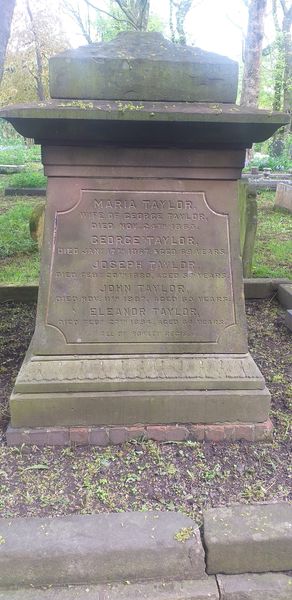
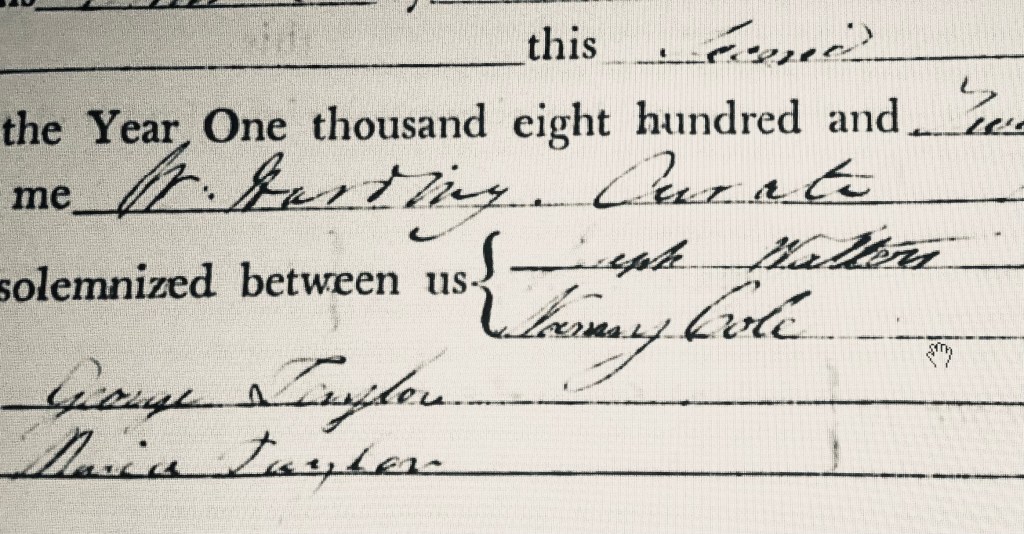
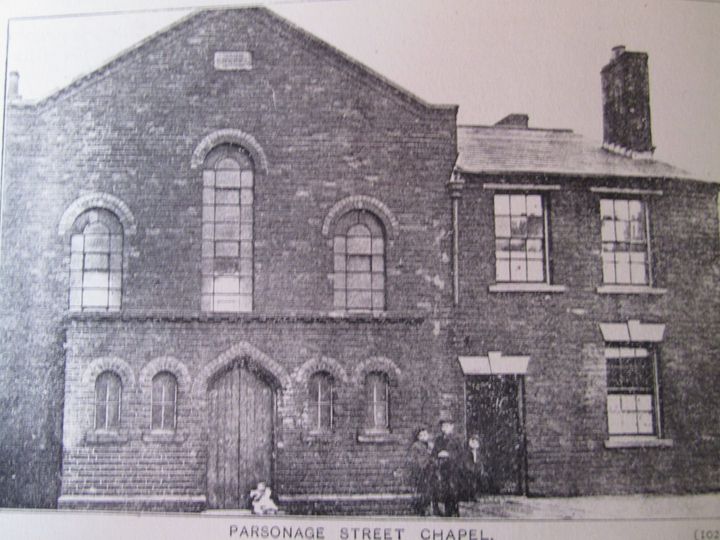
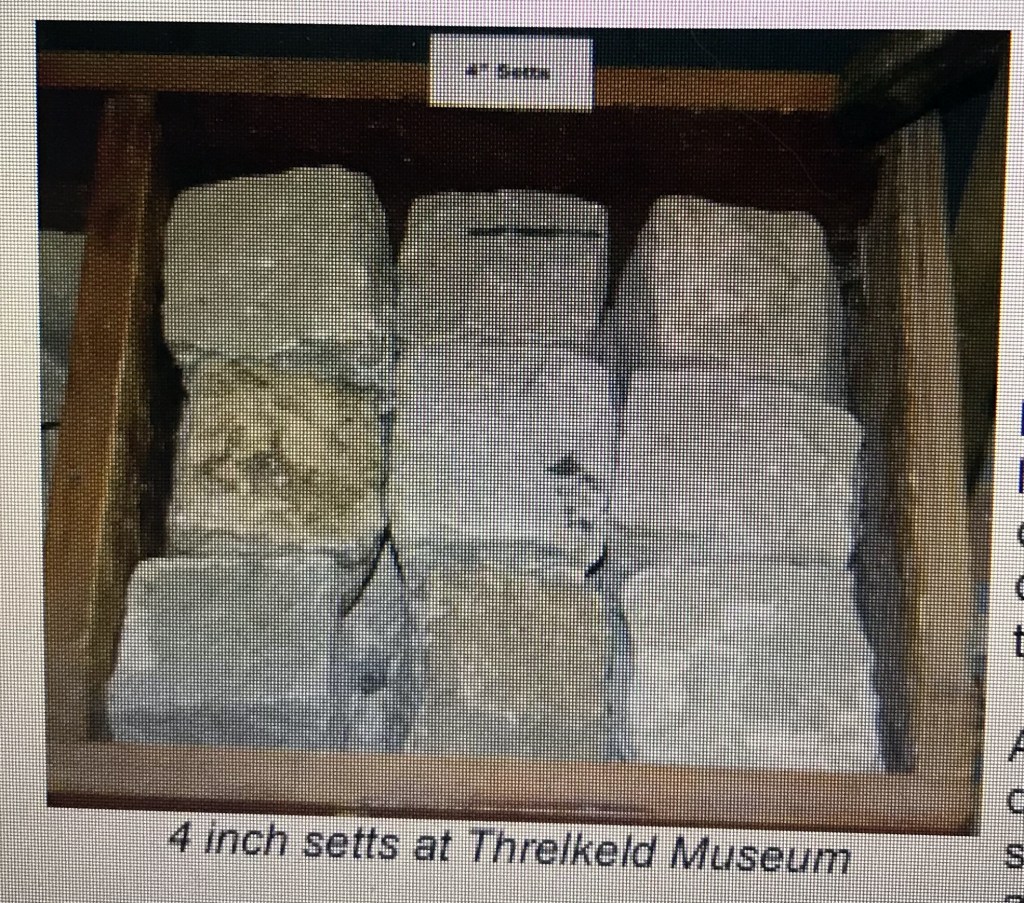
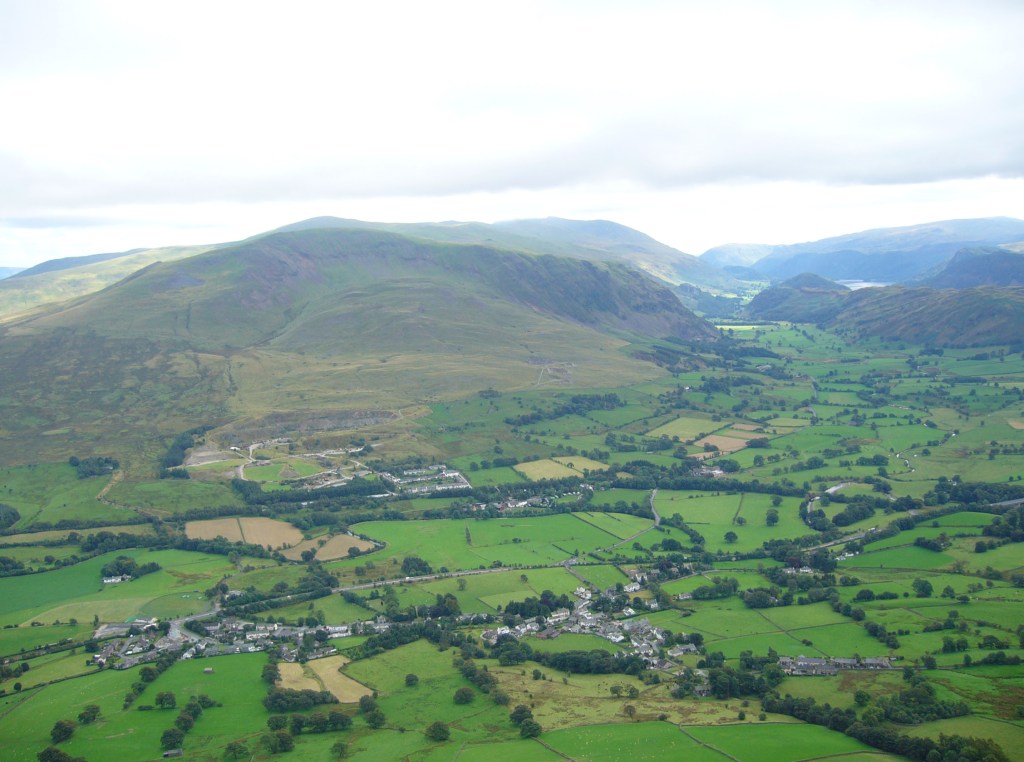
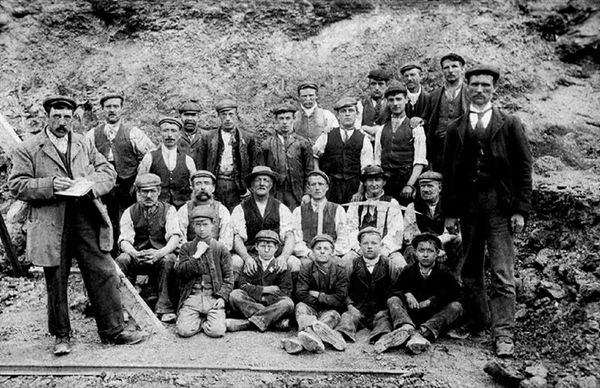
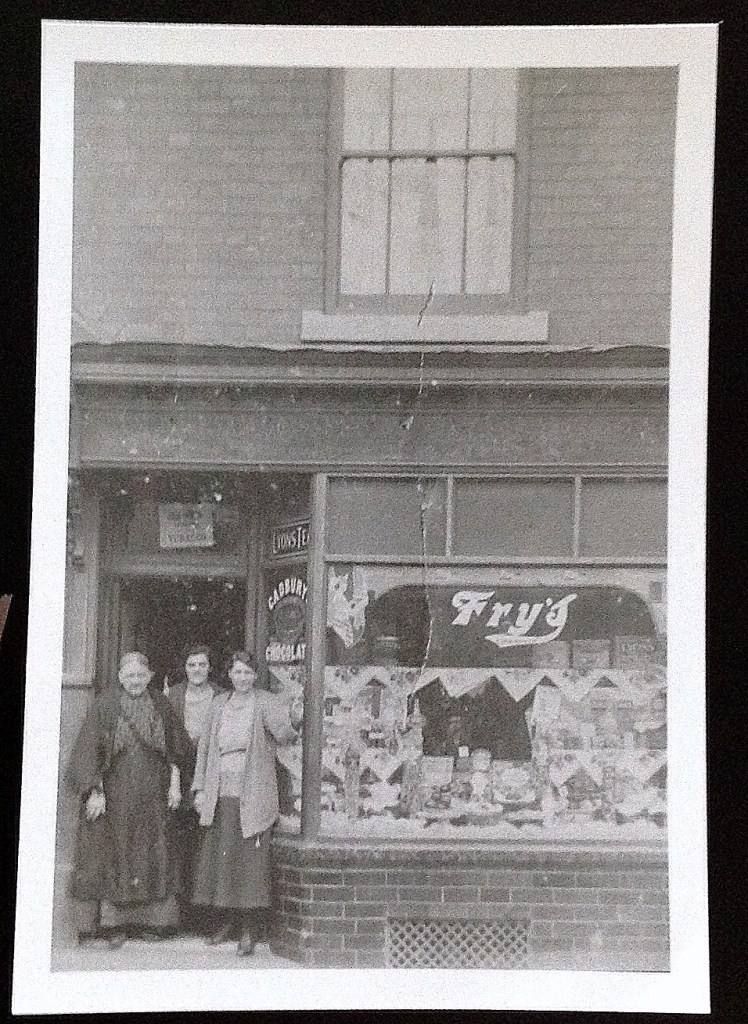

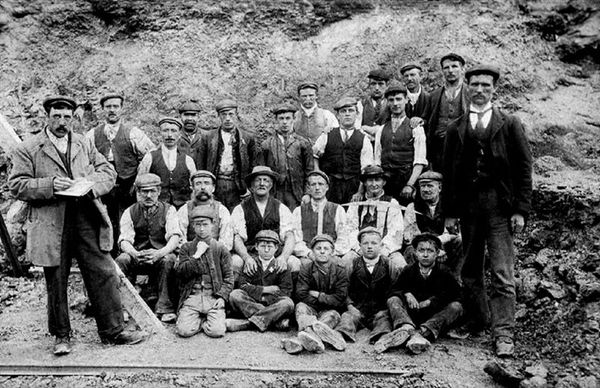
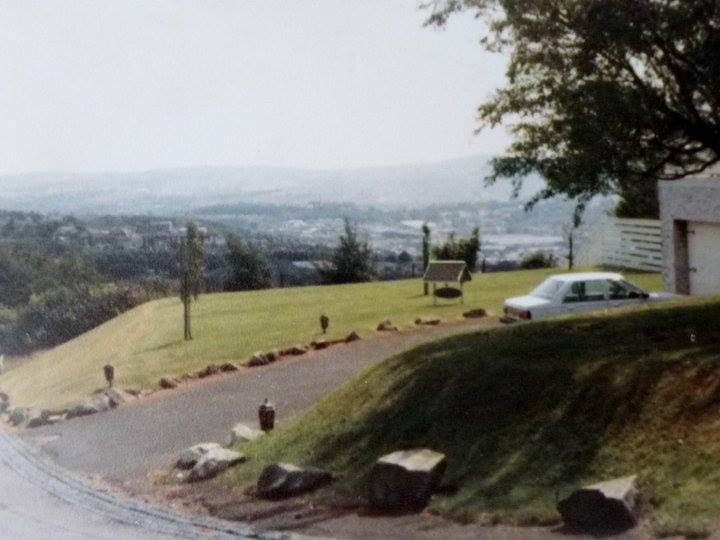

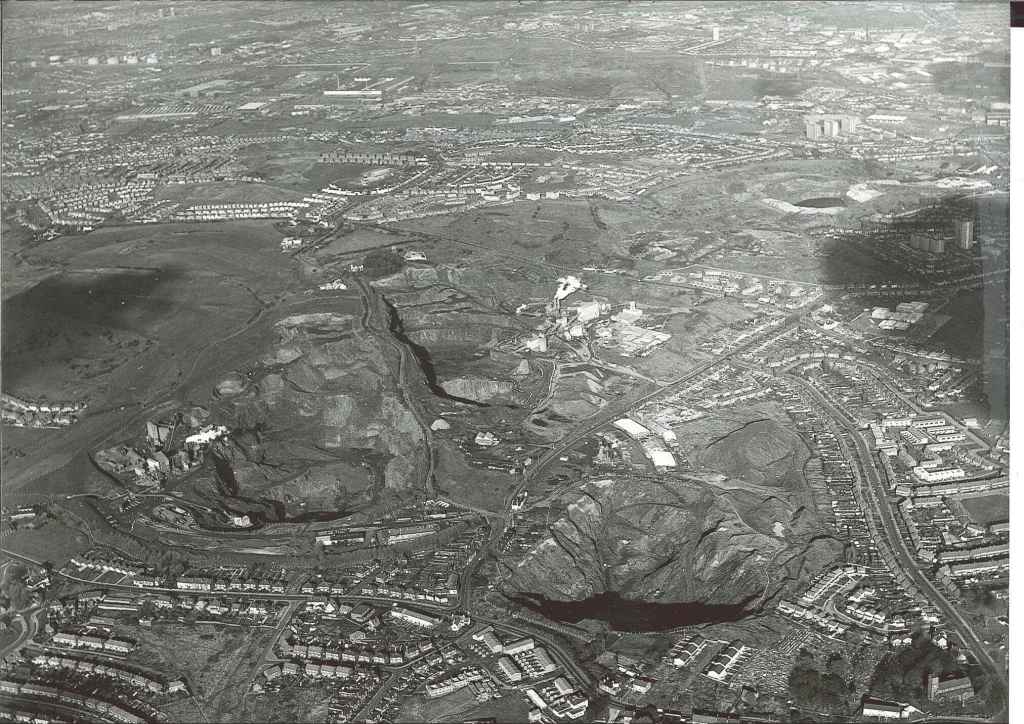
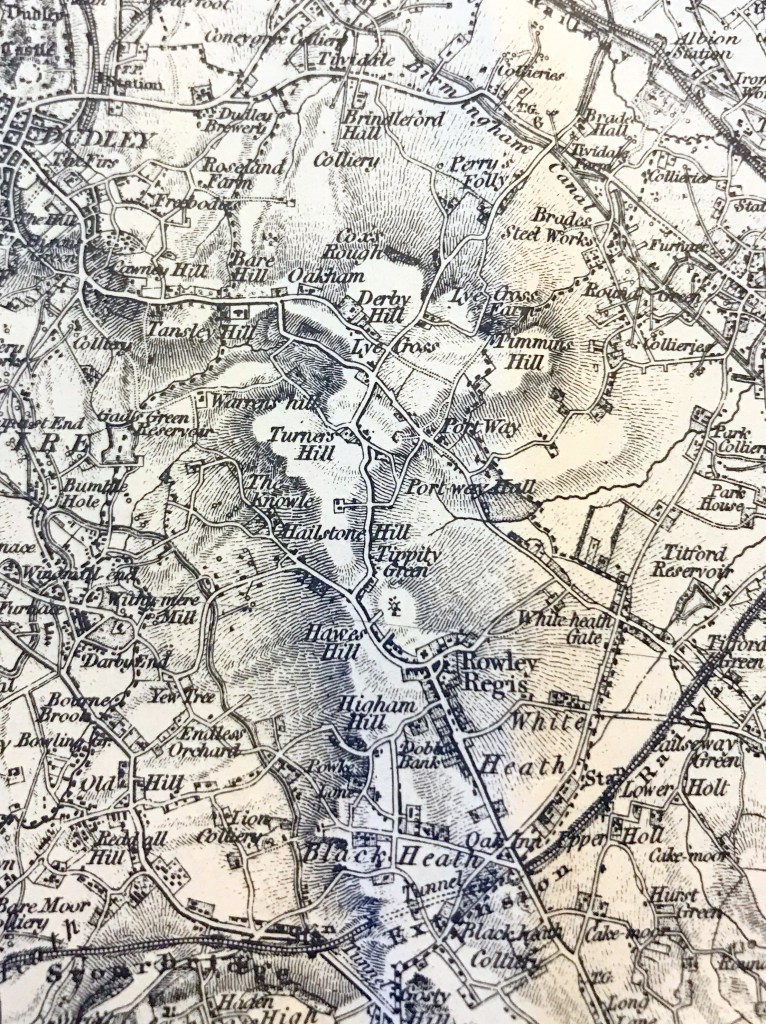


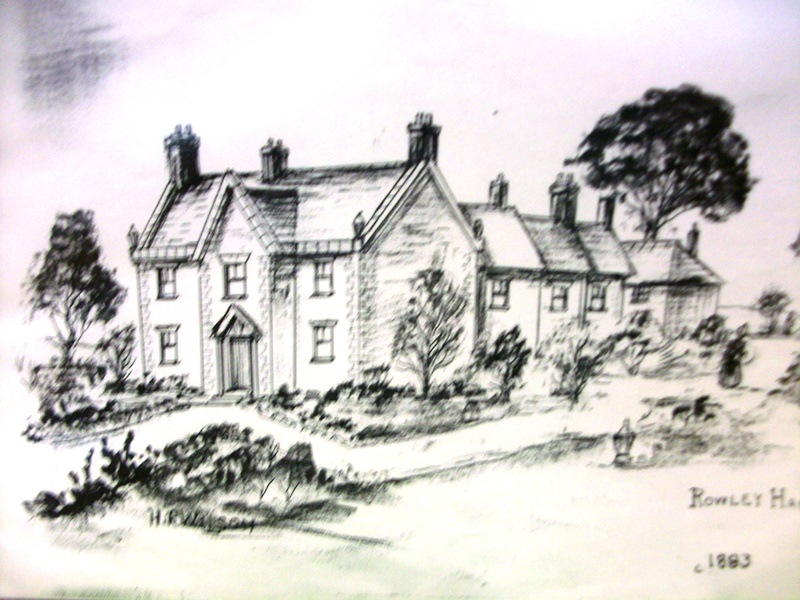
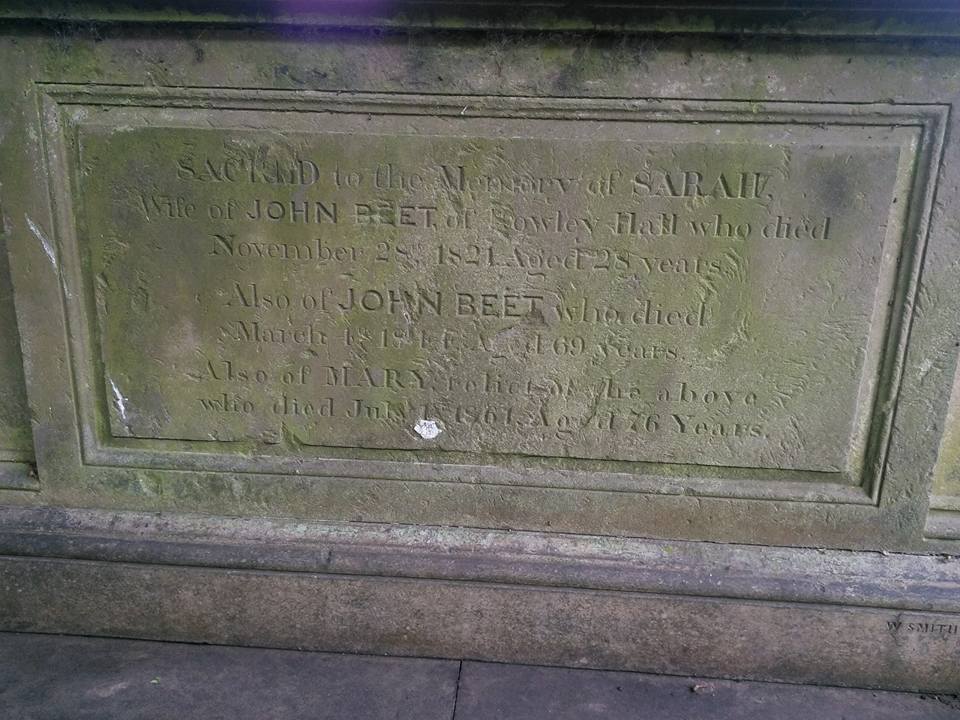

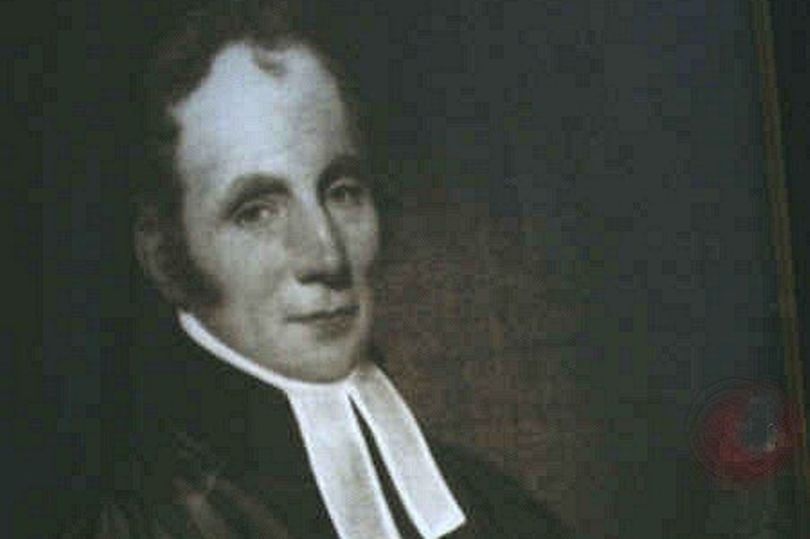

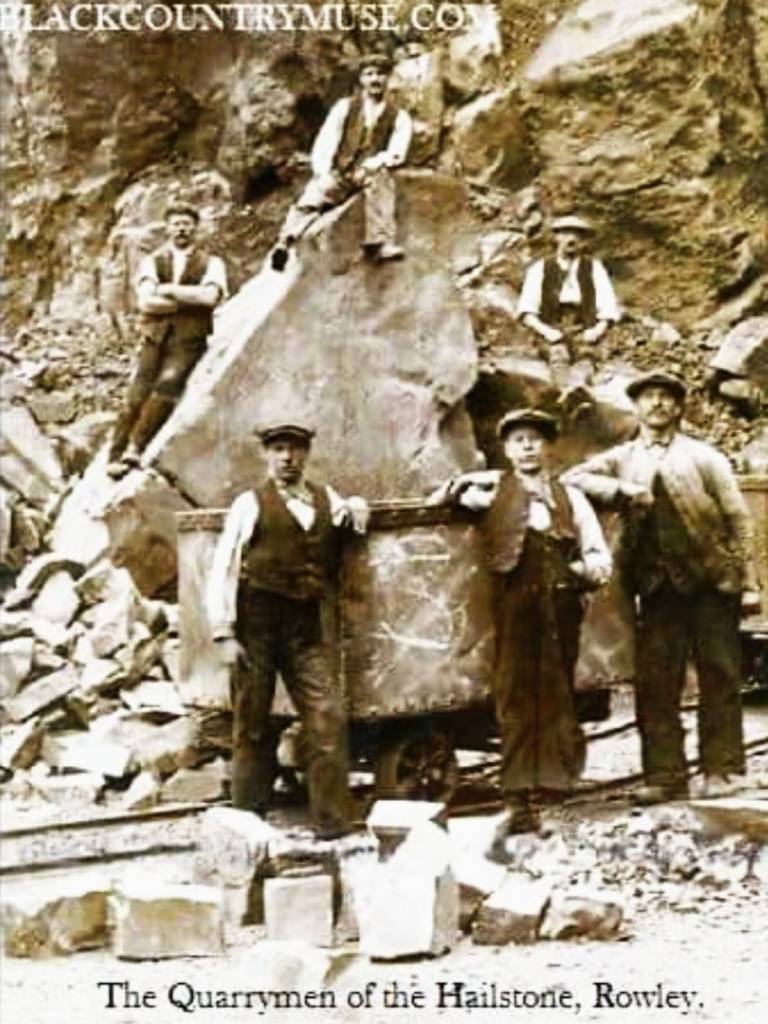

 rowleyregislosthamlets.co.uk