As I have mentioned before, although the landscape around Rowley became industrialised and scarred by mining, clay extraction and quarrying, much of Turners Hill remained open countryside and in use for farming, supplying the local population with milk and eggs until well into the 20th century and much of the area on the hill is now being returned to a green condition as quarries are filled in.
There were several farms on the Rowley side of Turners Hill itself, and this post is principally about Freebodies Farm, Hailstone Farm and Turners Hill Farm with a mention of Lamb Farm, nearer to Portway Hall. To local people these farms were often known by the names of the farmers living there at the time but on maps their traditional name are usually shown. Of the local farms, there were apparently at least four dairy farms in the area in the 1920s and 30s, run by the Monk, Richards, Merris and Skidmore families.
At an early stage there was a Mill or Windmill Farm at Tippity Green although this was not identified in the later censuses, it appears to have been on the site of the former parish windmill and this area was subsequently quarried away.
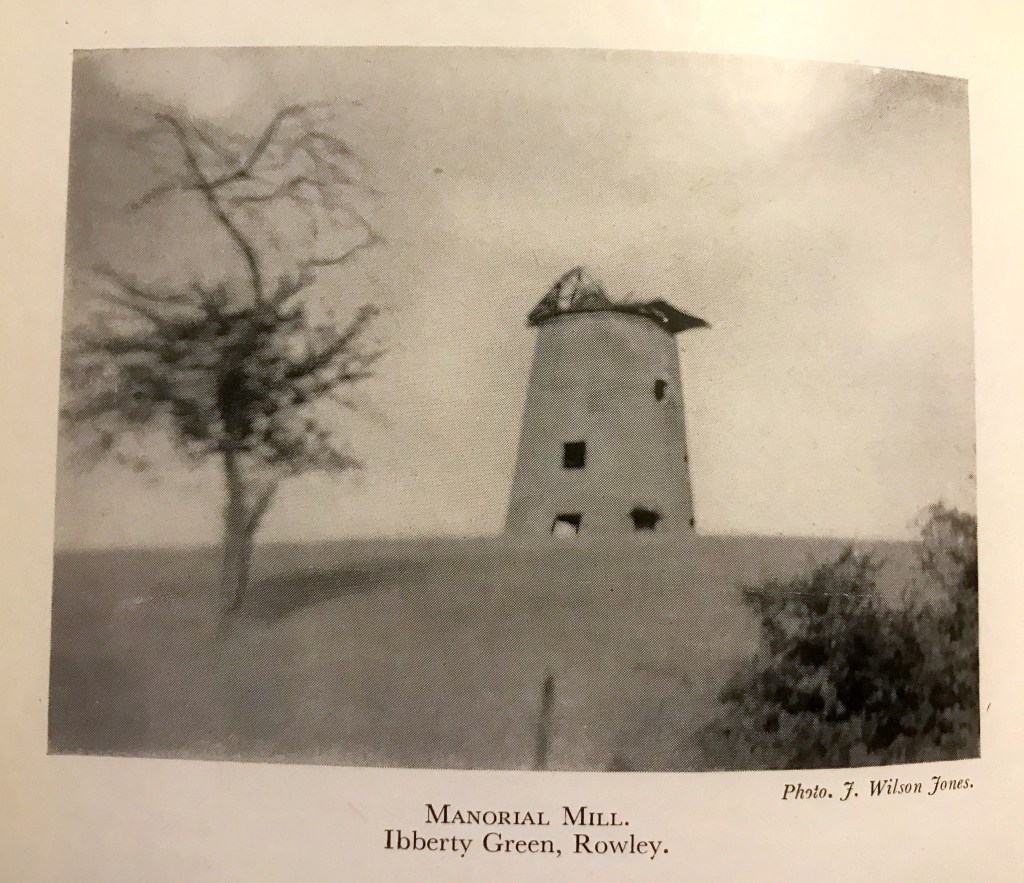
This photograph of the Ibberty (later Tippity) Manorial Mill appears in J Wilson Jone’s book, The History of the Black Country which was published in about 1950 although the date of the photograph is not known.
In 1841 Edward Alsop aged 60 was listed as a farmer at the Wind Mill Farm in Tippity Green, with his presumed wife and four children, plus a male servant. Next listed on the Census was Elizabeth Lewis, aged 40, an ironmonger, with her family and then Joseph Bowater who was a butcher and subsequent licensee of the Bulls Head so that is the correct area in Tippity Green. Neither the Alsop nor Lewis families are listed in the area by the time of the next census.
There was also a Knowle Farm but this is not quite within the area of the Lost Hamlets and I have not indexed the Census for this area.
Also, the late Anthony Page has a picture in his first book on Rowley of Warren’s Hall Farm which was over the top of the hill on the Oakham Road, a large white house. It later also had riding stables and later still became a residential Nursing Home before being demolished and replaced by housing. Again, it is not quite within my study area and I have not indexed the census for this area.
Portway Farm, also slightly outside my study area, still exists though no longer in farming use, perhaps the only one of all these farms to have survived as a building to the present day.
The Censuses
The Censuses are not consistent about how the farms were recorded. Sometimes they were not listed by name. Where I have been able to identify the farms I have shown the results under details about each farm. To date I have only transcribed censuses for the Study area up to 1881. Later ones will follow in due course and I hope to upload the transcripts to a website for the Study at some point.
Not all the censuses include the acreage farmed by each farm but where they do, they vary considerably from one census to the next which does not help with the identification process.
Where on Turners Hill were the farms?
I was very unclear until recently exactly where each of these farms was although I think I have them identified now. No doubt someone will help me out if I have this wrong!
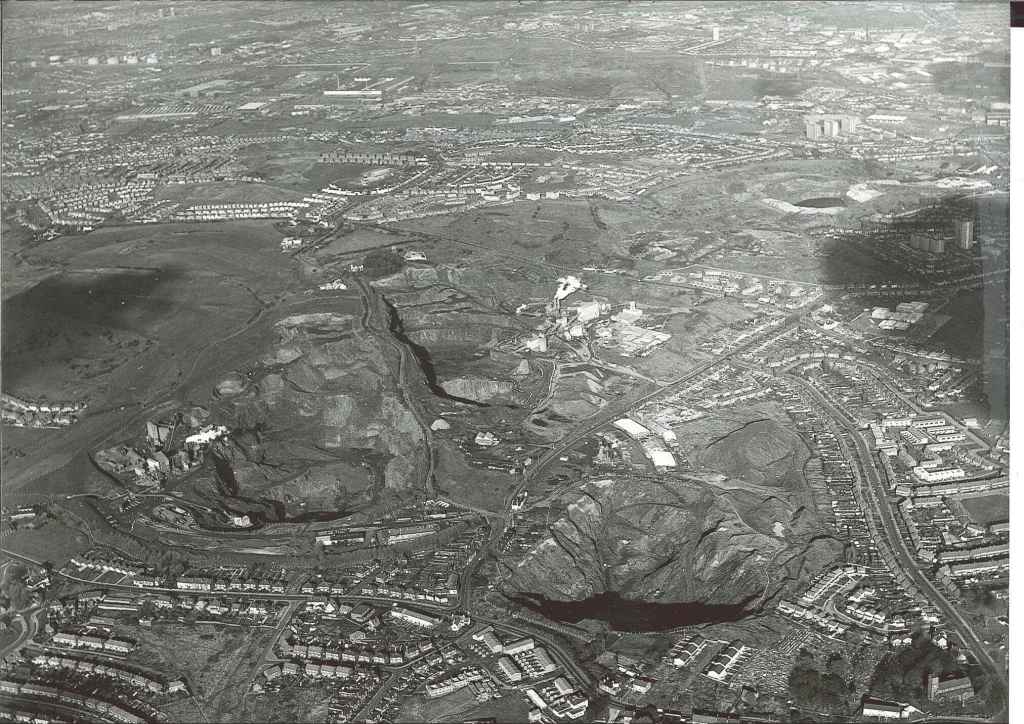
Freebodies Farm and Hailstone Farm were next to each other down a lane on the left off the Turners Hill Road, above the Hailstone quarry with the Hailstone Farmyard being at the end of the track in the area shown on OS maps as Gadds Green. Hailstone Farm occupied the two buildings shown on the left on this photograph and Freebodies the three buildings on the right.

The date of this photograph is not known (copyright also unknown but will be gladly acknowledged if informed) but the two farms are very much on the brink of the quarries so probably 1960s.
Turners Hill Farm was further up the hill, on the right.
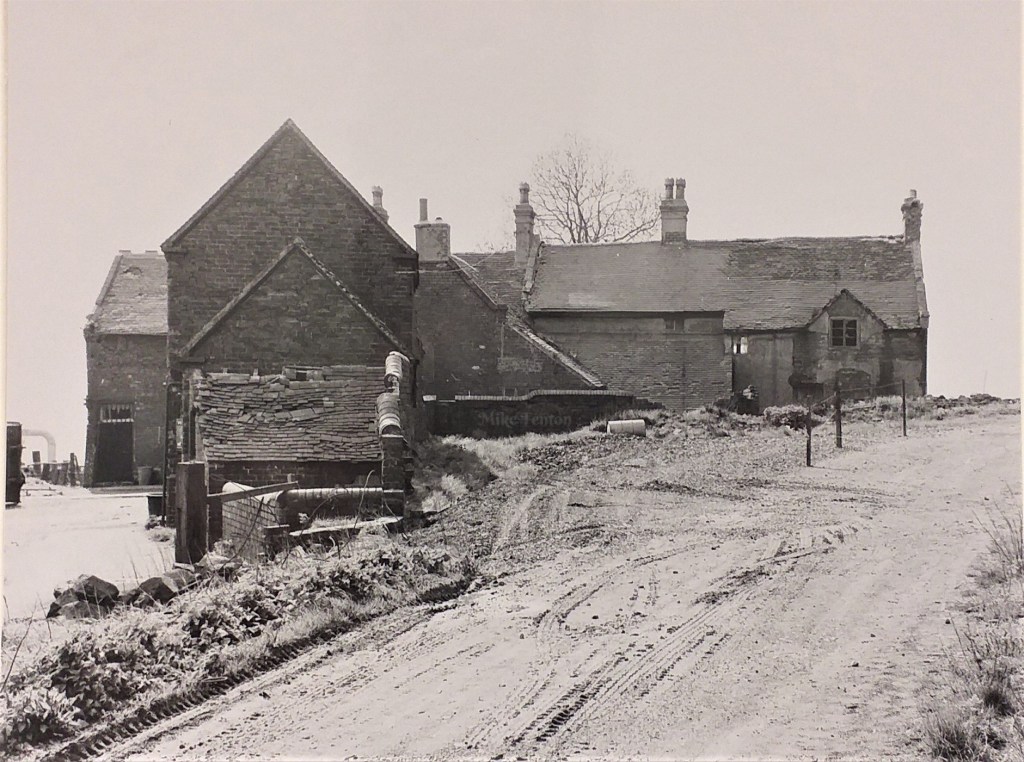
Turners Hill Farm, 1969. Copyright: Mike Fenton
Many of the fields were divided not by hedges but by stone walls which is a very common practice in areas where there is a ready supply of stone for use, as in the Cotswolds and in the Yorkshire Dales. There were some hedges, though, because Reg Parsons who grew up at 2 Turners Hill in the late 1930s told me that his mother loved the wild sweet peas which grew in the hedges near there. He remembered Vera Cartwright with the milk cart which delivered daily to Blackheath, Whiteheath, Langley and Rowley Regis, seven days a week. Before the advent of milk bottles, milk in most parts of the country was taken round in churns and cans and the cans were taken into the customer’s house to be dispensed into their own jugs. This was not just in Rowley, my husband can remember, as a boy, helping his uncle with his milk round in Gloucester where the same system was used. He also said that the horse or pony would know the route and stopping places where they would wait patiently for the milk to be dispensed before moving on to the next stop.
Reg Parsons also remembered that there was a field below his home on Turners Hill which was used as an fuel dump in the Second World War, he remembers piles of Jerry Cans on concrete bases and also an anti-aircraft gun (known apparently as Big Bertha) near the Wheatsheaf pub. My mother used to be on fire watch sometimes during the war, with the St John’s Ambulance brigade and she also remembered the gun there. Sarah notes that one of her grandfather’s fields was requisitioned by the army so this would have been for the fuel storage that Reg remembers and she also tells of family memories that during the war a German bomb landed on one of the fields killing a cow. And during air raids, the ponies pulling the milk carts had to be unharnessed in case they bolted, with all the potential loss of milk and vehicles. Later, in the 1950s, six caravans were put on the site which were lived in by local people.
Many people have mentioned their memories of the Cartwright family who farmed at Hailstone Farm on Turner’s Hill for many decades and who had a riding school, as well as the milk round. Sarah Thomas has written a fascinating book called Hailstone Farm about life on the farms there which she has published privately and, having come across my study online, she has very kindly sent me a copy but with the stipulation that she does not wish to have any of the contents to be put on social media. However, she tells me that she has deposited copies of the book in national and local archives so it would be well worth enquiring, if you are visiting local archives or perhaps Blackheath library, whether they hold a copy. Certainly Dudley Archives lists a copy and Sandwell Archives appear to but do not specify where it is held and it is not reservable through the library system. The book is full of photographs and pictures of documents and family memories and history. I will not be reproducing anything from it but it will inform me about the farms and where they were so that this study has a more accurate record of the farms and their ownership over recent years.
Freebodies Farm, Turner’s Hill
There has been, if not specifically a farm, then an area known as Freebodies on Turners Hill for centuries.
A Survey of English Place Names refers to it as an ‘early-attested site in the Parish of Dudley , a name of the manorial type, deriving from the family of Frebodi found in Dudley in 1275 and 1327’. Bear in mind that for centuries the main route from Rowley to Dudley ran over Turners Hill so directly through the site where Freebodies Farm later was. There was, may still be, an area of Dudley called Freebodies in the Kates Hill area of Dudley and the Freebodies Tavern was there until very recently.
The Morgan website has a large amount of well documented and referenced information on local families and the area and notes that a document in the Dudley Archives shows that there was a Deed Poll in about 1550 by a William Chambers Alias Ireland assigning ancient ecclesiastical land of the Priory of St John’s at Halesowen. A number of his descendants for the next 150 years appear in the local records of Rowley Regis and Dudley, using the names ‘Chambers alias Ireland’ These include intermarriages with the Darby family. The name Ireland is sometimes spelled ‘Ierland’ or ‘Yearland’. The same document demonstrates that they owned ex-monastic lands at Rowley called Freebodies, and this reference recurs in a number of later Darby wills. If you have Chambers/Irelands/Darbys or Cartwrights on your family tree it is well worth looking at this site https://www.morganfourman.com/ Sadly I have none of these names in my tree!
A survey by Lord Dudley’s Stewards in 1556 produced a rent roll in which William Ireland’s Freebodys, later called Freebury Farm is recorded, suggesting that it was established before the neighbouring Hailstone Farm.
A Will of John Chambers in 1870, implies that the farm on Turners Hill was originally part of the Freebodies estate. Certainly, John Chamber’s brother William was an executor of his will and was described as a farmer of Rowley Regis.
At other times it was known as Freebury Farm. Spelling was very variable in those days!
Censuses for Freebodies: At Freebodies Farm in 1841 were Josiah Parkes and his family (including Sophia Cole who was mentioned in my earlier article about the Cole families around Turners Hill, and one male and one female servant.
However, there is no mention of Freebodies in the 1861 Census nor any farmer listed in Gadds Green. However, listed as Farmhouse, Turners Hill and as a farmer of 30 acres is William Smith, aged 54 with his wife Sarah and his Levett granddaughter, plus two servants. Was this Freebodies?
In 1871 there is no mention of Freebodies Farm but two households are listed as ‘adjoining Hailstone Farm’ – John Bradshaw, an agricultural labourer aged 26 with his wife and his 11 month old son plus his brother aged 21 and also an ag lab. The brothers had both been born in Haselor, Warwickshire and his wife in Solihull. Also described as living ‘adjoining Hailstone Farm’ was a blacksmith Henry Russell aged 33 with his wife and daughter. So both of these households were from outside the area. It is possible that the land of the two farms was being worked together and the farmhouse used to house either farm workers or tenants.
The next building listed is Brickhouse Farm which was some distance away in Cock Green on the Dudley Road and which was being farmed by the Levett family with one ag lab and one female servant. There is sometimes no accounting for the routes taken by census enumerators!
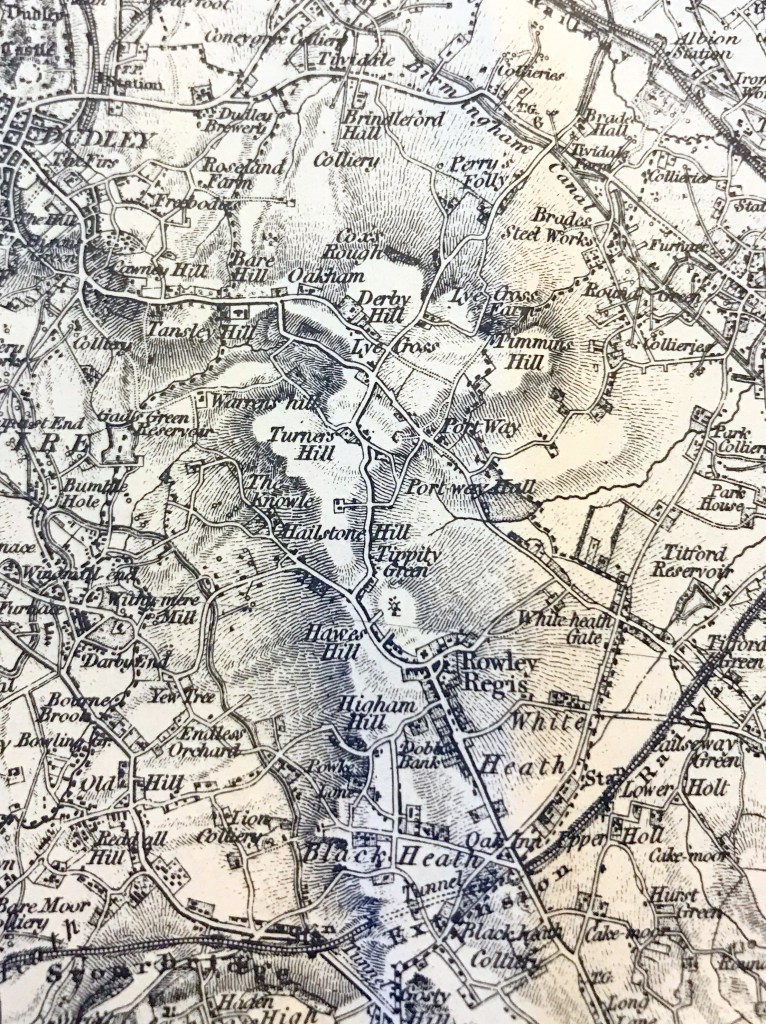
Or was there a well established path across the fields between Hailstone and the Dudley Road at Springfield which everyone used? This seems likely as Reg Parsons mentioned to me that his father, on his way home from work, would sometimes get off the bus at Springfield to buy something from the shop there and would then cut up over the fields to home. This does seem more practical than the residents up on the hill always having to walk down to Perrys Lake, along Tippetty Green and to the Knowle that way. There is certainly a Footpath marked on the 1904 OS Map, here, running from Knowle Farm to Hailstone Farm and also further on up Turners Hill. .
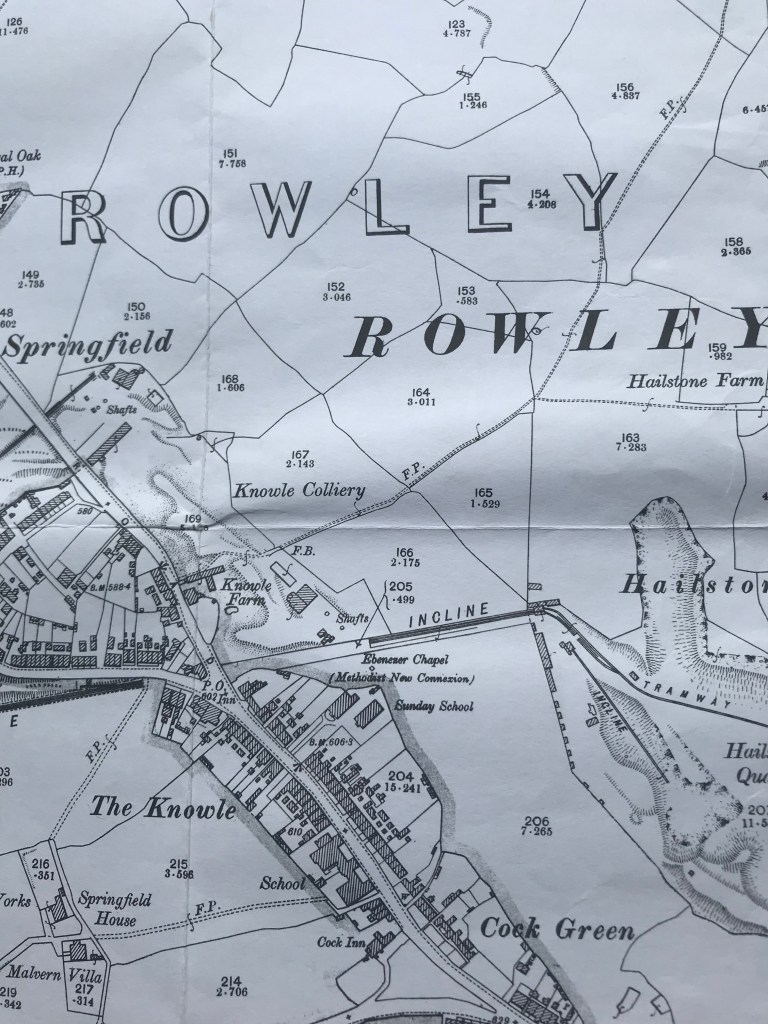
Copyright: Alan Godfrey Maps
Hailstone Farm
A lease in Dudley Archives dated 1796 is for a lease of 21 years to Samuel Round, farmer, of Hailstone Farm (a messuage called Freeberrys alias Fingerhold – that Finger ‘I the Hole popping up again!) so it seems likely that the farm was established by the late 1700s.
Sarah’s Cartwright grandfather had been born on Hailstone Farm but the family then moved elsewhere, again this makes me think of the information on the Morganfourman site that the Cartwrights were closely linked to this area as far back as the 1500s. He took over first Lamb Farm in 1912 and then Hailstone Farm in 1924 and ran their businesses from there, including the riding school established by Sarah’s mother and the milk round (which had originally been started in the early 1900s when the family were living at Lamb Farm), later taking on the tenancy of Freebodies in addition in 1932, subletting the house to tenants. In addition to the Riding School, there were some Gymkhanas there – much more detail about this and photographs in this article in the Black Country Bugle in 2019. https://www.pressreader.com/uk/black-country-bugle/20191106/281505048027440
Later part of the family moved to another farm at Bewdley and Sarah’s mother and father continued to live at Hailstone until the 1960s when the lease was terminated and the land taken back for quarrying.
There is much more detail in the book about the farms, their construction, plans, photographs, invoices etc from the business in the book, a real very personal record of a Rowley Farm in the 20th century.
Censuses for Hailstone Farm
In 1841, the farmer at Hailstone Farm was Samuel Round who was sixty, with three servants, possibly the Samuel Round mentioned above who was granted a lease in 1796 or possibly his son . I can find no trace of Hailstone Farm or the Round family in 1851.
In 1861, Keturah Round, a married lady of 54 was at Hailstone Farm with several children though no spouse and she is described as the Head of the household though not a widow. She had married Edwin Round in Dudley in the Sep qtr if 1854 and was previously Wheale.
In 1871 Hailstone Farm was occupied by Elizabeth Stickley, a widow with her occupation given as Farmer with her two sons John aged 37 and Thomas aged 27, both described as Farmer’s son, along with Ruth Lees, a servant but possibly also related to Elizabeth Stickley as her maiden name was Lees. In the previous census this family had farmed at Oatmeal Row, Cakemore, next door to some ancestors of mine!
In 1881, there is no mention of Hailstone Farm, and no farmer listed but there are three households listed as Hailstone Hill. Susan Jones, who was 50 and a widow was listed as an annuitant aged 33, born in Middlesex, as were the two young nieces living with her who were scholars. Her femail servant was born in Kingswinford. It is tempting to think that this was Hailstone Farm. One of the other houses was occupied by Joseph Hooper, a Farm labourer, aged 48 and born in Cleverley, Shropshire and his wife Ann aged 54, born Thame, Oxfordshire. The tenants in this area certainly almost all came from outside the area, it seems.
Turners Hill Farm
Maps show Turners Hill Farm higher up Turners Hill from the other two farms and there is also a reference on some maps to Cloudland though not on recent maps. There appears to be a large House there, too, Turners Hill House and sometimes the owners of this house were also described as farmers. It is possible, since there is evidence that the Downing family had other land in the area which they let out, that farming was not their principal occupation and that most of the land was farmed from Turners Hill Farm, rather than house.
Censuses for Turners Hill Farm/House
At Turners Hill in 1841 was Joseph Downing with his wife Nancy, son Isaac and two female servants.
By 1851 still on Turners Hill but with no name given for their residence was his widow Nancy Downing with their son Isaac, aged 35 who was a ‘proprietor of lands’ and three unmarried daughters, all described as annuitants, plus a Thomas Whitehouse who was probably Nancy Downing’s brother as her maiden name was Whitehouse. Thomas Whitehouse was a widower, and also a ‘proprietor of lands’ like his nephew.
By 1861 Isaac Downing was still living on Turners Hill, with his three sisters. This time he has given his occupation as “Principal occupation: general superintendence of the cultivation of land. “The Enumerator has added Farmer. But Stephen Parsons on Facebook commented that he remembers that in his time there was a large house on the right of Turners Hill Road which was Turners Hill House, and that Monks Lane ran below it which led to Monks Farm and the quarry. There was also an area in this location called Cloudland on some maps. So were the Downings perhaps living at Turners Hill House but contracting out the farming? It seems likely. I was interested to see on the Facebook page that Linda George has receipts signed by Isaac Downing in 1855 and 1856 for the letting of a farm at Darby’s Hill to Samuel Cook so the Downing family may have had substantial land holdings around the area.
The Downing siblings, still all unmarried, were still on Turners Hill, in 1871, Isaac, now 55, described as Landowner and Farmer and also on Turners Hill and described as a farmer of 88 acres in 1871 is William Whitehouse, a widower, with his two teenage sons a female servant and a farm labourer. I note that a William Whitehouse had been one of the witnesses of Joseph Downing and Nancy Whitehouse in 1810 so may well have been an uncle or cousin to the Downings. This census is the last one showing this Isaac Downing, as he died in November 1874 and was buried in St Giles.
There was also listed in 1871, however, a farmer of 60 acres on Turners Hill, James Bridge aged 28 with his wife Anne, one female servant and one agricultural labourer so this may have been Turners Hill Farm. By 1861 Ann Bridge, now a widow aged 39 was the farmer at Turners Hill Farm, by now farming 40 acres and employing 2 labourers, a cowman and a waggoner.
By 1881, there is the family of Samuel Woodall, an Engineer and Iron Founder listed first under Turners HIll, probably at Turners Hill House. He was 35 and born in Dudley. His wife Mary was born in Birmingham. In addition his two brothers and a sister were also living with them, with three female domestic servants, again all born outside Rowley. I presume this was the house previously occupied by the Downings.
Listed at 5 Turners Hill was William Giles, aged 30 – a farmer of 70 acres employing one additional man. This presumably was Turners Hill Farm. He and his wife were born outside Rowley, though not a great distance, being from Kingswinford and Cakemore respectively. Their elder two children aged 8 and 6 had been born in Enville, Staffordshire, the two younger aged 4 and 2 in Rowley Regis.
The Parish Registers
The Chambers family
On 31 October 1544, Margrett, wife of William Chambers was buried, so there were already Chambers in Rowley at this date. In 1558 William Chambers was buried. Between the two dates three Chambers girls – Mary, Margaret and Agnes were all married at St Giles. The records from 1558 to 1566 are noted by the Vicar, Adam Jevenn, as being missing. (I wonder whether he was an early ancestor of the Jeavons families in Rowley and Blackheath?)
In 1575, Jone, as daughter of John Chambers was baptised and in 1602, John, son of Thomas.
On 12 Feb 1603, a child William was baptised, described as the son of Edward Shakespurre and Joane, d. of Christopher Chambers. Freebodies is not mentioned but certainly Christopher Chambers was associated with Freebodies then . In January 1641, Edward, son of William Chambers of Freebodies was baptised at St Giles, in 1744 another William Chambers of Freebodies was buried . Christopher Chambers was one of two people appointed in 1650, along with three others to be ‘Collectors for the poore’ which implies a certain social standing in the parish. At times, the Chambers used the name Irelands, too. Sometimes their abode is given as Churchend though it is not clear where this was. Certainly there were 152 Chambers entries in the Parish Register between 1539 and 1684 for baptisms and burials, 1539-1754 for marriages. On occasions Chambers were also churchwardens.
By 1723, with the burial of Elinor Chambers, widow, her abode was shown as Ffreebodies. Another branch of the Chamber, however was at Brickhouse in 1724. In 1727, Christopher Chambers of ‘ye ffinger i’ the hole’ was buried. Another branch of the Chambers was described in a marriage in 1732 as ‘of Tividale’. So the Chambers seemed to be scattered right around Turners Hill over several centuries.
The Downing family also had a long term presence on Turners Hill. The first Downing entry in the Registers is in 1644 when Robert, son of John Downing of Warrley was baptised, with numerous entries after that, the first Isaac Downing (that we know of) being baptised at St Giles in 1672. In 1814 Isaac Downing, of Turners Hill was buried aged 75, having died of Asthma.
Back in 1722, Mary, wife of Isaac Downing ‘de ffox oak’ was buried but he appears to have remarried the following year and had a child Samuell baptised at St Giles, with an Isaac Downing of Foxoak being buried in 1727, probably not the same man but possibly related.
On 23rd July 1815, Isaac , son of Joseph and Nancy Downing, was baptised and Joseph’s occupation was given as a ‘Beast Leech’ – someone who treated sick animals. Joseph and Nancy were still on Turners Hill in the 1841 Census. A daughter Mary Ann was baptised to them in 1818, followed by Lavinia in 1821 and Amelia in 1823. Another Isaac Downing was married to Elizabeth Nutt in 1815 so there were several Isaacs around then. Joseph Downing, originally a ‘beast leech’ and later a farmer died and was buried in St Giles on 2 Jan 1849.
Not all the Downings in the area were so well-to do – Mary Downing, aged 69 of Perry’s Lake was buried in April 1821, having died of cold. In 1823 William Downing, son of Joseph Downing a miner, died in the Poorhouse. In 1828 an Isaac Downing of Perrys Lake died aged 88 of natural decay so presumably there was some connection shown by the use of the name Isaac. There were also Downings in Mincing Lane, in Windmill End and in Portway, all apparently in labouring jobs of various sorts. By the 1840s another branch of Downings were living in Gorsty Hill and another in Waterfall Lane.
Only the Downings on Turners Hill appear to have been wealthy and one wonders whether perhaps one child might have benefitted from a scholarship to the Old Swinford Hospital and been able subsequently to have gone into a profession which improved his circumstances. I would dearly love to find out a list of Rowley boys who attended that school!
Lamb Farm
Lamb Farm was, according to Roy Slim, in an article in the Black Country Bugle in 2021, a small farm adjacent to the Lion Farm which later gave its name to the Lion Farm Estate, near Whiteheath so slightly out of my main study area but included here as there were connections to Freebodies and Hailstone Farm . Roy says that the Throne Farm, farmed by the Skidmores, was much larger than either of them and I presume that the local roads with royal names were so named because they were on land formerly part of this farm. Throne Road, Throne Crescent, Queens Drive, Hanover Road, Tudor Road, Windsor Road, Stuart Road. And I am interested to see that some of the modern roads there, built where the quack was, also have names with Royal connections, Sandringham Drive, Palace Close, Majestic Way, with the Vikings, Celts, Druids, Goths, Romans and Saxons getting a mention, too!
After the Cartwrights moved to Hailstone Farm in 1924, Lamb Farm was let to various tenants, including Hawleys, Hewitts, Slims, Matthews and Skidmores. Roy Slim has also written about his family’s time there.
Lamb Farm was sold for development in 1945.
Local memories of the farms
On the ‘I remember Blackheath and Rowley Regis’ Facebook page, Raymond Kirkham remembered that he had known the farm halfway up Turners Hill as Cartwright Farm. This would have been Hailstone Farm, as at the time Raymond was growing up, the Cartwrights were working the area of both farms from Hailstone Farm and, although they leased Freebodies too and farmed the land, the house was let to tenants. He noted that the farm further up at the top of the hill was Monk Farm and this must have been Turners Hill Farm. He said that this whole area was his playground when he was growing up and his family got their eggs from the farm.
Ian Davies remembered Hailstone farm well, as he was related to the Cartwright family. Ian’s Geordie grandfather lived with the Cartwrights at Lamb farm, near Portway Hall, when he first moved south in the early 1900s. He remembers that by the 1950s George Cartwright had moved away to a farm near Bewdley and Hailstone Farm had been taken over by their daughter Vera and her husband George Thomas. George taught Ian to ride. The quarries were already threatening to swallow the farm back then. The narrow track from Turners Hill had quarries close on both sides. The farmhouse and top of the land were swallowed up by the Tarmac mega-quarry, The lower area stretching down to Springfield was used for housing.
Ian also remembered Lamb Farm which was on the left going down Throne Road, immediately after Portway Hall. He used to walk past the drive on the way to his grandparents’ house in Newbury Lane. He thinks that St Michael’s School was built on the land and that in the 1800s Portway Hall colliery was on the farm’s land and he thinks this was responsible for the subsidence that ultimately forced Portway Hall to be demolished.
Ian also kindly added a link on the Facebook page about memories of Blackheath and Rowley Regis to an article written by Sarah Thomas in the Black Country Bugle which appeared in Nov 2019, including various photographs.
https://www.pressreader.com/uk/black-country-bugle/20191106/281505048027440
There are obviously several family connections to the Cartwrights still in the area as Margaret Higgs said that George Cartwright was her father’s uncle, her grandmother was George Cartwright’s sister.
Mark Northall said that his father Frank Northall had worked at Cartwright’s farm as a lad.
Jill Watkins-Beavon had lived in Gadds Green which was the land opposite Hailstone farm, later her fmily lived in one of the four houses in the quarry.
William Perry remembered in 2018 that his father had told him that when he was young he would walk up Turners Hill to Cartwright’s (Hailstone) farm where they had a lovely horse that he used to stroke.
So this is all the information that I have found to date about the farms in the Lost Hamlets, all disappeared now into the quarry but helping to sustain the local populace in their time, and about the families who farmed them over the centuries. More information would be very welcome and this can be added, corrected or a further post done if sufficient additional information is found.

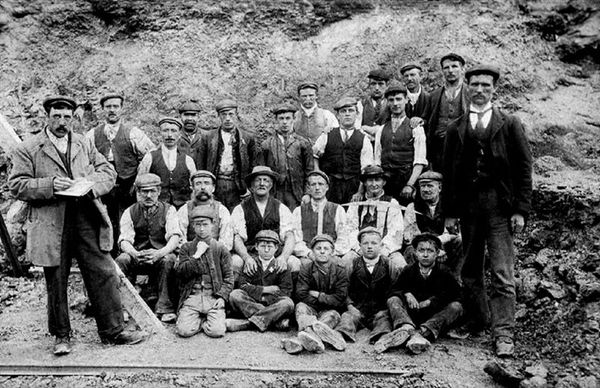

 rowleyregislosthamlets.co.uk