Mary Ann Alsop
Mary Ann Alsop was born in 1820, fourth and youngest but one of the daughters of Edward Alsop and Betty nee Hodgetts, she was baptised at St Giles, Rowley Regis on 21 May 1820. The next time there is any record of her is in the 1841 Census when she is living at the Windmill Farm, with her siblings Sarah, Thomas and Rhoda.
But she was not there for very much longer. On 6 May 1844 Mary Ann married William James Vaughan at Tipton, St Martin. William was baptised in Oldbury and it seems very likely that his family were living in Rounds Green. His occupation at the marriage was shown as a ‘jobbing smith’ and his father Joseph Vaughan was also a jobbing smith. The witnesses were Mary Ann’s brother-in-law Isaac Mallin and her sister Rhoda.
The Vaughan family
The Vaughan family into which Mary Ann married were a large and industrious family, this particular branch living in Rounds Green, Oldbury but with Birmingham connections. I suspect also that they were connected with a large family of Vaughans in Wales as many of the distinctive Vaughan Christian names also appear in that family and they were also very extensively involved in the iron and metal working industries.
Mary’s new husband William James (1820-1869) was the third son of Joseph Vaughan (1795-1851) and Amelia (nee Page) Vaughan (1797-1843) of Rounds Green, Langley. Joseph, at least some of his brothers and several of his sons were originally described as ‘smiths’ but they had an early association with edged and garden tools, an occupation which was very common in that area, particularly in Brades village.
‘The Brades Works’
I confess that despite growing up barely a mile from Rounds Green, until recently I knew nothing about Brades village or the Brades works. But it is not difficult to find out. Not least, there is a most interesting website called https://madeinoldbury.co.uk/articles/brades-works/ which has a wide range of articles and information likely to be of interest to anyone who has lived locally.
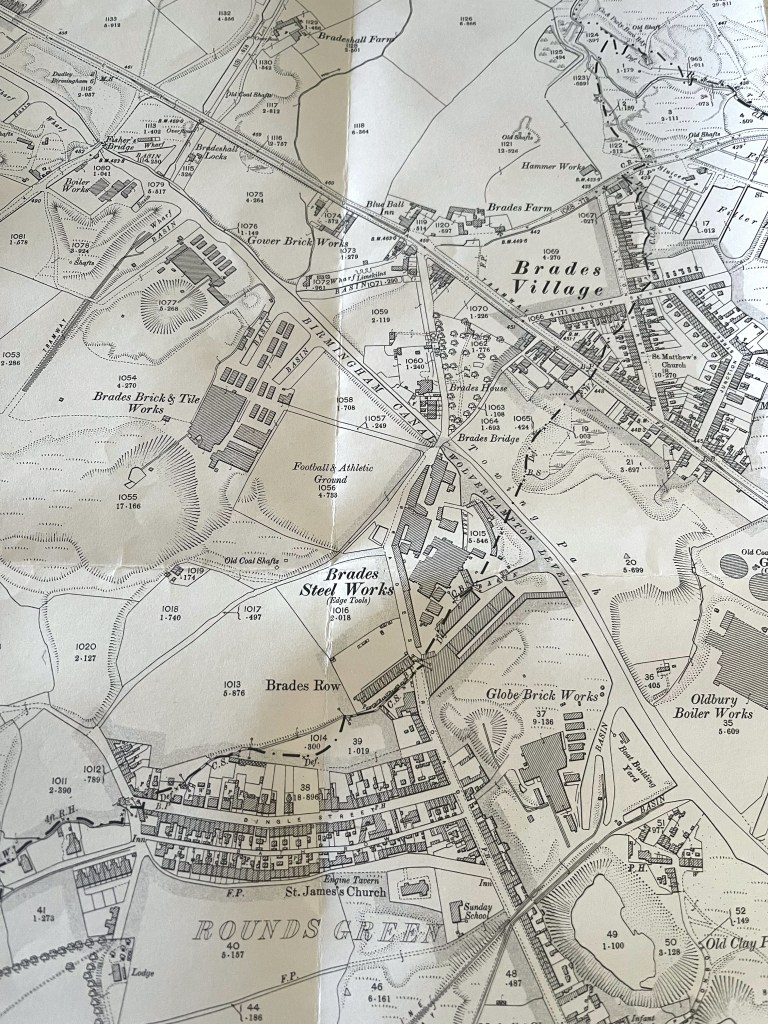
Copyright: Alan Godfrey Maps.
As can be seen from this 1902 map, Rounds Green was immediately adjacent to the Brades works (Brades village is top right on the other side of the canal) and I think it is highly likely that the jobbing smiths in the Vaughan family, living in Rounds Green, worked there.
A William Hunt, the Oldbury website tells me, set up a series of small forges and furnaces alongside the Birmingham to Wolverhampton canal in 1782 to manufacture edge tools, and there are accounts for as early as 1796, which list several different departments at work. By 1805 they were also manufacturing steel on site, digging the coal required around the site. Other materials could be brought in and taken out on the canal, a huge advantage at a time when roads were generally very poor. On the site a large number of knives, trowels, spades, hoes and edging knives, axeheads, hatchets, garden shears, wood chisels and scythes were made, as well as supplying the steel for ramrods used during the Napoleonic wars. There was also a ‘jobbing forge’ which is probably where the Vaughan men worked until they set up their own company. Tools from the Brades factory were sent all over the world and also supplied to the military, including bayonets. One particular design of Brades trowel, apparently, became highly prized amongst archaeologists as being the best trowel for excavating.
Elihu Burritt, the American diplomat based in Birmingham, wrote about a visit to the site in his book ‘Walks in the Black Country’, published in 1869, extracts from which are on the Oldbury website and worth reading, he called these works ‘one of the chief lions of The Black Country’.
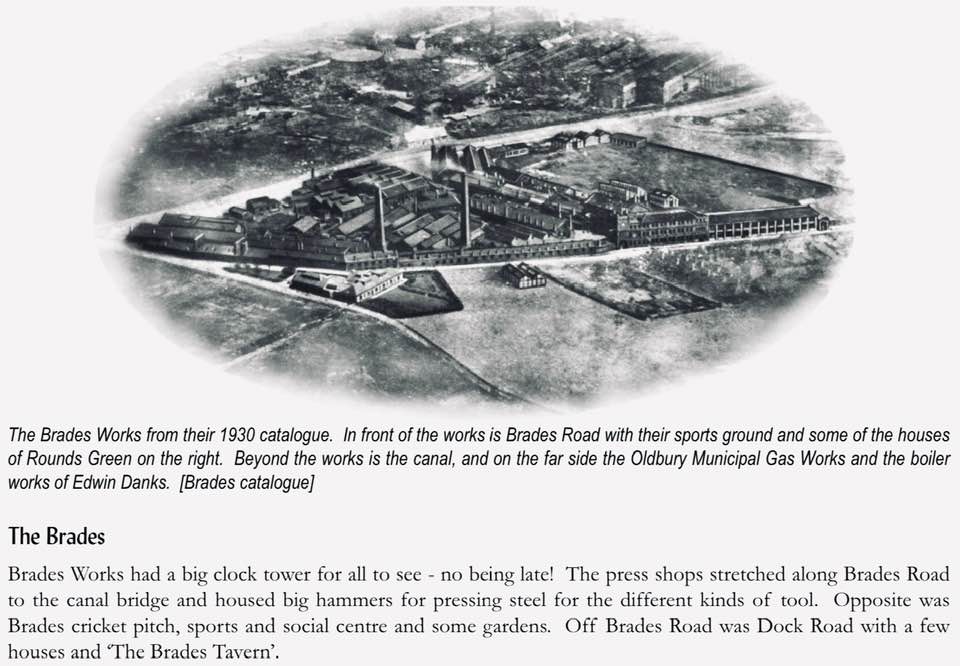
Copyright unknown.
After various amalgamations with other companies, Brades Tools has gone now but it is fascinating to look on ebay and see how many vintage Brades tools still fetch good prices! One axe was listed at £285, another at £350!
Back to the Vaughan family and William James’s parents:
Between 1816 and 1840, Joseph, the jobbing smith and Amelia Vaughan had eight sons and five daughters.
Connections to the Page family
After Amelia’s death on 6 August 1843 (buried at St Giles, Rowley Regis) Joseph was left with several young children and he married again very quickly in October 1843 in Birmingham to Lucy Page. I was interested to see the name Page as that was Amelia’s maiden name, so I wondered whether they were sisters. No, they weren’t, I found. But they were sisters-in-law! Lucy’s previous husband was the wonderfully named Fairbrother Page, one of Amelia’s brothers. And the Page family were all in the metal working trades, too in one way or another. And Page was not exactly an unknown name in Rowley Regis, either. Fairbrother and Lucy Page had nine children and he had died, aged only 40 in 1840, and his family were all in the Aston/Duddeston area of Birmingham. Some of the Page family were quite well off, too. Fairbrother was a steel toy maker and his brother William, who was his executor and trustee under his Will, was a spoon manufacturer employing 6 men and 2 boys in 1851. After William’s death in 1857, his widow Rebecca, nee Mucklow, married a Joseph Needham , who was also a spoon maker, in 1860, continuing to live in the Duddeston area during his lifetime. At the time of his death in 1880, he left an estate valued at under £5,000. But when Rebecca, who had moved from industrial Aston to rural Sutton Coldfield, died in 1889, she left an estate worth £35,290/12/9d! Serious money and so much more than her husband had left less than ten years earlier. Perhaps she was a good investor.
The Vaughans were also apparently a successful family. A trade directory dated 1858 shows brothers Charles, John, William, Richard, Septimus and Joseph Vaughan as ‘edge tool makers’ as individuals and as companies in Dartmouth Street, Summer Lane and Milton Street, Aston. By 1861 Charles, the eldest brother is shown in the census as a ‘garden tool manufacturer’ in partnership with his brothers. An 1858 Trade Directory lists the brothers as manufacturers of ‘garden trowels, hoes, rakes, forks, ladies’ garden tools in sets, ship scrapers, connecting links, flat and convex washers, etc, etc. It appears from other entries in the same page that each of the brothers in the partnership was managing a separate factory producing particular items from the list. Their Dartmouth Street works backed onto the canal and had a canal basin alongside, with a glass works on the other side of the basin and a coal wharf over the canal, the whole area was heavily industrialised.
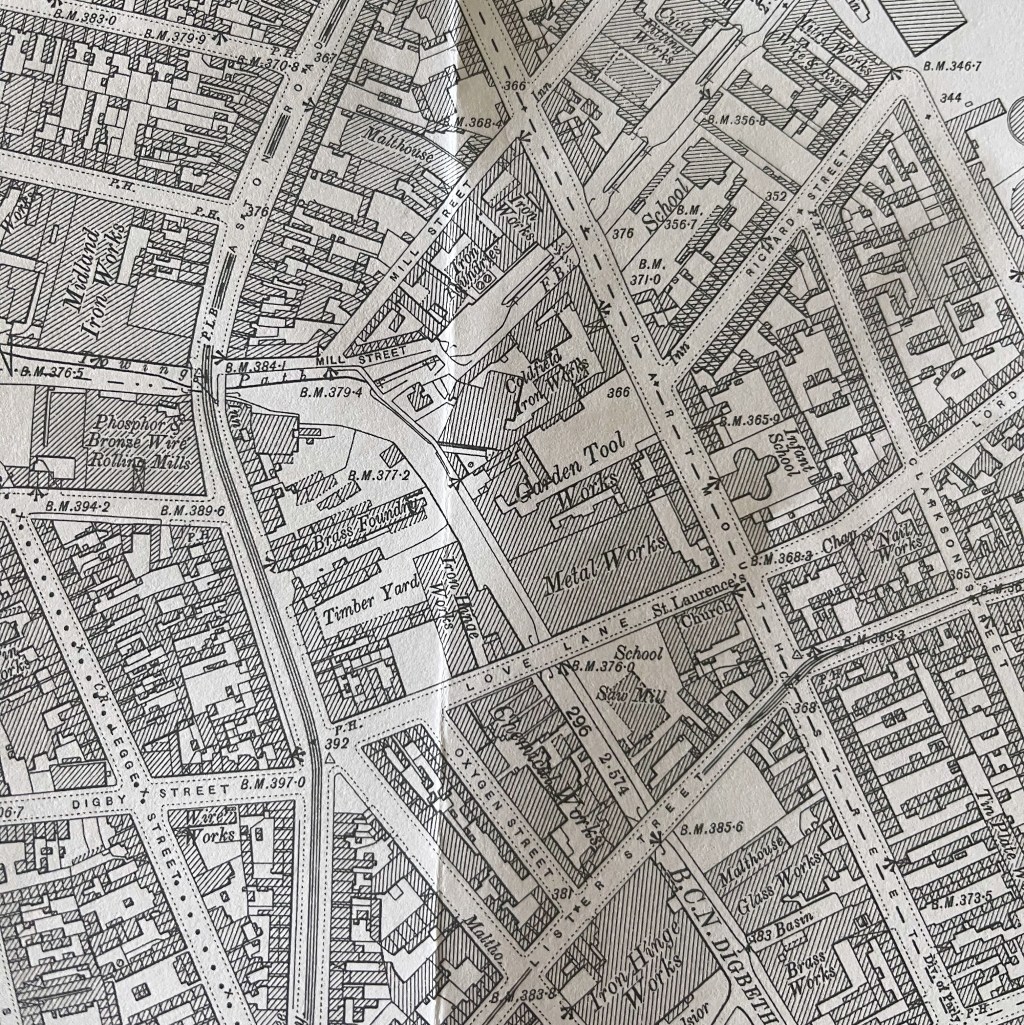
Copyright: Alan Godfrey maps.
On this extract from the 1902 OS Map, a garden tools works can be seen which has the canal on one side and Dartmouth Street on the other, very likely to have been the Vaughan Brother’s works. Note the number of other industrial premise around them, interspersed with housing and back-to-back courtyards.
Looking at the 1902 OS Map of the area, I couldn’t see any industrial premises in Milton Street but there was a ‘Hatchet and Hoe Works’ and a ‘sheep shears works’, both in the Milton Street/Summer Lane area which may well have been connected with the Vaughans.
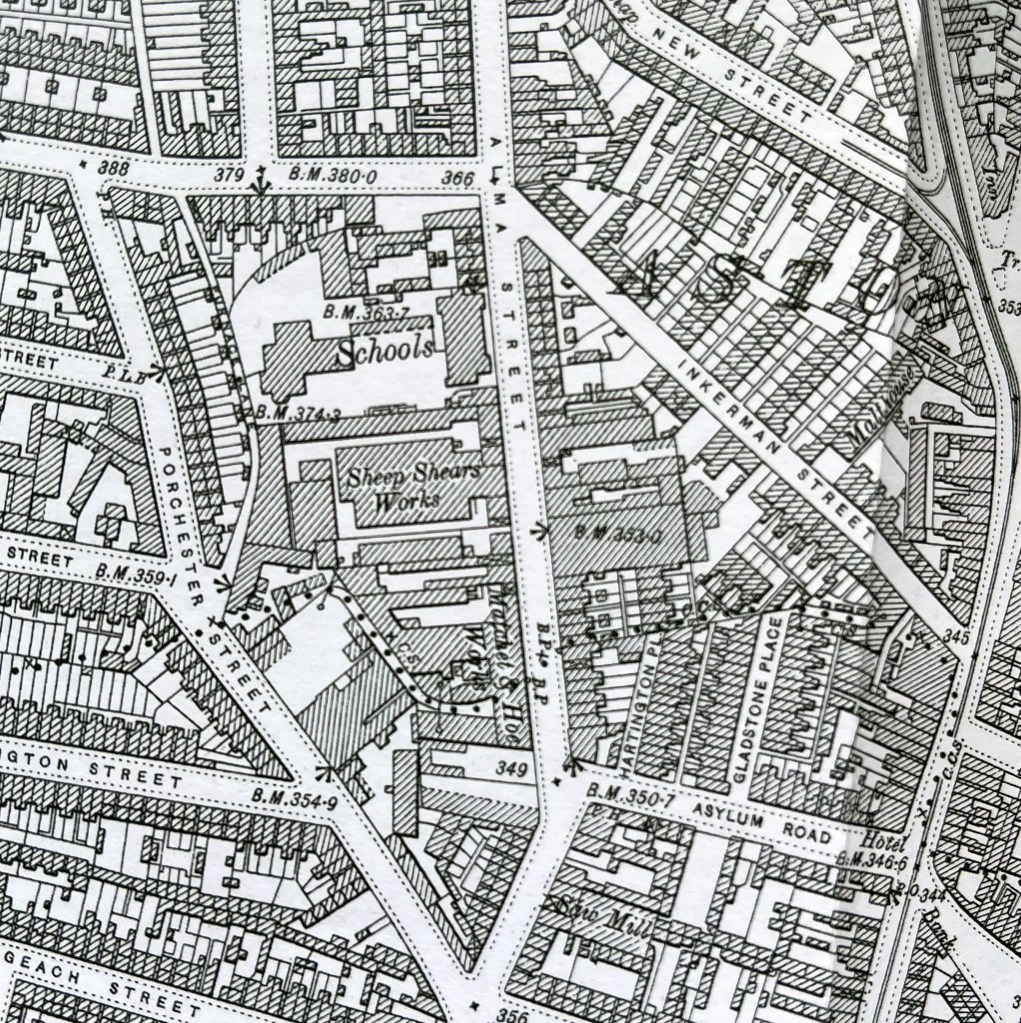
Copyright: Alan Godfrey maps. Alma Street, Aston showing the sheep shears works and, just below it the Hatchet and Hoe works – these are the sort of products the Vaughan Brothers would have been making. Again, surrounded by poor quality and crammed housing and no green space.
In 1871 the company was employing 57 men, 9 women and 27 boys. The 1881 census shows that this had increased to 72 men, 12 women and 21 boys. When Charles died in 1892, his estate alone was valued at £15,022/3s/9d, equivalent to between £2.4-£2.6million today.
Mary Ann and William James’s family
On 15 May 1845, the first child of Mary and William – Joseph Edward Vaughan – was born at Wall Heath, Kingswinford. It is not clear why the couple were at Wall Heath but their second son was also born there. It seems likely that they were there for William’s work in some way. Wall Heath was not a big place but there was a windmill there at this time and there is still a Foundry Road, either of which may be a clue. Joseph was followed by his brother William James, born on 11 October 1846, also at Kingswinford. (Well, that takes care of the paternal Christian names of both grandfathers – the Vaughans were a great family for repeating the same names through the generations, makes for interesting and at times frustrating research).
Another son Charles was born in 1849 in West Bromwich Registration District, probably the Oldbury or Rounds Green area but he does not appear in the 1851 Census with the rest of the family and nor does Joseph Edward, the eldest child. Only William James, aged 3 and Richard Henry, aged 3 weeks were with their parents who must recently have moved to Birmingham, are with their parents and also William’s brother Richard. I think that the two older children must have been staying with other family members to help Mary Ann, certainly Joseph was staying in Tipton in 1851 with two of his Vaughan aunts, although Charles is still proving elusive. So by 1851 most of the rest of the family were living at Handley Street, in Aston, Birmingham. With William aged 31 (shown as a garden tool maker, employing 11 men) and Mary Ann, in addition to their two young sons William and Richard, is Richard Vaughan, aged 24, listed as Partner and brother of William. Richard Henry Vaughan had been born on 13 March 1851 – the census was on 30th March so he was quite a new baby. He was followed in 1853 by Thomas, in 1855 by Amelia, in 1856 by Mary Ann, all born in Birmingham and in 1858 by Emma Eugenie. Two more sons followed – Lewis Ralph in 1861 and Septimus in 1863, these latter all born in Aston. And yes, Septimus was the seventh son! But he was not the first Septimus Vaughan, his father William James had brothers Septimus and Octavius who were – yes, the seventh and eighth sons of the family. So by this time most of the Vaughan brothers were living in the Aston/Handsworth area where their factories were.
By 1861, the family had moved to Poole Street, Aston. William James Vaughan Snr died in June 1869, when his youngest child was only 5 and was buried at Witton Cemetery, Birmingham. His Probate record showed that his estate was valued at under £2,000 (less than his older brother twenty years later but still a substantial amount).
The widowed Mary Ann Vaughan was still in Poole Street in 1871 with her son Joseph (25) described as an ‘edge tool maker’ and next son Thomas as a Jeweller’s Assistant, the other children still being at school.
By 1881, when Mary Ann was 61 and an ‘annuitant’ the family were living in Albert Road, Aston, with four of her younger children and one granddaughter Clara, aged 4. The only son remaining at home by then was Septimus who was 13 and already a toolmaker, in the family tradition. His sister Emma who was 21 was shown as a milliner, another potentially profitable, like shoemaking, as every woman wore a bonnet and fashionable (and well-off) ladies would have numerous bonnets which would require replacements as fashions changed. Another example of the Alsop/Vaughan families identifying local needs and meeting them, using their dexterous skills – these families were not afraid of hard work or being ‘in trade’.
Mary Ann Vaughan, nee Alsop, died, aged 62, on the 4 March 1882 in Aston and was buried at Witton Cemetery with her late husband, there was a fine memorial for them, alas last seen laid flat.
Mary Ann and William James Vaughan’s children
Joseph Edward 1845-1909
Joseph was born on 15 May 1845 in Wall Heath and baptised on 24 Aug 1845 at Kingswinford. However, in the 1851 Census he is not listed with his family in Handley Street, Aston. Instead he is staying, aged 6, described as a lodger, in Church Street, Tipton, along with his aunt Selina Vaughan, then aged 21, They are with Cornelius and Mary Ann Guest, (nee Vaughan) – Mary Ann is Selina’s sister and therefore also Joseph’s paternal aunt. By 1861, Joseph is back with his family, in Poole Street, Aston, now aged 15 and, like his two next brothers William and Richard, they are all, like their father, Garden Tool Makers – in the family business, almost certainly.
In 1871, Joseph was living with his widowed mother and younger siblings in Poole Street, Aston but in 1873 he married Marian O’Donellan in Birmingham, it appears that this was a Roman Catholic ceremony as the details are in Latin. They had three children – Mary Catherine in 1875, George Edward in 1877 and Norman John Donellan in 1880.
In 1881, living in Albert Road, Aston, Joseph was described as a Manager, and in 1891, by now living in 40 Cromwell Street, Aston, he was once more an Edge Tool Maker. But in this census only George of their children is also listed. The other two children were staying with their O’Donellan grandparents in College Green, Bristol.
His wife Marian, however, also has an occupation in this 1891 census – she was a pawnbroker. Interestingly I have also found a trade directory reference to a pawnbroker called Michael O’Donnellan who was Marian’s father, in Sherlock Street, Birmingham in 1868 so perhaps this was a family trade. Later census entries for both Michael and Marian O’Donellan record them both as chiropodists but perhaps they were pawnbrokers first! And trade directories dated 1888, 1890 and 1892 show Joseph Edward Vaughan as a pawnbroker at 40, Cromwell Street, Duddeston, Birmingham. The Register of voters for 1885-86 1890 shows Joseph Edward Vaughan at 40 Cromwell Street, but still owning a house at 131 Albert Road, which was where they had been living in the 1881 Census. But the 1891 Census has Joseph, as an Edge Tool Maker, Marian and George living at 40 Cromwell Street, where Marian was a Pawnbroker. So perhaps Joseph continued his work as an edge tool maker but his wife ran the pawnbroking business. Cromwell Street was not by any means as affluent an area as where most of Joseph’s family ended up living but undoubtedly it would have been a good catchment area for a pawnbroker.
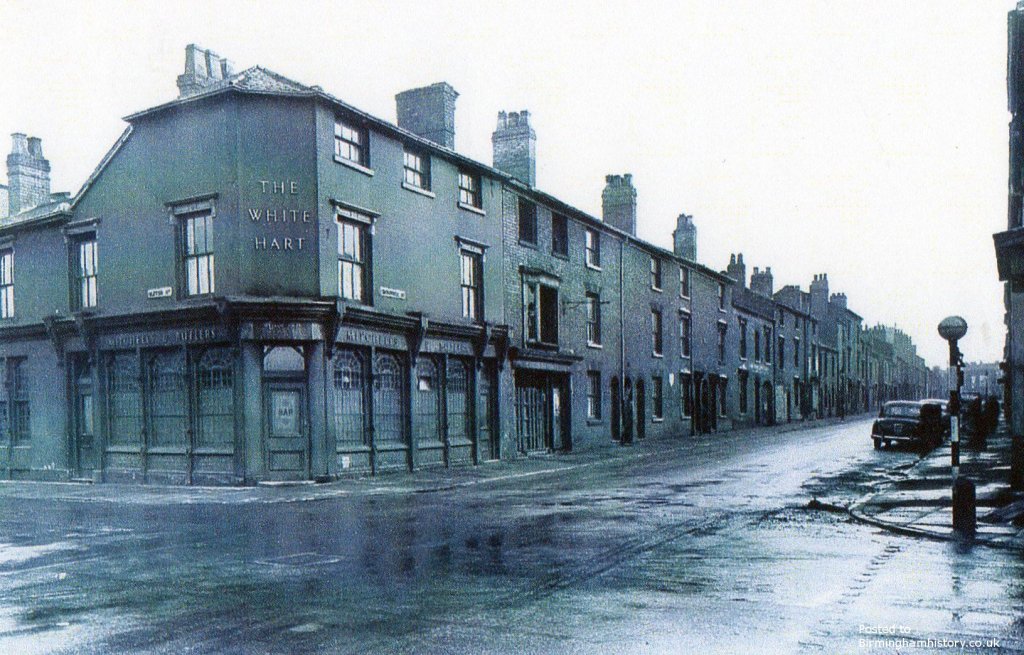
Copyright unknown. A view of Cromwell Street in the 1950s. Other than the cars, it would probably have looked much the same when Joseph and Marian had their pawnbroking business there.
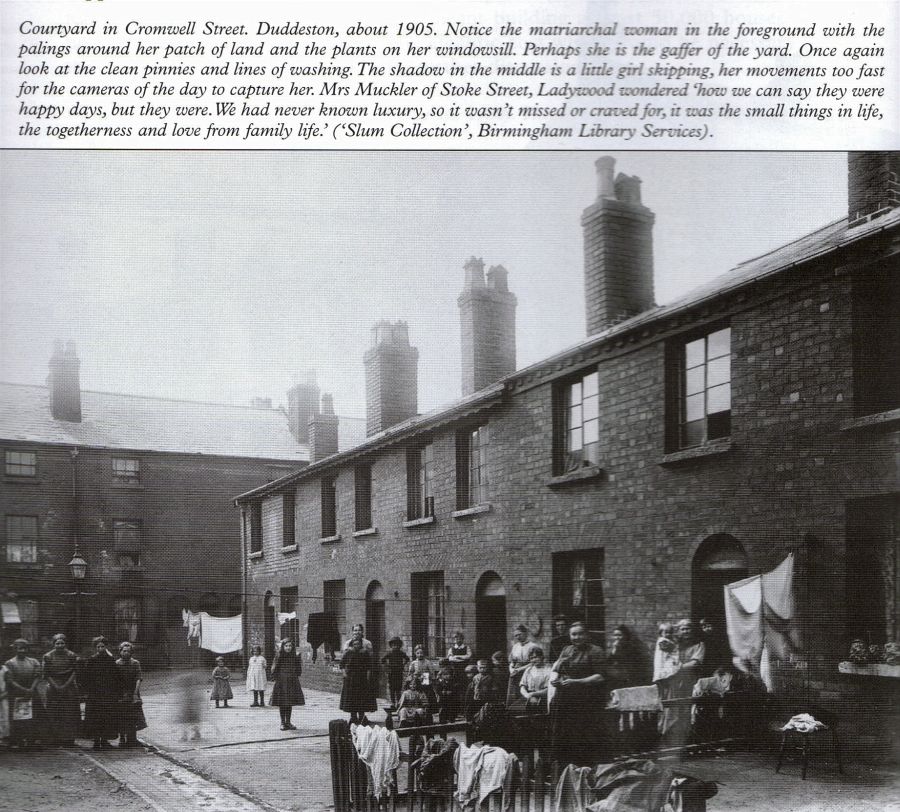
Copyright Birmingham Libraries ‘Slum Collection’.
I cannot find either Joseph or Marian in the 1901 Census, so perhaps they were travelling. Joseph died, aged 63, on 17 February 1909 and was buried at Witton Cemetery as were most of his siblings and his parents. By 1911 Marian had moved to Bristol where her parents had lived for many years and was listed as a chiropodist, like her father. She died there in January 1920.
Joseph Edward and Marianne’s children
Mary Catherine married and settled in Bedminster, Bristol and it may be that she had lived in Bristol most of her life with her grandparents. Her husband John Fleming who was 20 years her senior, died in 1915, they had one son and three daughters. She died in Bristol in 1958, her Probate Record interestingly gives her name as Vaughan or Fleming so perhaps she had gone back to using her maiden name for some reason. In 1989 there was a George Edward Vaughan living in a tenement in Chancery Lane, London and in 1901 George Edward was in Poplar, London where he was shown as a Merchant Seaman, and he received his UK Second Mate’s Certificate also in 1901. He emigrated to Melbourne, Australia in 1914 and enlisted in the Australian Navy there in 1915, giving his mother Marianne’s name and address in Bristol as his next of kin. George travelled at least once to the USA, probably to visit his brother. He died in Australia in September 1970, aged 93. Norman John Donellan Vaughan also became a seaman and also emigrated, in 1905 he went to Vancouver and then San Francisco where he became a naturalised citizen in 1925, his address on the Registration card given as Golden Gate Bridge! He was an auto-mechanic and had married in England in Middlesborough where his only daughter Catherine had been born. A possible death is in Nevada in 1963.
So this little branch of the Vaughans uncharacteristically settled far from the place of their birth, as had their Irish O’Donellan grandparents, or perhaps raised mostly many miles from the larger Vaughan and Alsop families in the Midlands, they did not feel part of that larger clan nor to have been in the metal trades, both boys becoming seaman which would have been much easier, living in the Port City of Bristol.
William James Vaughan 1846-1928
William was born in 1847 in Wall Heath and baptised on 3 January 1847 at Kingswinford. He was with his family in Handley Street, Aston in the 1851 Census, and in 1861, he was with them in Poole Street, with his three brothers and three sisters. The census in 1871 was taken on 2 Apr but William had been married just a few days earlier on 21 March to Elizabeth Prudence Sturges whose father Robert Sturges was a partner in an electro-plating company. William was listed, with Elizabeth at Penzance Place, Victoria Road, Aston where he gave his occupation as a metal worker.
By the time of the 1881 Census, their family had grown with the births of Robert Edward on 30 January 1872, William James in 1874, Ernest Charles in 1875, and Elizabeth Sturges Vaughan in 1877. In 1881 they were living in Yardley, Birmingham and their next children were Lawrence Sturges Vaughan born in 1882 and Thomas Ralph born in 1886, (who died in 1887). Elizabeth Vaughan died in 1889 in Aston and was buried in the family plot at Witton Cemetery.
It seems likely that William had been working for his father-in-law’s company – Sturges, Bladon and Middleton since at least the time of his marriage if not before. Trade directories for the company which was originally founded by an Elizabeth Sturges, who had been active in the industry since 1829 at Suffolk Street, Birmingham, with her son Richard Ford Sturges between 1833 and 1841 as Sturges & Son, making Platina, British Plate and Britannia Metal wares. He continued the business on his own account from 1841 to about 1863 at 46 Broad Street, Birmingham. It was perhaps the next generation who were in partnership with Bladon and Middleton who made tea and coffee sets, trays, tankards, condiment sets, casserole dishes, Fruit and Cake Baskets and Old English Pewterware.
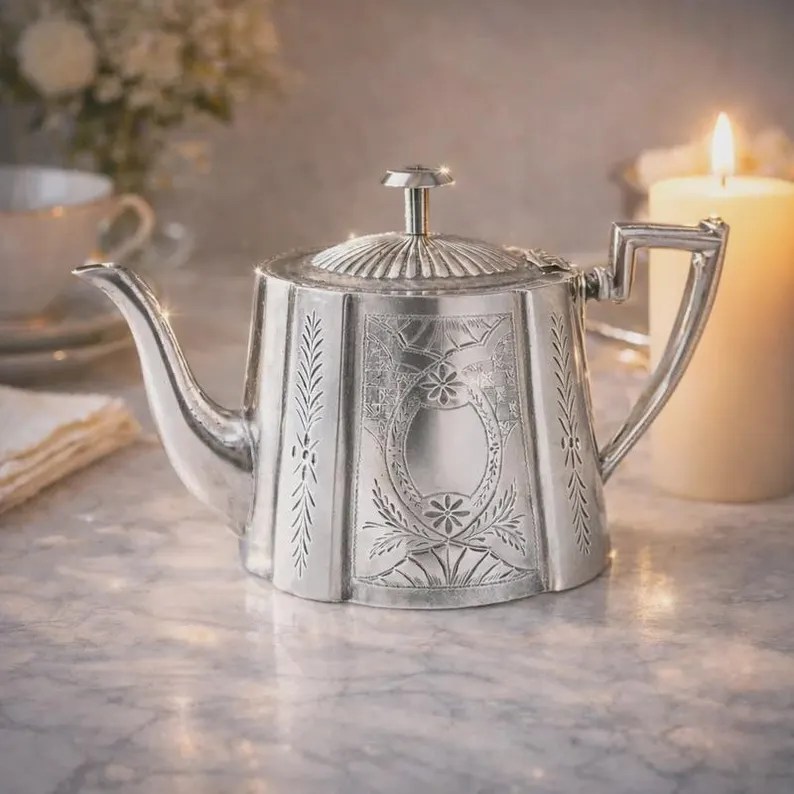
Copyright unknown. A silver plated teapot produced by Sturges, Bladon and Middleton
William was at 156 Victoria Road, Aston in 1891, along with his four sons and one daughter and his sister Amelia was also living there as his housekeeper. By now his occupation was shown as an Electro-plate Manufacturer, as were his sons Robert (19) and Ernest then 16, while William at 17 was a Clerk.
In the first quarter of 1893 William re-married to Mary Ann Pagett, and they continued to live at 156 Victoria Road where their children Madeline Lilian (1897), Edgar (1898), Horace (1903) and Frank (1905) were born. By the time of the 1911 Census, the family had moved out to Acocks Green, where Frank was born.
Mary Ann died on 28 February 1917, aged 52 and was buried in Yardley Cemetery where her son Edgar was also interred in 1918, aged 20, who had served with the Royal Marine Light Infantry and died on 13 June 1918 of wounds, at Whalley Military Hospital, Lancashire.
In the 1921 Census, William was at Lincoln Road, Olton, near Solihull with his son Horace who was now 18 and a Clerk at the Britannic Assurance Company. William died on 6 May 1828, aged 81 and was buried at Witton Cemetery with his first wife Elizabeth and their son Thomas who had died in infancy. His estate was valued at just over £3,000.
William and Elizabeth’s children
Robert Edward Vaughan was born on 30 January 1872 in Aston. He married May Pottle Chinn in December 1901 and they had two sons Edward Winston (1903) and Clifford Sturges (1907, followed by a daughter Kathleen in 1909. They lived for many years in Grove Road, Sparkhill and Robert worked for Sturges, Bladon and Middleton, as it appears his sons also did. Robert later moved to Stratford-on-Avon where he became a farmer – a greater contrast to the metal plating industry is hard to imagine – and he died in 1950 in Earlswood, another rural area. His widow May died in 1958.
William James Vaughan was born in 1874 in Aston and remained there, living with his family and working as a Clerk until his marriage in 1900 in Solihull when he married Annie Elizabeth Smith. Unlike most of his brothers, William did not go into the metal industry and became a Clerk for a Timber Merchant so that he and his family lived in Knowle, Solihull, rather than Aston. Although William gives his occupation as a Clerk up to 1911, by 1921 he had become Managing Director of the timber company, living in Marshall Lake Road, Shirley and his eldest son was also working for the same company as a Clerk to the Timber Merchant. William and Annie had two sons Charles Smith (1900) and William James (1906, and three daughters Dorothy Beatrice (1910), Mildred May (1912) and Olive Margaret (1916). William James died in August 1932 in Shirley, aged 58 but Annie lived on in Solihull until 1962, when she died aged 82.
Ernest Charles Vaughan was born on 18 February 1875 in Aston and was with his family until his marriage in 1903, when he married Florence Eugenie Salvey in Aston. They had two children Eric in 1906 and Dorothy in 1907, both born in Handsworth. At that time it seems that Ernest was working in the electro-plating business, probably in the family business. By 1911, although Ernest was still listing his occupation as an Electro Plate Manufacturer, the family had moved to Suttton Coldfield and in 1921 they had moved on to Wylde Green, Sutton Coldfield where he had the same occupation. By 1939, however, they were living at ‘Garage House’, Kingsbury Road, Minworth, Sutton Coldfield where Ernest had become a garage owner. He died in Sutton Coldfield in 1948. His wife Florence died, still at Garage House, in 1963 and both Ernest and Florence were buried at Witton Cemetery, the resting place of so many members of the Vaughan family.
Elizabeth Sturges Vaughan was born on 22 December 1876 in Aston and was with her family until her marriage in 1906, when she married Thomas Henry Salvey in Solihull. Thomas was the younger brother of Florence Eugenie Salvey who had married Elizabeth’s older brother Ernest in 1903. Like his father Thomas was a dentist. Thomas and Elizabeth lived in Cheshire for a time. Their daughter Hilda was born in Nantwich in 1907, their son Vaughan was born in Crewe in 1911 and they were in Crewe in the 1911 Census. But by 1921, the family were back in Birmingham, living in Stratford Road, Sparkhill, Birmingham where Thomas and Elizabeth still lived when the 1939 Register was drawn up. Elizabeth died in 1953 and is buried in Yardley Cemetery, Thomas Selvey lived to the age of 90 and died at Arreton Manor on the Isle of Wight in 1968, his daughter Hilda also died in Newport, Isle of Wight, in 1994 so he had perhaps moved to be near her.
Lawrence Sturges Vaughan was born in 1882 in the Solihull Registration District. His mother died in 1889 when he was only 7 and in 1891, when the remaining family were living in Victoria Road, Aston, his aunt Amelia Vaughan was living with the family, acting as her brother’s housekeeper. By 1901, his father had married again and a halfsister and half brother had been added to the family. Lawrence was listed as a Tool Maker, although whether this was with the Vaughan family and their numerous companies making garden and edge tools, it is not possible to know. Lawrence married Ada Williams, nee Bartlett, a widow and business woman, in September 1910 in St James’s, Aston Park and in 1911, they were living at 112 Ettington Road, Aston, along with his stepson Francis Williams who was 11.
By 1921, they were still living there but now Lawrence gave his occupation as collecting and delivering laundry and Ada gave her occupation as superintending the Laundry. Her son Francis, by now 21 was working in Electro-plating. Lawrence and Ada appear not to have had any children together. Lawrence died, aged only 47, in 1929 and was buried at Witton Cemetery. His wife Ada Vaughan is listed among those killed in ‘World War II Civilian Deaths’, she was still at at 112 Ettington Road, when she died on 11 April 1941, aged 64, presumably in a bombing raid and she was also buried at Witton Cemetery. Ada left an estate valued at £7,685, a substantial sum in those days. Her executor was her son by her first marriage Francis Williams who was described as a laundry manager, so presumably he had taken over the laundry business which had originally been owned by his father.
Thomas Ralph Vaughan was born in 1886 in Aston and died in 1887, aged 9 months, buried in Witton Cemetery, his parents were both interred in the same grave when they died in 11889 and 1928 respectively.
William and Mary Ann’s children
Madeline Lilian was the first of William’s children with his second wife Mary Ann Pagett. She was born on 24 May 1896 in Aston. She was baptised at St Mary Aston Brook, on 12 August 1896. Madeline was at home with the family in 1901 and 1911 but visiting friends in Cardiff in 1921. Her occupation was shown as a shorthand typist to Alldays & Onions, Sparkbrook, Birmingham . It appears that Madeline did not marry, she was living alone at 14 Hazelwood Road, Acocks Green in 1929, according to Voter’s records. She was at a Riding School in Brackley Northamptonshire in the 1939 Register and her occupation there was recorded as a shorthand typist to a Chartered Accountant. Madeline appears to have remained in Birmingham until at least 1955 but by 1960 she had moved to Laughton, near Eastbourne, West Sussex where she died in 1968. I have been unable to find any record of her burial.
Edgar was born in Aston on 11 June 1898, and was at home with his family in 1901 and in 1911, when he was still at school. However, on 12 February 1917, aged 18 years and 8 months, he was called up and enlisted into the Royal Marines Light Infantry , giving his occupation as a Polisher, presumably in the family business. He was posted to the 2nd Royal Marines Battalion on 18th March and wounded on the 27 March. Edgar was brought back to England and died in Whalley Military Hospital, Lancashire on 13 June 1918. He was buried with his late mother at Yardley Cemetery.
Horace was born in 1903 in Aston and was with his family in 1911 and in 1921 when his occupation was given as a Clerk. I cannot find him in the 1939 Register and it is possible that he was either in the services or that he was abroad for a time. It appears that Horace married Kathleen Waters in 1945 in Birmingham. Three children appear to have been born to this marriage in Birmingham but as they may well be living, I am not giving their names. There are some indications that he may have worked in aircraft production during WWII but nothing definite. Horace died in 1986, aged 83 and was buried at the church of St Laurence, Birmingham with his address given as 75 Woodland Road, Northfield. Kathleen died in 1988.
Frank was born in 1906 inAcocks Green, baptised on 26 October 1906 at Aston-juxta-Birmingham and appears with his family in the 1911 Census, aged 6. And then – nothing definite. It is rather odd – when his father died in 1928, his Will named two of his sons, – Robert Edward, from his first marriage- a farmer, Horace from his second marriage- an Insurance Clerk and his son-in-law Thomas Selvey, a dentist. But there is no mention of Frank, nor can I find a death registration nor a burial for Frank. Looking for a Frank Vaughan of the correct age and birthplace in the 1921 Census, there is only one. And he is an ‘Inmate’ in a ‘Home for Feeble-Minded Lads’ in Monkton, Jarrow, South Shields – a long way from home but his birthplace is shown as Birmingham, Warwickshire so it is possible that this is the correct Frank – there were about 50 boys in the home and they were from all over the country. Many of the inmates were in their twenties and thirties, this Frank would have been amongst the youngest there. Knowing of accepted practice around such institutions in those days it is entirely possible that most of the inmates remained there for many years.
And yet, there is a Frank Vaughan in Birmingham in the 1939 Register who was married and a storekeeper at the Austin Works in Longbridge. He was married in 1934 to an Olive Blake but I note that at their marriage he gave his father’s name as John Vaughan so perhaps this was not him. I can see that other researchers who have worked on this record have also been unable to find Frank after 1911 so he must remain a mystery. I have been unable to find out when Frank died.
So there we have the ten children of William James Vaughan II and his two wives, the grandchildren of William James Vaughan I and Mary Ann Alsop. Again, most of the family were involved in working in the metal industries, both through their own company and through the families they married into, such as the Sturges family. None moved very far from Birmingham, although they gradually migrated out from Aston to the leafier suburbs (though it’s difficult to criticise them for that!) but none of them either seem to have moved back towards the Vaughan home ground in Oldbury and Rounds Green. They did, mostly, appear to stick quite closely together, especially the Vaughans and there are numerous Vaughan burials over at least three generations in Witton cemetery.
Summary
So yet again, one of the the Alsop children – Mary Ann had married into another prosperous local business family and was associating, through them, with other families involved in the works and factories of the ‘City of a Thousand Trades’ and far removed, in material terms, from your average Rowley nail maker, as you can imagine. And again, the close association with Rowley village was lost within one or two generations, although the family members appear mostly to have remained close.
I have written in this piece about Mary Ann Alsop and William James Vaughan’s first two children and fourteen grandchildren. I begin to think that the Alsops may end up with as many grandchildren as the Hill family but spread further afield!
As this piece has got so lengthy and there are still eight more of the children of William James Vaughan I and Mary Ann Alsop to look at, I will finish this piece here and continue in another piece!


hello, would there be any contact details for the writers of these articles please? I have some information that may be of interest. Kind regards, Claire
LikeLike